Muscle Length, Range of Motion and Stretch-Mediated Hypertrophy: What the Research Actually Shows
Stretch mediated hypertrophy explained with MRI data: when long muscle length training beats short ranges, if lengthened partials work, and what to change.

TL;DR. The short answer
- Training a muscle through its stretched position tends to build at least as much muscle as other ranges, and in several MRI studies clearly more, for example 14% vs 9% hamstring growth with seated vs lying leg curls.
- If you cut range of motion, cut the top (shortened) part, not the bottom. Top-half partials are the version that consistently loses.
- Lengthened partials and full reps produced practically equivalent growth in trained lifters and in a 297-person multi-site trial, so full range remains a perfectly good default.
- The best-supported exercise swaps are seated leg curls, overhead triceps extensions, standing calf raises and deep squats. Evidence for biceps and lats is thinner.
- Claims that long-length training builds new sarcomeres in series, or targets the lower or upper end of a muscle, are still unproven in humans.
Table of contents
Stretch mediated hypertrophy is the idea that a muscle grows best when it is loaded hard in its stretched, lengthened position. The research mostly supports a practical version of it: exercises that challenge the bottom of the range tend to build as much muscle as other options, and sometimes clearly more. The bigger claims (adding sarcomeres in series, growing the “lower” part of a muscle on command) are still unproven in humans.
That middle ground is where this guide lives. Social media has turned “train the stretch” into a slogan. Some of it is solid. Some of it is extrapolation from rats.
Below, we go through the length-tension physics, the MRI studies muscle by muscle, the full range vs partials debate and what all of it means for your next leg day. For how this fits with volume, effort and nutrition, start with our hypertrophy guide for natural lifters.
Quick answer: what should you actually change?
If you only read one section, read this one.
- Keep full range of motion as your default. It reliably beats partial reps done in the top, shortened part of a lift.
- Never cut the stretch. If you shorten a rep, cut the lockout or the squeeze, not the bottom.
- Pick long-length exercise versions where the evidence is clear: seated over lying leg curls, overhead triceps extensions, straight-knee calf raises and deep squats.
- Lengthened partials are optional. In trained lifters they performed about the same as full reps, not better.
- Ignore promises of targeting the lower or upper half of a muscle. The effect is small at best.
Why the stretched position is special: the length-tension curve
A muscle is a chain of sarcomeres, tiny contractile units where actin and myosin filaments overlap and pull. How much force they can produce depends on how much they overlap. At mid length the overlap is close to ideal. Very short, the filaments crowd each other. Very long, they barely touch.
That gives you the classic active length-tension curve: weak at the ends, strongest in the middle. We go deeper into the physics in our explainer on the length-tension curve and sarcomere overlap.
But there is a second curve that matters for growth.
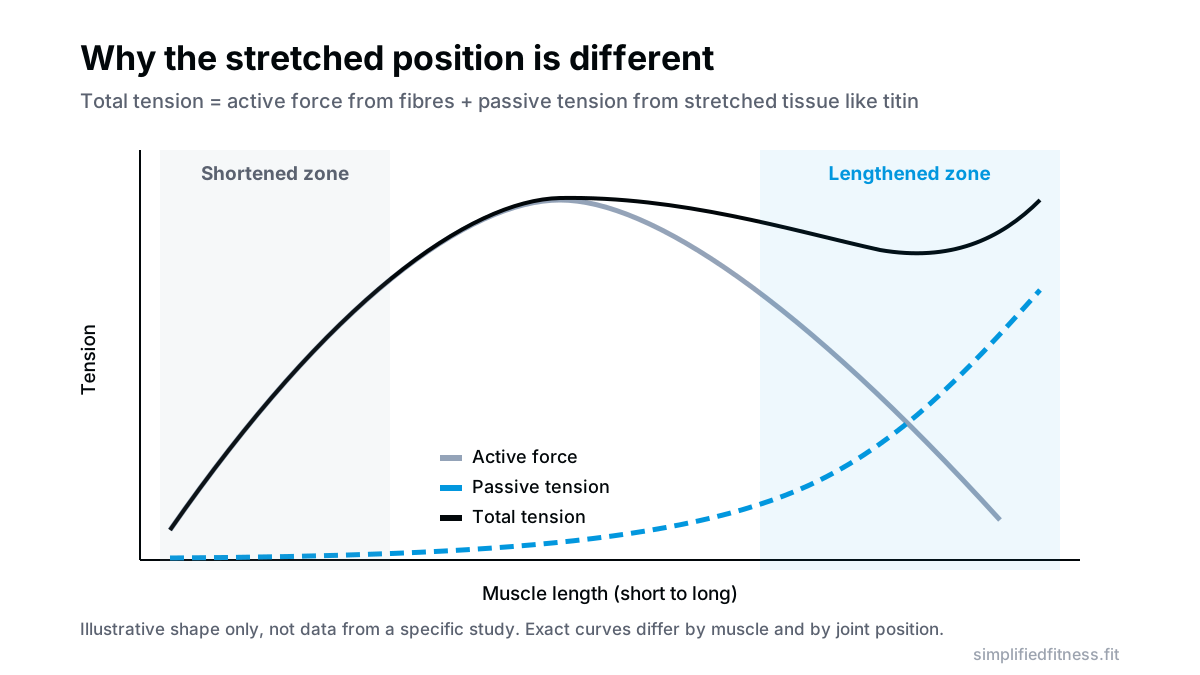
As a muscle lengthens, elastic structures inside and around it start to resist the stretch. The biggest player inside the sarcomere is titin, a giant spring-like protein that anchors myosin. The longer the muscle, the more passive tension titin and connective tissue produce. So at long lengths you have active force from contracting fibres plus passive tension from stretched tissue.
Is titin really a growth sensor?
Probably part of the story, but most of the evidence comes from animals.
The cleanest experiment was in mice. Researchers cut the nerve to one half of the diaphragm so it was passively stretched by the working half. The stretched muscle grew 48% in mass within 6 days, through sarcomeres added both in series and in parallel. Mice engineered with more compliant titin had a 20% smaller growth response, and mice with stiffer titin an 18% larger one (van der Pijl et al., 2018). Titin-binding signalling proteins were switched on during the stretch.
That is good evidence that titin acts as a mechanical sensor. It is also a mouse diaphragm under constant stretch for days, which is nothing like 10 reps of seated leg curls.
What is stretch mediated hypertrophy, really?
The term gets used for two different things, and mixing them up causes most of the confusion.
1. Pure stretching. In animals, a muscle held under passive stretch can grow quickly, as the mouse study above shows. Whether ordinary static stretching does much for muscle size in people is far less clear, and the human studies that report gains generally used long, frequent stretching sessions rather than a few quick holds. That is not a realistic add-on for most lifters. (If you are curious about stretching between sets, our guide to inter-set stretching for hypertrophy covers that evidence.)
2. Loading the stretched position during lifting. This is what lifters usually mean, and it has much better human data: training studies that compare a long-length version of an exercise against a short-length version and measure muscle size with MRI or ultrasound. We break down the cellular side in stretch-mediated hypertrophy and sarcomerogenesis.
For the rest of this guide, “stretch-mediated hypertrophy” means the second version.
The MRI evidence, muscle by muscle
The strongest studies here use a clever design: each person trains one limb one way and the other limb the other way. Same person, same diet, same sleep, same genetics. Muscle volume is measured with MRI before and after. Several of them come from the same research group in Japan, which is worth keeping in mind.
Hamstrings: seated beats lying leg curls
Your hamstrings cross both the hip and the knee. Sitting bends the hip, which pre-stretches them; lying flat does not.
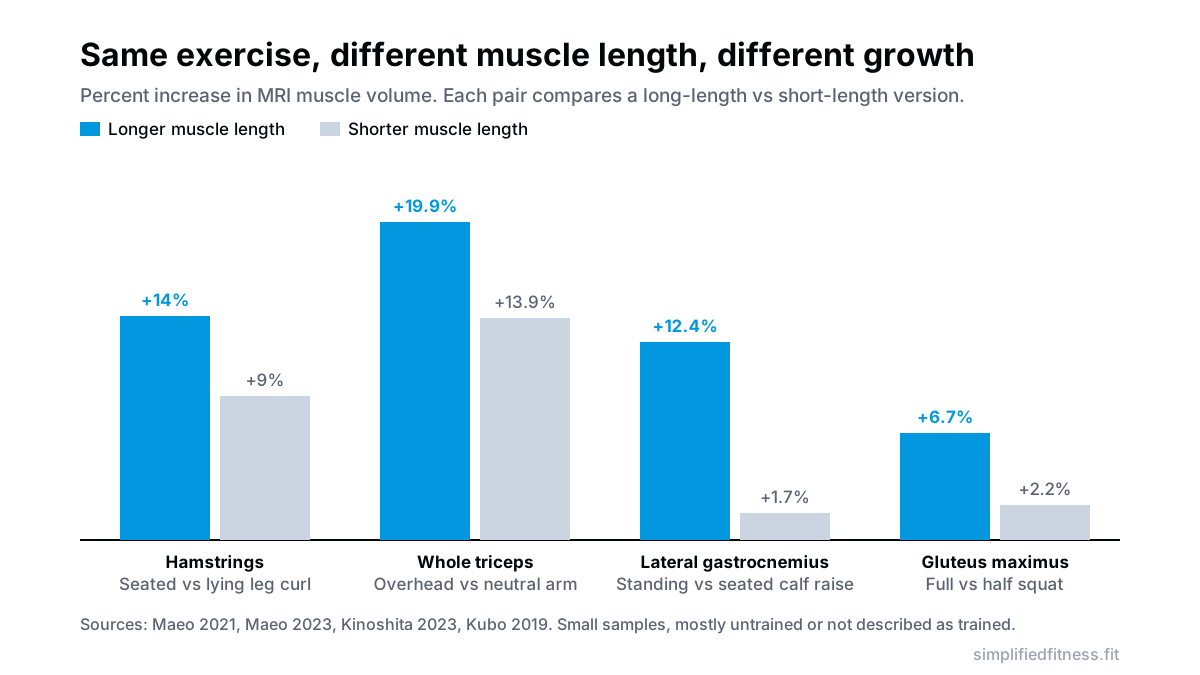
In a 12-week study, 20 healthy adults did seated leg curls with one leg and lying (prone) curls with the other, 5 sets of 10 at 70% of 1RM, twice a week. Whole-hamstring volume rose 14% with seated curls versus 9% with lying curls. The two-joint hamstring muscles grew more with seated training (8-24% vs 4-19%), while the one-joint short head of the biceps femoris grew about the same either way (10% vs 9%) (Maeo et al., 2021).
That last detail matters. The muscle that was not lengthened by hip position did not care which curl you did. That is exactly what you would predict if muscle length is doing the work.
For comparison, here is the lying version. With the hips flat on the pad, the hamstrings start much less stretched than when you sit with the hips bent.
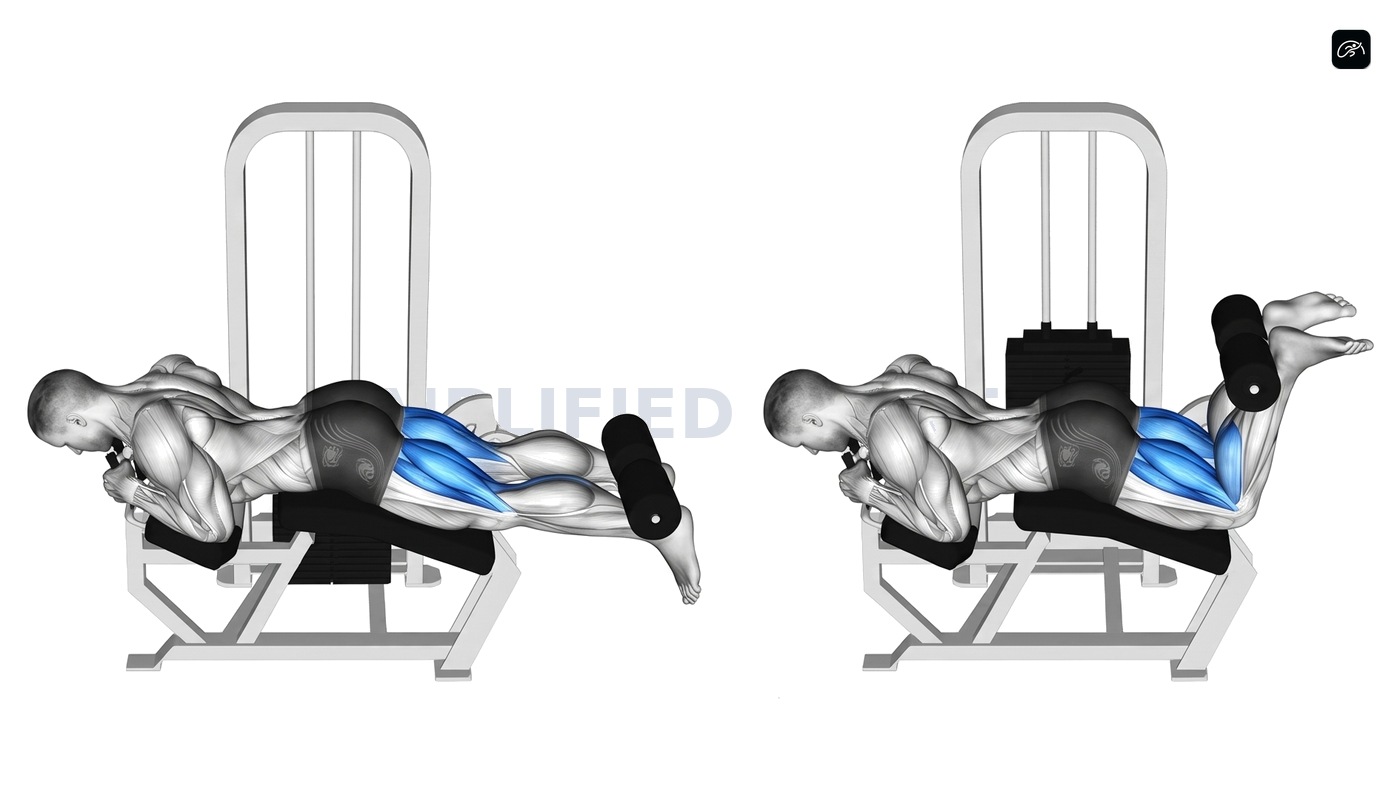
For setup and exercise choices, see seated vs lying leg curls for hamstring growth. Hip-hinge work like Romanian deadlifts also loads the hamstrings long, and a Nordic curl and fascicle length guide covers the eccentric side.
Triceps: overhead beats arm-at-side
The long head of the triceps crosses the shoulder. Raising the arm overhead stretches it.
In 21 adults training one arm overhead and the other with the arm at the side (cable elbow extensions, 5 sets of 10, twice a week for 12 weeks), the overhead arm grew more in every region measured (Maeo et al., 2023):
- long head: +28.5% vs +19.6%
- lateral and medial heads combined: +14.6% vs +10.5%
- whole triceps: +19.9% vs +13.9%
Here is the part people miss. The overhead arm lifted 34-39% less weight throughout the study. Less load, more growth.
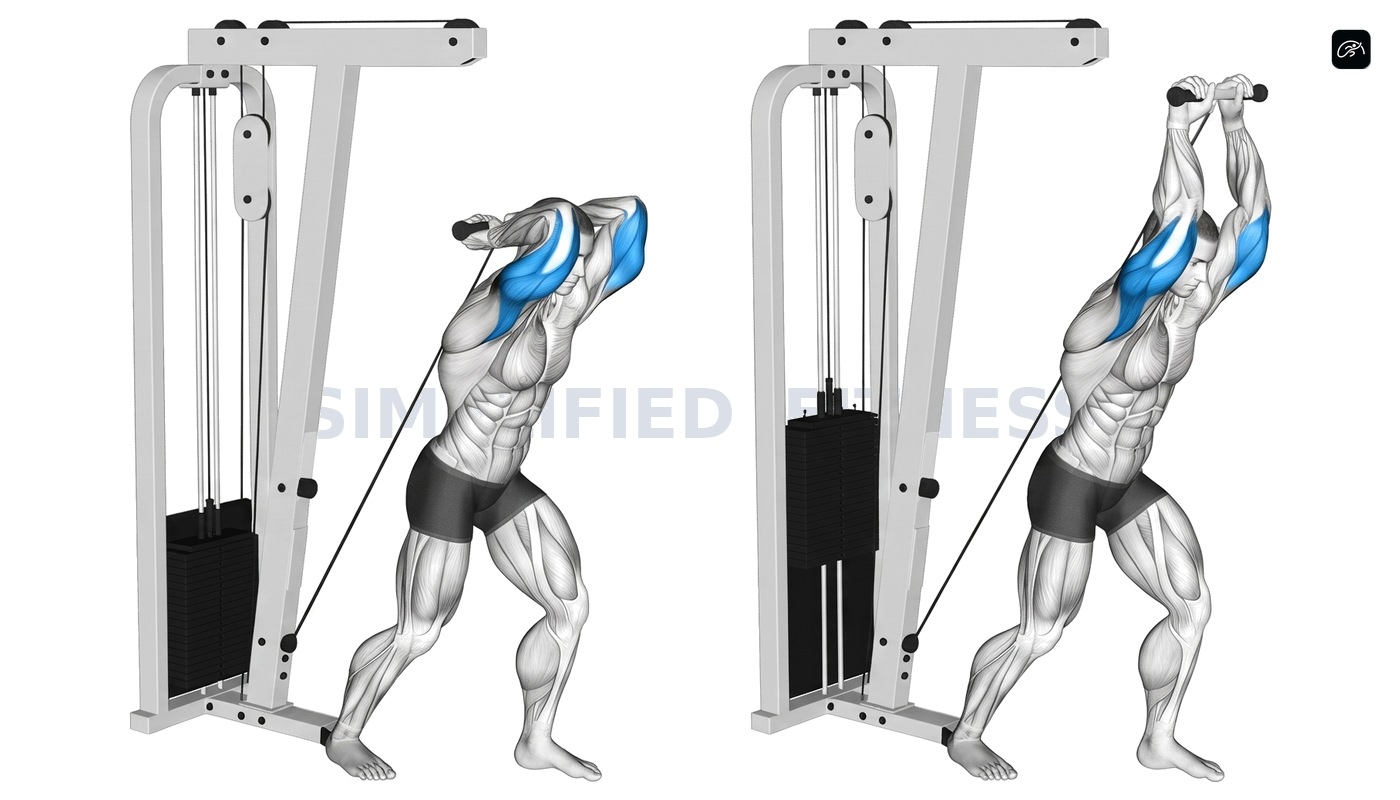
We compare the options in overhead cable triceps extensions vs pushdowns and the broader overhead vs neutral triceps long head question.
Calves: straight-knee beats bent-knee
The gastrocnemius crosses the knee. Straight knee (standing calf raise) keeps it long; bent knee (seated) slackens it.
In 14 untrained adults, 12 weeks of standing calf raises on one leg and seated on the other produced a dramatic difference in the gastrocnemius (Kinoshita et al., 2023):
- lateral gastrocnemius: +12.4% standing vs +1.7% seated
- medial gastrocnemius: +9.2% vs +0.6%
- soleus (one-joint, unaffected by knee angle): +2.1% vs +2.9%, similar
Seated calf raises barely grew the gastrocnemius at all. Again, the muscle whose length did not change (soleus) showed no preference.
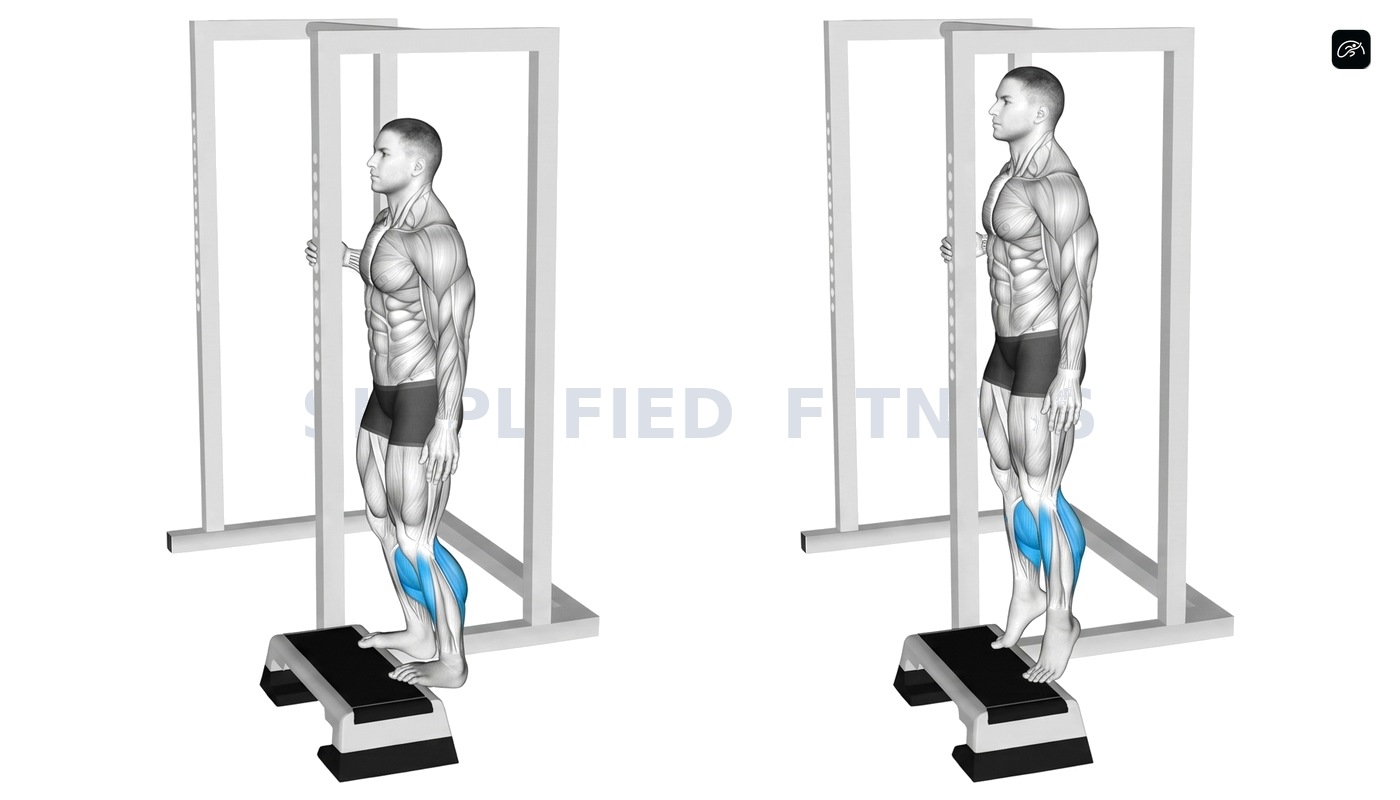
The anatomy is explained in straight-leg vs bent-knee calf raises.
Glutes and adductors: deep squats beat half squats
In a 10-week study, 17 men were randomised to full or half squats. Quadriceps growth was nearly identical (+4.9% vs +4.6%). But the deep squatters grew more gluteus maximus (+6.7% vs +2.2%) and adductors (+6.2% vs +2.7%) (Kubo et al., 2019). Both muscles are stretched hardest at the bottom of a deep squat.
The surprise: the rectus femoris and hamstrings did not grow in either group. Squats are not a complete thigh workout.
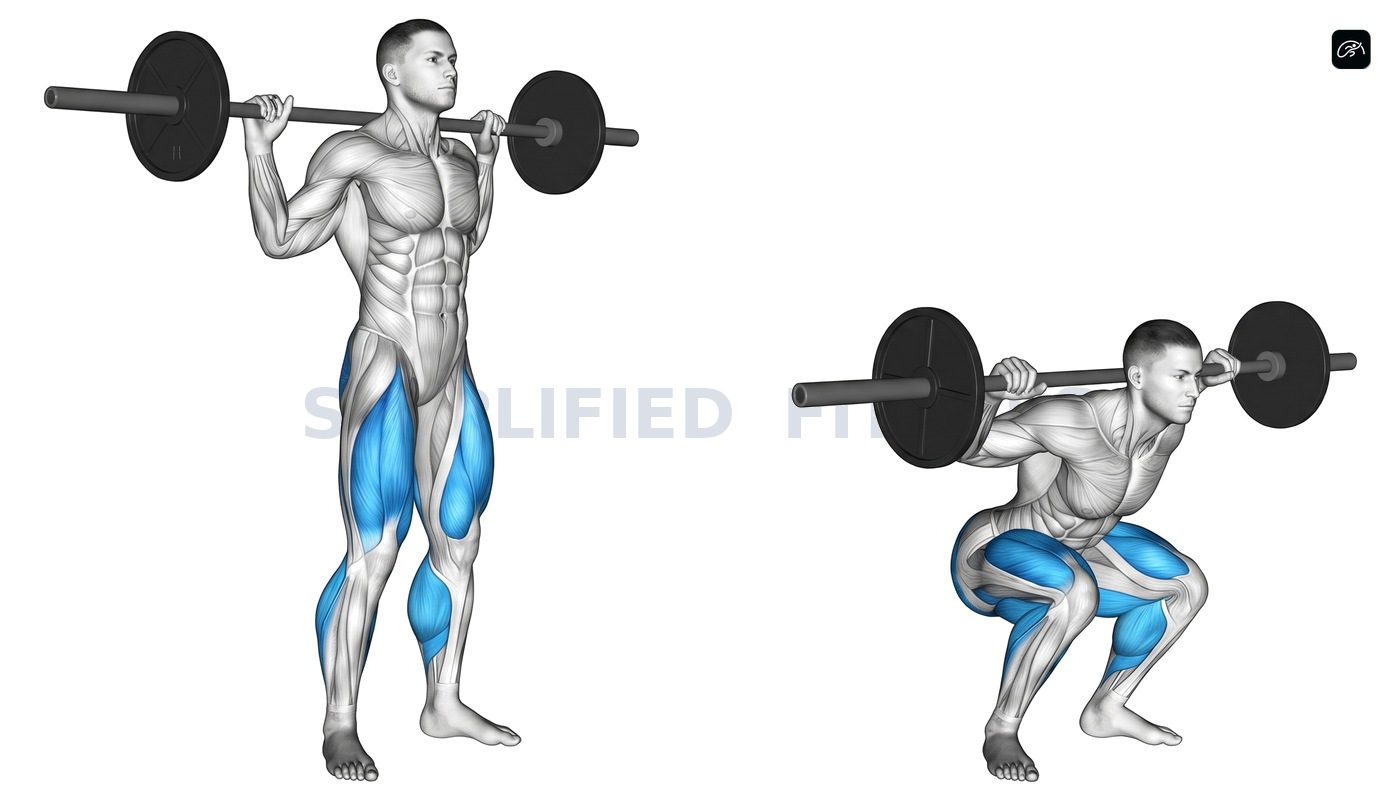
Depth decisions get their own breakdown in squat depth science and hip flexion depth and adductor magnus recruitment. If long femurs make deep squats awkward, see adapting range of motion to your anthropometry.
Full range of motion vs partials: what the reviews say
Before the long-length studies, the debate was simpler: full reps or partial reps? The early reviews favoured full range, and they were right about something important.
A 2020 systematic review found six studies (135 people, mostly men). For the lower body, full range came out ahead of partial range for hypertrophy; for the upper body the data were limited and conflicting (Schoenfeld and Grgic, 2020).
A 2021 meta-analysis of 16 studies went further. Full range produced greater gains in strength (ES = 0.56) and lower-limb hypertrophy (ES = 0.88) than partial range (Pallarés et al., 2021).
Then a 2023 systematic review asked the sharper question: which partial? It split partial reps by where in the range they happened. Full reps and partials in the initial (stretched) part of the range beat partials in the final (shortened) part for the rectus femoris, vastus lateralis, biceps and brachialis at distal sites. Full range beat top-end partials for glutes and adductors. Stretched-position partials even produced more proximal rectus femoris growth than full range (Kassiano et al., 2023).
Why these reviews seem to disagree
They mostly do not. Many older partial-range studies had people train the top half of the movement, the easier, shortened part. Pooling those against full reps makes “partials” look bad. Once you separate top-half from bottom-half partials, the stretched portion appears to be what full reps were getting right. That is our reading of the reviews, not something either one tested directly, but it fits the data well.
Here is a clean example. In 42 young women doing calf raises on a leg press for 8 weeks, medial gastrocnemius thickness rose 15.2% with bottom-half partials, 6.7% with full reps and 3.4% with top-half partials (Kassiano et al., 2023).
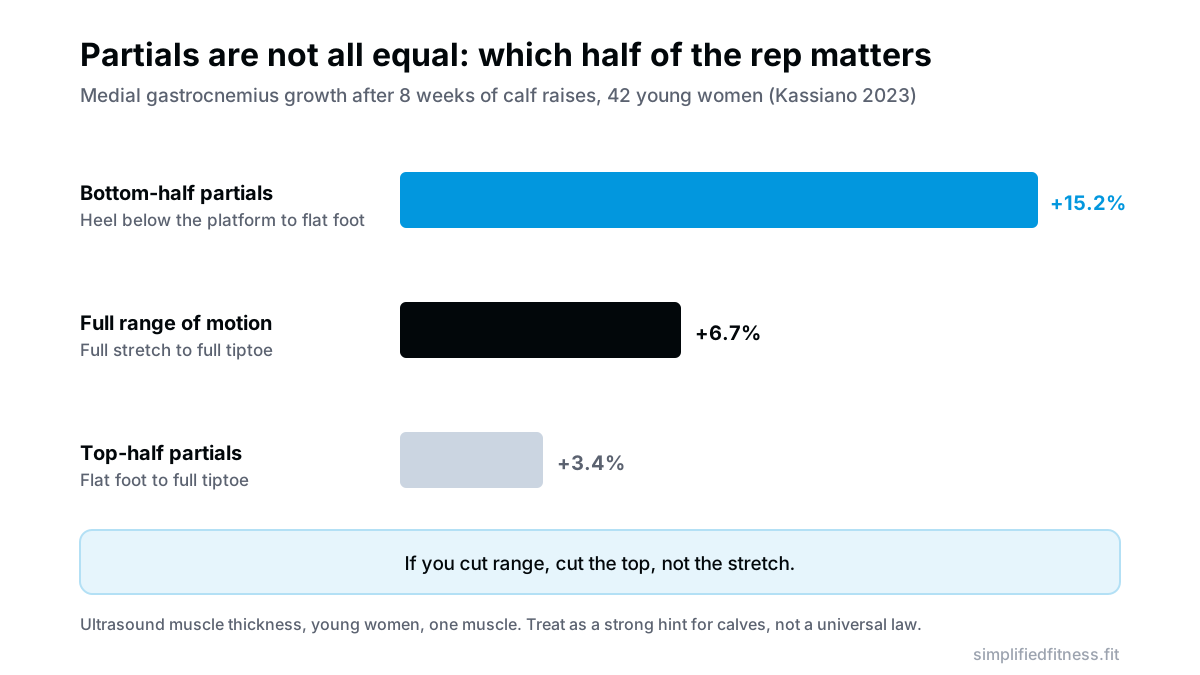
The same pattern showed up on the leg extension. In 45 untrained women, partials in the first part of the knee extension (100° to 65° of knee bend, the stretched end) gave greater quadriceps growth at several sites along the thigh than full or final-range reps. The top-end group’s growth at two of the four measured sites was similar to the non-training controls (Pedrosa et al., 2022).
The full vs partial debate gets its own deep dive in full vs partial range of motion for hypertrophy.
Lengthened partials: better, or just equal?
So if the stretch matters most, should you drop full reps and only train the bottom half? Here is where newer trials in trained lifters push back on the hype.
Trained lifters, upper body. Thirty resistance-trained participants trained one arm with lengthened partials and the other with full reps for 8 weeks (4 exercises, 4 sets each, twice a week). Elbow flexor and extensor thickness changed similarly, and the statistics gave moderate support for no difference (Wolf et al., 2025). The authors’ conclusion: emphasise the stretch, either with full range or with lengthened partials.
Large multi-site trial. A pre-registered trial randomised 297 people across 15 training sites to lengthened partials (n = 163) or full reps (n = 134) for 12 weeks. Arm and thigh muscle growth was small in both groups, and the authors judged the difference between conditions small and practically equivalent, although their strict pre-registered equivalence tests did not quite clear the bar (Gschneidner et al., 2025).
Trained lifters, biceps. In 13 trained people doing preacher curls, stretched-half partials gave similar growth at mid-arm and only a trivial to small advantage near the elbow, while full reps were slightly better for some strength measures (Havers et al., 2025).
Put these next to the calf and leg extension studies and an honest picture forms. In two studies of young women (one explicitly untrained), bottom-half partials beat full reps. In trained lifters and in the largest trial, they matched full reps. Possible reasons include training status, the muscle studied, how long the stretch was held, and the fact that full reps already include the stretched portion. Nobody knows for sure yet.
| Approach | What the evidence shows | When to use it |
|---|---|---|
| Full range of motion | Beats top-half partials; matches lengthened partials in trained lifters | Default for almost every exercise |
| Lengthened (bottom-half) partials | Equal to full reps in trained lifters; better in two studies of young women (calves, leg extension) | Final sets on machines and cables, or to work around a painful lockout |
| Shortened (top-half) partials | Consistently the weakest option for growth | Rarely; maybe specific strength work near lockout |
| Long-length exercise versions | Clearly better for hamstrings, triceps, gastrocnemius, glutes and adductors in MRI studies | Swap them in for their short-length cousins |
Regional hypertrophy: can you grow the “lower” part of a muscle?
This is one of the most oversold claims in the area. The pitch: train a muscle long and it grows near the tendon, giving you “fuller” lower biceps or a teardrop quad.
There is some basis for it. Several single studies above found the biggest differences at distal sites, and a muscle can grow unevenly along its length.
But when a 2025 meta-analysis pooled 12 studies that measured growth at different points along a muscle, the differences between longer and shorter muscle length training were trivial at proximal, middle and distal sites. There was a trend for long-length training to do slightly better moving towards the distal end, but most of the results sat within a range of practical equivalence (Varovic et al., 2025). The authors also flagged that the “long” and “short” conditions in these studies differed by only about 22% in average muscle length, so bigger contrasts might show bigger effects.
The fair summary: regional targeting is real enough to notice in some studies, small enough to ignore when building a program. Pick exercises for whole-muscle growth first. The details are in regional hypertrophy and non-uniform muscle growth.
Does long-length training build sarcomeres in series?
Probably the most repeated claim in this topic, and the least proven in humans.
The idea: loading a muscle at long lengths adds sarcomeres end to end (in series), making fascicles longer, which could add size and change where the muscle produces force best.
A 2025 systematic review found eight human studies (120 people total) that measured both muscle size and fascicle length. Both may increase more after long-length training. But the evidence was mixed, no study measured sarcomere number directly, and all but one estimated fascicle length with a linear extrapolation method of questionable validity (Wolf et al., 2026). The reviewers concluded that the structural adaptations behind long-length growth remain undetermined.
So when someone says “lengthened partials make your muscles longer”, the honest response is: maybe, and nobody has measured it properly in people yet.
How to apply this to your training
You do not need a new program. You need a few smart exercise swaps and a rule about range of motion. Where the evidence is clear, swap in the long-length version. Where it is thin, use a sensible default and move on.
| Muscle | Long-length choice | Short-length version it beat or replaces | Evidence strength |
|---|---|---|---|
| Hamstrings | Seated leg curl, Romanian deadlift | Lying leg curl | Good (MRI, within-person) |
| Triceps | Overhead cable or dumbbell extension | Pushdown with arm at side | Good (MRI, within-person) |
| Calves | Standing or leg-press calf raise, deep stretch at bottom | Seated calf raise (for gastrocnemius) | Good (MRI, untrained) |
| Glutes and adductors | Deep squat, deep leg press | Half squat | Moderate (one MRI trial) |
| Quads | Leg extension with a deep start; squats for vasti | Top-range leg extensions | Moderate (mostly untrained women) |
| Biceps | Curls that load the stretch (incline, preacher, Bayesian cable) | No clear loser | Limited and mixed |
| Lats | Full range pulldowns and rows with a stretch at the top | No direct growth data | Very limited |
| Chest | Presses and flyes through a full stretch | No clear loser | Limited |
A few practical rules make this work.
1. Control the bottom. The stretched position is where most people rush. Lower under control and do not bounce out of the hole. A brief pause is fine.
2. Expect lighter weights. Long-length versions often feel weaker. The overhead triceps arm used 34-39% less weight and still grew more. Track your reps and effort, not your ego.
3. Still train hard. Muscle length does not replace effort. Sets need to be taken reasonably close to failure; our breakdown of training to failure vs reps in reserve explains how close.
4. Swap, do not stack. Most of these studies used 3-5 sets per exercise two or three times a week. Replace a short-length exercise with the long-length version rather than adding extra sets. If you want to check your weekly totals, our training volume calculator does the counting.
5. Use the equipment you have. Many budget gyms in India have no seated leg curl or calf machine. Romanian deadlifts with dumbbells, overhead dumbbell extensions and standing calf raises on a step with a dumbbell all load the same muscles long. No fancy machine required. The bigger picture on choosing between machines, cables and free weights is in our exercise selection and biomechanics guide and free weights vs cables vs machines.
Two-joint muscles: the quiet secret
Most of the clear wins above involve muscles that cross two joints: hamstrings, triceps long head, gastrocnemius, rectus femoris. Their length depends on both joints, so you can stretch them through one joint while training them at the other. When both joints shorten the muscle at once, it can also run out of room to produce force. That concept, and how to use it, is covered in active vs passive insufficiency in two-joint muscles. Quads that never get hit with the hip extended, for example, may need leg extensions or sissy squats and reverse Nordics for full development.
Is the shortened position useless?
No. “Train the stretch” does not mean the top of the rep does nothing. Full reps include the top, and full reps reliably build muscle. Top-half partials are the weakest option in the range-of-motion studies, but they still produced some growth in several of them. Shortened-position exercises can also be useful for strength at those specific angles, since partial-range strength gains tend to be specific to the range you train (Pedrosa et al., 2022).
If you love a peak-contraction exercise, keep it. Just make sure each muscle also gets loaded hard in its stretched position somewhere in your week. We weigh the arguments in is shortened overload or peak contraction useful?
Who should be careful with deep stretches
Loaded stretches are not risk-free for everyone. Back off and get checked by a doctor or physiotherapist if you:
- feel sharp or pinching pain (not just muscle effort) at the bottom of a lift
- have a recent muscle strain, especially hamstrings or calves
- have a joint replacement, a history of shoulder dislocation, or a surgeon’s range-of-motion limits
- notice pain, numbness or tingling that travels down an arm or leg
For everyone else, the usual rules apply. Build into new deep positions over a few weeks, start lighter than you think, and expect more soreness when you first switch to a long-length exercise.
The bottom line
Stretch-mediated hypertrophy, in its practical form, holds up well. Loading a muscle in its stretched position grew more muscle than shortened alternatives in several MRI studies, especially for the hamstrings, triceps, gastrocnemius, glutes and adductors. Top-half partials are the clear loser.
The hype outruns the data in three places. Lengthened partials match full reps in trained lifters rather than beating them. Regional targeting effects are small. And sarcomeres in series have not been measured directly in people.
So keep it simple. Train with full range of motion, own the bottom of every rep, pick the long-length version of key exercises, and keep working hard with progressive overload. If you want a ready-made program that does this, start with our free workout plans.
Go deeper: every guide in this topic
- Active vs Passive Insufficiency: How Two-Joint Muscles Change Your Exercise Choice
- Squat Mobility With Long Femurs: Adapting Range of Motion to Your Hips
- Dumbbell Pullovers vs Cable Lat Pull-ins: Training Lats at Long Muscle Lengths
- Full vs Partial Range of Motion: What the Hypertrophy Research Shows
- Why Your Inner Thighs Burn After Deep Squats: Adductor Magnus vs Glute Max
- Incline Dumbbell Curls vs Preacher Curls: Lengthened Stretch vs Shortened Resistance
- Incline vs Flat Bench for Upper Chest: Which Angle Actually Works?
- Intra-Set Passive Stretching: Does Stretching Between Sets Increase Muscle Growth?
- Is Shortened Overload Useless? What Peak Contraction Training Still Does
- The Sliding Filament Theory and Length-Tension Curve: Cross-Bridge Overlap Physics
- Lengthened Partials Explained: How to Do Them, What the Research Says
- Long Muscle Length Training: Why Stretched Positions Build More Muscle
- Overhead Cable Triceps Extensions vs Cable Pushdowns: Which Builds More Triceps?
- Overhead vs Neutral Arm Triceps Training: Why the Long Head Grows More
- Preacher Curls vs Bayesian Cable Curls: Which Loads the Biceps Better?
- Regional Hypertrophy: Can You Grow Proximal, Middle or Distal Muscle Regions?
- Seated vs Lying Leg Curl: Why Hip Flexion Builds More Hamstring
- Squat Depth Science: Parallel vs Below Parallel for Quad and Glute Growth
- Straight-Leg vs Bent-Knee Calf Raises: Gastrocnemius vs Soleus Length-Tension
- Stretch-Mediated Hypertrophy: Longitudinal Sarcomerogenesis vs Parallel Addition
Frequently Asked Questions
What is stretch mediated hypertrophy?
Stretch mediated hypertrophy is the idea that muscles grow more when they are loaded at long lengths, where they are both contracting and being stretched. Animal research shows passive stretch alone can trigger growth, and human MRI studies show bigger gains from long-length versions of exercises like the seated leg curl and overhead triceps extension. In practice, it means choosing exercises and ranges that load the muscle hard in its stretched position.
Is full range of motion better than partial reps for muscle growth?
Full range of motion is better than partials done in the shortened, top part of a lift, but not clearly better than partials done in the stretched part. A 2023 systematic review found full range and bottom-range partials both beat top-range partials for several muscles. Use full reps as your default and never shorten the stretch.
What are lengthened partials?
Lengthened partials are reps that only cover the stretched half of an exercise, such as the bottom half of a calf raise or the first half of a preacher curl. Trials in trained lifters found they build about as much muscle as full reps when everything else is matched. They are a useful option, not a requirement.
Are lengthened partials better than full reps?
Current evidence says they are about equal, not better. An 8-week trial in 30 trained lifters and a 12-week trial with 297 participants across 15 sites both found practically equivalent muscle growth between lengthened partials and full reps. Pick whichever you can push hard and progress consistently.
Should I do lengthened partials after failure?
You can, but the evidence for adding partials after failure is limited and mixed. Most of the research on stretched-position training compared full sets of partials against full sets of full reps, not tacked-on partials. If you try it, use it on the last set of safe machine or cable exercises rather than heavy barbell lifts.
Does training at long muscle lengths cause more growth?
Often yes, though not in every muscle or every study. Within-person MRI studies found greater growth from seated than lying leg curls, overhead than neutral triceps extensions and standing than seated calf raises. The gap is clearest when one option barely stretches the muscle at all.
Is the seated leg curl better than the lying leg curl?
For hamstring size, the best current evidence favours the seated leg curl. In a 12-week MRI study, whole-hamstring volume rose 14% with seated curls versus 9% with lying curls, because sitting with the hip bent stretches the hamstrings more. Make seated curls your main hamstring isolation exercise if your gym has one.
Are overhead triceps extensions better than pushdowns?
For overall triceps growth, overhead extensions came out ahead in the best study on this question. A 12-week MRI trial found whole-triceps volume grew 19.9% overhead versus 13.9% with the arm at the side, even though the overhead arm lifted lighter loads. Keep pushdowns if you enjoy them, but include an overhead extension each week.
Are standing calf raises better than seated calf raises?
For the gastrocnemius, yes, standing calf raises built far more muscle in a 12-week MRI study of untrained adults. Lateral gastrocnemius volume rose 12.4% standing versus 1.7% seated, while soleus growth was similar between the two. Make straight-knee calf raises your main calf exercise and add seated work for the soleus if you want.
Do deep squats build more muscle than half squats?
Deep squats built more glute and adductor muscle than half squats in a 10-week MRI study, while quadriceps growth was similar. Gluteus maximus volume rose 6.7% with full squats versus 2.2% with half squats. Squat as deep as you can with good control, and do not cut depth just to load more weight.
Do squats grow the rectus femoris?
Squats seem to do little for the rectus femoris. In the full versus half squat study, rectus femoris and hamstring volume did not change in either group; one proposed explanation is that squatting lengthens these two-joint muscles at one joint while shortening them at the other, so their overall length changes little. Add leg extensions or another knee-dominant movement with the hip extended for this part of the quads.
Can stretching alone build muscle?
Stretching alone may build a little muscle in some situations, but the clearest effects come from animal studies with continuous stretch. In mice, a passively stretched muscle grew 48% in mass within 6 days, a dose of stretch no lifter would ever use. For lifters, loading the stretched position with weights is a far more practical and better-tested route.
What is the length-tension relationship?
The length-tension relationship describes how much force a muscle can produce at different lengths. Active force peaks near mid length, while passive tension from stretched structures such as titin rises as the muscle lengthens. Exercises that load the long end of this curve expose the muscle to high total tension, which is one proposed reason they grow muscle well.
What role does titin play in muscle growth?
Titin is a giant elastic protein inside each sarcomere that resists stretch and appears to act as a mechanical sensor. In mice, muscle growth after passive stretch scaled with titin stiffness, being smaller when titin was more compliant and larger when it was stiffer. This is promising mechanism work, but it has not been directly tested in human lifters.
Does long muscle length training add sarcomeres in series?
It might, but the human evidence is not strong enough to say it does. A 2025 systematic review found fascicle length may increase more after long-length training, yet no study had measured sarcomere number directly and most used fascicle length estimates of questionable validity. Treat sarcomerogenesis claims on social media as a hypothesis.
Can you target the lower or upper part of a muscle?
Only to a small degree, and less than many influencers suggest. A 2025 meta-analysis of 12 studies found trivial differences in regional growth between longer and shorter muscle length training at proximal, middle and distal sites. Choose exercises for whole-muscle growth first and treat regional targeting as fine-tuning.
Do biceps grow more from incline curls or preacher curls?
The evidence is mixed and the differences are small. A 2025 trial in trained lifters found stretched-half preacher curls gave only a trivial to small advantage at the lower biceps compared with full reps, and growth at mid arm was similar. Include a curl that loads the stretched position, but do not expect it to transform your arms.
Is there evidence for long muscle length training for lats?
There is little direct muscle growth data for lats specifically. A trial in trained lifters found lengthened partials and full reps gave similar improvements on a pulldown strength test, but it measured arm muscle thickness, not lat size. Use full range pulldowns and rows with a deliberate stretch at the top until better data arrives.
Why do I lift less weight on long-length exercises?
Many long-length exercise versions put the muscle in a weaker position, so the weight on the stack drops. In the overhead triceps study, absolute loads were 34-39% lower than in the neutral position, yet the overhead arm still grew more. Judge these exercises by effort and progression, not by the number on the stack.
Do partial reps build strength?
Partial reps build strength mostly in the range you train. In a knee extension study in untrained women, each partial group gained most strength at the angles it trained, while a group alternating ranges improved across all angles tested. If you compete or test a full-range lift, keep training that lift through its full range.
Is full range of motion safe for my joints?
For most healthy lifters, full range of motion under control is generally well tolerated when load is progressed gradually. The trials in this guide trained people through full and deep ranges, though they were not designed to study injuries. If you have a current injury, joint replacement or sharp pain at end range, see a doctor or physiotherapist before pushing into deep positions.
Should beginners worry about lengthened partials?
No, beginners should master full range technique first. Full reps are easier to standardise, teach control at both ends of the lift and still emphasise the stretched position. Once you can perform an exercise consistently, you can experiment with lengthened partials on a few machines or cables.
How many sets should I do at long muscle lengths?
There is no special set count for long-length work; it fits inside your normal weekly volume. Most muscle-length studies used around 3-5 sets per exercise, two or three times a week. Swap a short-length exercise for a long-length version rather than piling extra sets on top.
Sources & References
Every claim above is checked against peer-reviewed research (PubMed, U.S. National Library of Medicine) or guidance from established health bodies. How we fact-check.
- Schoenfeld BJ, Grgic J. Effects of range of motion on muscle development during resistance training interventions: A systematic review. SAGE Open Med. 2020. PMID: 32030125
- Pallarés JG, et al. Effects of range of motion on resistance training adaptations: A systematic review and meta-analysis. Scand J Med Sci Sports. 2021. PMID: 34170576
- Kassiano W, et al. Which ROMs Lead to Rome? A Systematic Review of the Effects of Range of Motion on Muscle Hypertrophy. J Strength Cond Res. 2023. PMID: 36662126
- Maeo S, et al. Greater Hamstrings Muscle Hypertrophy but Similar Damage Protection after Training at Long versus Short Muscle Lengths. Med Sci Sports Exerc. 2021. PMID: 33009197
- Maeo S, et al. Triceps brachii hypertrophy is substantially greater after elbow extension training performed in the overhead versus neutral arm position. Eur J Sport Sci. 2023. PMID: 35819335
- Kinoshita M, et al. Triceps surae muscle hypertrophy is greater after standing versus seated calf-raise training. Front Physiol. 2023. PMID: 38156065
- Kubo K, et al. Effects of squat training with different depths on lower limb muscle volumes. Eur J Appl Physiol. 2019. PMID: 31230110
- Kassiano W, et al. Greater Gastrocnemius Muscle Hypertrophy After Partial Range of Motion Training Performed at Long Muscle Lengths. J Strength Cond Res. 2023. PMID: 37015016
- Pedrosa GF, et al. Partial range of motion training elicits favorable improvements in muscular adaptations when carried out at long muscle lengths. Eur J Sport Sci. 2022. PMID: 33977835
- Wolf M, et al. Lengthened partial repetitions elicit similar muscular adaptations as full range of motion repetitions during resistance training in trained individuals. PeerJ. 2025. PMID: 39959841
- Gschneidner D, et al. The effects of lengthened-partial range of motion resistance training of the limbs on arm and thigh muscle area: A multi-site randomised trial. J Sports Sci. 2025. PMID: 41055237
- Havers T, et al. Partial Range, Full Gains? The Effect of 8 Weeks of Partial Range of Motion Training at Long Muscle Lengths on Elbow Flexor Hypertrophy and Strength in Trained Individuals. Eur J Sport Sci. 2025. PMID: 41247250
- Varovic D, et al. Does Muscle Length Influence Regional Hypertrophy? A Systematic Review and Meta-Analysis. Int J Sports Med. 2025. PMID: 40570881
- Wolf M, et al. Does longer-muscle length resistance training cause greater longitudinal growth in humans? A systematic review. Sports Med Health Sci. 2026. PMID: 41646176
- van der Pijl R, et al. Titin-based mechanosensing modulates muscle hypertrophy. J Cachexia Sarcopenia Muscle. 2018. PMID: 29978560

Umair Hazrami · Founder & Head Coach, Simplified Fitness
Umair Hazrami founded Simplified Fitness and the Simplified Lifter channel to cut through fitness noise. With 4+ years of consistent training and 10+ coaching clients, he writes every guide from the peer-reviewed research and links the sources so you can check them. Our editorial standards.
Educational content only, not medical advice. If you have a medical condition, are pregnant, or take medication, talk to a qualified doctor before changing your diet, supplements or training. Full disclaimer.
Keep reading
Hypertrophy
Active vs Passive Insufficiency: How Two-Joint Muscles Change Your Exercise Choice
Active vs passive insufficiency explained for lifters: why hamstrings, triceps, quads and calves grow differently depending on your second joint position.
10 min read
Hypertrophy
Squat Mobility With Long Femurs: Adapting Range of Motion to Your Hips
Squat mobility with long femurs is mostly a lever and hip-socket issue, not a flaw. Learn how to adjust depth, stance and heels without risking your hips.
10 min read

Hypertrophy
Anabolic Resistance in Older Adults: Why Muscle Responds Less and How to Beat It
Anabolic resistance in older adults explained: why muscle responds less to protein and lifting after 50, plus the protein dose, leucine and sets that help.
8 min read

Hypertrophy
How Blood Flow Restriction Builds Muscle: Venous Occlusion, Metabolites and Cell Swelling
BFR training hypertrophy mechanisms explained: how a cuff and 20% 1RM can match heavy lifting for size. Metabolites, swelling, mTOR, myostatin and cuff safety.
8 min read