Complete Shoulder, Delt & Neck Training Guide: 3D Deltoid Anatomy, Rotator Cuff & Traps
Shoulder workout science in plain English: how to train front, side and rear delts, protect your rotator cuff and build traps and neck, with every study linked.
TL;DR. The short answer
- Your front delts already get plenty of work from chest and overhead pressing, so most lifters gain more by spending shoulder sets on the side and rear delts.
- Dumbbell and cable lateral raises produced similar side delt growth (3.3-4.6% thicker in 8 weeks) in resistance-trained lifters when range of motion was matched, so choose the one you can take close to failure.
- Rear delts respond to horizontal abduction (reverse pec deck, rear delt flies) and rows. Face pulls are a useful extra, not a requirement.
- For a cranky shoulder, exercise therapy is the best-supported first-line option, though the best exercise type and dose are unknown, some trials are low certainty, and you should see a clinician if pain is sharp, worsening or follows an injury.
- Start with roughly 8-14 weekly sets for the side delts, 6-10 for the rear delts and little or no direct front delt work, then adjust to your recovery.
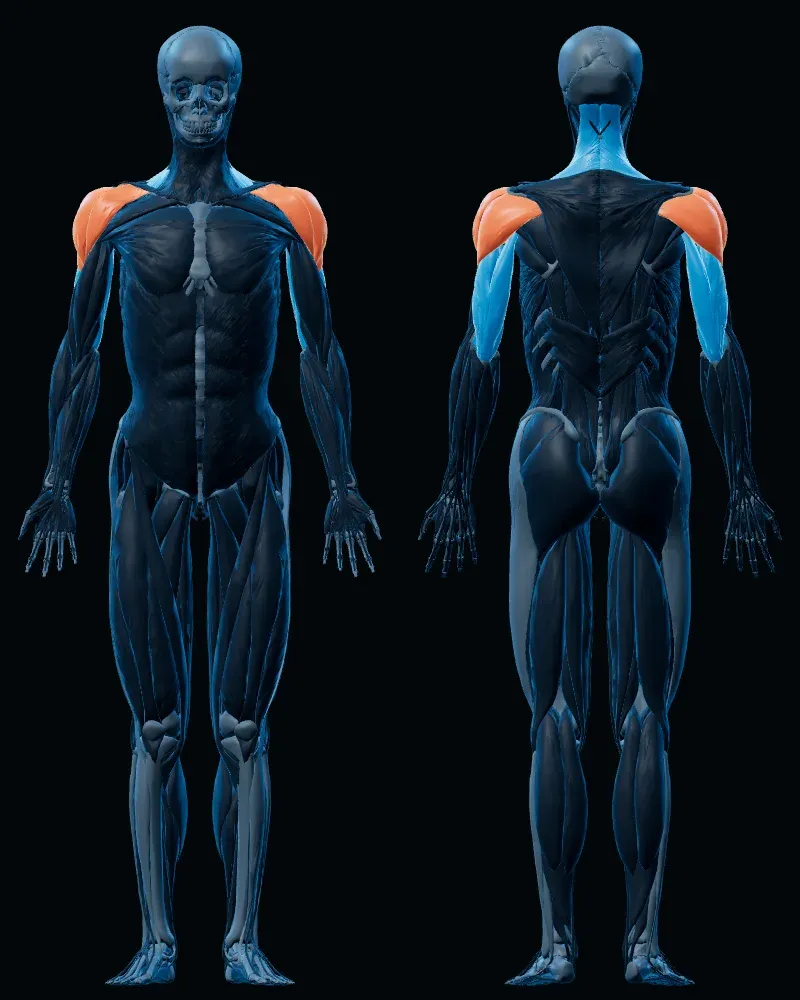
Muscles worked: shoulders
Main movers: all three heads of the deltoid
Assisting: supraspinatus, upper traps and triceps
Table of contents
Good shoulder workout science comes down to one idea: the deltoid is three muscles sharing one name, and each head needs different work. Your front delts get hit by every press you do. Your side and rear delts usually do not, which is why they are the usual weak link behind a “narrow” look.
This guide covers how to split your shoulder training across the heads, how to choose between lateral raise variations, how to look after the rotator cuff, and how traps and neck fit in. It also sits alongside our guides to chest training and back training, because shoulder work only makes sense once you count what those days already give you.
Short on time? The tl;dr above is the whole plan. Read on for the reasoning and the studies.
How is the deltoid built, and why does it matter for training?
The deltoid wraps over the top of your shoulder joint with three parts. The anterior (front) head sits on the collarbone side and helps lift the arm forward and across the body. The lateral (side) head runs from the acromion and lifts the arm out to the side. The posterior (rear) head pulls the arm back and out, as in a reverse fly.
Fibre direction decides the job. A muscle can only produce the most torque in the direction its fibres pull, so a press does not train the side or rear head the way a lateral raise or reverse fly does. We cover the anatomy in more detail in our deltoid heads functional anatomy article.
Under the deltoid sits the rotator cuff: four small muscles (supraspinatus, infraspinatus, teres minor and subscapularis, often shortened to “SITS”) that centre the ball in the socket while the big muscles move the arm. They are not glamorous. They are the reason a heavy press does not feel like the joint is pinching.
Do the three delt heads really need different exercises?
Yes, and one electromyography (EMG) study makes the point nicely. Thirteen men experienced in strength training did one set of 12 reps at 60% of their one-rep max in the bench press, dumbbell fly, shoulder press and lateral raise, and the researchers recorded activation of each head as a percentage of maximal voluntary isometric contraction (MVIC) (Campos et al., 2020).
- Front delt: shoulder press highest (33.3% MVIC), with bench press (21.4%), lateral raise (21.2%) and dumbbell fly (18.8%) not significantly different from each other.
- Side delt: lateral raise (30.3%) and shoulder press (27.9%) were similar and both far higher than bench press (5%) and fly (3.4%).
- Rear delt: lateral raise highest (24%), shoulder press next (11.4%), bench press (3.5%) and fly (2.5%) lowest.
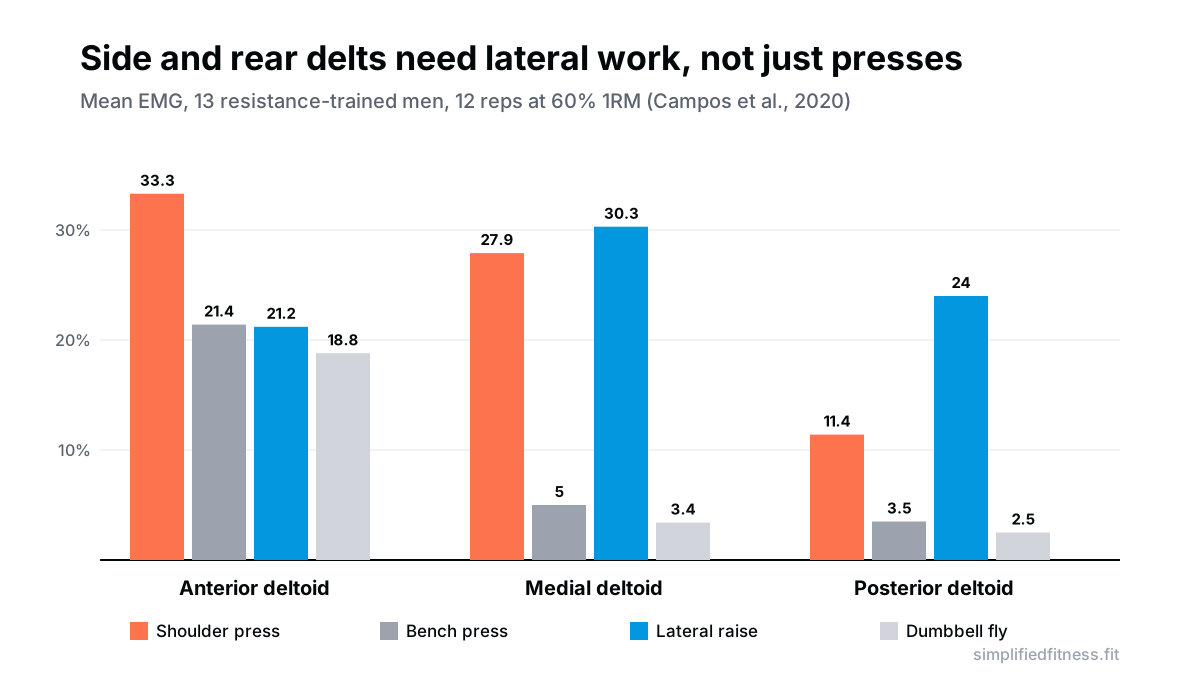
Two cautions. This was 13 men and one set per exercise, and surface EMG only tells you how active a muscle is during a lift. It does not prove how much it will grow. A 2024 systematic review of 33 EMG studies is consistent with the overall pattern: for the middle deltoid, abductions and horizontal abductions produced the greatest activation, and for the posterior deltoid, pull-ups and inverted rows ranked highest (Rabello et al., 2024). Still, activation is a clue, not a guarantee of growth.
Do front delts need their own exercise?
Usually not. A 10-week trial in healthy men trained the bench press at 50-55% of 1RM, three times a week, and measured muscle cross-sectional area with MRI. The training group grew more than controls in the pectoralis major, pectoralis minor, anterior deltoid and triceps, while the medial deltoid did not keep pace with the other muscles (Lanza et al., 2024). The sample was small (13 trainees, 11 controls) and the load was light, so treat it as supporting evidence, not a rule.
The practical reading is simple. If you press for chest and overhead several times a week, your front delts are already getting stimulus. Our article on why front raises are mostly unnecessary goes through the details.
What are the best lateral delt exercises?
Lateral raises are the obvious tool, plus any overhead press you can load hard. The side delt is also the head most responsible for the shoulder width people want, so it is worth some priority.
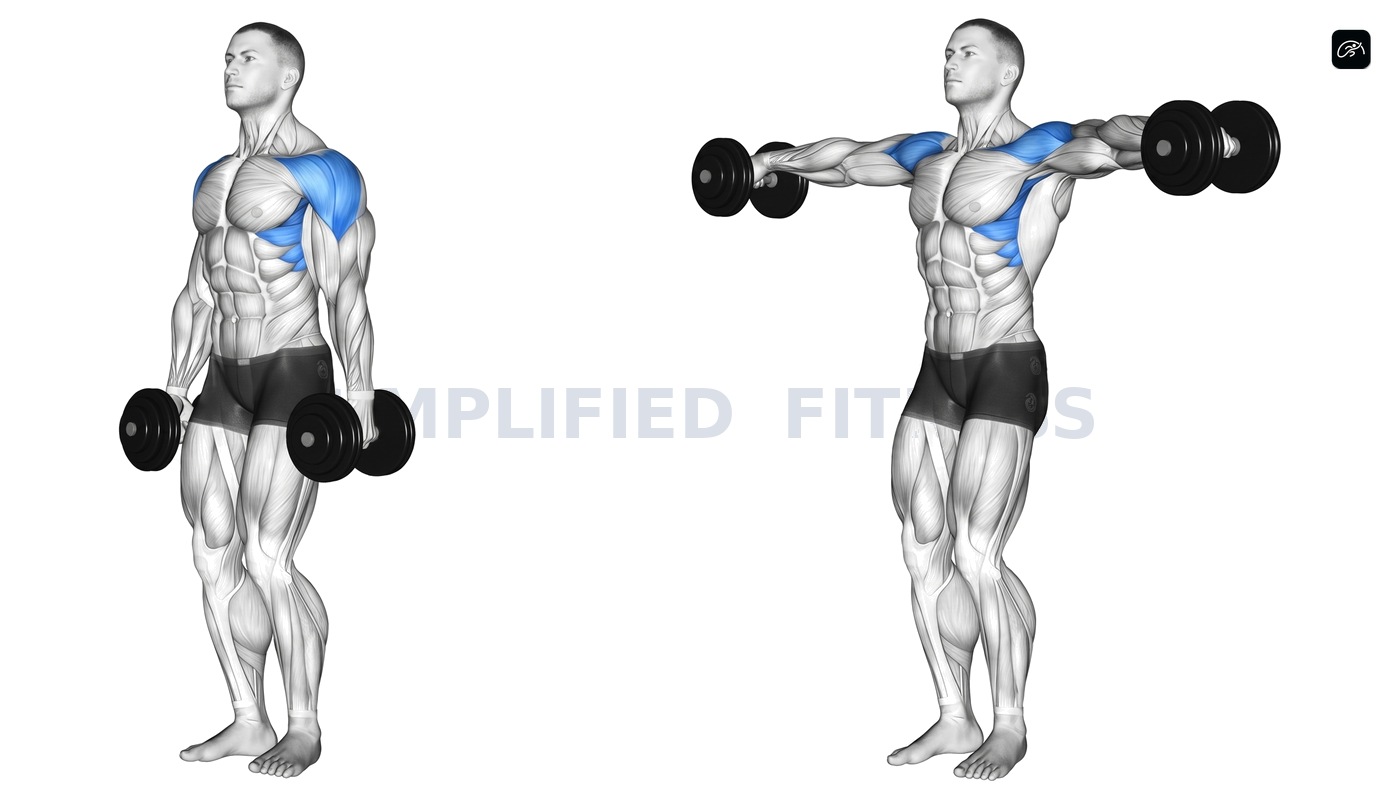
Dumbbell vs cable lateral raises: which grows the side delt more?
The mechanical argument is easy to make. With dumbbells, the load pulls straight down, so the torque is near zero at the bottom and highest when your arm is horizontal. A cable can be set to give tension from the start of the lift. That led plenty of lifters to assume cables must be superior.
Then someone tested it. A 2025 study had 24 resistance-trained men and women train their arms in a within-participant design: one arm did cable raises, the other dumbbell raises. They did five sets to momentary failure, twice a week, for eight weeks, with shoulder range of motion standardised between conditions. Lateral deltoid thickness (by ultrasound) rose 3.3-4.6%, and the Bayesian analysis supported no difference between the two conditions (Larsen et al., 2025).
So choose by feel. Dumbbells are cheap, available in every gym, and brutal at the top. Cables are smoother at the bottom and easier to progress in small steps. Our deeper dive on dumbbells versus cables and machines for lateral delts compares them, and the behind-the-back and cross-body cable variations are worth knowing if your gym is cable heavy.
Does the “pouring a pitcher” cue matter?
You will see lifters tilt the thumb down, “pouring water”, on the raise. An EMG review found the highest middle deltoid activation with lateral raises done with internal rotation (Rabello et al., 2024). Again, that is activation, not growth. Some shoulders feel worse in that position. If it pinches, drop it. We separate hype from data in our hand cue myth article, and cover other range options in Lu raises and overhead lateral raises and side-lying incline lateral raises.
Overhead press vs lateral raise: which should you do?
Both, in most programmes, and they do different jobs.
The press lets you move heavy weight and trains the front and side delts and triceps together. The lateral raise is limited by a small muscle and a long lever, so you will use much lighter loads, but the side delt is under direct tension. The Campos EMG data above shows the shoulder press and lateral raise reached similar side delt activation (27.9% and 30.3% of MVIC).
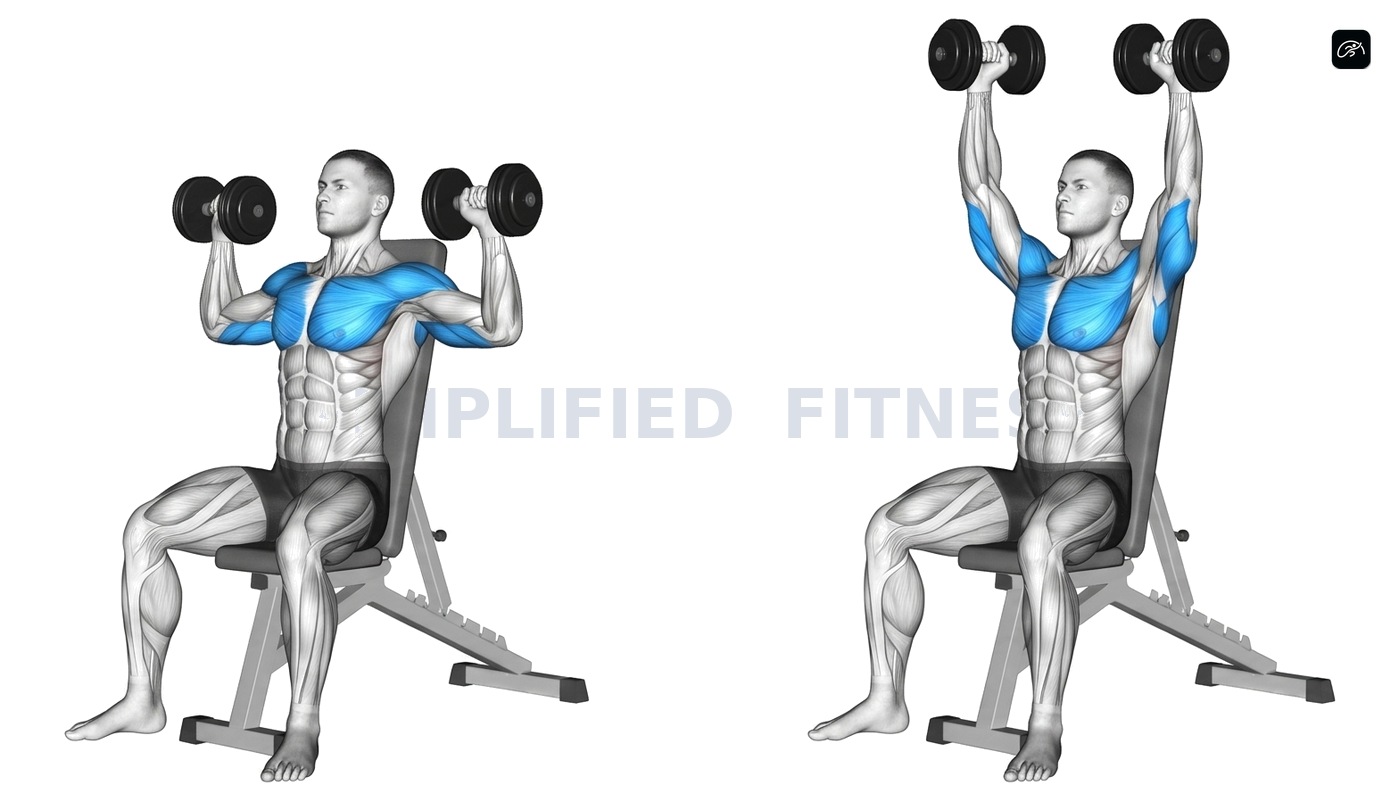
How you press matters for comfort. Seated or standing, dumbbell or machine, narrow or wide: those choices change joint angles and how stable you are. If your shoulder complains on a barbell press, try a neutral-grip dumbbell or a machine. Our guides on standing vs seated and dumbbell vs machine overhead pressing and converging shoulder press machines and the AC joint walk through the options, and our behind-the-neck press safety article explains why that variation is a poor fit for most lifters.
| Exercise | Best at | Weak at | Practical use |
|---|---|---|---|
| Overhead press (barbell, dumbbell, machine) | Heavy front and side delt loading, triceps | Rear delt | Main heavy shoulder lift, 2-3 times a week or fewer if you press a lot for chest |
| Lateral raise (dumbbell, cable, machine) | Direct side delt tension | Heavy overload | 2-3 times a week, close to failure, lighter loads |
| Reverse pec deck / rear delt fly | Rear delt isolation | Side delt | Add 6-10 weekly sets with rows |
| Rows / pull-ups | Rear delt and upper back together | Direct side delt work | Count them toward rear delt volume |
How do you train rear delts: face pulls, reverse flys or rows?
The rear delt is the head most lifters neglect, and many rear delt exercises are really upper back exercises. To target the deltoid itself, use horizontal abduction: arms swing out and back with the elbows roughly level with the shoulders.
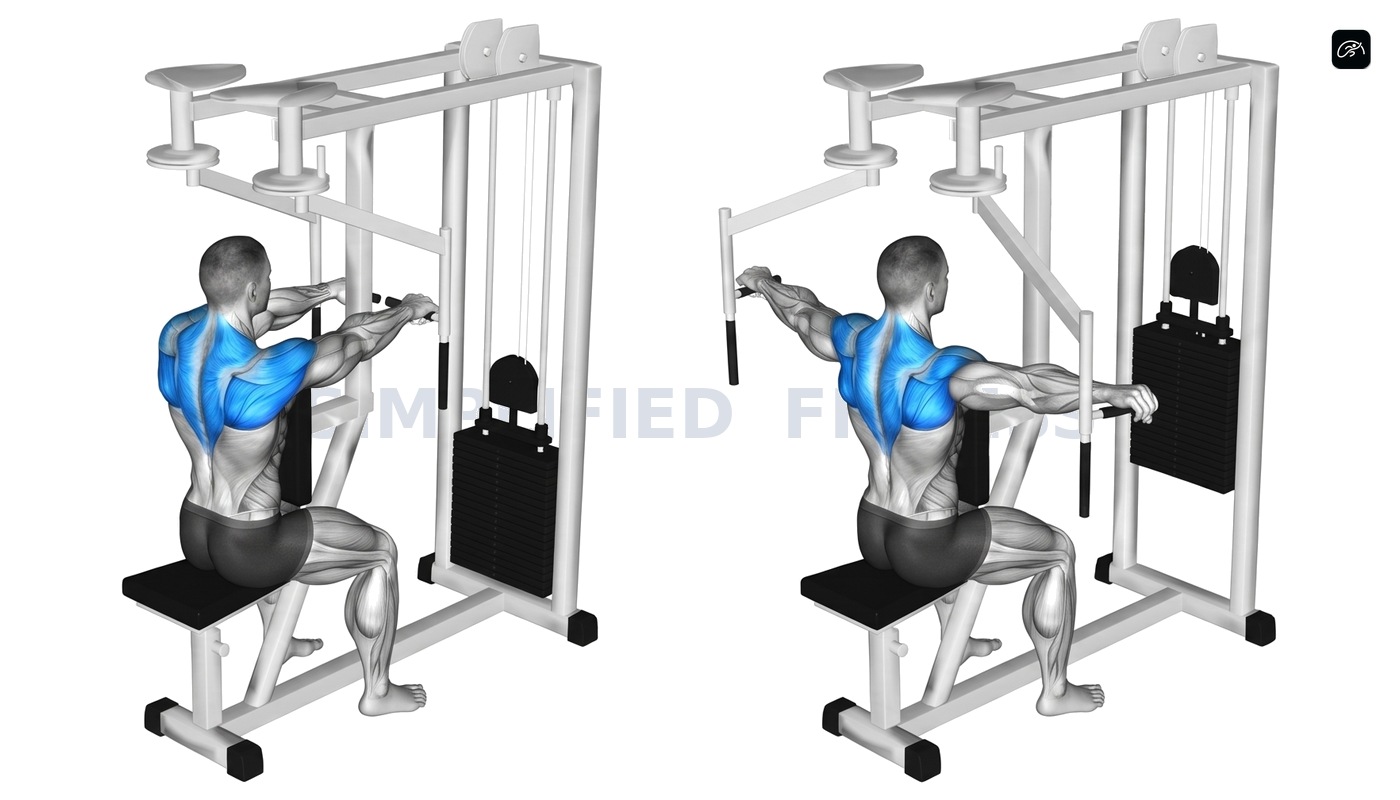
In the review above, pull-ups and inverted rows produced the greatest posterior deltoid activation across the studies, with horizontal abductions also ranking among the strongest exercises for the middle deltoid. Hand position may matter on machines: in 19 resistance-trained men on a reverse fly machine, a neutral grip produced significantly higher posterior deltoid and infraspinatus activity than a pronated grip, though the 95% confidence interval for the posterior deltoid difference ran from just 0.1% to 7.4% MVIC (Schoenfeld et al., 2013). Small difference, one session, short study, but it supports the idea that you can experiment with grip.
Our full comparison is in reverse pec deck vs cables and face pulls, and the face pull form and scapular retraction guide explains how to do them without turning them into a shrug.
How many sets and how often?
Volume has a dose-response. A meta-analysis of 15 studies (34 treatment groups) found a graded relationship: more weekly sets per muscle were associated with more hypertrophy, and each added set corresponded to about 0.37% extra gain in muscle size (Schoenfeld et al., 2017). It does not say more is always better, and it is not shoulder specific.
On frequency, a 2019 meta-analysis of 25 studies found no meaningful difference between higher and lower frequency when volume was equated, including for upper body training. For a given volume, people can choose a frequency that suits them (Schoenfeld et al., 2019). For deeper detail, read our training volume and frequency pillar.
Putting those together, here is an illustrative starting plan. It is a starting point, not a prescription backed by one trial:
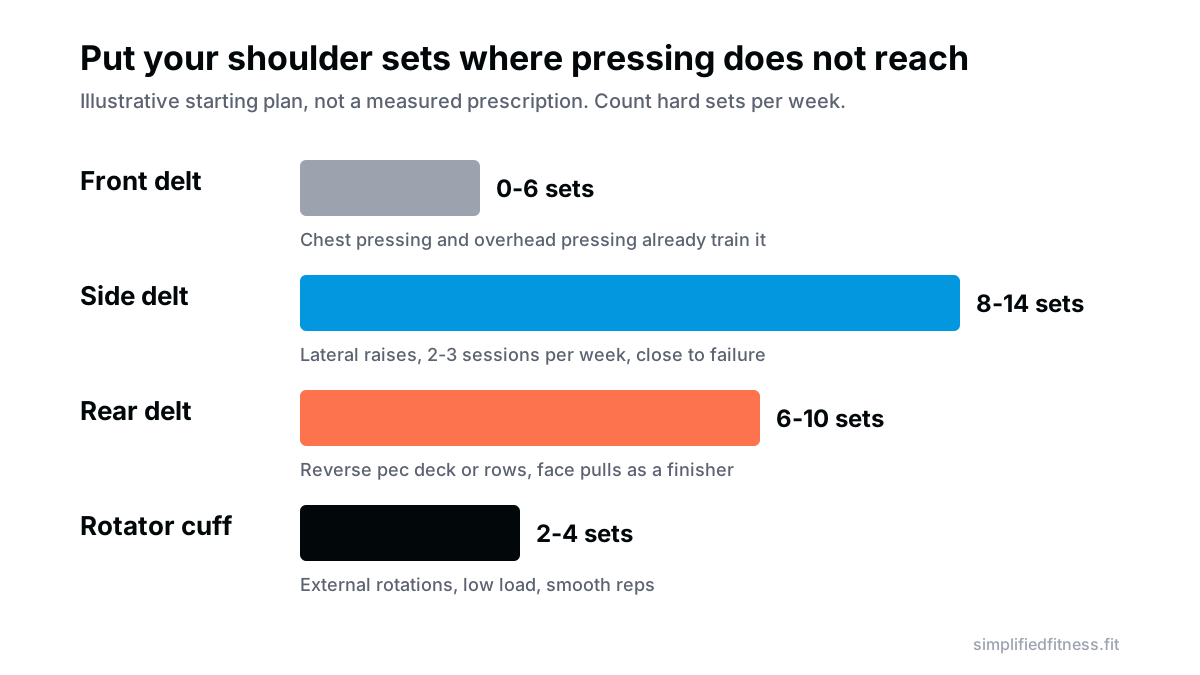
Our 3D shoulder protocol on volume, frequency and specialization shows how to build that plan, and the free training volume calculator helps you count what you already do.
Where do shoulders fit in a split?
On a push day, shoulders follow chest. On a push/pull/legs rotation your pressing volume is already high, so you can run lateral raises as a finisher and keep front delt volume near zero. Our push day plan shows one version, and the article on structuring shoulders and arms on a push day or split looks at alternatives. For related arm work, see the arm and forearm guide.
Is overhead pressing or training shoulders bad for impingement?
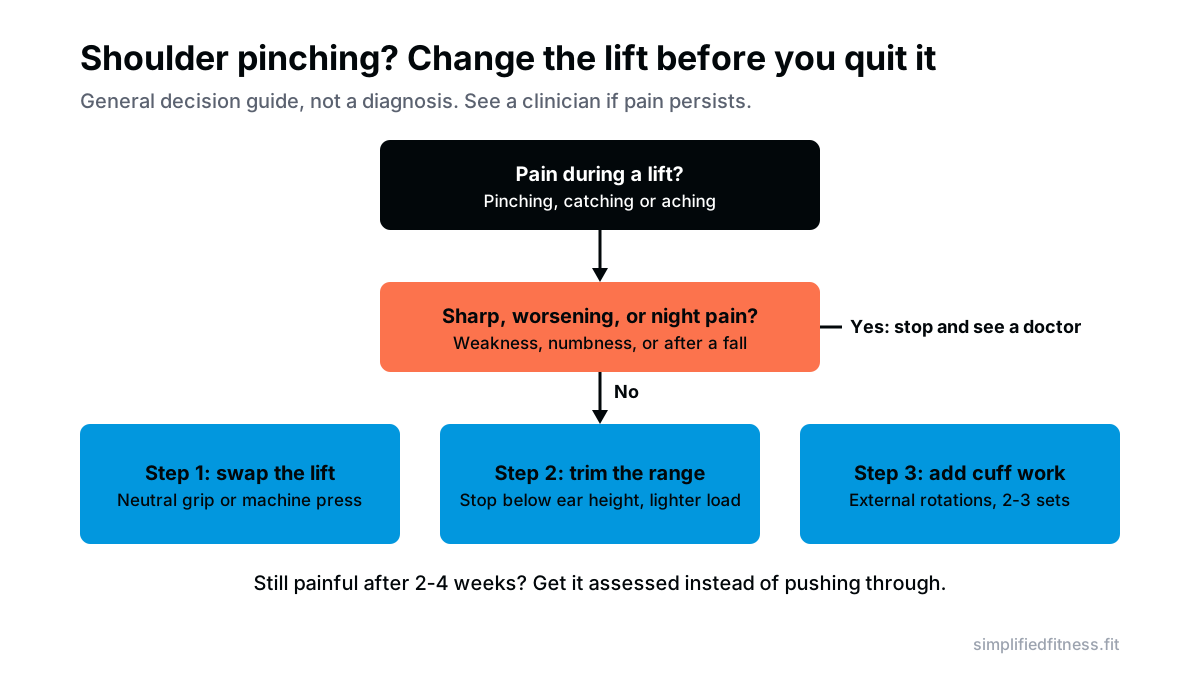
“Impingement” gets used loosely. Often it means shoulder pain on lifting the arm, sometimes called subacromial or rotator cuff related shoulder pain. We cannot diagnose it, and no article can. What the research can tell us is how people with shoulder pain tend to do with exercise.
An umbrella review of 16 systematic reviews gave a strong recommendation for exercise therapy as first-line treatment for pain, mobility and function in subacromial shoulder pain, with moderate evidence of no effect for laser, shockwave, pulsed electromagnetic energy and ultrasound (Pieters et al., 2020).
Not all evidence is that positive. A meta-analysis of seven randomised trials (468 participants) included four trials (271 participants) of progressive resisted exercise. Compared with placebo or no treatment, it found uncertain clinical benefit at more than 6 weeks to 6 months, and concluded the findings were low certainty (Naunton et al., 2020). Why the gap? The umbrella review summarises many reviews, while the later meta-analysis restricted itself to placebo or no-treatment comparisons, and the trials were small and varied in programmes. A cautious reading: exercise is a reasonable first step, we do not know the best dose, and you should not expect a guaranteed cure.
Are upright rows bad for your shoulders?
This is where lifting folklore gets ahead of the data. Upright rows lift the elbows high with the arms internally rotated, a position that a painful shoulder may not like. In our searches we did not find a trial showing upright rows cause impingement in healthy lifters, so we will not claim it. The sensible position is: if they hurt, stop; if you want side delt and upper trap work, lateral raises and shrugs do the job without the argument. We walk through safer options in our upright row and impingement modification guide, and the broader subacromial impingement lifting solutions article.
For wider context on training around pain, see our joint-friendly lifting pillar.
How do you strengthen the rotator cuff?
The cuff responds to low-load, controlled work. In an intramuscular EMG study of 10 healthy subjects across seven external rotation exercises, side-lying external rotation at 0 degrees of abduction produced the highest activity for the infraspinatus (62% MVIC) and teres minor (67% MVIC), while the supraspinatus was most active in prone horizontal abduction at 100 degrees with full external rotation (Reinold et al., 2004). That study is from 2004 and used few participants, so it is a guide to selection, not proof of long-term strength gains.
A simple routine:
- Side-lying external rotation. Elbow tucked, light dumbbell, 2-3 sets of 12-15 slow reps.
- Band external rotation. Same idea, standing, good for travel and home training.
- Prone Y or T raise. Light weight, thumbs up, no shrugging.
- Scapular work. Rows, face pulls and wall slides or similar.
Do these 2-3 days a week, either at the end of a session or as a short warm-up. The goal is control, not fatigue. Our rotator cuff strengthening and SITS guide goes deeper.
How do you train traps without wrecking your neck?
The trapezius has three parts that do different things. The upper traps elevate the shoulder blade (the shrug), the middle traps pull it back toward the spine, and the lower traps pull it down. Our trapezius anatomy article breaks that down.
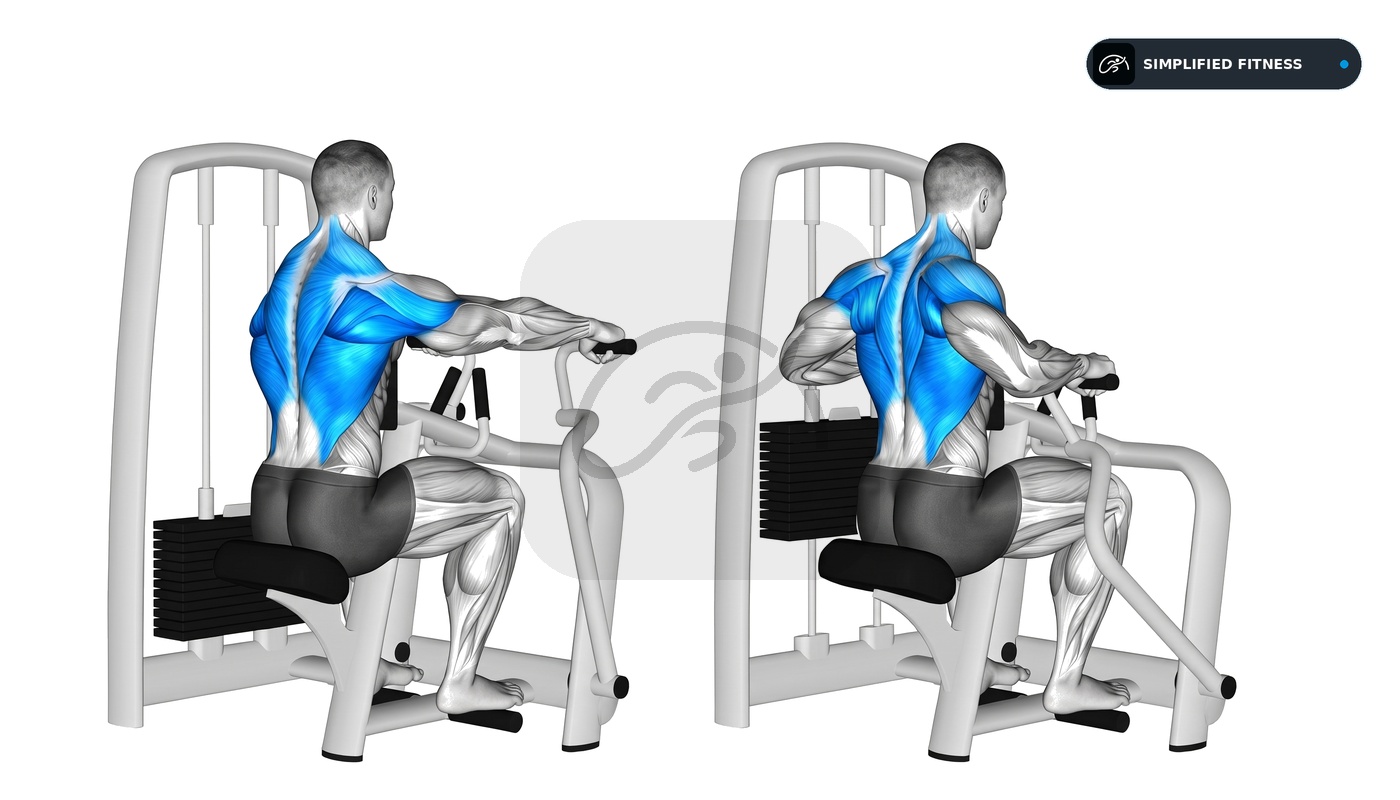
Upper traps respond to shrugs and heavy pulling. Middle and lower traps need rows and prone movements. If your upper traps tend to take over on raises and rows, adding more shrugs may not be the priority. In a controlled laboratory study of 45 healthy subjects doing 12 scapular exercises, side-lying external rotation, side-lying forward flexion, prone horizontal abduction with external rotation and prone extension had the best ratio of lower and middle trap to upper trap activity (Cools et al., 2007). Healthy subjects, surface EMG, no growth outcomes, so treat it as an exercise-selection clue.
For shrug mechanics, see barbell vs dumbbell vs cable and Kelso shrugs. A practical range is 2-4 hard sets per week for direct upper trap work, then more rowing as needed.
Can you build your neck?
You can, but evidence for neck hypertrophy is thin, and the neck needs more caution than any other region in this article.
A 12-week randomised trial in 40 elite women footballers added isometric neck exercises three times a week to their normal conditioning. Neck strength did not improve beyond what the control group achieved (Deng et al., 2022). That does not mean neck training is useless. It means one specific programme in one elite group failed to add anything on top of their existing training, so we cannot generalise.
In people with chronic neck pain, a 4-week trial of 41 patients compared a cervical and scapula-focused resistance programme with trapezius massage, and found greater improvement in pain, range of motion and disability with the exercise programme (Kang et al., 2022). It was short and small, and it involved people with diagnosed neck pain, so it is not a template for healthy lifters training alone.
If you want to experiment as a healthy lifter, start with a few light sets of neck extension and flexion with a towel or band resistance, slow reps, no failure, no jerking. Our neck hypertrophy and cervical training guide covers progressions. Skip it and see a clinician if you have neck pain, arm numbness, headaches that start with training or dizziness.
What does a week of shoulder training look like in India?
Equipment is the main practical issue. Many Indian gyms have adjustable dumbbells, a cable crossover and a pec deck that doubles as a reverse fly. That is enough. If you train at home with resistance bands and one pair of dumbbells, lateral raises, band external rotations, rows and push-ups cover everything above.
Recovery matters as much as the exercise list. Protein from dal, paneer, curd, eggs, soya chunks and chicken helps maintain muscle, and our free diet plan shows how to hit a daily target on a budget. In hot summers, reduce session length and hydrate, because a pinched, fatigued shoulder at the end of a sweaty hour is a poor place to push for the last sets.
A sample week for an intermediate lifter, built from the principles above and not from a single study:
- Push day 1: heavy press, chest work, lateral raises 3-4 sets.
- Pull day: rows, pulldowns, reverse pec deck 3 sets, rotator cuff 2 sets.
- Push day 2: incline press, light lateral raises 3-4 sets, triceps.
- Upper or accessory day: face pulls 3 sets, shrugs 2 sets, lateral raises 3 sets, external rotations.
Common shoulder training mistakes
- Training the front delt three ways and the side and rear delt not at all.
- Swinging heavy dumbbells with the traps doing the lifting.
- Ending every set at “failure” with sloppy form on lateral raises.
- Pressing through sharp pain because “it will warm up”.
- Doing rotator cuff work with weights that are too heavy to control.
- Using upright rows and behind-the-neck presses because other people do.
- Changing the whole programme every two weeks and never measuring progress.
The bottom line on shoulder workout science
- Front delt: mostly covered by pressing.
- Side delt: lateral raises, dumbbell or cable, plus a press.
- Rear delt: reverse fly work and rows, with face pulls as a finisher.
- Cuff and traps: light, controlled, regular.
- Neck: optional, cautious, thin evidence.
- Pain: modify first, assess if it persists.
Shoulders also share workload with the chest and back, so if you are rebuilding your whole programme, our guide to exercise selection and biomechanics is a good companion. If a shoulder is hurting and you are unsure what to change, talk to a qualified physiotherapist or doctor.
Go deeper: every guide in this topic
- 3D Shoulder Protocol: Weekly Volume, Frequency (2-3x/Week) and Rep Ranges
- Are Front Raises Necessary? Why Bench Pressers Rarely Need Direct Front Delt Work
- Behind-the-Neck Press: Shoulder Mobility, Neck Safety and Muscle Bias
- Cable Lateral Raises: Behind-the-Back vs Cross-Body Setup, Which Is Better?
- Converging Machine Shoulder Press: Why It Feels Easier on Your AC Joint
- Dumbbell Lateral Raise Hand Cues: Pouring the Pitcher Myth vs Neutral Wrist
- Face Pulls Form: Rear Delts vs External Rotation, and How to Do Each
- Functional Anatomy of the Deltoid: Anterior, Lateral, and Posterior Heads
- Best Lateral Raise Variation: Dumbbells vs Cables vs Machines for Wider Shoulders
- Lu Raises and Full ROM Overhead Raises: Trapezius and Deltoid Hand-Off Above 90°
- Neck Hypertrophy and Cervical Spine Strength: Flexion, Extension and Lateral Training
- Overhead Press for Shoulder Size: Standing Barbell vs Seated Dumbbell vs Machine
- Rear Deltoid Training: Reverse Pec Deck vs Cable Face Pulls vs Incline Dumbbell Flyes
- Rotator Cuff Strengthening (SITS): Supraspinatus, Infraspinatus, Teres Minor Protocols
- Shoulder and Arm Workout Structuring: Push Day vs a Dedicated Delt and Arm Day
- Shrugs Biomechanics: Barbell vs Dumbbell vs Kelso Shrugs for Trap Thickness
- Side-Lying Incline Lateral Raises: Fixing the Dumbbell Resistance Curve
- Subacromial Shoulder Impingement: What You Can Still Lift and How to Modify It
- Trapezius Anatomy: Upper, Middle and Lower Traps and How to Train Each
- Are Upright Rows Bad for Your Shoulders? Grip Width, Impingement and Safer Cable Versions
Frequently Asked Questions
What is the best exercise for shoulders?
There is no single best shoulder exercise because the three deltoid heads are loaded differently. Overhead pressing loads the front and side delts, lateral raises load the side delt most, and horizontal abduction or rows load the rear delt. Pick one press, one lateral raise variation and one rear delt movement and you cover the whole muscle.
Do I need to train front delts separately?
Usually not. In healthy men, a 10-week bench press programme grew the anterior deltoid, and shoulder pressing activated it more than any other exercise in an EMG comparison. Because chest and overhead pressing already hit it, adding front raises mostly adds fatigue. Only add direct front delt work if it is clearly lagging and your other pressing volume is low.
How do I build bigger side delts?
Train the lateral deltoid directly with lateral raises, several times a week, taking sets close to failure. Research shows the side delt works hardest during lateral raises and overhead presses, and that both dumbbell and cable raises grow it. Start with 8-14 hard weekly sets split over two or three sessions and add reps or load over time.
Are cable lateral raises better than dumbbell lateral raises?
Not on current evidence. A 2025 study in 24 resistance-trained lifters found similar lateral deltoid growth with cables and dumbbells over 8 weeks when range of motion was matched. Cables keep tension at the bottom of the lift, dumbbells are harder at the top, so choose what you can do with the best form and the most effort.
Are lateral raises bad for your shoulders?
For most healthy lifters, lateral raises with a controlled load are well tolerated. Heavy weights and swinging make it easier to irritate the joint, so many lifters stop near ear height and keep the load moderate. If a raise pinches the top of your shoulder, lighten the load, change the angle or swap to a machine and see a clinician if it persists.
Should I do lateral raises with palms down or thumbs up?
The research does not show a clear winner for growth. An EMG review found the highest middle deltoid activation with lateral raises done with internal rotation, but electrical activity is a weak predictor of hypertrophy. Use the hand position that feels smooth and pain free, and judge it by whether the side delt burns.
Is overhead press or lateral raise better for shoulders?
They do different jobs. In one EMG study the shoulder press produced the highest anterior deltoid activation and a medial deltoid level close to lateral raises, while lateral raises produced the highest posterior deltoid activation of the four lifts tested. Most lifters do best with both: a press for heavy loading and lateral raises for focused side delt volume.
How many sets per week do shoulders need?
A meta-analysis found a graded dose-response, with more weekly sets generally giving more growth up to the volumes studied. A practical starting point is about 8-14 sets for the side delts, 6-10 for the rear delts, and whatever pressing gives the front delts. Increase only if you are recovering and progressing, and use our training volume calculator to track it.
How often should I train shoulders per week?
Two to three sessions a week is a practical way to spread side and rear delt volume. A meta-analysis found no meaningful growth difference between frequencies when weekly volume is equal, so frequency is about convenience and quality. Spread your sets so no single session leaves you grinding through junk reps.
Do face pulls build rear delts?
Face pulls can contribute, but they are not the best-tested rear delt builder. Reverse fly machines and horizontal abduction movements have more direct support, and a study of 19 trained men found the neutral grip on a reverse fly machine raised posterior deltoid and infraspinatus activity versus a pronated grip. Use face pulls as a higher-rep finisher after your main rear delt work.
What is the best rear delt exercise?
Reverse pec deck or other horizontal abduction work is a strong choice because it isolates the rear delt with a stable setup. Rows and pull-ups also load the rear delt substantially according to an EMG review of 33 studies. Combine one isolation exercise with your back training and keep reps controlled.
Are upright rows bad for shoulder impingement?
Upright rows are often flagged as a risky choice for sore shoulders, but we could not find trial evidence that proves they cause impingement in healthy lifters. The concern is mechanical: lifting the elbows above the hands with internal rotation can aggravate a painful shoulder in some people. If it hurts, switch to a lateral raise or a wide-grip row and have persistent pain assessed.
What are the best rotator cuff exercises?
External rotation variations are the standard choice for the cuff. In an EMG study of 10 healthy subjects, side-lying external rotation produced the highest infraspinatus (62% of maximal contraction) and teres minor (67%) activity of seven exercises. Do 2-3 sets of controlled reps with a light dumbbell or band a few days a week.
Can rotator cuff exercises fix shoulder pain?
They help many people, but the evidence is lower certainty than people assume. An umbrella review gives a strong recommendation for exercise therapy as first-line care for subacromial shoulder pain, while a meta-analysis of seven trials rated the benefit of progressive resisted exercise as uncertain with low certainty evidence. See a physiotherapist or doctor if pain lasts beyond a few weeks.
Do shrugs build bigger traps?
Yes, shrugs load the upper trapezius directly, and heavy rows, carries and deadlift variations add to it. Use a full range and a brief pause at the top, with either dumbbells, a barbell or cables. A typical starting range is 2-4 hard sets a week, which you can adjust based on progress.
How do I train the lower and middle traps?
Middle and lower traps are best targeted with rows and prone or side-lying movements that pull the shoulder blades back and down. A controlled laboratory study of 45 healthy people found prone horizontal abduction with external rotation, prone extension and side-lying external rotation gave favourable lower and middle trapezius activation relative to the upper trap. Add 2-3 sets of these if your upper traps feel dominant.
Can you build your neck with exercise?
You can train the neck, but the evidence for hypertrophy is thin. A 12-week trial in elite women footballers found that adding isometric neck work did not improve neck strength beyond their normal conditioning, so results depend on the person and the programme. Start very light, move slowly, and avoid it if you have neck pain, numbness or dizziness until a clinician clears you.
Is neck training safe?
It can be done safely with light loads and controlled tempo, but the neck is a delicate region and should not be trained to failure with heavy weight. A small trial in people with chronic neck pain reported benefits from a cervical and scapula-focused programme over trapezius massage in 4 weeks, but it was short and small. Stop if you feel tingling, radiating pain or lightheadedness and see a doctor.
Why do my shoulders hurt when I bench or press?
Causes range from irritated tendons and rotator cuff overload to simple technique issues like flaring elbows or a wide grip. Pain that is sharp, constant, worse at night or linked to weakness needs medical assessment rather than a new exercise. Mild, predictable irritation often settles with a neutral grip, a slightly lower range and more cuff and upper back work.
Is the behind-the-neck press safe?
It demands a lot of shoulder mobility, and for many lifters a front-of-head press is the safer choice. The position pushes the shoulder into extreme external rotation under load, which some people lack the range for. If you want to keep it, use a light load, a wide grip and stop at the ears, and see our behind-the-neck press guide first.
How long does it take to see shoulder growth?
Visible change usually takes months, not weeks. In the 2025 lateral raise study, side delt thickness rose 3.3-4.6% over 8 weeks with 10 hard weekly sets, which is real but modest. Keep photos and rep records, and judge progress over 8-12 week blocks.
Can I train shoulders and arms together?
Yes, and many lifters do it on a push day or an upper day. Shoulders and triceps share pressing work, so keep an eye on fatigue and put the priority lift early in the session. Our push day plan shows one way to organise it.
Sources & References
Every claim above is checked against peer-reviewed research (PubMed, U.S. National Library of Medicine) or guidance from established health bodies. How we fact-check.
- Larsen S, et al. Dumbbell versus cable lateral raises for lateral deltoid hypertrophy: an experimental study. Front Physiol. 2025. PMID: 40692697
- Campos YAC, et al. Different shoulder exercises affect the activation of deltoid portions in resistance-trained individuals. J Hum Kinet. 2020. PMID: 33312291
- Rabello R, et al. Activation of the three deltoid muscle portions during common strengthening exercises: a systematic review. J Bodyw Mov Ther. 2024. PMID: 39593452
- Lanza MB, et al. Muscle hypertrophy response across four muscles involved in the bench press exercise: randomized 10 weeks training intervention. J Bodyw Mov Ther. 2024. PMID: 39593465
- Schoenfeld B, et al. Effect of hand position on EMG activity of the posterior shoulder musculature during a horizontal abduction exercise. J Strength Cond Res. 2013. PMID: 23302754
- Schoenfeld BJ, et al. Dose-response relationship between weekly resistance training volume and increases in muscle mass: a systematic review and meta-analysis. J Sports Sci. 2017. PMID: 27433992
- Schoenfeld BJ, et al. How many times per week should a muscle be trained to maximize muscle hypertrophy? A systematic review and meta-analysis of studies examining the effects of resistance training frequency. J Sports Sci. 2019. PMID: 30558493
- Reinold MM, et al. Electromyographic analysis of the rotator cuff and deltoid musculature during common shoulder external rotation exercises. J Orthop Sports Phys Ther. 2004. PMID: 15296366
- Pieters L, et al. An update of systematic reviews examining the effectiveness of conservative physical therapy interventions for subacromial shoulder pain. J Orthop Sports Phys Ther. 2020. PMID: 31726927
- Naunton J, et al. Effectiveness of progressive and resisted and non-progressive or non-resisted exercise in rotator cuff related shoulder pain: a systematic review and meta-analysis of randomized controlled trials. Clin Rehabil. 2020. PMID: 32571081
- Cools AM, et al. Rehabilitation of scapular muscle balance: which exercises to prescribe? Am J Sports Med. 2007. PMID: 17606671
- Deng CL, et al. An isometric neck strengthening program does not improve neck strength in elite women's football-code athletes: a randomised controlled trial. J Sci Med Sport. 2022. PMID: 34772616
- Kang T, et al. Cervical and scapula-focused resistance exercise program versus trapezius massage in patients with chronic neck pain: a randomized controlled trial. Medicine (Baltimore). 2022. PMID: 36181044

Umair Hazrami · Founder & Head Coach, Simplified Fitness
Umair Hazrami founded Simplified Fitness and the Simplified Lifter channel to cut through fitness noise. With 4+ years of consistent training and 10+ coaching clients, he writes every guide from the peer-reviewed research and links the sources so you can check them. Our editorial standards.
Educational content only, not medical advice. If you have a medical condition, are pregnant, or take medication, talk to a qualified doctor before changing your diet, supplements or training. Full disclaimer.
Keep reading
Exercise Technique
3D Shoulder Protocol: Weekly Volume, Frequency (2-3x/Week) and Rep Ranges
How to build 3D shoulders: how many weekly sets, how often to train side and rear delts, and which rep ranges to use, with an 8-week plan and the research.
8 min read

Exercise Technique
Adductor Magnus Training: Seated Adductor Machine and Copenhagen Planks for Thigh Mass
Adductor magnus training explained: what research says on deep squats, the adductor machine and Copenhagen planks for thicker inner thighs and groin strength.
7 min read

Exercise Technique
Antagonist Arm Supersets: Biceps and Triceps Pairing for a Faster, Pumpier Arm Day
A biceps triceps superset workout can shorten arm day while keeping volume close to straight sets. See the research, pairing tips and a 20-minute routine.
9 min read

Exercise Technique
Are Front Raises Necessary? Why Bench Pressers Rarely Need Direct Front Delt Work
Are front raises necessary if you bench and overhead press? See what EMG and volume research says, when they can still help, and where to spend those sets.
8 min read