Are Upright Rows Bad for Your Shoulders? Grip Width, Impingement and Safer Cable Versions
Are upright rows bad for shoulders? See what the impingement research says, which grip width and stop height to use, and how to run a safer cable version.

TL;DR. The short answer
- Upright rows are not proven to damage the shoulder, but the classic version (narrow grip, elbows above shoulder height) is the one most linked with impingement signs in lifters, so it is the one to modify or drop.
- A wider grip raises lateral deltoid and trap activity and lowers biceps involvement (16 weight-trained men, 2013), so it is the better choice if side delts are the goal.
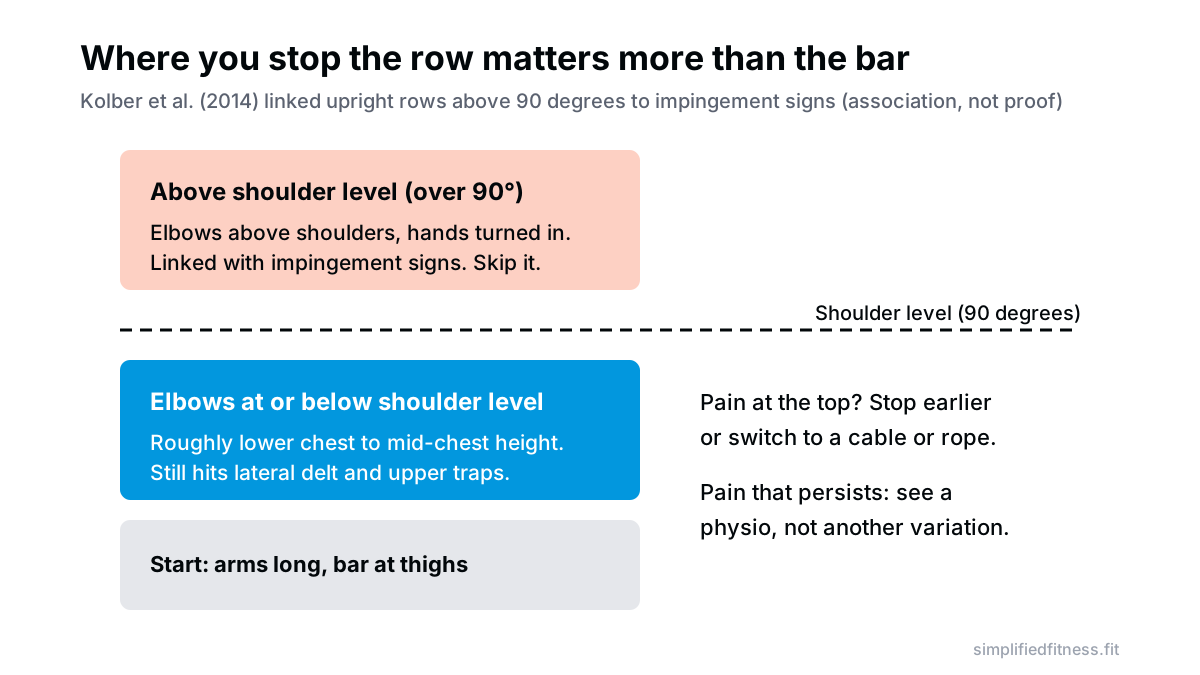
- Stopping the elbows at about shoulder level or below avoids the range (over 90 degrees) that one 2014 study associated with impingement signs.
- A cable or rope version is a sensible, more adjustable option, though no study has directly tested it against the barbell for impingement.
- Pain that pinches at the top, wakes you at night or lingers for weeks is a reason to see a physiotherapist or doctor, not to try another grip.
Part of our complete guide: Complete Shoulder, Delt & Neck Training Guide: 3D Deltoid Anatomy, Rotator Cuff & Traps
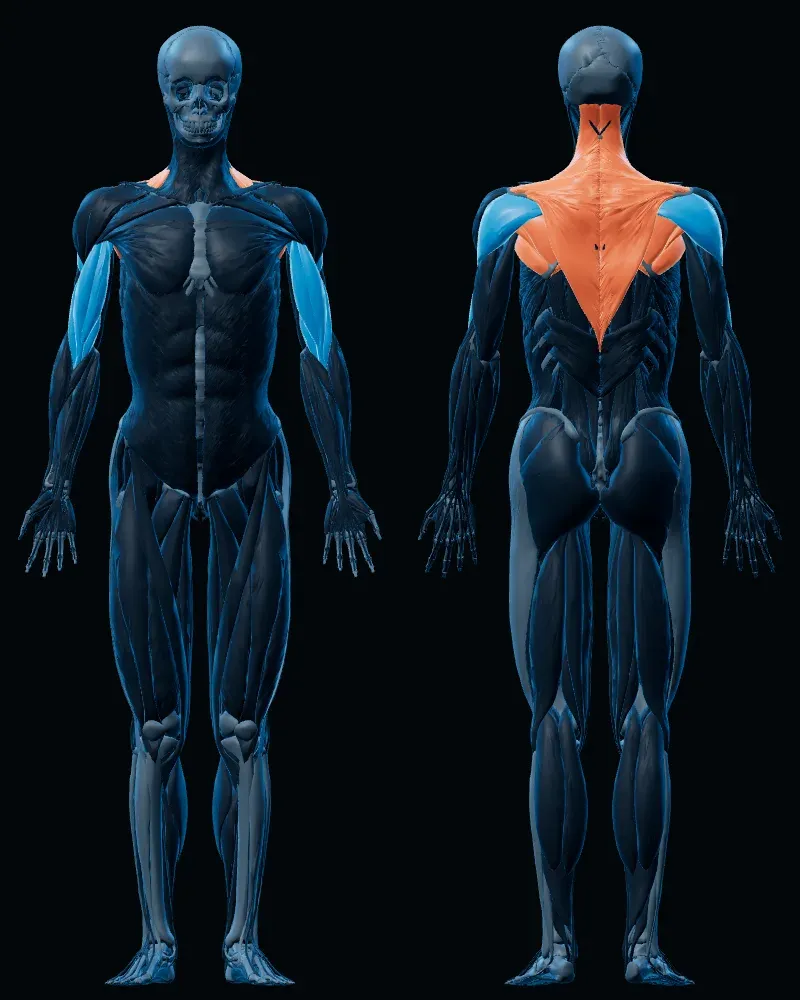
Muscles worked: upper back
Main movers: traps, rhomboids, teres major, infraspinatus and teres minor
Assisting: rear delts, biceps and brachialis
Table of contents
Are upright rows bad for shoulders? Not by default, but the classic version is the riskiest way to do them. A narrow grip, a heavy barbell and elbows hauled above shoulder height is the combination most often linked with impingement signs, and it is the part worth changing.
This article sits inside our complete shoulder and delt training guide. Here we look at one controversial lift: what the research actually shows, what it does not, and how to keep the useful parts (side delts and upper traps) with less irritation.
Why upright rows have a bad reputation
The upright row asks your shoulder to do two things at once. You lift the arms out to the side (abduction) while the hands stay turned inward in front of you (internal rotation). Push the elbows past shoulder level and the rotator cuff tendon, mainly the supraspinatus, has less room as it passes under the bony roof of the shoulder (the acromion).
That tight space is why the problem is called subacromial impingement. It is a mechanical idea, and a reasonable one. But a mechanism is not proof of injury, so let’s look at the data.
What the research says about upright rows and impingement
The best-known study here is small and observational. Researchers tested 46 men who lifted weights at least twice a week and 31 non-lifters using two clinical screens for impingement (the painful arc and Hawkins-Kennedy tests). Lifters were more likely to show the combined signs, and those signs were associated with both lateral raises and upright rows performed above 90 degrees. Lifters who did external rotator strengthening were less likely to show them (Kolber et al., 2014).
Read that carefully. It shows an association in a one-time snapshot. It cannot say the row caused the signs, and it flags lateral raises too.
Wider context points the same direction, loosely. A review of resistance training injuries found that up to 36% of documented training-related injuries and disorders involve the shoulder, with weak technique and muscle imbalances among the risk factors. Most of that research was retrospective (Kolber et al., 2010). Another study found recreational lifters had less shoulder mobility in most directions and bigger strength imbalances between opposing muscle groups than non-lifters (Kolber et al., 2009).
Related biomechanics evidence comes from rehab exercises. The “empty can” raise (thumbs down, internal rotation) produced shoulder blade positions that narrow the subacromial space, and more pain than the “full can” version in 28 people with impingement (Timmons et al., 2016). A review of shoulder exercise mechanics also notes that scapular internal rotation and anterior tilt reduce subacromial width, while retracting the shoulder blades increases it (Escamilla et al., 2009). A heavy narrow-grip row tends to look more like the empty can than the full can.
Does grip width change the exercise?
Yes, mainly for muscle recruitment. In 16 weight-trained men, researchers used grips of 50%, 100% and 200% of biacromial breadth (the width between the bony points of the shoulders), with the same load each time. Wider grips gave more lateral and posterior deltoid and trapezius activity and less biceps activity (McAllister et al., 2013). The authors concluded that anyone wanting to maximise deltoid and trap involvement should use a wide grip.
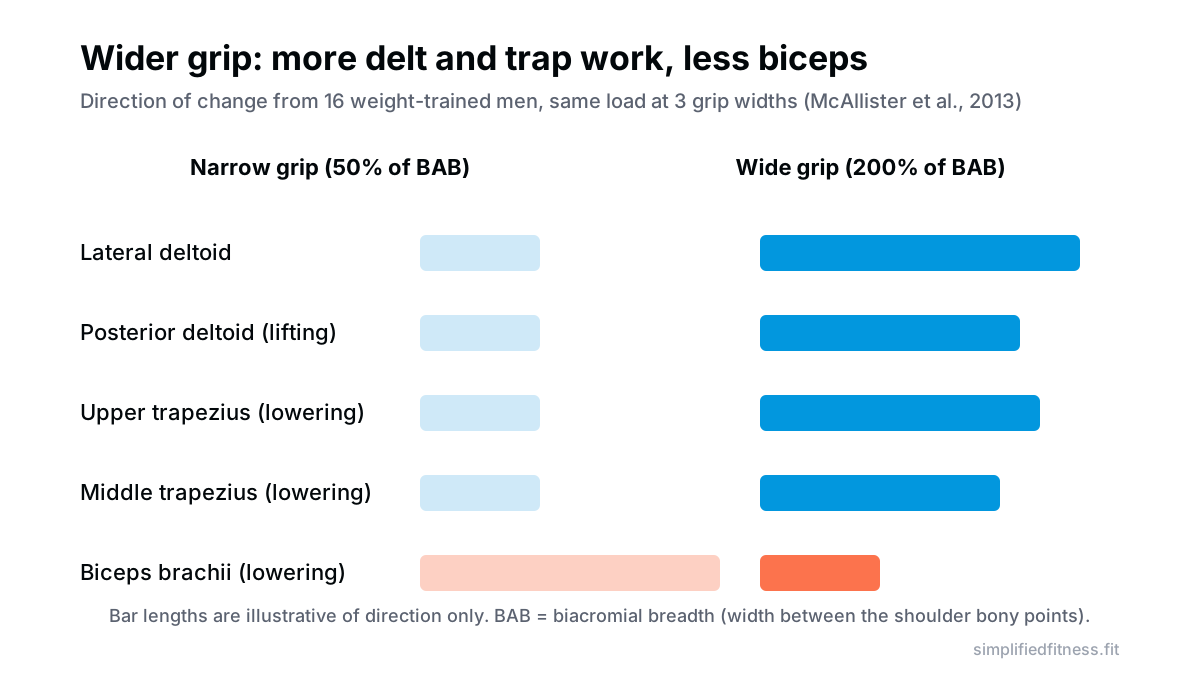
Two honest caveats. This was electromyography (muscle electrical activity) over two reps, not a growth trial. And it measured muscle recruitment, not impingement. Whether a wide grip reduces joint stress is a plausible idea, not a demonstrated fact.
How to do upright rows safely
Here is the version I would start with. It uses the research above where it exists and common sense where it does not.
- Go wider. A starting point is about 1.5 times shoulder width, which is coaching convention rather than a tested number. The study ran up to twice biacromial breadth. Choose the width where your wrists stay comfortable.
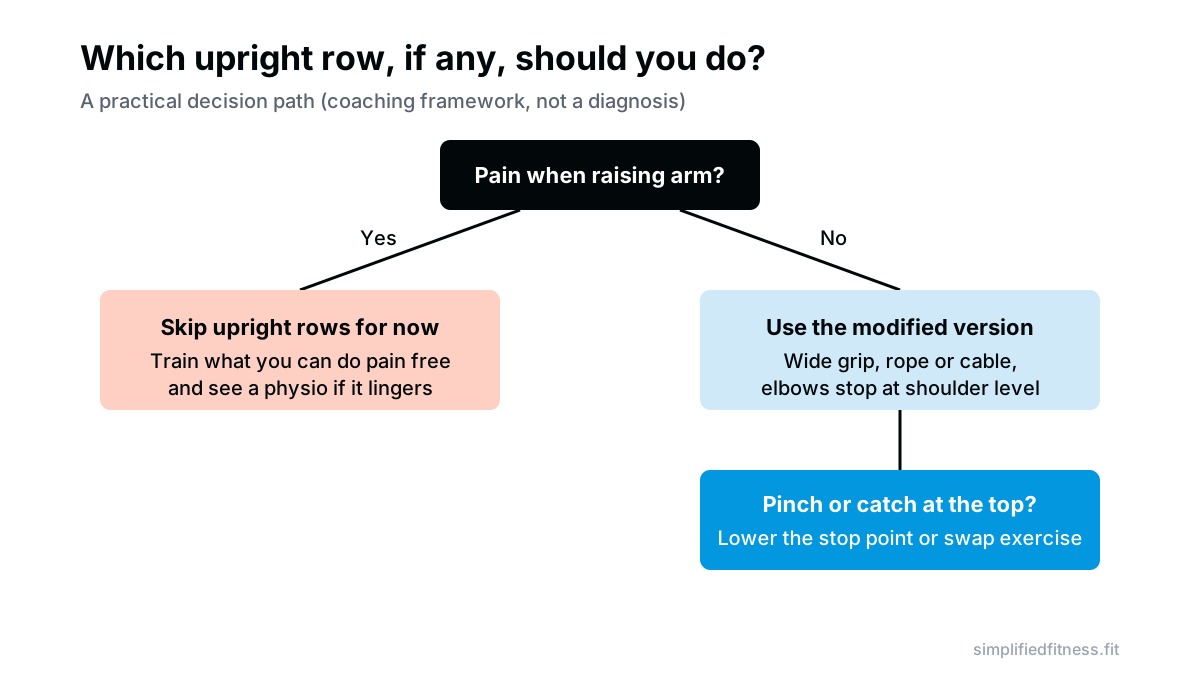
- Stop at shoulder height. Elbows level with or just under the shoulders, bar roughly lower to mid-chest. Do not chase the chin.
- Lead with the elbows. Think elbows out and up, not hands up. The hands should trail the elbows.
- Lean a touch forward. A slight forward lean keeps the pull in a more comfortable path for many lifters. This is a practical cue, not a researched one.
- Go lighter than your ego wants. Heavy loads are not required for growth; muscle gain is possible across a wide range of loads when sets are taken close to failure (Schoenfeld et al., 2021). Reps of 10-15 suit this exercise well.
- Control the lowering. Two seconds down, no dropping and swinging.
Cable and rope upright rows: a safer way in?
A low cable with a rope or a straight bar has practical advantages. The pull is smooth, the load is easier to nudge up in small steps, and a rope lets your hands separate at the top so the wrists and shoulders can find a comfortable path. You can also use a single-arm handle and let the elbow travel slightly forward of the body.
What we cannot say is that cables are proven safer for impingement. No study has tested that. Think of the cable as a more adjustable tool, and keep the same rules: wide hands, stop at shoulder height, light load.
Upright row vs lateral raise vs other side delt options
If side delts are your target, you have choices. The table below is our practical read, not a ranking from head-to-head trials.
| Exercise | Main strength | Main drawback |
|---|---|---|
| Wide-grip cable or rope upright row | Heavier loading, adds upper traps | Can still pinch if elbows go high |
| Dumbbell lateral raise | Direct side delt isolation | Weak at the bottom, easy to cheat |
| Cable lateral raise | Tension at the start of the rep | Setup takes longer |
| Machine lateral raise | Stable, easy to take close to failure | Fit depends on the machine |
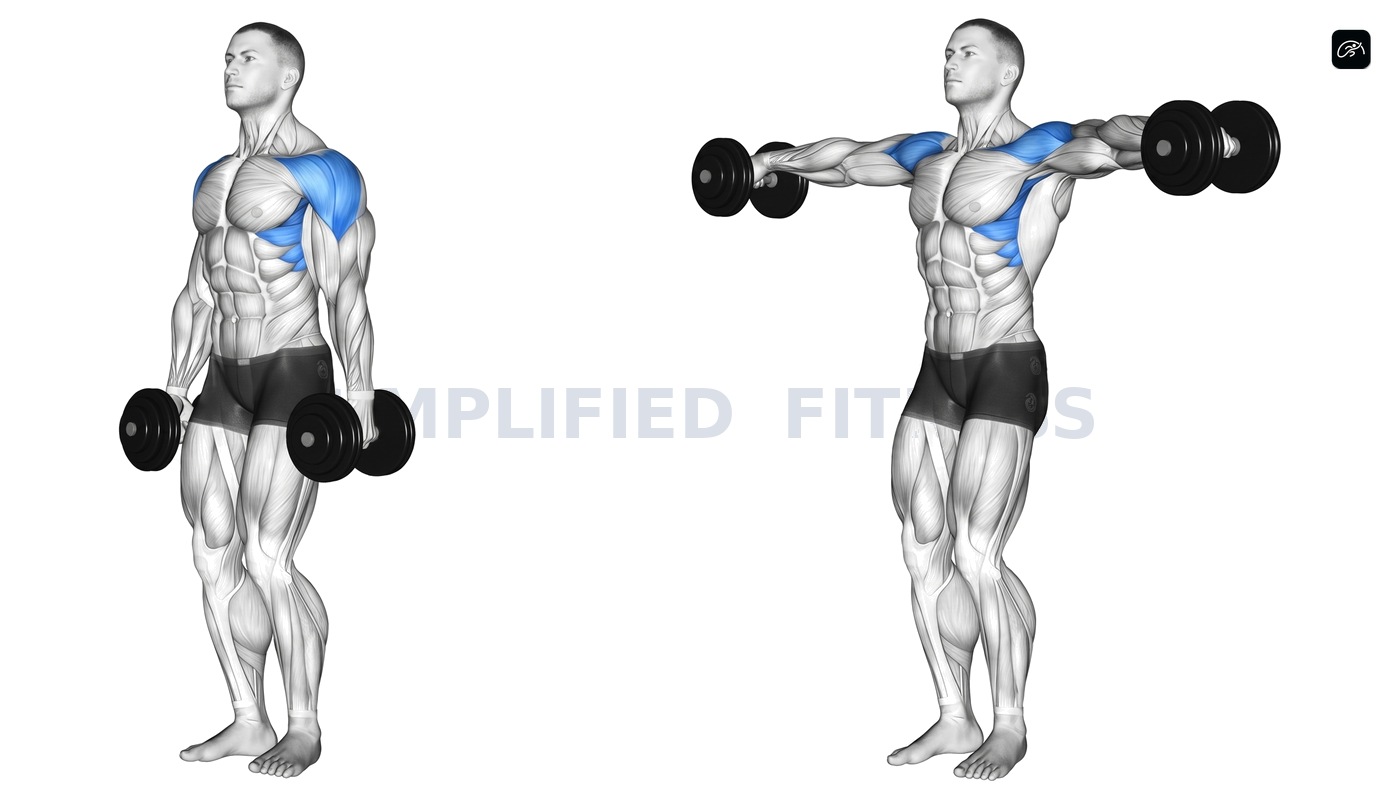
Lateral raises are not magic either. The same 2014 study associated lateral raises above 90 degrees with impingement signs, so range matters for both. For a full breakdown, see our guide to lateral deltoid training with dumbbells, cables and machines and the variation covered in cable lateral raises behind the back vs cross-body.
When to see a doctor or physio
Upright rows are optional. Your shoulder is not.
Get assessed if you have pain that lingers beyond a couple of weeks, pain at night, a catching or painful arc as you lift the arm, weakness lifting the arm, or pain after a fall. A clinician can tell impingement from a tendon problem or something else. We do not diagnose here.
The encouraging part: for persistent subacromial impingement, a specific rotator cuff and shoulder blade exercise programme beat generic exercises in a 12-week randomised trial of 102 patients whose earlier conservative treatment had failed. Pain and function improved more, and fewer chose surgery (20% vs 63%) (Holmgren et al., 2012). A masterclass review also concludes that a graduated exercise approach gives at least equivalent benefit to surgery for several rotator cuff related conditions, though outcomes can be incomplete (Lewis, 2016). Our guides on rotator cuff strengthening, face pulls and lifting with subacromial impingement go deeper.
Where upright rows fit in a program
Keep it small. One exercise, 2-3 hard sets, once or twice a week, inside your overall 6-12 weekly sets for side delts, a practical range rather than a researched one. A push day is a natural home; our push day plan already has shoulder work built in.
On a budget, none of this changes. A rope attachment and a cable stack are the only equipment you need, and plenty of gyms in India have both. Eat enough protein (dal, paneer, curd, soya if you are vegetarian) and sleep properly, because those matter more than the grip.
The bottom line
The classic upright row is not proven to wreck shoulders, but it is the most debated way to train them. Go wide, stop at shoulder height, use a rope or cable, keep the load modest and quit the exercise if it pinches. If you would rather skip it, lateral raises and face pulls cover almost everything it offers.
For more on building shoulders well, return to the complete shoulder and delt training guide.
Frequently Asked Questions
Are upright rows bad for your shoulders?
Not automatically, but the classic narrow-grip version with elbows driven above shoulder height is the variation most associated with shoulder impingement signs. A 2014 study of recreational lifters found impingement signs were associated with upright rows performed above 90 degrees, though that kind of study cannot prove the row caused them. If you want to keep the exercise, use a wider grip and stop the elbows around shoulder level.
Can upright rows cause a rotator cuff tear?
There is no good evidence that upright rows on their own tear the rotator cuff. The concern is irritation of the tendons under the acromion (subacromial impingement) from repeated high, internally rotated reps, which is a different problem from a tear. Sudden sharp pain, weakness lifting the arm or night pain should be checked by a clinician.
What is the safest way to do upright rows?
Use a wider grip, a lighter load, and stop when your elbows reach about shoulder height. These changes follow from the research on grip width and on the over-90-degree range, although no trial has proven them safer. A rope or cable setup makes the path easier to adjust.
How wide should my grip be on an upright row?
A common coaching starting point is roughly 1.5 times shoulder width, and the grip-width study tested up to twice the width between the shoulder bones. Wider grips raised lateral deltoid and trap activity in that study. Pick the width where your wrists stay neutral and your shoulders feel fine, and test it with a light load first.
Do wide grip upright rows build side delts?
They can be a useful lateral delt exercise. In 16 weight-trained men, lateral deltoid activity was higher with a very wide grip than with narrow or shoulder-width grips. Muscle activity is not the same as muscle growth, so judge the exercise by your progress over months.
How high should I pull on an upright row?
About shoulder height at most, which is roughly lower to mid-chest level for most people. One 2014 study linked rows above 90 degrees with impingement signs. Stopping at shoulder level still trains the side delts and upper traps and keeps the joint out of that range.
Are cable upright rows safer than barbell upright rows?
They may be easier on the shoulder because the handle path and grip are more adjustable, but this has not been directly tested. A cable also keeps tension through the whole rep and lets you use a rope or a single arm. Try a light weight first and stop earlier if you feel a pinch.
Are upright rows better than lateral raises?
Neither is clearly better, because there is no head-to-head hypertrophy trial. Lateral raises isolate the side delt with less trap and biceps involvement, while upright rows let you load heavier and train the upper traps too. If either hurts, pick the one that does not.
Why do upright rows hurt my shoulders?
A pinching feeling near the top often points to irritation of tendons passing under the acromion, especially with narrow grips and elbows above shoulder level. Posture, weak external rotators and sheer volume can add to it. Lower the stop height, widen the grip, drop the load and see a clinician if pain persists.
What can I do instead of upright rows?
Cable or dumbbell lateral raises train the side delt directly, and shrugs or face pulls cover the traps and upper back. These give most of what the upright row offers with a more controllable joint angle. Our shoulder guide covers how to combine them.
Should I stop upright rows if I already have shoulder impingement?
Usually yes, at least until symptoms settle and a clinician has assessed you. Exercise therapy for the rotator cuff and shoulder blade muscles has good trial support for impingement pain, so avoiding an aggravating lift while you rehab is sensible. Do not self-diagnose from the internet.
How many sets of upright rows do I need?
Treat it as one lateral delt option among several, not a requirement. Roughly 6-12 hard sets of total side delt work per week is a reasonable range, shared across whichever exercises you tolerate. Stay 1-3 reps from failure and keep your form tidy.
Sources & References
Every claim above is checked against peer-reviewed research (PubMed, U.S. National Library of Medicine) or guidance from established health bodies. How we fact-check.
- McAllister MJ, et al. Effect of grip width on electromyographic activity during the upright row. J Strength Cond Res. 2013. PMID: 22362088
- Kolber MJ, et al. Characteristics of shoulder impingement in the recreational weight-training population. J Strength Cond Res. 2014. PMID: 24077379
- Kolber MJ, et al. Shoulder injuries attributed to resistance training: a brief review. J Strength Cond Res. 2010. PMID: 20508476
- Kolber MJ, et al. Shoulder joint and muscle characteristics in the recreational weight training population. J Strength Cond Res. 2009. PMID: 19077737
- Escamilla RF, et al. Shoulder muscle activity and function in common shoulder rehabilitation exercises. Sports Med. 2009. PMID: 19769415
- Timmons MK, et al. Empty can exercise provokes more pain and has undesirable biomechanics compared with the full can exercise. J Shoulder Elbow Surg. 2016. PMID: 26577128
- Holmgren T, et al. Effect of specific exercise strategy on need for surgery in patients with subacromial impingement syndrome: randomised controlled study. BMJ. 2012. PMID: 22349588
- Lewis J. Rotator cuff related shoulder pain: assessment, management and uncertainties. Man Ther. 2016. PMID: 27083390
- Schoenfeld BJ, et al. Loading recommendations for muscle strength, hypertrophy, and local endurance: a re-examination of the repetition continuum. Sports (Basel). 2021. PMID: 33671664

Umair Hazrami · Founder & Head Coach, Simplified Fitness
Umair Hazrami founded Simplified Fitness and the Simplified Lifter channel to cut through fitness noise. With 4+ years of consistent training and 10+ coaching clients, he writes every guide from the peer-reviewed research and links the sources so you can check them. Our editorial standards.
Educational content only, not medical advice. If you have a medical condition, are pregnant, or take medication, talk to a qualified doctor before changing your diet, supplements or training. Full disclaimer.
Keep reading
Exercise Technique
3D Shoulder Protocol: Weekly Volume, Frequency (2-3x/Week) and Rep Ranges
How to build 3D shoulders: how many weekly sets, how often to train side and rear delts, and which rep ranges to use, with an 8-week plan and the research.
8 min read

Exercise Technique
Are Front Raises Necessary? Why Bench Pressers Rarely Need Direct Front Delt Work
Are front raises necessary if you bench and overhead press? See what EMG and volume research says, when they can still help, and where to spend those sets.
8 min read

Exercise Technique
Behind-the-Neck Press: Shoulder Mobility, Neck Safety and Muscle Bias
Behind the neck press safety explained: who has the shoulder mobility for it, what EMG studies show for delts, and which swaps work if you do not.
10 min read
Exercise Technique
Cable Lateral Raises: Behind-the-Back vs Cross-Body Setup, Which Is Better?
Cable lateral raise behind the back vs in front: what the research says, which setup suits most lifters, and a step-by-step guide to pulley height and cuffs.
9 min read