High-Protein Indian Breakfasts: Besan/Moong Chilla, Paneer Paratha Hacks, and Egg Scrambles
High protein Indian breakfast recipes that reach about 30 g: paneer besan chilla, paneer paratha and egg bhurji, with macros, prep times and swaps for poha.
TL;DR. The short answer
- A typical plate of poha, upma or idli gives roughly 5-10 g of protein. Adding 100 g of paneer or 3-4 eggs is what moves breakfast into the 28-35 g range.
- A per-meal target of about 0.4 g/kg body weight (28 g for a 70 kg lifter) is a sensible aim, based on a 2018 review. It is a guide, not a hard cutoff.
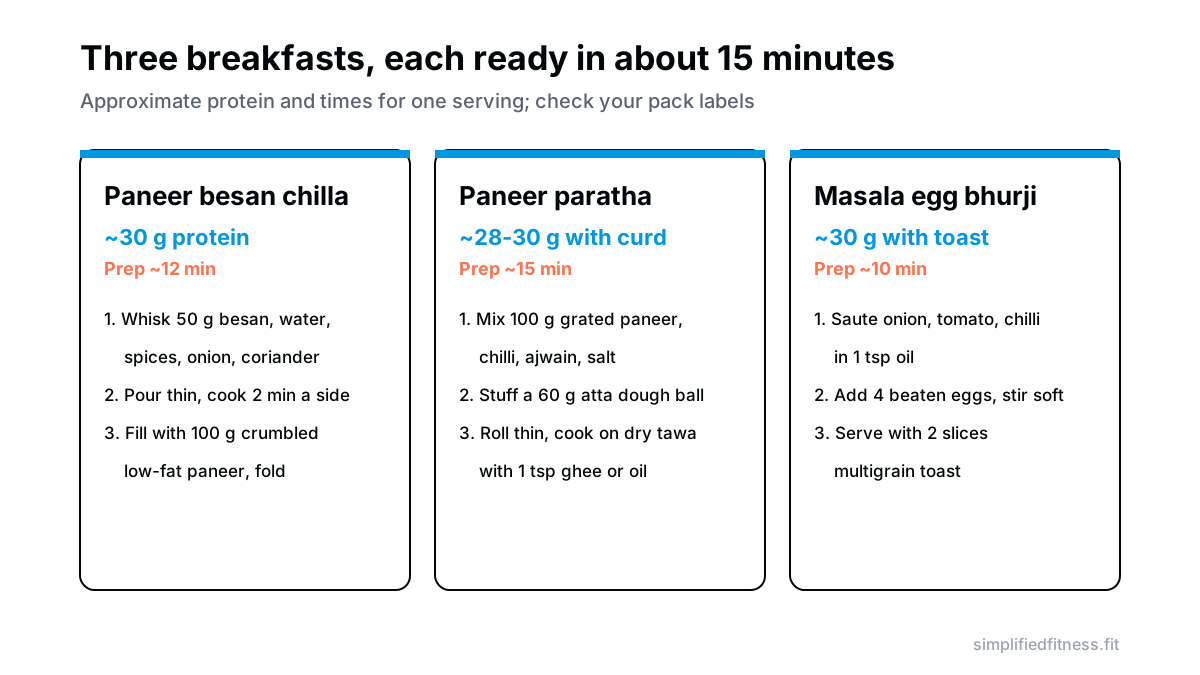
- Three fast options: paneer-stuffed besan chilla, paneer paratha with curd, and 4-egg masala bhurji with multigrain toast, each about 10-15 minutes.
- Total protein matters most. Animal protein had only a small edge in one meta-analysis, so vegetarian and egg-based breakfasts can both work if the portion is big enough.
- Macro numbers here are approximate. Paneer, besan and egg sizes vary, so check your pack label.
Part of our complete guide: Indian High-Protein Nutrition Guide: Cutting and Muscle Building on Vegetarian and Non-Veg Diets
Table of contents
Breakfast is the hardest meal of the day for an Indian lifter to get right. The classic plates (poha, upma, idli, plain parathas) are mostly carbohydrate and sit at roughly 5-10 g of protein. The high protein Indian breakfast recipes below get you to about 28-35 g in 10-15 minutes by changing what goes on the plate, not by buying anything fancy.
This is a practical cluster inside our Indian high-protein nutrition guide. Here we stay on mornings only. For lunch and dinner planning, see the vegetarian meal prep blueprint.
One caveat up front. Every macro figure in this article is an approximate home-cooking estimate, not a lab measurement. Brands, egg sizes and how generously you measure all move the numbers by a few grams.
How much protein do you actually need at breakfast?
Start with your daily number, then divide. The International Society of Sports Nutrition says 1.4-2.0 g/kg of body weight a day is enough for most people who train (Jager et al., 2017). A meta-analysis of 49 trials found that extra protein stopped adding to fat-free mass gains beyond about 1.6 g/kg/day (Morton et al., 2018).
Per meal, a 2018 review concluded that about 0.4 g/kg per meal across at least four meals is a good target for reaching 1.6 g/kg/day. The upper end of 2.2 g/kg/day would need about 0.55 g/kg per meal (Schoenfeld and Aragon, 2018).
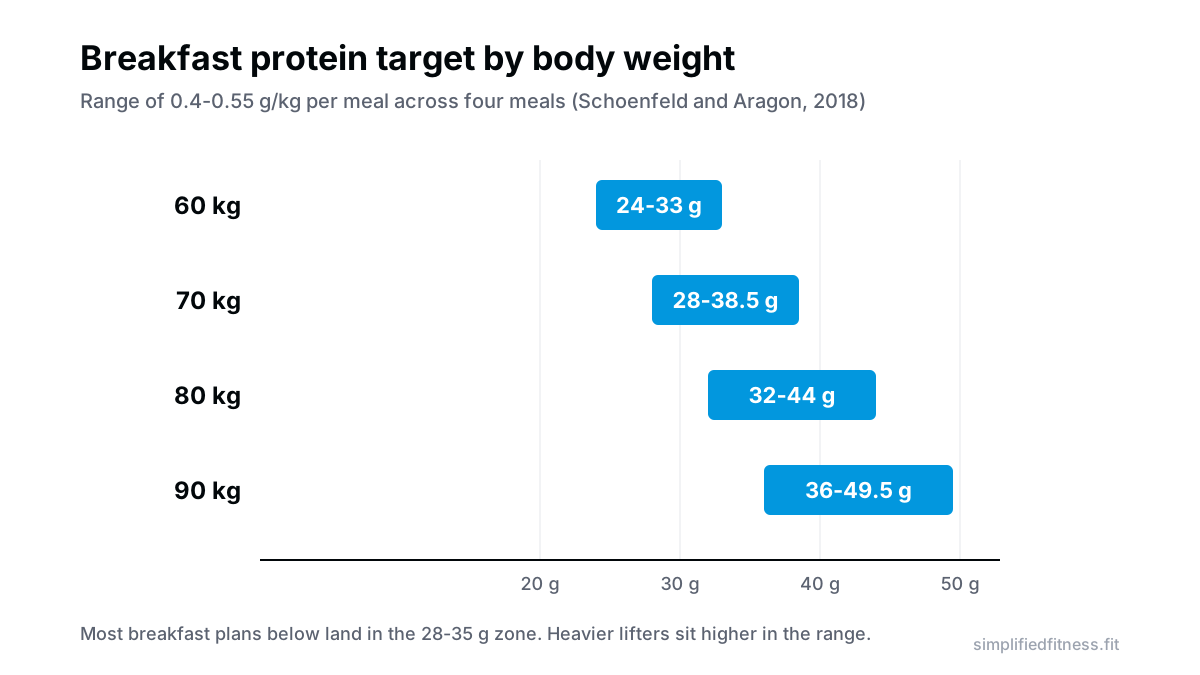
Notice the word “target”. The same review points out that the older 20-25 g “ceiling” came from studies of fast-digesting protein eaten alone. Mixed meals digest slower. So 30-40 g at breakfast is not wasted for most healthy adults. It is a mix of evidence and judgement, not a law.
Why poha, upma and idli fall short
Nothing is wrong with these foods. They are light, familiar and easy on the stomach in hot weather. The problem is the ratio. A plate is mostly rice, semolina or flattened rice, with a spoon of peas or peanuts for decoration.
Here is the reality of a typical plate compared with the upgrades below (all approximate).
| Breakfast | Typical protein | Main gap |
|---|---|---|
| 1 plate poha | about 4-5 g | Almost all carbohydrate |
| 1 plate upma | about 5-6 g | Semolina base, little else |
| 3 idli + sambar | about 8-10 g | Rice and urad dal ratio |
| 2 aloo parathas + curd | about 10-12 g | Potato filling, no protein stuffing |
| Paneer besan chilla | about 30 g | Stuffed with paneer |
| Paneer paratha + curd | about 28-30 g | Paneer replaces potato |
| 4-egg bhurji + toast | about 30 g | Eggs do the heavy lifting |
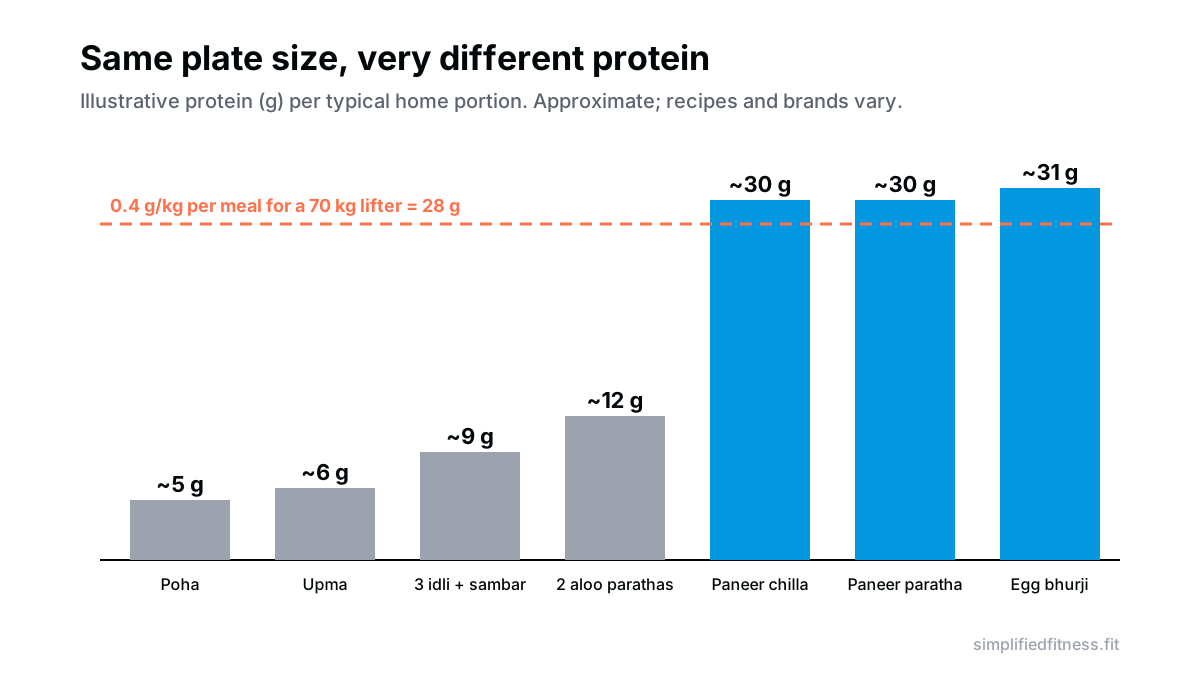
The most common mistake here is trying to fix poha by adding a few peanuts. A handful of peanuts adds a few grams. A 100 g block of paneer or three eggs adds closer to 18-20 g.
Paneer besan chilla: the easiest vegetarian win
Besan is chickpea flour, so it already carries more protein per gram than wheat or rice flour. A chilla made from 50 g of besan gives roughly 10-12 g. The stuffing does the rest.
Ingredients (one serving):
- 50 g besan
- Water, salt, turmeric, ajwain, chilli
- Chopped onion, coriander, a little grated ginger
- 100 g low-fat paneer, crumbled
- 1 tsp oil for the pan
Method: Whisk the besan with water into a thin pourable batter and add spices. Pour on a hot non-stick tawa and cook about 2 minutes a side. Spread the crumbled paneer over one half, season, fold and serve with mint chutney.
Approximate macros: about 30 g protein, 25-30 g carbohydrate, 10-15 g fat depending on the paneer. Prep time is around 12 minutes.
Want more protein from a pulse? Swap part of the besan for ground, soaked moong dal for a moong chilla. Dals vary, and we cover the differences in our article on dals and pulses and the protein myth. For choosing between regular and low-fat paneer, see paneer vs low-fat paneer.
High-protein paneer paratha: fewer parathas, more paneer
A plain paratha is dough with fat. A paneer paratha can be a real protein meal, if you flip the ratio.
Ingredients (one serving):
- 60 g whole wheat atta (one ball)
- 100 g paneer, grated
- Green chilli, ajwain, coriander, salt
- 150 g plain curd on the side
- 1 tsp ghee or oil
Method: Mix the grated paneer with spices. Stuff a small ball of dough, seal and roll thin so the filling stays at the centre. Cook on a hot dry tawa and finish with a teaspoon of ghee or oil.
Approximate macros: about 28-30 g protein including curd. Prep around 15 minutes if you grate the paneer the night before.
Curd is the quiet hero here. It adds protein and keeps the plate cooler and more filling. For ways to boost curd’s protein, read about hung curd and Greek yogurt yields.
Watch the fat. Ghee, oil and full-fat paneer add up fast, which is a trap we explain in hidden calorie traps in Indian cooking.
Egg bhurji: the fastest and cheapest option
If you eat eggs, this is the simplest route to 30 g. A large egg gives about 6 g of protein, so four eggs gives roughly 24 g, and two slices of multigrain toast add another 6-8 g.
Ingredients (one serving):
- 4 eggs (or 3 whole eggs plus 2 whites)
- 1 small onion, 1 tomato, green chilli
- Turmeric, red chilli powder, garam masala
- 1 tsp oil, 2 slices multigrain bread
Method: Saute the onion, chilli and tomato in oil for 3 minutes. Pour in beaten eggs and stir gently on low heat until just set. Cook it soft, not rubbery. Add coriander and serve with toast.
Approximate macros: about 30-32 g protein, 15-25 g carbohydrate, 20-25 g fat. Prep time is about 8-10 minutes.
Whole eggs or egg whites?
A 2021 narrative review found that in young men, whole egg raised myofibrillar protein synthesis more than egg whites in short-term studies. But the limited long-term evidence showed no extra muscle gain from yolks when total protein was already high (Santos et al., 2021). The authors stress that this rests on very limited evidence, mostly in young men.
Practical takeaway: whole eggs are fine for most healthy lifters, and you can add a white or two for extra protein per calorie. If you have high cholesterol, diabetes or heart disease, ask your doctor how many eggs are right for you. We cover the cost and cholesterol side in eggs in the Indian diet.
Is plant protein enough for vegetarians?
Yes, with a caveat. A 2021 meta-analysis of 16 randomised trials found that protein source did not change gains in absolute lean mass or muscle strength. Animal protein did favour percent lean mass slightly, mainly in adults under 50 (Lim et al., 2021).
In practice that means plant-heavy diets work, but you may need a slightly larger portion or a mix of sources to match animal protein. A vegetarian Indian breakfast of chilla (besan or moong), paneer and curd gives you three different sources on one plate, which helps.
Should you eat more protein at breakfast when cutting?
If you are cutting calories and training hard, total protein matters more. A 2014 systematic review of six studies in lean, resistance-trained people suggested needs may rise to 2.3-3.1 g per kg of fat-free mass as calories drop and leanness increases (Helms et al., 2014). That review covers a small, specific group, so it applies to lean, experienced lifters rather than every beginner.
For most people, the practical point is simple. A 30 g breakfast makes the rest of the day easier. If breakfast is 8 g, you need to claw back 20 g at lunch and dinner. For a full calorie-matched day, see the vegetarian cutting diet at 1800 calories or the non-vegetarian cutting diet plan.
Fast swaps to upgrade the breakfast you already eat
You do not need to give up poha or idli. Keep the base and fix the protein.
- Poha: add 2-3 boiled egg whites and a whole egg, or 100 g paneer cubes, plus a bowl of curd.
- Upma: stir in 100 g crumbled paneer or add moong sprouts and serve with a glass of milk.
- Idli: have 3 idli with sambar plus 2 eggs or a bowl of hung curd.
- Plain paratha: replace potato stuffing with paneer, and pair with curd.
- Cereal or oats: mix in curd or milk and a scoop of whey or a few boiled eggs on the side.
Eating out early or travelling? Boiled eggs and curd are available almost everywhere and keep for hours in a bag if you carry them cold.
A simple weekly rotation
Cook what you will actually repeat. A workable rotation uses all three recipes plus one flexible day.
- Monday and Thursday: egg bhurji with toast.
- Tuesday and Friday: paneer besan chilla with mint chutney.
- Wednesday and Saturday: paneer paratha with curd.
- Sunday: your usual family breakfast, upgraded with eggs or paneer.
Grate paneer for two days at a time and keep it chilled. In summer, use paneer and batter within a day and keep them in the fridge, because both spoil faster in heat.
When to talk to a doctor
If you have kidney disease, high cholesterol, diabetes, a heart condition or any condition that changes how much protein or fat is right for you, speak to a doctor or a registered dietitian before raising your protein intake sharply. Nothing here is medical advice, and individual needs vary.
The short version
The clearest path to a high protein Indian breakfast is to replace low-protein bulk with paneer, eggs or besan, and to size the portion to your body weight. Aim for roughly 0.4 g/kg at breakfast, pick one of the three recipes, and use your free protein calculator and our free diet plan tools to place it in your day.
Frequently Asked Questions
How much protein should I eat at breakfast?
A reasonable target is about 0.4 g of protein per kg of body weight, which is roughly 25-40 g for most lifters. A 2018 review suggested spreading protein across at least four meals to reach 1.6 g/kg a day. Use our protein calculator to get your daily number, then divide it by your meals.
Is besan chilla high in protein?
On its own, a chilla made from 50 g of besan gives roughly 10-12 g of protein, which is decent but not enough for a full meal. Besan is chickpea flour, so it carries more protein than wheat or rice flour. Stuff it with 100 g of paneer or serve it with eggs to reach about 30 g.
How do I make paneer paratha high in protein?
Use more paneer and less dough. A paratha made with 100 g of grated paneer and a 60 g atta ball, plus a bowl of curd, lands near 28-30 g. Roll it thin, cook it on a dry tawa and use only a teaspoon of ghee or oil.
Is poha a good breakfast for muscle gain?
Poha is a fine carb base, but one plate has only about 4-5 g of protein, which is too little on its own for a lifter. Flattened rice is mostly carbohydrate. Add 2-3 eggs, 100 g of paneer cubes or a bowl of sprouts to make it work.
How many eggs should I eat for breakfast?
Three to four whole eggs give roughly 18-25 g of protein, and toast, curd or paneer can fill the gap. Whole eggs are not clearly worse than whites for muscle gain, though the evidence is limited. If you have high cholesterol or heart disease, ask your doctor how many eggs suit you.
Are whole eggs better than egg whites for muscle?
Not clearly. A 2021 review found whole eggs raised muscle protein synthesis more than whites in young men in the short term, but the limited long-term data showed no extra muscle gain. Whole eggs taste better and keep costs down, so use whole eggs and add one or two whites if you want more protein per calorie.
Can vegetarians get 30 g of protein at breakfast in India?
Yes, but it takes planning. Paneer, curd, besan, moong dal and soya are the usual building blocks, and one stuffed chilla or paratha can reach about 28-30 g. Stack two sources, for example chilla plus a bowl of curd, instead of relying on one.
Is plant protein as good as animal protein for muscle?
A 2021 meta-analysis found protein source did not change absolute lean mass or strength gains, though animal protein slightly favoured percent lean mass, especially in adults under 50. Plant sources tend to have less leucine and lower digestibility per gram. Eat a bit more total protein and mix sources such as dal, besan and dairy.
Does a high-protein breakfast help with fat loss?
It can help, mainly by making it easier to hit your daily protein target while eating fewer calories. Resistance-trained people cutting calories may need higher protein, with a 2014 review suggesting 2.3-3.1 g per kg of fat-free mass. Front-load protein at breakfast so you are not scrambling at dinner.
Can I prep high-protein breakfasts in advance?
Partly. Chilla batter keeps in the fridge for a day, paneer can be grated ahead and boiled eggs last a few days in the fridge. Cook the chilla or bhurji fresh because they take only a few minutes. In hot weather, keep batter and paneer chilled and use them within a day.
Is it fine to eat 30-40 g of protein in one meal?
Yes for most healthy people. The body does not simply waste protein above 25-30 g, and a 2018 review found some of the extra amino acids still go to tissue building. If you have kidney disease, talk to your doctor before raising your protein intake.
What is a quick high-protein breakfast on a budget?
Egg bhurji with toast is usually the cheapest, and moong or besan chilla with curd is a close second. Both use staples you likely already buy. Skip protein bars and powders if the budget is tight and put the money into eggs, dal, curd and paneer.
Sources & References
Every claim above is checked against peer-reviewed research (PubMed, U.S. National Library of Medicine) or guidance from established health bodies. How we fact-check.
- Schoenfeld BJ, et al. How much protein can the body use in a single meal for muscle-building? Implications for daily protein distribution. J Int Soc Sports Nutr. 2018. PMID: 29497353
- Morton RW, et al. A systematic review, meta-analysis and meta-regression of the effect of protein supplementation on resistance training-induced gains in muscle mass and strength in healthy adults. Br J Sports Med. 2018. PMID: 28698222
- Jager R, et al. International Society of Sports Nutrition Position Stand: protein and exercise. J Int Soc Sports Nutr. 2017. PMID: 28642676
- Santos HO, et al. The Effect of Whole Egg Intake on Muscle Mass: Are the Yolk and Its Nutrients Important? Int J Sport Nutr Exerc Metab. 2021. PMID: 34504041
- Lim MT, et al. Animal Protein versus Plant Protein in Supporting Lean Mass and Muscle Strength: A Systematic Review and Meta-Analysis of Randomized Controlled Trials. Nutrients. 2021. PMID: 33670701
- Helms ER, et al. A systematic review of dietary protein during caloric restriction in resistance trained lean athletes: a case for higher intakes. Int J Sport Nutr Exerc Metab. 2014. PMID: 24092765

Umair Hazrami · Founder & Head Coach, Simplified Fitness
Umair Hazrami founded Simplified Fitness and the Simplified Lifter channel to cut through fitness noise. With 4+ years of consistent training and 10+ coaching clients, he writes every guide from the peer-reviewed research and links the sources so you can check them. Our editorial standards.
Educational content only, not medical advice. If you have a medical condition, are pregnant, or take medication, talk to a qualified doctor before changing your diet, supplements or training. Full disclaimer.
Keep reading
Indian Diet
Budget Indian Diet for 120g Protein Under ₹100 a Day (Student Plan)
A budget Indian diet for 120g protein under 100 rupees a day: soya, eggs, milk and chana, with protein per rupee maths and two student plans you can copy.
8 min read
Indian Diet
Chicken Breast and Fish in India: Where to Buy, How to Cook, and Cost per 30 g Protein
Chicken breast price per kg India: compare wet market vs apps, learn safe handling, a brine method for juicy meat, and rohu vs chicken cost per 30 g protein.
11 min read
Indian Diet
How to Convince Indian Parents About Whey Protein: Kidney Fears, 'Chemicals' and the Real Evidence
How to convince Indian parents about whey protein: explain it as paneer-water dairy, answer the kidney fear with trial data, and read the label together.
9 min read
Indian Diet
Curd vs Greek Yogurt vs Hung Curd: Protein Yield and the Home Recipe
Curd vs Greek yogurt protein in India: plain dahi gives about 3-4 g per 100 g. See how straining it into hung curd can triple that, and what studies show.
9 min read