Budget Indian Diet for 120g Protein Under ₹100 a Day (Student Plan)
A budget Indian diet for 120g protein under 100 rupees a day: soya, eggs, milk and chana, with protein per rupee maths and two student plans you can copy.
TL;DR. The short answer
- Soya chunks are the cheapest protein in India by a wide margin: about 26 g of protein for roughly ₹10 per 50 g dry, using illustrative prices. Roasted chana and eggs follow, while toned milk and low-fat paneer cost the most per gram.
- A day of 50 g soya, 4 eggs, 500 mL toned milk, 100 g roasted chana and 100 g low-fat paneer gives about 104 g of protein for roughly ₹120. Swapping paneer for extra soya and chana gives about 106 g for roughly ₹92.
- Roti, rice and dal add roughly 15-20 g on top, so a 75 kg student can reach about 120 g. The 120 g target matches the roughly 1.6 g/kg per day point beyond which extra protein stopped adding muscle, on average, in a large meta-analysis.
- All prices here are estimates that change by city and season. Check your local rates, then recompute grams of protein per rupee before you commit.
- If you have kidney disease, are pregnant, or have a soy or egg allergy, speak to a doctor or dietitian before raising protein or changing staples.
Part of our complete guide: Indian High-Protein Nutrition Guide: Cutting and Muscle Building on Vegetarian and Non-Veg Diets
Table of contents
Yes, a budget Indian diet for 120g protein under 100 rupees a day can be done, but only if you buy the right foods and your local prices are close to the ones used here. Soya chunks, eggs, milk or curd and roasted chana do most of the work, and roti, rice and dal fill the rest.
This article is the rupee-maths side of our complete guide to Indian high-protein nutrition. I will show the numbers, two sample days you can copy, how to shop, and where the plan can fail.
One honest caveat first. The prices below are illustrative estimates. They shift by city, season and shop, and I have not measured them in your market. Use the method, then plug in your own rates.
How much protein do you need on a student budget?
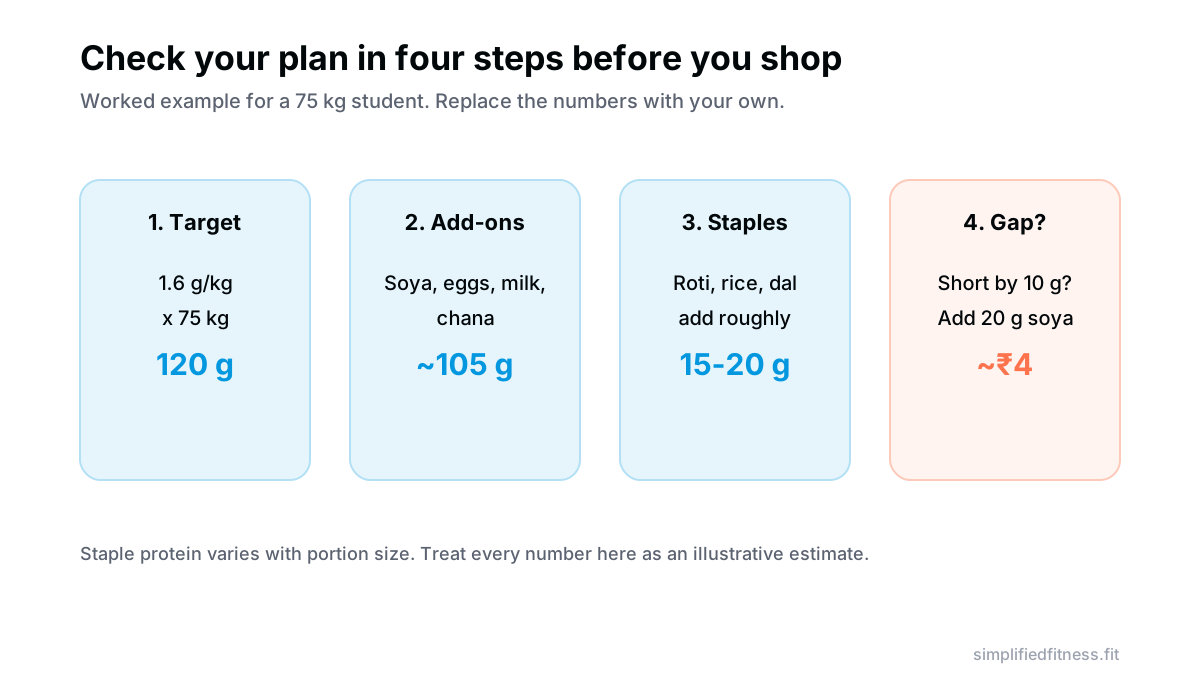
Start with the target, because 120 g is not magic. It suits a person of about 75 kg eating roughly 1.6 g/kg per day.
That number comes from a meta-analysis of 49 trials with 1,863 people doing resistance training. It found that protein supplementation increased strength and fat-free mass, and that going beyond a total intake of about 1.62 g/kg/day did not add further fat-free mass gains (Morton et al., 2018). The review also noted that benefits shrank with age and were larger in trained people, and some of its trials were funded by dairy bodies, so treat 1.6 g/kg as a sensible target, not a hard line.
If you weigh 60 kg, about 96 g is enough. Work out yours with the protein intake calculator before you spend a rupee chasing 120 g.
Cutting body fat is different. A review of six studies in lean, resistance-trained athletes who were eating in a deficit suggested needs may be higher, around 2.3-3.1 g/kg of fat-free mass (Helms et al., 2014). That is a small, specific population, and most students are not that lean.
Which are the cheapest protein sources in India?
Compare protein per rupee, not price per kilo. A cheap kilo of rice is still a poor protein buy.
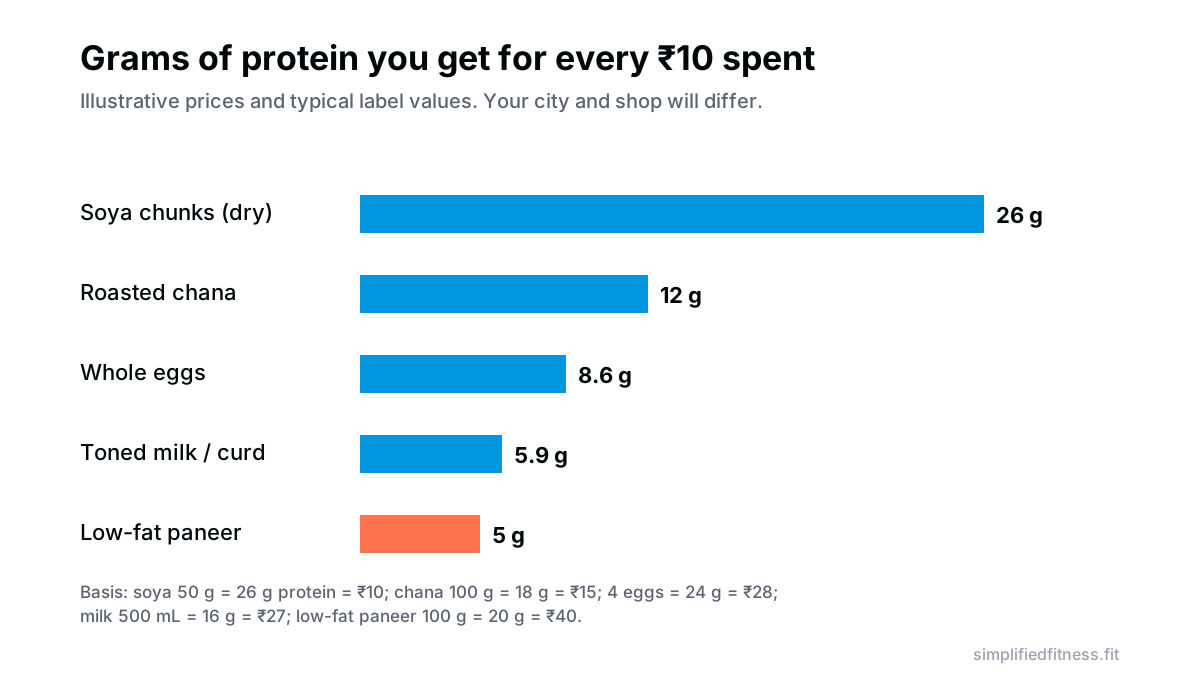
Here is the same data as a table, using the numbers I am working from.
| Food | Amount | Protein (approx.) | Price (illustrative) | Protein per ₹10 |
|---|---|---|---|---|
| Soya chunks, dry | 50 g | 26 g | ₹10 | 26 g |
| Roasted chana | 100 g | 18 g | ₹15 | 12 g |
| Whole eggs | 4 | 24 g | ₹28 | 8.6 g |
| Toned milk or curd | 500 mL | 16 g | ₹27 | 5.9 g |
| Low-fat paneer | 100 g | 20 g | ₹40 | 5 g |
These protein values are rounded figures, and brands differ. Read the nutrition label on your own soya packet, since dry chunks vary a little between brands.
Milk, curd and paneer look expensive per gram, but milk and curd bring calcium and a protein source that is easy to eat at breakfast, so I would keep them in even on a tight week. For a deeper cost comparison across foods, see our cost per 30g protein breakdown.
What does a 120g protein day under ₹100 look like?
Here are two plans that cover the add-on protein foods. Staples like roti, rice and dal come on top.
Plan A, about ₹120, about 104 g of protein:
- 50 g dry soya chunks (about 26 g)
- 4 whole eggs (about 24 g)
- 500 mL toned milk or curd (about 16 g)
- 100 g roasted chana (about 18 g)
- 100 g low-fat paneer (about 20 g)
Plan B, about ₹92, about 106 g of protein:
- 75 g dry soya chunks (about 39 g)
- 4 whole eggs (about 24 g)
- 500 mL toned milk or curd (about 16 g)
- 150 g roasted chana (about 27 g)
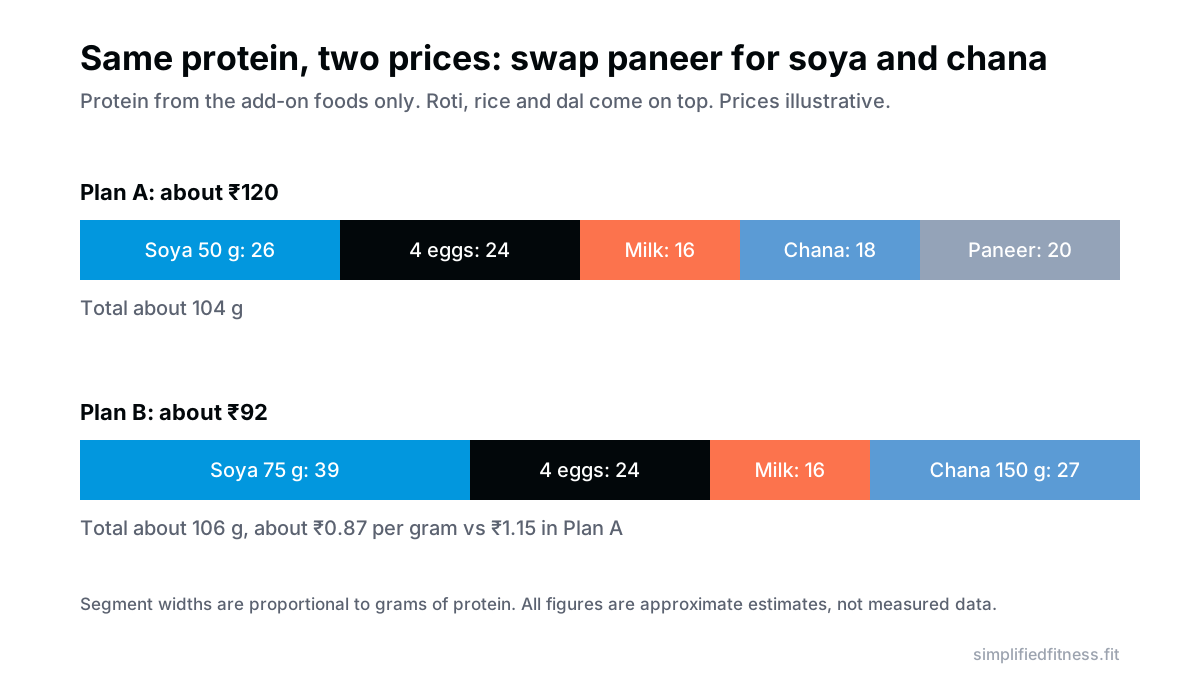
Plan A lands around ₹120, so it misses the headline. Plan B passes it. That is the point of doing the maths: a small swap changes the bill without changing the protein.
Now the staples. Two or three rotis, a cup of rice and a katori of dal add roughly 15-20 g of protein depending on portion size. That takes either plan to about 120 g for a 75 kg person.
I will be straight about the cost, though. Atta, rice and dal are not free, and I have not included them in the ₹92 or ₹120. If you already eat them at home or in the mess, the add-on cost is what you see above. If you are buying them separately, expect the full day to sit above ₹100.
Is cheap soya and chana protein as good for muscle?
A common worry is that cheap protein must be worse.
The research on soy is reassuring. A meta-analysis of nine supplementation studies with 266 participants, each at least 6 weeks long, found that soy and animal protein (whey, beef, milk or dairy) produced similar increases in strength and lean body mass with resistance training (Messina et al., 2018). That meta-analysis is on supplements, not on soya chunks specifically, and the groups were small, so it supports soy as a protein source rather than proving chunks beat everything. For hormone and safety worries around soya, see soya chunks protein and isoflavone myths.
A 2026 randomized trial in 65 resistance-trained young adults compared egg whites, whole egg, salmon, pork, lentils and mycoprotein after a leg workout, each giving 0.25 g protein per kg. Muscle protein synthesis rates showed no significant differences between groups, though net whole-body protein balance was higher after egg whites (Haigh et al., 2026). It was a single-session study in young people, so it says little about months of training, but it fits the idea that ordinary foods can do the job.
Pulses themselves digest reasonably well. A study of nine cooked Canadian pulse classes, using rodent models, found digestibility above 70% and amino acid scores that varied by pulse (Nosworthy et al., 2017). Rodent data, not human, and Canadian pulses rather than Indian chana, so I would not read much more into it than “cooked pulses are decent protein, and vary.”
How to buy protein cheaply in India
The plan only works if the prices do. Small habits matter more than clever recipes.
Buy dry soya chunks and chana in bulk. A monthly pack is usually cheaper per gram than small packets, if you will actually use it. Buy what you can finish, and store it in an airtight jar, away from damp.
Compare per-gram protein, not the sticker price. Check the label for protein per 100 g, divide the pack price by the grams of protein in the pack, and compare. Brands differ more than you would think.
Use the mandi or a local grocer for eggs and milk. Eggs by the tray and milk from a local dairy are often cheaper than packaged retail, though quality and storage vary, so boil milk properly and keep eggs refrigerated where you can.
Roast your own chana. Plain roasted chana is cheap and keeps well. Flavoured packets cost more and may add salt and oil.
Cook in batches. One pot of soya curry or chana can cover two or three meals. If your hostel or PG restricts cooking, a basic electric kettle or induction plate makes boiled eggs and soaked soya realistic. If you are building a full week around a small budget, see our student dorm meal prep guide.
How to cook cheap protein so you can stay consistent
The cheapest plan is useless if you cannot face eating it. A few specifics help.
Soak dry soya chunks in hot water for 10-15 minutes, squeeze out the water, then cook in a curry, pulao or dry fry with spices. Raw or half-soaked chunks taste bland and chewy.
Make egg bhurji with onion, tomato and chilli, or boil a few in advance. Four eggs a day can feel monotonous, so alternate with curd or chana.
Keep roasted chana and a small curd cup as your default snack. They need no cooking, which matters during exam weeks.
For eggs specifically, our eggs in the Indian diet article covers cost and the cholesterol question. For a no-egg day, our high-protein Indian vegetarian meal prep blueprint shows how to rotate sources.
What should you watch out for?
This is a budget plan, not a medical one.
Allergies and intolerances. If soy or eggs do not agree with you, swap them out. Lactose intolerance may make milk difficult; curd, paneer or more chana can fill the gap.
Digestive comfort. Large amounts of soya and chana can cause gas or bloating if your gut is not used to them. Raise portions slowly over a week or two, and drink water through the day, especially in hot weather.
Health conditions. If you have kidney disease, are pregnant, have diabetes, or take regular medication, speak to a doctor or registered dietitian before raising protein or changing your diet. This article is general education and does not diagnose or treat anything.
Variety. One cheap food repeated for weeks is easy on the wallet but narrow on nutrients. Fruit, vegetables, seasonal produce and different pulses are worth budgeting for, even if they sit outside the protein maths.
So is fitness affordable for an Indian student?
Yes. The expensive parts of fitness advertising, such as powders, branded bars and fancy supplements, are not what builds muscle in the research above. Total daily protein, resistance training and consistency are.
A student who buys dry soya, eggs, milk or curd and roasted chana can reach a sensible protein target for around ₹92 a day at the illustrative prices used here. Staples add to that, and your actual rates may differ, so run the numbers locally.
Before you start, price your own basket. Then use the protein intake calculator to confirm your target, and revisit the grocery list every few weeks as prices move. If you want to see where this fits in the bigger picture, our Indian high-protein nutrition guide is the place to start.
Frequently Asked Questions
Can you really get 120g of protein under ₹100 a day in India?
Yes, it is possible but tight, and it depends on local prices. Soya chunks, eggs, roasted chana and curd or milk can reach about 105 g of protein for roughly ₹92 at illustrative prices, and roti, rice and dal add roughly 15-20 g more. Price your own basket first, because the staples are extra and rates differ by city.
What is the cheapest protein source in India?
Dry soya chunks are usually the cheapest, giving roughly 26 g of protein for about ₹10 per 50 g at illustrative prices. Roasted chana and whole eggs come next. Compare protein per rupee on the pack label rather than price per kilo.
How much protein does a college student need to build muscle?
A common evidence-based target is about 1.6 g/kg of body weight per day. A large meta-analysis found that protein supplementation beyond about 1.62 g/kg/day did not add further fat-free mass gains in resistance training. For a 60 kg student that is about 96 g, so use the protein calculator for your own number.
Is soya chunks protein as good as whey or eggs for muscle?
For long-term gains, the research suggests soy is a reasonable choice. A meta-analysis of nine supplementation studies with 266 participants found similar strength and lean mass gains from soy and animal protein with resistance training. Eat it with rice or roti and some dal or curd across the day, and soak or boil the chunks well.
Are eggs or paneer cheaper per gram of protein?
At the illustrative prices in this article, eggs give about 8.6 g of protein per ₹10 and low-fat paneer about 5 g, so eggs usually win. Loose paneer from a local dairy can narrow the gap, so check your own rates and use paneer for variety rather than as your cheapest source.
Can a vegetarian student hit 120g protein cheaply?
Yes, by leaning on soya chunks, chana, curd, milk and dal instead of eggs. The protein just needs a bit more planning because plant sources are less concentrated. Add an extra 25-50 g of dry soya if you are short, and keep curd or milk in the day.
Are dal and rice enough protein for gym goers?
Usually not on their own. Indian surveys show that about 60% of protein comes from cereals of lower digestibility and quality, so a roti-rice-dal diet often leaves the total short for lifters. Add a concentrated source like soya, eggs, curd or milk at two or three meals.
Is it better to buy soya chunks in bulk?
Often yes, if you will use them within a few months. Bulk packs from a wholesale market or a monthly grocery order usually cost less per gram of protein, though prices vary. Store them in an airtight jar away from moisture and buy only what you can finish.
How many eggs a day is okay on a budget?
Four eggs a day is a common budget plan, but there is no single right number and your doctor can advise if you have high cholesterol or heart disease. Eggs are cheap and give about 6 g of protein each. Rotate with curd, milk and chana so you are not relying on one food.
Do I need protein powder if I am on a tight budget?
No. Protein powder is convenient, not essential, and the resistance training research above tracks total daily protein, not whether it came from a tub. Whole foods in this plan can cover your target for less per gram. If you do buy powder, compare cost per 25 g serving against your food prices.
Is 120g of protein safe for healthy Indian students?
For healthy adults this is within the range used in training studies, and a 75 kg person is eating about 1.6 g/kg. People with kidney disease or other medical conditions should not raise protein without medical advice. Drink water normally and see a doctor if you notice swelling, unusual urine changes or persistent fatigue.
What if I cannot eat soya chunks every day?
Swap in roasted chana, curd, milk, eggs or low-fat paneer and recalculate grams of protein per rupee. Some people prefer variety, and you do not need soya daily to hit your target. Aim for about 20-30 g of protein at each main meal.
Are cooked pulses a decent protein source?
Reasonably, yes. A study of nine cooked Canadian pulse classes found digestibility above 70% in rodent tests, though protein quality scores varied by pulse. Pulses are not all equal in amino acid quality, which is why pairing them with cereals, dairy or eggs helps. Soak and cook pulses thoroughly instead of eating them raw.
Sources & References
Every claim above is checked against peer-reviewed research (PubMed, U.S. National Library of Medicine) or guidance from established health bodies. How we fact-check.
- Morton RW, et al. A systematic review, meta-analysis and meta-regression of the effect of protein supplementation on resistance training-induced gains in muscle mass and strength in healthy adults. Br J Sports Med. 2018. PMID: 28698222
- Messina M, et al. No difference between the effects of supplementing with soy protein versus animal protein on gains in muscle mass and strength in response to resistance exercise. Int J Sport Nutr Exerc Metab. 2018. PMID: 29722584
- Swaminathan S, et al. Protein intakes in India. Br J Nutr. 2012. PMID: 23107548
- Nosworthy MG, et al. Determination of the protein quality of cooked Canadian pulses. Food Sci Nutr. 2017. PMID: 28748078
- Haigh FA, et al. Ingestion of diverse protein-rich whole-foods result in similar post exercise whole body and myofibrillar protein synthesis rates compared with a more isolated protein source in young adults. Am J Clin Nutr. 2026. PMID: 41643855
- Helms ER, et al. A systematic review of dietary protein during caloric restriction in resistance trained lean athletes: a case for higher intakes. Int J Sport Nutr Exerc Metab. 2014. PMID: 24092765

Umair Hazrami · Founder & Head Coach, Simplified Fitness
Umair Hazrami founded Simplified Fitness and the Simplified Lifter channel to cut through fitness noise. With 4+ years of consistent training and 10+ coaching clients, he writes every guide from the peer-reviewed research and links the sources so you can check them. Our editorial standards.
Educational content only, not medical advice. If you have a medical condition, are pregnant, or take medication, talk to a qualified doctor before changing your diet, supplements or training. Full disclaimer.
Keep reading
Indian Diet
Chicken Breast and Fish in India: Where to Buy, How to Cook, and Cost per 30 g Protein
Chicken breast price per kg India: compare wet market vs apps, learn safe handling, a brine method for juicy meat, and rohu vs chicken cost per 30 g protein.
11 min read

Indian Diet
How to Convince Indian Parents About Whey Protein: Kidney Fears, 'Chemicals' and the Real Evidence
How to convince Indian parents about whey protein: explain it as paneer-water dairy, answer the kidney fear with trial data, and read the label together.
9 min read
Indian Diet
Curd vs Greek Yogurt vs Hung Curd: Protein Yield and the Home Recipe
Curd vs Greek yogurt protein in India: plain dahi gives about 3-4 g per 100 g. See how straining it into hung curd can triple that, and what studies show.
9 min read
Indian Diet
Is Dal a Good Source of Protein? Moong, Chana and Rajma Reality Check
Is dal a good source of protein? Moong, chana and rajma give some protein but far more carbs. See the numbers and how to build a plate that works for lifters.
8 min read