Is Dal a Good Source of Protein? Moong, Chana and Rajma Reality Check
Is dal a good source of protein? Moong, chana and rajma give some protein but far more carbs. See the numbers and how to build a plate that works for lifters.
TL;DR. The short answer
- Dal is a useful food but a weak protein anchor. A typical home bowl gives roughly 5-9 g of protein next to about 12-23 g of carbohydrate, so by weight it carries about two and a half times more carbs than protein.
- Getting 30 g of protein from dal alone takes about 5 thin home bowls, roughly 80 g of carbs and around 650 kcal once you count a teaspoon of tadka fat per bowl. Two bowls give about 12 g, which is why 'two bowls is plenty' falls apart.
- Pulses are not worthless protein. Cooked pulses in a 2017 rodent-based analysis were highly digestible (above 70%), and a cereal plus legume meal supplied lysine well in a small Indian study.
- Chickpea, and pulses generally, run short on sulphur-containing amino acids, which cereals can cover. Eating dal with roti or rice is a real complement, not just tradition.
- Keep the dal, but add a proper protein anchor such as paneer, curd, eggs, soya or tofu, and treat the dal as part of your carbs.
Part of our complete guide: Indian High-Protein Nutrition Guide: Cutting and Muscle Building on Vegetarian and Non-Veg Diets
Table of contents
Is dal a good source of protein? Partly. Dal gives you some protein, but a normal bowl carries several times more carbohydrate than protein, so for a lifter it works better as a carb-and-fibre side than as a protein anchor.
That is awkward news if your parents are convinced that two bowls of dal a day is “plenty of protein.” This article is part of our Indian high-protein nutrition guide, and it takes the dal protein myth in India apart with arithmetic rather than opinion. Dal stays on the plate. It just stops carrying a job it cannot do.
How much protein is actually in a bowl of dal?
Here is the problem with most dal numbers you see online: they depend on what “a bowl” means. A thin dal from a hostel mess and a thick dal you cook at home are very different foods, because cooked pulses are mostly water.
So treat the figures below as working estimates, not a lab result. For a home-style bowl of about 150-200 g cooked, with tadka, a realistic range is:
- Protein: roughly 5-9 g
- Carbohydrate: roughly 12-23 g
- Energy: roughly 110-180 kcal, depending mostly on how much ghee or oil goes into the tadka
Where do these come from? Dry lentils and moong carry about 24 g of protein and about 63 g of carbohydrate per 100 g, and rajma is similar (USDA FoodData Central). A thin home bowl usually holds about 20-35 g of dry dal once cooked. Cooking adds water, not carbs or protein, so the ratio stays at roughly 2.5 g of carbs (including fibre) for every gram of protein.
For the rest of this article I will use working numbers of about 6 g protein, 16 g carbs and 130 kcal per bowl, which assumes about 25 g of dry dal and a teaspoon of ghee or oil in the tadka. They are illustrative. The most accurate way to log dal is to weigh it dry before cooking.
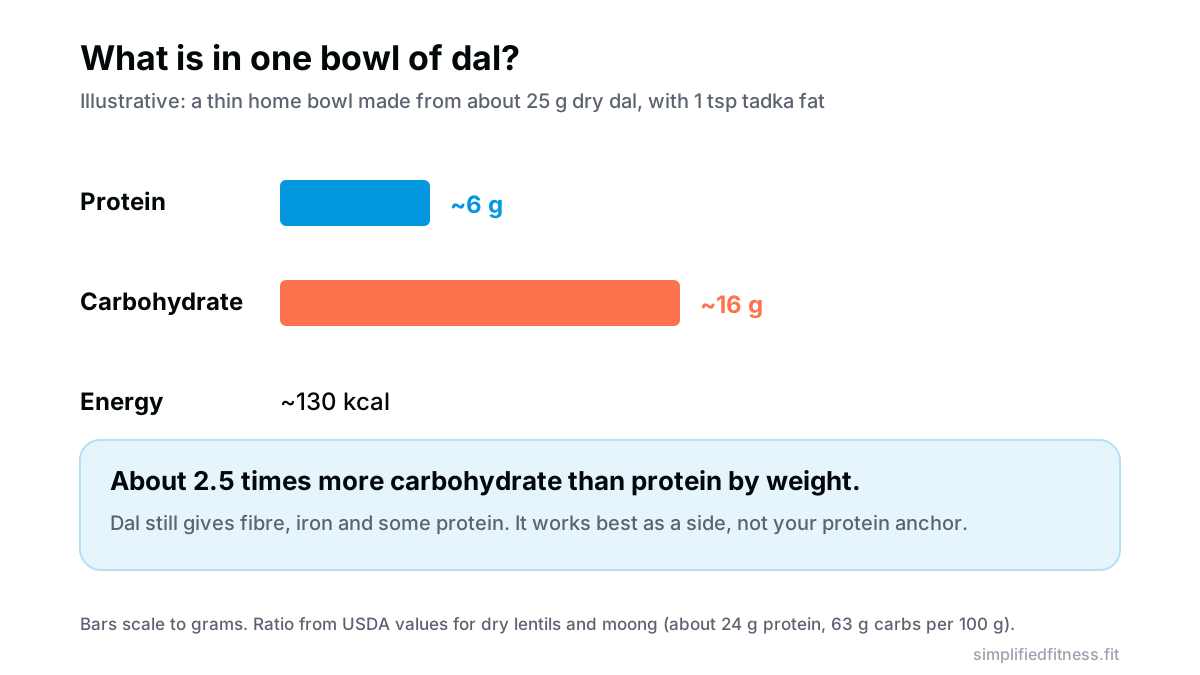
The reason is simple. Pulses are seeds, and seeds store energy as starch. The protein is real, but it comes bundled with a lot of carbohydrate and fibre.
Why dal is better counted as a carbohydrate source
When you track macros, every food goes somewhere. Chicken breast goes under protein. Rice goes under carbs. Dal sits awkwardly in the middle, which is where the confusion starts.
The practical rule that works: log dal as carbs, and treat its protein as a bonus. If you mentally file two bowls as “a protein serving”, you may be crediting yourself with 25-30 g you never ate, when the real number is closer to 12 g.
Moong, chana and rajma all behave this way. A thick rajma or chana masala may give slightly more protein per bowl than a watery dal because there is more solid food per spoonful. It also brings more carbs, and often more oil. None of the three flips the ratio.
What does it take to get 30 g of protein from dal?
Do the multiplication. If one bowl gives about 6 g of protein, 30 g takes about 5 bowls. Those five bowls bring roughly 80 g of carbohydrate and around 650 kcal, about a third of it from the tadka fat, before any rice, roti or sabzi.
Even at the generous end of 9 g per bowl, you still need more than 3 bowls. That is a lot of dal for one meal, and it still leaves the rest of the day to cover.
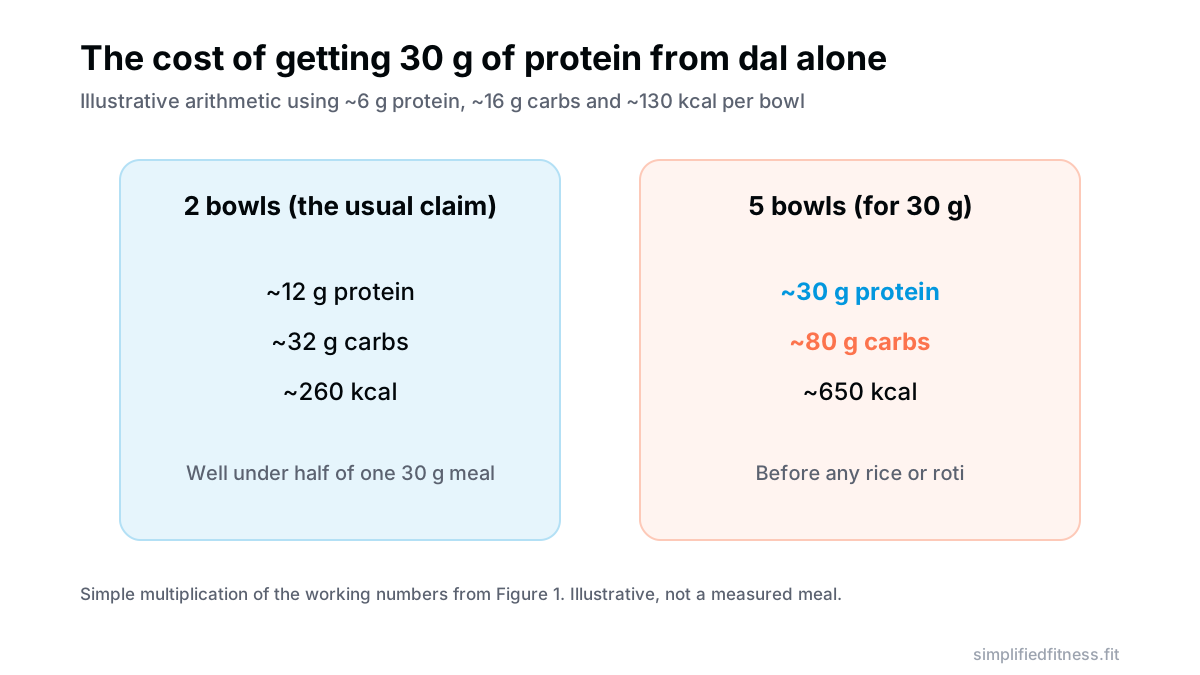
Now compare that to what you need. A 2018 meta-analysis of 49 trials in healthy adults found that muscle gains from protein levelled off at total intakes of about 1.6 g/kg/day (Morton et al., 2018). For a 70 kg lifter that is around 112 g a day. Two bowls of dal cover roughly a tenth of that. The remaining 100 g has to come from somewhere else.
You can get your own number in seconds with our protein calculator.
Is dal an incomplete protein?
Short answer: it has a weak spot, but it is not useless.
A review of chickpea nutrition reports that chickpea has significant amounts of all the essential amino acids except the sulphur-containing ones (methionine and cysteine), and that cereals can fill that gap (Jukanti et al., 2012). Pulses in general are usually described the same way, although that review is about chickpea specifically.
That is why dal with roti or rice is not just habit. Cereals tend to run short on lysine, pulses tend to run short on sulphur amino acids, and together they cover each other.
There is some direct evidence from India. In a small study of 7 healthy young Indian men, the metabolic availability of lysine from a habitual cereal-legume vegetarian meal was 86.6%, compared with 91.9% for milk powder (Bandyopadhyay et al., 2020). The authors concluded that adding appropriately processed legumes and milk to lysine-limited cereal diets can help meet protein requirements. It was a very small sample of young men and one meal, so it is a useful signal rather than a final answer.
Digestibility is also not the main issue. A 2017 analysis of nine cooked pulse classes, including chickpea, lentils and kidney beans, found digestibility above 70% and protein quality scores above 0.5, though only navy beans qualified as a “good source” of protein under US rules (Nosworthy et al., 2017). Note that this work used rodent models and Canadian pulses, so it does not tell us exactly how your home-cooked toor dal behaves.
If you want the deeper scoring story, see our explainer on DIAAS vs PDCAAS protein quality.
Does plant protein build muscle as well?
Largely, if the total is high enough.
A 2021 meta-analysis of randomised controlled trials (18 articles in the review, 16 in the meta-analysis) found that protein source did not change absolute lean mass or strength gains, but animal protein favoured percent lean mass. Adults under 50 gained about 0.41 kg more lean mass with animal protein (Lim et al., 2021). Baseline protein intakes in those trials were generally already above recommended levels.
A 2025 review adds a caution: diets built mostly on whole plant foods may need higher total protein and energy intakes to compensate for lower protein quality, and complementary plant proteins can help (Matthews et al., 2025). Several of the authors report funding links to dairy and meat bodies, so read the framing with that in mind, though the practical advice is mild.
The takeaway: a vegetarian can build muscle, but dal is not the efficient way to do it. We cover the bigger picture in plant vs animal protein for hypertrophy.
Why “two bowls of dal is plenty” feels true
Your parents are not making it up. Here is why the myth sticks:
- Dal is called “protein” in school textbooks and family wisdom, and relative to rice it genuinely is higher.
- For a sedentary adult eating a mixed diet, dal plus milk plus curd may be enough.
- It is cheap and filling, so people feel nourished.
The catch is that a lifter’s target is much higher. A person training for muscle wants roughly 1.6 g/kg a day. Dal-and-roti diets that look fine for a desk job leave a lifter well short. We look at that gap in more depth in our post on the traditional Indian diet and protein deficiency.
How to build a plate that actually works
You do not need to drop dal. You need to put a real protein anchor next to it.
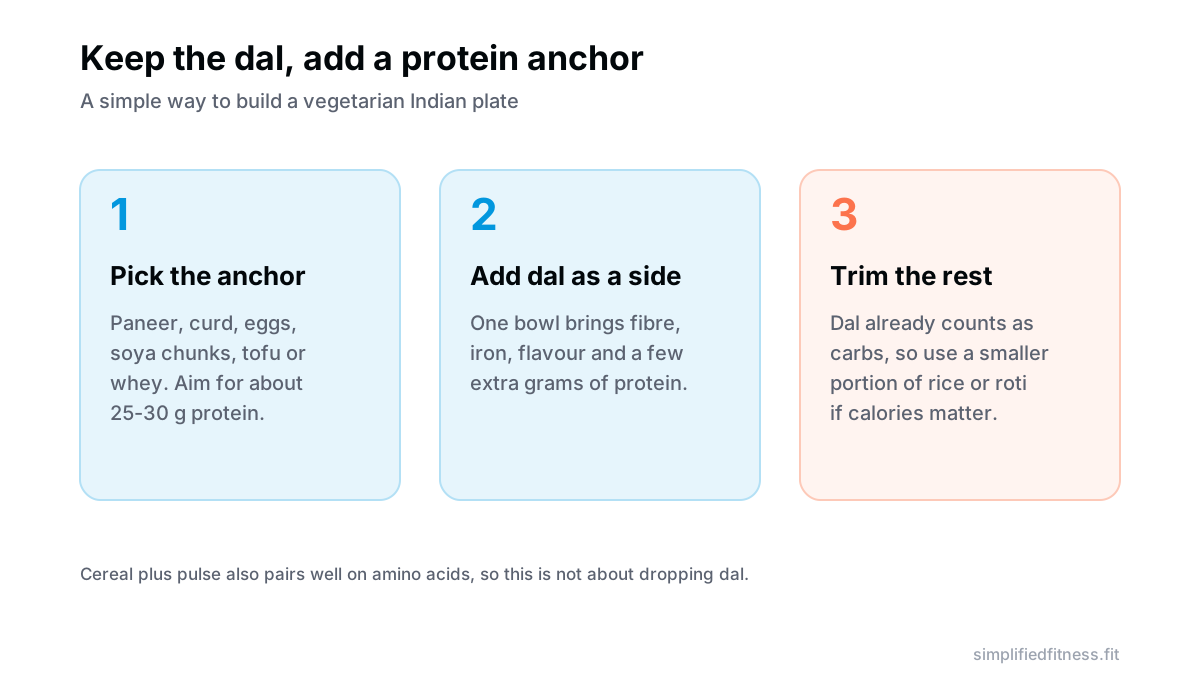
A few Indian combinations that work:
- Paneer or curd plus dal. One bowl of dal, a serving of paneer bhurji or a katori of thick curd. See paneer vs low-fat paneer and hung curd and Greek yogurt.
- Soya chunks with rajma or chana. Soya chunks are far more protein-dense than any dal. Details and safety are in our soya chunks guide.
- Eggs on the side, if you eat them. Two or three eggs next to your dal and roti change the meal completely.
- Moong chilla with a curd side. Moong becomes a flatter, thicker food, so each bite has more protein than a thin dal.
- A whey scoop when the day is running short. It is a convenient top-up, not a requirement.
A simple plan to start from: one bowl of dal as a side, a 25-30 g protein anchor, and a smaller portion of rice or roti. For a full day laid out, see our vegetarian 1,800 kcal, 140 g protein plan or build your own with the free diet plan tool.
How should lifters use dal, moong, chana and rajma?
Quick rules:
- Log dal as carbs. Note its protein as a bonus.
- Keep one bowl at lunch or dinner for fibre, iron and flavour.
- Watch the tadka. Oil and ghee add calories fast without adding protein.
- Soak and pressure cook if pulses upset your stomach. A review notes cooking can reduce anti-nutritional factors in chickpea, so it helps digestion even if it does not change the protein total.
- Do not drop dal on a cut. It is filling and cheap. Just keep the portion measured.
When to see a doctor
If you have kidney disease, diabetes, gout or a digestive condition, dal and other pulses can interact with your diet plan, for example through potassium, carbohydrate load or gas. Check with your doctor or a registered dietitian before making big changes to protein or pulse intake. If you suspect a protein or iron deficiency (constant tiredness, hair shedding, poor recovery), get it tested rather than guessing.
The bottom line
Dal is a good food and a poor protein anchor. A normal bowl has roughly 5-9 g of protein and a lot more carbohydrate, so counting it as protein quietly leaves vegetarian lifters short. The amino acid story is better than the myth-busters sometimes claim, especially when you eat it with roti or rice, but the numbers still do not add up to a high-protein meal.
Keep the dal. Add paneer, curd, eggs, soya or tofu next to it. Trim the rice. That is the whole fix, and for many Indian vegetarians it is the simplest way to close the protein gap.
Frequently Asked Questions
Is dal a good source of protein?
Dal is a modest source of protein, not a strong one. A normal home bowl gives roughly 5-9 g of protein but carries about 12-23 g of carbohydrate, so more of its energy comes from carbs than from protein. Use dal as a fibre-rich carb side and build your protein around paneer, curd, eggs, soya or tofu.
How much protein is in one bowl of dal?
It depends on the size of the bowl and how thick the dal is, but 5-9 g is a realistic range for a home-style katori. Thin, watery dal sits at the low end, and thick dal made with more lentils sits higher. Weigh your own portion cooked once and check it against a food database to get your personal number.
Is dal a carb or a protein?
In terms of what you eat, dal is mostly carbohydrate with a meaningful amount of protein and fibre. Pulses are plant seeds, and the bulk of their dry weight is starch. Count your dal toward your carb budget and treat its protein as a bonus.
Is moong dal high in protein?
Moong dal is a decent plant protein by pulse standards, but it is still more carbohydrate than protein once cooked. Cooking adds water, which dilutes both. If you want a higher protein moong dish, moong chilla with a paneer or curd side is a more practical route than a thin dal.
Do chana and rajma have more protein than dal?
Chana and rajma are similar to dal in the sense that they are also carbohydrate-rich pulses with a useful amount of protein. A thick rajma or chana masala bowl may give a bit more protein than a thin dal because there is more solid food per spoonful. They are still not a substitute for a dedicated protein food.
How many bowls of dal do I need for 30 g of protein?
With working numbers of about 6 g of protein per thin home bowl, you would need about 5 bowls, which brings roughly 80 g of carbs and around 650 kcal with a teaspoon of tadka fat in each. Even at a generous 9 g per bowl you would need over 3 bowls. This is why pairing dal with a concentrated protein source is far more practical.
Is dal an incomplete protein?
Pulses are usually described as limited in sulphur-containing amino acids, and a review on chickpea says chickpea has significant amounts of all essential amino acids except those. Cereals cover that gap, which is why dal with roti or rice works. Over a day of varied meals, this is rarely a problem for most people.
Do I need to eat dal and rice together in the same meal?
No. Amino acid pairing works across the day, not only inside one plate, and the gap in dal is small to begin with. Eating dal and rice or roti together is still a convenient habit that covers the gap.
Can vegetarians build muscle on dal and roti alone?
It is possible in principle but difficult, because dal and roti together give a lot of carbs for each gram of protein. You would likely overshoot calories before reaching a useful protein intake. Adding paneer, curd, eggs, soya or a whey shake makes it far easier to reach about 1.6 g/kg per day.
Is plant protein worse than animal protein for muscle?
Not dramatically. A 2021 meta-analysis of randomised trials found no difference in absolute lean mass or strength change by protein source, though animal protein did favour percent lean mass, especially in adults under 50. Total daily protein matters more than source, but plant-heavy diets may need a bit more total protein.
Should I stop eating dal if I want to lose fat?
No. Dal is filling, has fibre and costs little, so it can fit a fat loss diet. Just log it as carbs, keep the portion sensible and cook it with less oil and ghee in the tadka.
Does soaking or pressure cooking change dal protein?
Cooking methods mainly change digestibility and anti-nutritional factors, not the amount of protein in a meaningful way. A review notes that anti-nutritional factors in chickpea can be reduced by different cooking techniques. Soaking and pressure cooking are good habits for digestion, but they will not turn dal into a high-protein food.
How much protein should a lifter eat per day?
A meta-analysis of 49 trials found that gains in fat-free mass levelled off above total protein intakes of about 1.6 g/kg/day. That is around 112 g a day for a 70 kg person. Use our protein calculator to set your own number.
Sources & References
Every claim above is checked against peer-reviewed research (PubMed, U.S. National Library of Medicine) or guidance from established health bodies. How we fact-check.
- Morton RW, et al. A systematic review, meta-analysis and meta-regression of the effect of protein supplementation on resistance training-induced gains in muscle mass and strength in healthy adults. Br J Sports Med. 2018. PMID: 28698222
- Lim MT, et al. Animal Protein versus Plant Protein in Supporting Lean Mass and Muscle Strength: A Systematic Review and Meta-Analysis of Randomized Controlled Trials. Nutrients. 2021. PMID: 33670701
- Bandyopadhyay S, et al. Metabolic Availability of Lysine in Milk and a Vegetarian Cereal-Legume Meal Determined by the Indicator Amino Acid Oxidation Method in Indian Men. J Nutr. 2020. PMID: 32840572
- Nosworthy MG, et al. Determination of the protein quality of cooked Canadian pulses. Food Sci Nutr. 2017. PMID: 28748078
- Jukanti AK, et al. Nutritional quality and health benefits of chickpea (Cicer arietinum L.): a review. Br J Nutr. 2012. PMID: 22916806
- Matthews JJ, et al. Understanding Dietary Protein Quality: Digestible Indispensable Amino Acid Scores and Beyond. J Nutr. 2025. PMID: 40675340
- U.S. Department of Agriculture. FoodData Central, SR Legacy dataset (nutrient values per 100 g). fdc.nal.usda.gov

Umair Hazrami · Founder & Head Coach, Simplified Fitness
Umair Hazrami founded Simplified Fitness and the Simplified Lifter channel to cut through fitness noise. With 4+ years of consistent training and 10+ coaching clients, he writes every guide from the peer-reviewed research and links the sources so you can check them. Our editorial standards.
Educational content only, not medical advice. If you have a medical condition, are pregnant, or take medication, talk to a qualified doctor before changing your diet, supplements or training. Full disclaimer.
Keep reading
Indian Diet
Budget Indian Diet for 120g Protein Under ₹100 a Day (Student Plan)
A budget Indian diet for 120g protein under 100 rupees a day: soya, eggs, milk and chana, with protein per rupee maths and two student plans you can copy.
8 min read
Indian Diet
Chicken Breast and Fish in India: Where to Buy, How to Cook, and Cost per 30 g Protein
Chicken breast price per kg India: compare wet market vs apps, learn safe handling, a brine method for juicy meat, and rohu vs chicken cost per 30 g protein.
11 min read
Indian Diet
How to Convince Indian Parents About Whey Protein: Kidney Fears, 'Chemicals' and the Real Evidence
How to convince Indian parents about whey protein: explain it as paneer-water dairy, answer the kidney fear with trial data, and read the label together.
9 min read
Indian Diet
Curd vs Greek Yogurt vs Hung Curd: Protein Yield and the Home Recipe
Curd vs Greek yogurt protein in India: plain dahi gives about 3-4 g per 100 g. See how straining it into hung curd can triple that, and what studies show.
9 min read