Gluteus Maximus Hypertrophy: Hip Thrusts vs Deep Squats vs Back Extensions
Gluteus maximus hypertrophy: do hip thrusts or deep squats build bigger glutes? See what the EMG and MRI studies show, and a 3-exercise plan to use.
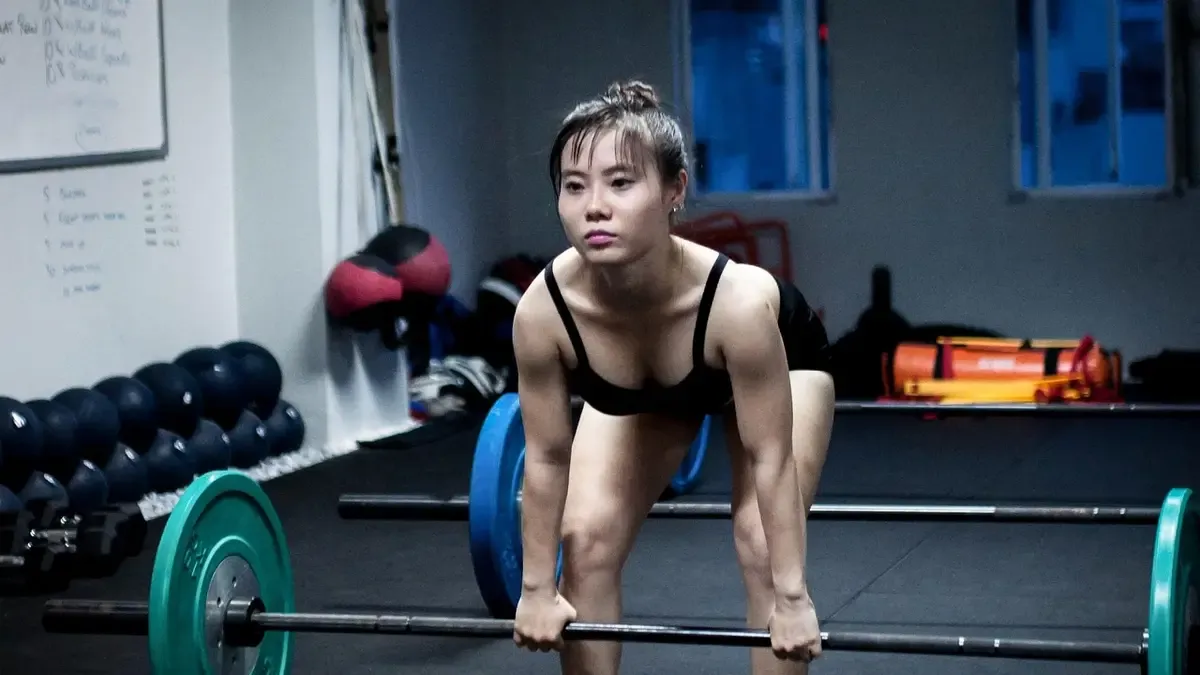
TL;DR. The short answer
- Neither exercise has clearly won. In a 9-week MRI trial in untrained people, hip thrusts and back squats grew the glutes by similar amounts, while squats also grew the quads and adductors more.
- Hip thrusts produce higher glute EMG than squats at the same relative effort (about 70-87% vs 29-45% in trained women), but EMG is a poor predictor of how much muscle you actually build.
- Deep squats challenge the glutes in a stretched position at the bottom; hip thrusts are hardest at lockout, where the glutes are shortened. Using both is a sensible way to cover the whole range.
- A 45-degree back extension activated the glutes about as much as a Romanian deadlift in one study of trained women, so it is a decent third exercise, though growth data for it is missing.
- A practical plan: deep squat or similar, hip thrust, and a back extension or RDL, around 2-3 hard sets each, twice a week.
Part of our complete guide: Complete Lower-Body & Core Training Guide: Quads, Glutes, Hamstrings, Calves & Abs Science
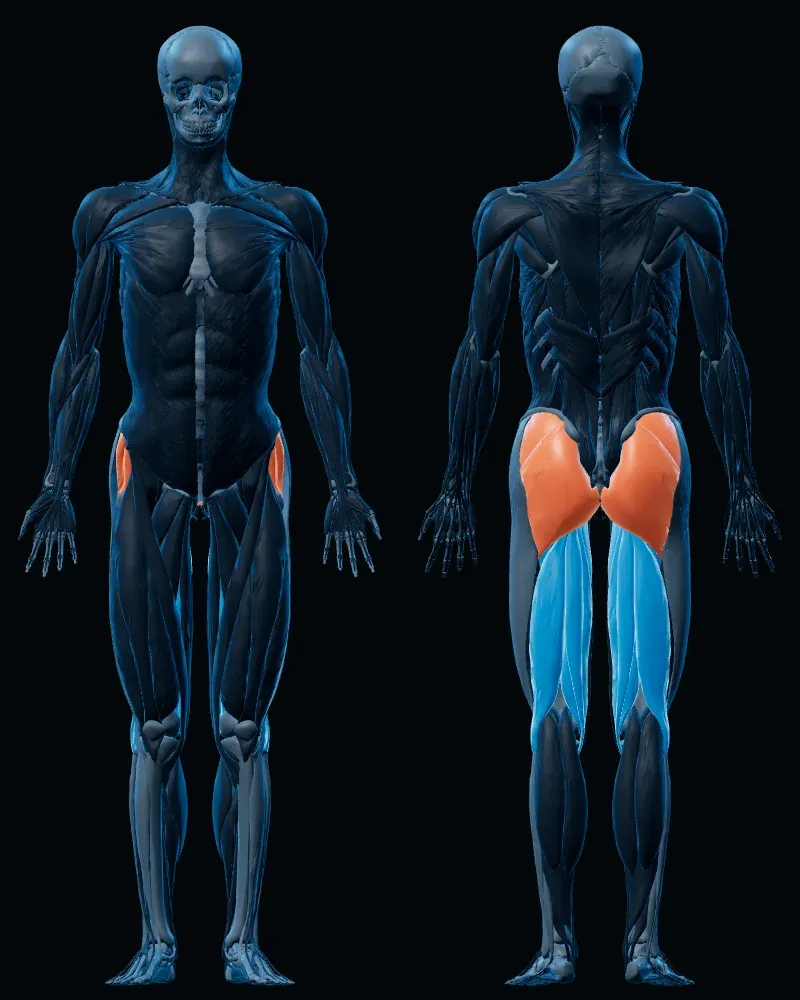
Muscles worked: glutes
Main movers: gluteus maximus, medius and minimus
Assisting: hamstrings and adductor magnus
Table of contents
Gluteus maximus hypertrophy does not hinge on picking hip thrusts or deep squats. In the best head-to-head MRI trial so far, both built similar glute size, and the squat also grew more thigh muscle. The smartest move for most lifters is to use both, then add a hip hinge such as a back extension.
This guide sits inside our complete lower-body and core training guide, and it goes narrower on one question: what actually grows the glutes, and in what order should you use the tools?
Hip thrust vs squat for glutes: what the studies actually show
The internet has made this a tribal fight. Thrust people point at EMG. Squat people point at heavy numbers. Both are half right.
Start with the electrical activity. In 13 trained women lifting estimated 10-rep-max loads, the barbell hip thrust produced much higher mean glute EMG than the back squat: 69.5% vs 29.4% for the upper gluteus maximus, and 86.8% vs 45.4% for the lower portion (Contreras et al., 2015). The thrust also hit the biceps femoris harder. Vastus lateralis (a quad muscle) showed no meaningful difference.
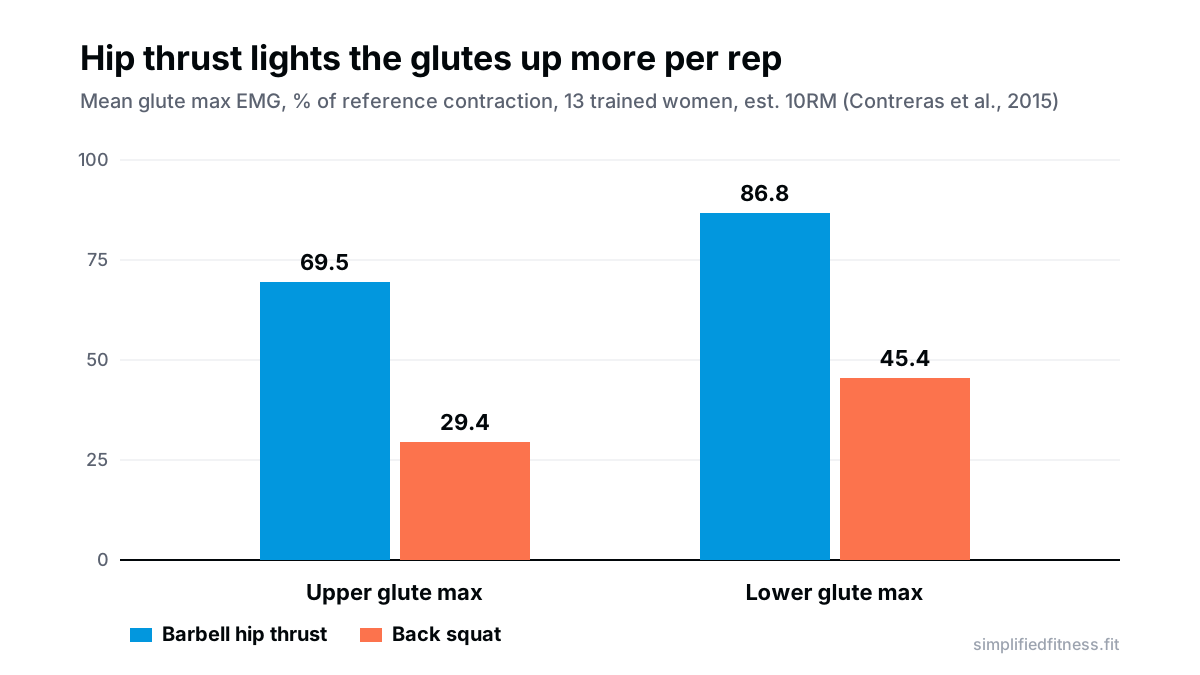
Now the part people skip. The authors themselves said longitudinal studies were needed to see whether higher activation matters for strength or size. Later work suggests it does not predict very well.
Here is the 2023 trial. Researchers randomised 34 untrained college-aged people to hip thrust or back squat training for 9 weeks, matched on sets, and measured gluteal size with MRI. Glute growth was similar in both groups. The estimates modestly favoured the thrust at the lower, mid and upper glute, but with wide uncertainty (for example -1.6 cm² for the lower glute, 95% CI -6.1 to 2.0). The squat group grew more quadriceps and adductor size. The thrust produced higher EMG in the first session, yet that “did not consistently predict gluteal hypertrophy outcomes” (Plotkin et al., 2023).
When the studies disagree
A second trial points the other way. In 22 well-trained women, 12 weeks of back squat or hip thrust training both increased hip extensor muscle thickness, but squats did more for the gluteus maximus (9.4% vs 3.7%) and the quadriceps (12.2% vs 2%) (Barbalho et al., 2020).
So what do we do with that? Study A (untrained, 9 weeks, MRI) found roughly equal glute growth. Study B (trained women, 12 weeks, muscle thickness) found squats ahead. The designs differ: training status, session volume and measurement method are not the same, and both samples are small. A reasonable reading is that squats are a genuinely strong glute builder, not just a quad exercise, and that the thrust’s edge in EMG has not turned into a clear growth edge.
Pooling the literature helps. A 2025 meta-analysis of 12 studies found resistance training has a moderate effect on gluteus maximus hypertrophy (SMD 0.71). Its authors noted that parallel or full range squats significantly enhanced glute growth, that leg press and kneeling hip extensions also work, and that when glute size is the priority, the barbell hip thrust should be prioritised (Krause Neto et al., 2025). Combined hip extension programs were also effective.
Do deep squats build bigger glutes than half squats?
Depth matters more than most lifters assume. In a small 10-week trial, 17 young men trained either full or half squats. Gluteus maximus volume rose about 6.7% with full squats versus about 2.2% with half squats, and the full group also gained more adductor volume (Kubo et al., 2019).
A biomechanics study in ten strength-trained women found hip extensor effort rose with both greater squat depth and heavier loads (Bryanton et al., 2012). A systematic review of range-of-motion trials also concluded that training through a full range of motion benefits lower-body hypertrophy compared with partial range (Schoenfeld and Grgic, 2020).
The caveat: these are small studies, mostly in young people, so depth is a likely advantage rather than a guarantee. For the full depth debate, see our article on squat depth science, parallel vs deep and how hip flexion depth changes adductor magnus and glute recruitment.
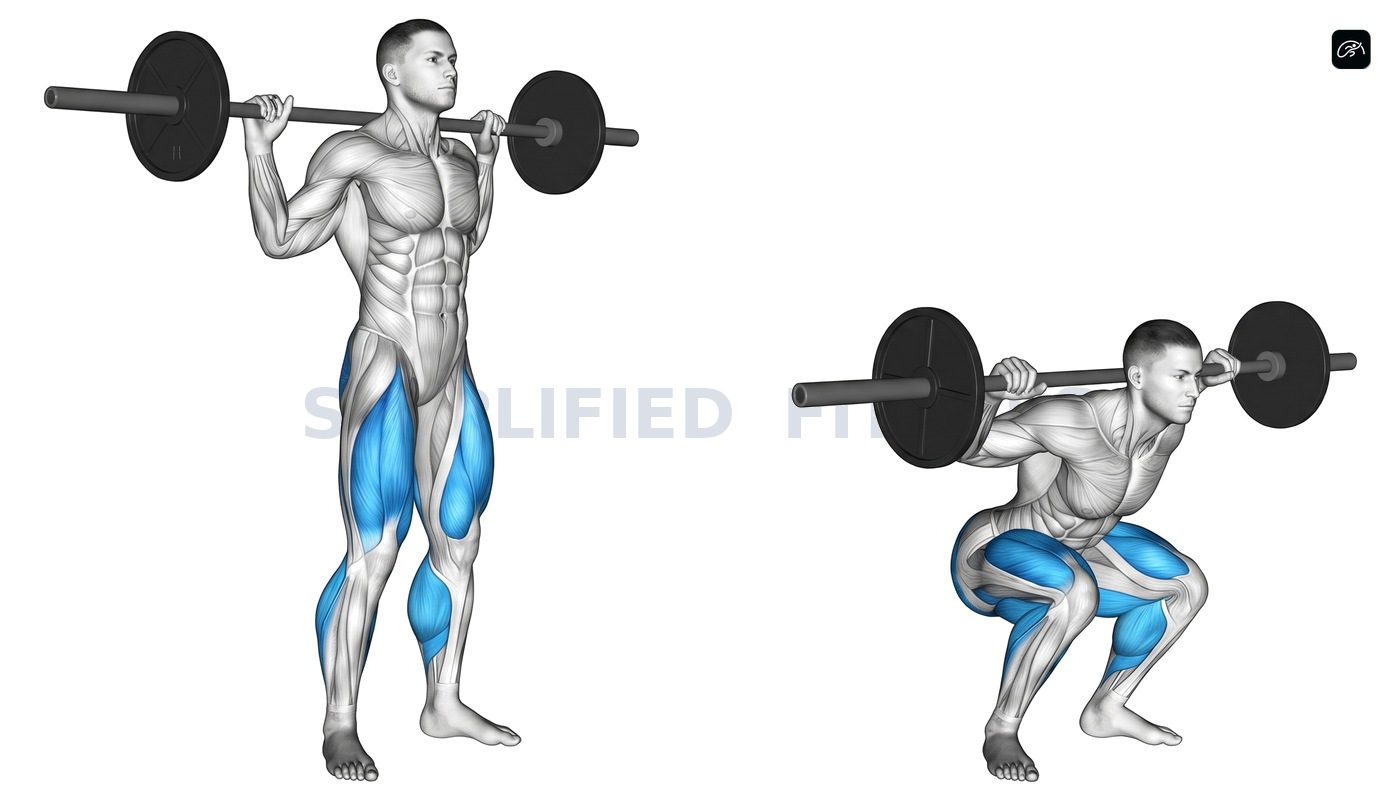
The shortened vs lengthened idea: where each exercise loads the glutes
Here is the coaching logic behind pairing these lifts. It is a reasoning framework from training principles, not a result any single trial here directly tested.
- Deep squat: the hips are most flexed at the bottom, so the glutes work in a stretched position. This is where many lifters feel the glutes the most on the way up.
- Barbell hip thrust: the hardest part is at lockout, with the hips extended and the glutes in a shortened position.
- 45-degree back extension: a long hinge range with a hamstring-and-glute emphasis that sits between the two.
The reason to care is that lengthened-range loading looks promising for growth in general (see our article on range of motion and stretch-mediated hypertrophy), while the thrust gives you very high tension at the other end. Combining them is a sensible way to cover the whole range, even though no trial here tested that exact combination.
Hip thrust form: the posterior tilt cue
If hip thrusts make your lower back burn and your glutes feel nothing, the fix is often position, not load.
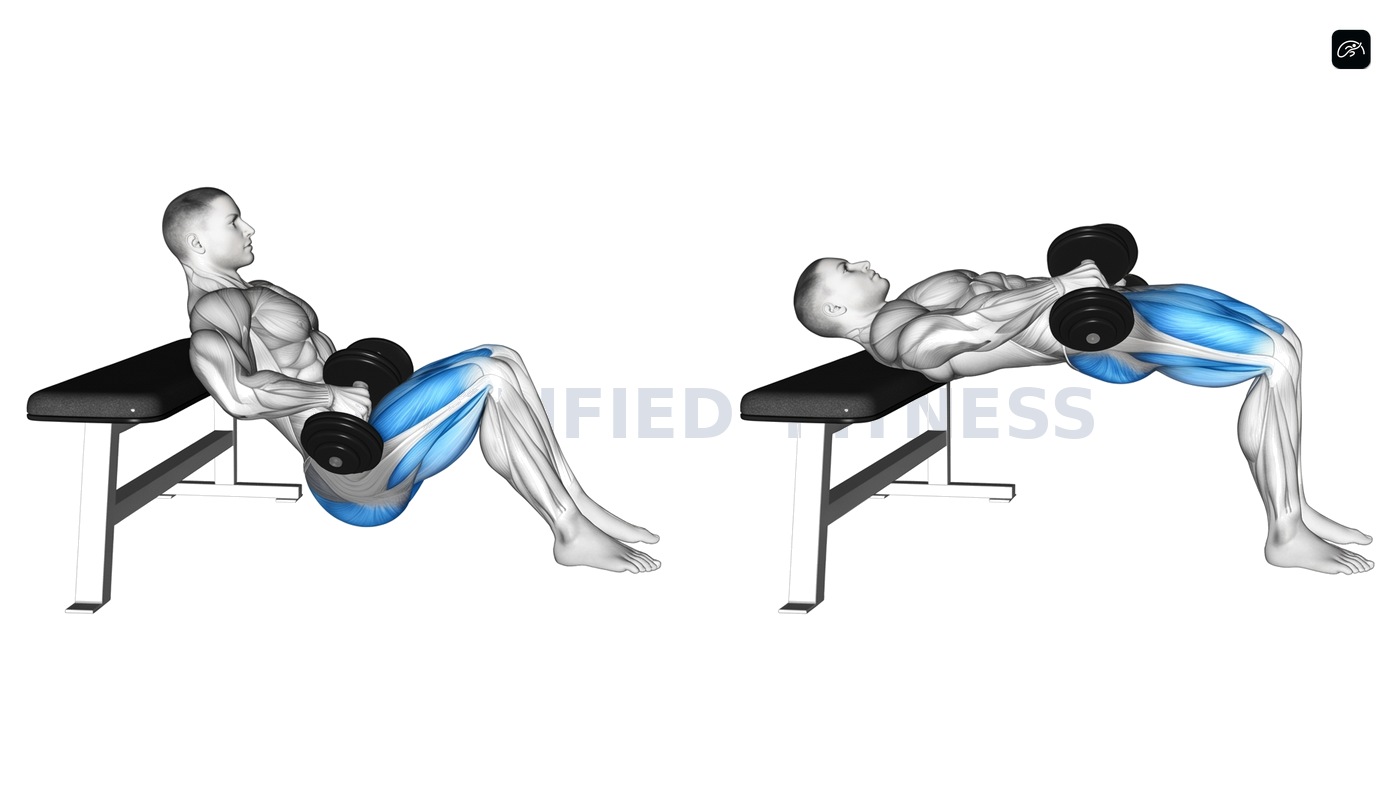
- Set your upper back on the bench with feet about shoulder-width apart, shins roughly vertical at the top.
- Tuck your chin slightly and keep your eyes on a point ahead of you.
- Pull your ribs down toward your hips before you drive.
- Finish with a small posterior pelvic tilt, so the top feels like a hard glute squeeze instead of an arched back.
- Pause for a beat, lower under control, repeat.
The posterior tilt cue is common coaching practice. I have not found a trial that tests it against other cues on glute growth, so treat it as a practical way to avoid compensating with the back, not a proven size booster.
Are 45-degree back extensions good for glutes?
They can be, if you hinge from the hips.
In 15 resistance-trained women using 6-rep-max loads, the 45-degree Roman chair back extension and the Romanian deadlift activated the gluteus maximus more than a seated machine back extension (by 94-140%). The Roman chair also produced the highest biceps femoris activation, and erector spinae activity did not differ between the three (Andersen et al., 2021).
That is activation, not growth, and I did not find a hypertrophy trial for it. But it makes the Roman chair a cheap, joint-friendly third exercise. For the hinge pattern itself, our Romanian deadlift guide covers the setup.
How to do it for glutes:
- Set the pad just below your hip bones so you can fold at the hips.
- Round your upper back very slightly, or hold it neutral if that is more comfortable, and keep it fixed.
- Lower until you feel a stretch in the glutes and hamstrings, then drive up until your body is in a straight line. Do not swing past that.
- Add a plate or dumbbell held to your chest once 15 clean reps feels easy.
What about flaring the feet? Lifters often ask about it, but I found no trial showing that turning the toes out changes glute growth. Some lifters feel more glute work with a slight turnout. Use whichever position lets you hinge cleanly, and consider it personal preference.
The 3-exercise glute blueprint
Putting the evidence into a plan. This is an illustrative template built from the studies above, not a protocol that has been tested as a package.
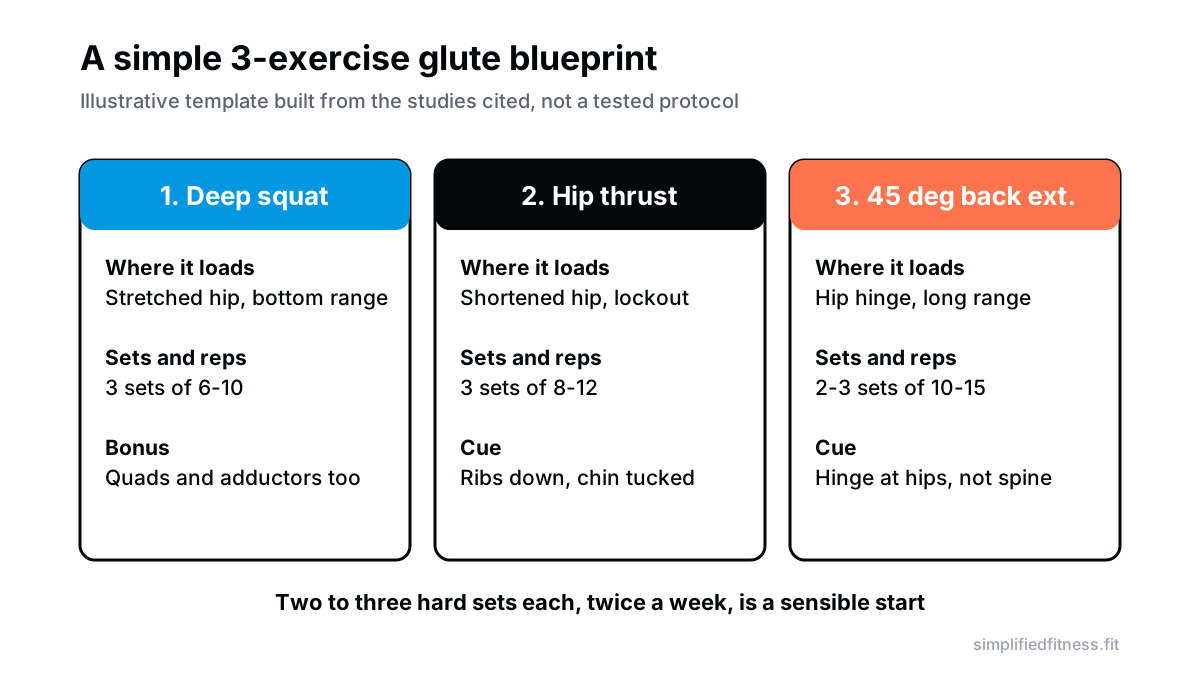
| Exercise | Role | Sets x reps | Notes |
|---|---|---|---|
| Deep squat (or leg press, split squat) | Stretched-range load, quads and adductors too | 3 x 6-10 | Go as deep as you can control |
| Barbell hip thrust | Shortened-range load | 3 x 8-12 | Ribs down, small posterior tilt |
| 45-degree back extension or RDL | Hinge pattern, hamstring and glute | 2-3 x 10-15 | Hinge at hips, spine fixed |
Run it as two lower-body days. On one day lead with the squat; on the other, lead with the hip thrust and finish with the hinge. Keep most sets 1-3 reps from failure and add a rep or a bit of load when you can. If you want to size your volume, use our training volume calculator or check the free leg day plan.
For wider context on weekly set counts, see our training volume and frequency guide. To organise glute work with quad and hamstring sessions, see complete leg workout programming. If you need a lower-load option on days your back is cranky, unilateral work like Bulgarian split squats and lunges is an easy swap. And for the smaller glutes on the side, see gluteus medius and minimus training.
Indian gym context: gear, food and budget
Plenty of Indian gyms have no thrust bench or barbell pad. A flat bench plus a barbell with a folded towel or a squat pad works, or use a dumbbell across the hips.
Growth needs fuel. If you are vegetarian, build protein around dal, paneer, curd, soya chunks and eggs if you eat them, and aim for roughly 1.6-2.2 g/kg of protein per day, a range commonly recommended for muscle gain. Our protein calculator gives you a personal number. In a hot climate, lighter loads on a sweaty day are better than ugly reps.
Safety: when to see a doctor
Muscle soreness and a pump are normal. Sharp pain in the lower back, hip pinching at the bottom of a squat, or pain that travels down the leg is not. If it keeps happening, or if you have a known hip, spine or pelvic condition, see a doctor or physiotherapist before pushing heavier. Posture cues here are general coaching advice, not a diagnosis of any movement problem.
Putting it together
Do not pick a side. Squat deep, thrust heavy, hinge with control, and keep adding load slowly. Glutes respond to hard, progressive sets across a full range, and the best exercise is the one you can train hard, consistently, without pain.
Frequently Asked Questions
Are hip thrusts better than squats for glute growth?
Not clearly. In a 9-week MRI trial in untrained adults, hip thrust and back squat training produced similar gluteal growth, with a modest, uncertain edge for the thrust. A 12-week trial in well-trained women found squats grew the gluteus maximus more. Use both rather than betting on one.
Do hip thrusts activate the glutes more than squats?
Yes, in the lab. Trained women using about 10-rep-max loads showed roughly 70% vs 29% mean upper glute EMG and 87% vs 45% lower glute EMG for the thrust versus the squat. Higher electrical activity does not reliably predict more growth, so treat it as a clue, not a verdict.
Do deep squats build bigger glutes than half squats?
Probably, based on limited data. In a 10-week trial of 17 young men, full squats raised gluteus maximus volume by about 6.7% versus about 2.2% for half squats. The sample was small, so aim for the deepest depth you can control with a neutral spine.
How low should I squat for glutes?
As deep as you can go while keeping your pelvis and lower back steady. Deeper depth increases the effort demanded of the hip extensors, and a 2025 meta-analysis found parallel or full range squats enhanced glute growth. If your pelvis tucks under at the bottom, stop just above that point.
Are 45-degree back extensions good for glutes?
They are a reasonable option. In 15 resistance-trained women, the Roman chair back extension activated the glutes more than a seated back extension machine and similarly to the Romanian deadlift. No long-term growth trial was in the evidence I reviewed, so use it as a supporting exercise.
Should I flare my feet on back extensions?
There is no good trial evidence that foot flare changes glute growth. Some lifters like a slight turnout because it feels more glute dominant, which is a cue, not a proven effect. Pick the foot position where you feel the hip hinge and keep your spine neutral.
How many sets of glute work do I need per week?
There is no glute-specific number. Roughly 10 or more hard sets per muscle group per week is a common recommendation from general hypertrophy research. Squats and thrusts both count toward your glutes. Start around 8-12 hard sets across your lower-body days and add only if you recover well.
How often should I train glutes?
Twice a week is a sensible default. You can split the work across separate days, such as a squat day and a hip thrust or hinge day. Spread your sets rather than cramming them into one session.
How do I stop feeling hip thrusts in my lower back?
Lower-back burn often means the ribs are flaring and the lumbar spine is arching at the top. Tuck your chin, pull your ribs down, and finish with a slight posterior pelvic tilt so the hips, not the spine, do the lockout. Lighten the load until the position holds.
Can I build glutes with squats alone?
You can grow glutes with squats, as the 12-week trial in trained women showed. But squats cannot pick where the glutes get loaded as precisely as a thrust can. Adding one hip-extension exercise is a low-cost way to cover the shortened range.
Do I need a barbell for hip thrusts?
No. Any way of loading a hip extension works: a dumbbell on the hips, a machine, a band or single-leg variations. The research on thrusts used barbells, so a heavy barbell is the best tested option, but progressive loading matters more than the tool.
What is the best glute exercise according to science?
No single exercise wins. A 2025 meta-analysis of 12 studies found many hip-extension exercises grow the glutes, and suggested the barbell hip thrust should be prioritised when glute size is the goal at the expense of other muscles. Combine a squat pattern, a thrust and a hinge for the broadest stimulus.
Sources & References
Every claim above is checked against peer-reviewed research (PubMed, U.S. National Library of Medicine) or guidance from established health bodies. How we fact-check.
- Plotkin DL, et al. Hip thrust and back squat training elicit similar gluteus muscle hypertrophy and transfer similarly to the deadlift. Front Physiol. 2023. PMID: 37877099
- Barbalho M, et al. Back squat vs. hip thrust resistance-training programs in well-trained women. Int J Sports Med. 2020. PMID: 31975359
- Contreras B, et al. A comparison of gluteus maximus, biceps femoris, and vastus lateralis electromyographic activity in the back squat and barbell hip thrust exercises. J Appl Biomech. 2015. PMID: 26214739
- Krause Neto W, et al. The impact of resistance training on gluteus maximus hypertrophy: a systematic review and meta-analysis. Front Physiol. 2025. PMID: 40276368
- Kubo K, et al. Effects of squat training with different depths on lower limb muscle volumes. Eur J Appl Physiol. 2019. PMID: 31230110
- Andersen V, et al. Comparison of muscle activity in three single-joint, hip extension exercises in resistance-trained women. J Sports Sci Med. 2021. PMID: 33948095
- Bryanton MA, et al. Effect of squat depth and barbell load on relative muscular effort in squatting. J Strength Cond Res. 2012. PMID: 22797000
- Schoenfeld BJ, et al. Effects of range of motion on muscle development during resistance training interventions: a systematic review. SAGE Open Med. 2020. PMID: 32030125

Umair Hazrami · Founder & Head Coach, Simplified Fitness
Umair Hazrami founded Simplified Fitness and the Simplified Lifter channel to cut through fitness noise. With 4+ years of consistent training and 10+ coaching clients, he writes every guide from the peer-reviewed research and links the sources so you can check them. Our editorial standards.
Educational content only, not medical advice. If you have a medical condition, are pregnant, or take medication, talk to a qualified doctor before changing your diet, supplements or training. Full disclaimer.
Keep reading
Exercise Technique
Adductor Magnus Training: Seated Adductor Machine and Copenhagen Planks for Thigh Mass
Adductor magnus training explained: what research says on deep squats, the adductor machine and Copenhagen planks for thicker inner thighs and groin strength.
7 min read
Exercise Technique
High Bar vs Low Bar Squat: Which Builds More Quad Muscle?
High bar vs low bar squat for hypertrophy: what torso lean, knee travel and EMG studies show, why high-bar leans quad, and when low-bar still makes sense.
8 min read
Exercise Technique
Calf Hypertrophy Science: Standing vs Seated Calf Raises (Gastrocnemius vs Soleus)
Calf hypertrophy explained: why calves seem stubborn, what the trials say on exercise choice, stretch and foot position, plus weekly sets, reps and frequency.
9 min read
Exercise Technique
Complete Leg Workout Programming: Quad Day vs Hamstring and Glute Day
Best leg workout routine science: split leg day into a quad session and a hamstring-glute session, with sets, order and a 5-week plan that avoids burnout.
9 min read