Uneven Chest Fix: Unilateral Dumbbell and Single-Arm Cable Pressing
Uneven chest fix: rule out scoliosis and rib issues, start sets with the weaker side, and use single-arm presses. What the research does and doesn't show.
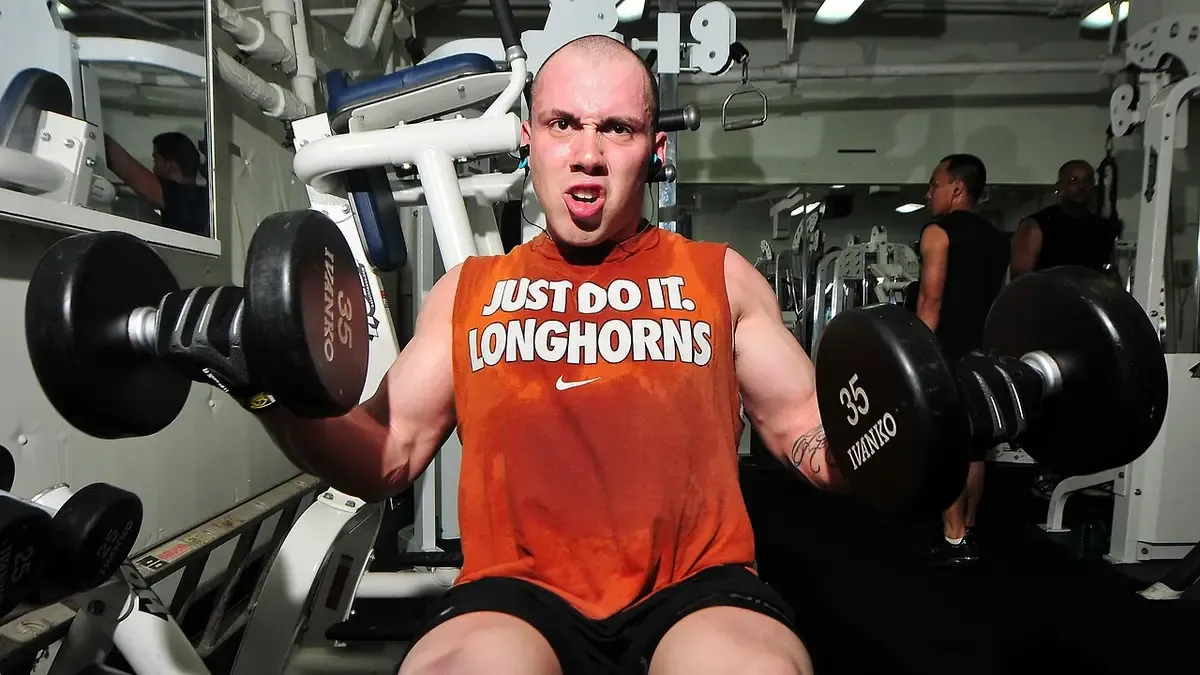
TL;DR. The short answer
- A mild size or strength difference between your two pecs is common. Rule out a structural cause (spine, rib cage, chest wall) with a doctor or physio if the unevenness is visible at rest or comes with pain.
- For a training-related imbalance, the practical fix is unilateral work: start every set with the weaker side and stop the stronger side at the same rep count.
- A 2025 meta-analysis found no difference in muscle growth between unilateral and bilateral training, so single-arm work is a tool for control and symmetry, not a growth hack.
- Training one side also raises strength in the untrained side a little (about 9% for the upper limb in one meta-analysis), which is why you must never give the strong side extra reps.
- Give any new protocol 8-12 weeks and track with monthly photos in the same light before you change anything.
Part of our complete guide: The Complete Chest Workout Guide: Pec Anatomy, Bench Angles, Flys and Shoulder-Safe Pressing
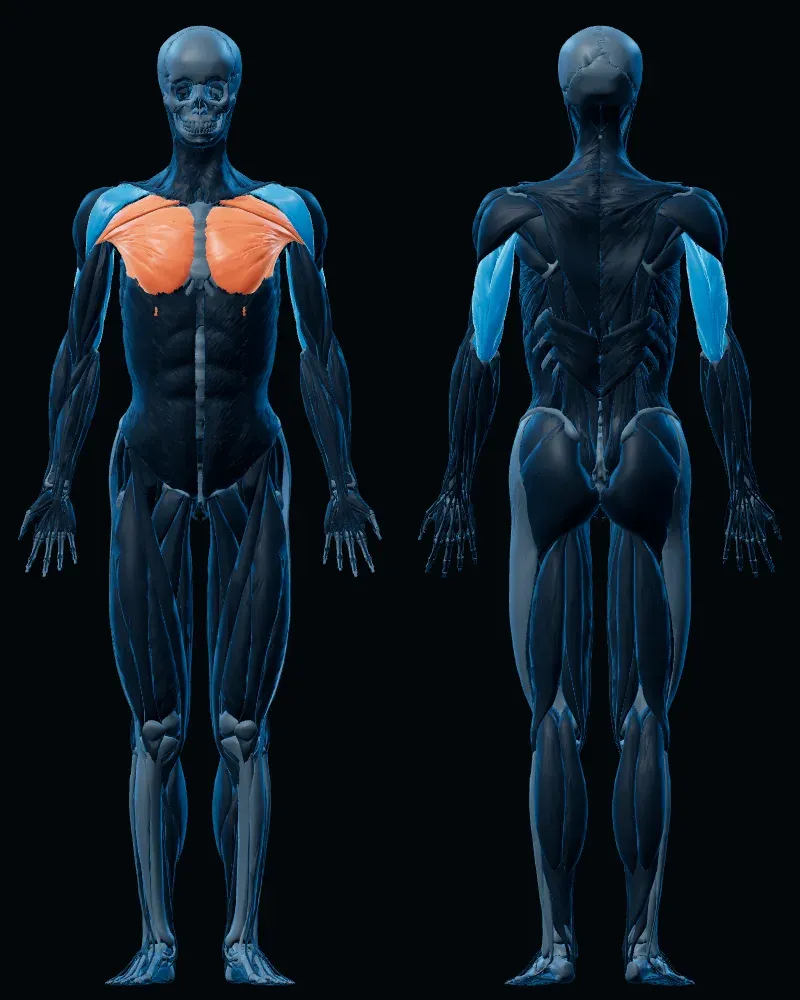
Muscles worked: chest
Main movers: pectoralis major
Assisting: front delts and triceps
Table of contents
If one pec looks smaller or presses weaker than the other, the best uneven chest fix is a two-step one. First rule out a structural cause with a doctor if the difference is obvious at rest. Then train each side on its own, starting every set with the weaker side and stopping the stronger side at the same rep count.
That is the whole idea. The rest of this guide covers how to check, how to run the protocol, and what the research can and cannot promise. It sits inside our complete chest training guide, so if you want the full picture of chest anatomy and programming, start there.
Is an uneven chest normal?
Mostly, yes. Nobody is a perfect mirror. Arm dominance, how you sit and sleep, and small differences in how each shoulder moves all leave a mark. A slightly bigger left pec or a right arm that locks out faster is something many lifters notice once they start looking.
Photos also lie. A chest shot with your torso rotated two degrees, under a gym spotlight, can look far more uneven than it is.
Dominance is a hint, not a rule. In a 12-week study of 12 active men, the nonpreferred leg started with only 4.9% to 5.8% lower isometric and eccentric strength than the preferred one, and muscle thickness was similar between sides (Baroni et al., 2016). That was the knee extensors, not the chest, in a small sample. Treat it as a reminder that small gaps are ordinary, not as chest-specific proof.
What if it is not just training? When to see a doctor
Some chest asymmetry is not about muscle at all. The shape of the rib cage, the spine and the chest wall all change how the front of your torso looks. Adolescent idiopathic scoliosis, for example, affects roughly 2% to 4% of adolescents, and a clinician screens for it with the Adam’s forward bend test (Horne et al., 2014).
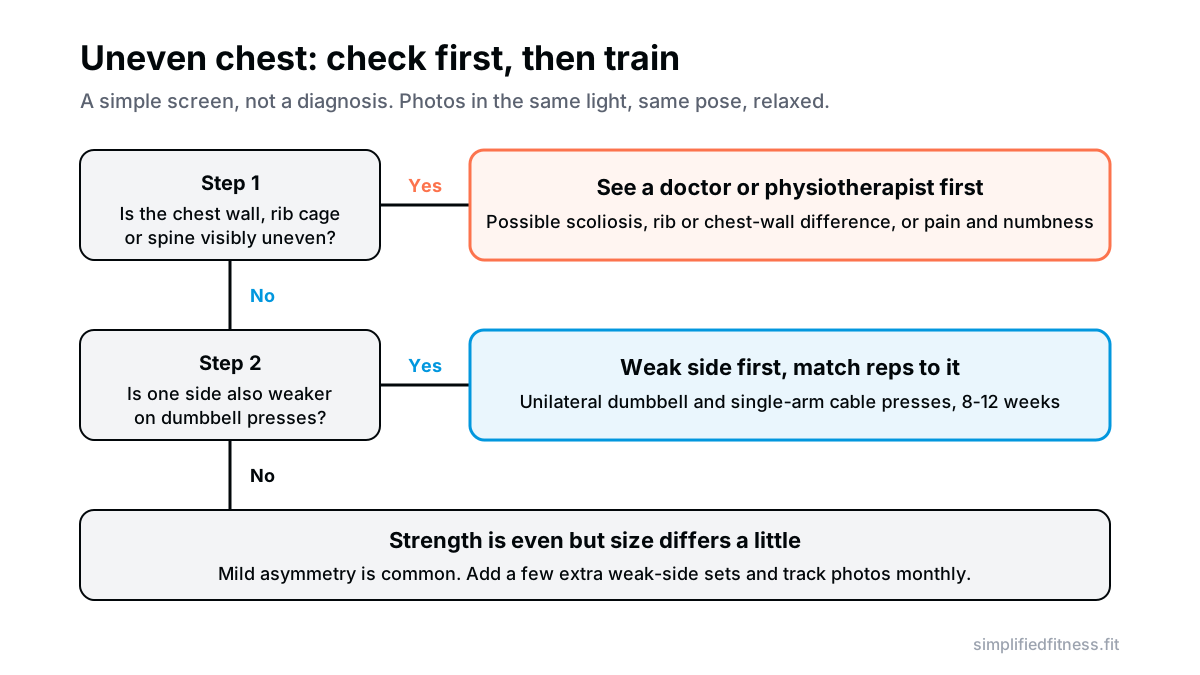
I cannot diagnose you, and no article can. Here is a simple screen for when to get checked first:
- The difference is clear when you stand relaxed, not only when you flex.
- It is new, or it is getting bigger.
- One shoulder blade sticks out, or your waist and shoulder lines look tilted.
- You feel pain, numbness, a lump or breathlessness.
Why unilateral pressing helps (and what it does not do)
With a barbell, both hands push one bar. The stronger arm can quietly do more of the work, and you will never feel it. Dumbbells and cables remove that option. Each side has to move its own weight through its own path.
Now the honest part. Unilateral training is not a muscle-building shortcut. A 2025 systematic review and meta-analysis of 9 studies found no significant difference in muscle hypertrophy between unilateral and bilateral training (effect size -0.21, 95% CI -3.56 to 3.13). Bilateral training gave a bigger gain in bilateral strength, and unilateral training gave a bigger gain in unilateral strength, which fits the idea of specificity. The authors flagged the evidence as limited and the risk of bias as moderate (Kassiano et al., 2025).
So the case for single-arm pressing is control, not magic. You get to match load and reps side by side, and you cannot hide a weak arm. For a deeper look at the trade-offs, see our guide to unilateral versus bilateral training for hypertrophy.
There is one more small point in its favour. In a unilateral chest press study of 20 participants, holding a single dumbbell instead of two produced a greater shoulder range of motion, with no difference in pec, trapezius or oblique EMG between a flat bench and the unstable COR bench (Patterson et al., 2015). Take that as a small lab finding on muscle activity and joint range, not a proven growth result.
The weaker-side-first protocol
Here is the system. It is simple on purpose.
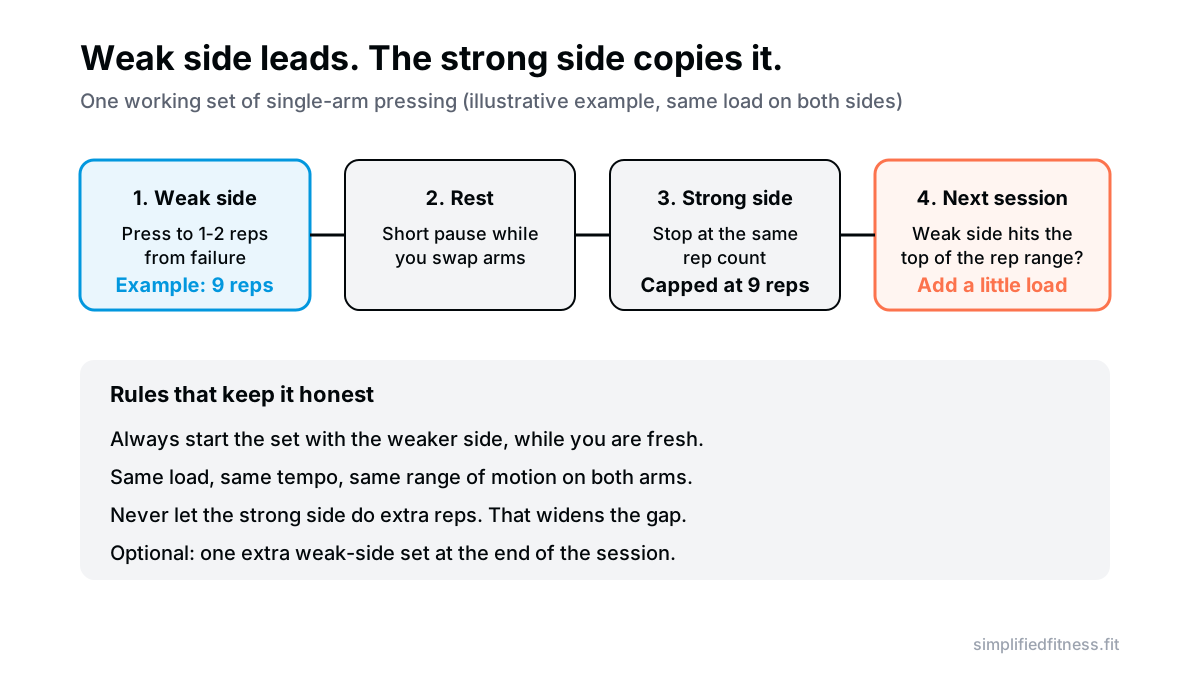
- Pick a load the weaker side can handle for 8-12 clean reps. Not what the stronger side can do.
- Start every set with the weaker side. Your first reps are your freshest. Give them to the pec that needs them.
- Stop the stronger side at the same rep count. If the weak side gets 9, the strong side gets 9. No bonus reps.
- Match tempo and depth. Same 2-second lowering, same stretch at the bottom, same lockout on both arms.
- Progress from the weak side. When the weaker arm reaches the top of the rep range with good form, add a small load.
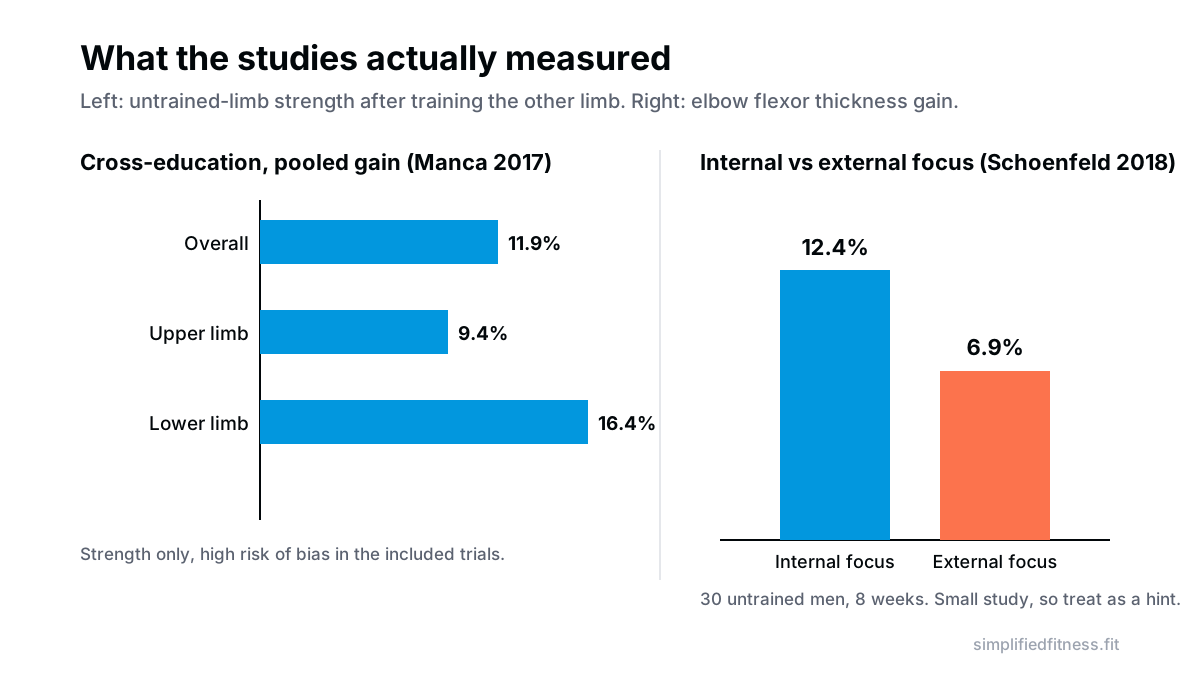
Why cap the strong side? Because training one limb raises strength in the untrained limb too. A meta-analysis of 31 randomized trials (785 participants) found an 11.9% pooled strength increase in the contralateral untrained limb, with +9.4% for the upper limb and +16.4% for the lower limb, though the included trials carried a high risk of bias (Manca et al., 2017). A newer upper-limb review of 31 studies and 1,214 participants found a small strength effect and no significant change in muscle thickness (SMD 0.14, 95% CI -0.23 to 0.51), with low to very low certainty (Hernando-Garijo et al., 2026).
In plain terms, some of that carryover is neural. It does not mean the strong side is growing, but it does mean extra strong-side reps can keep the strength gap alive. For how hard to push each set, our RIR and RPE calculator helps you pick a sensible effort.
How hard should the sets be?
Close to failure is fine, but you do not need to grind to the bitter end. A 2023 meta-analysis of 15 studies found a trivial advantage for training to set failure versus not (effect size 0.19), and no advantage for going to momentary muscular failure specifically (Refalo et al., 2023). Leave 1-2 reps in reserve on the weaker side and the cap works cleanly. If you grind to failure, the weaker side’s reps fall apart first and the target drops too low.
Exercise choices that actually work
You do not need ten exercises. Two or three, done well, are enough.
Single-arm dumbbell press. Flat or on an incline. Press one dumbbell at a time with the other hand resting on your stomach or holding a plate. The incline version also brings the upper chest in, and our incline dumbbell press angle guide covers the best bench setting.
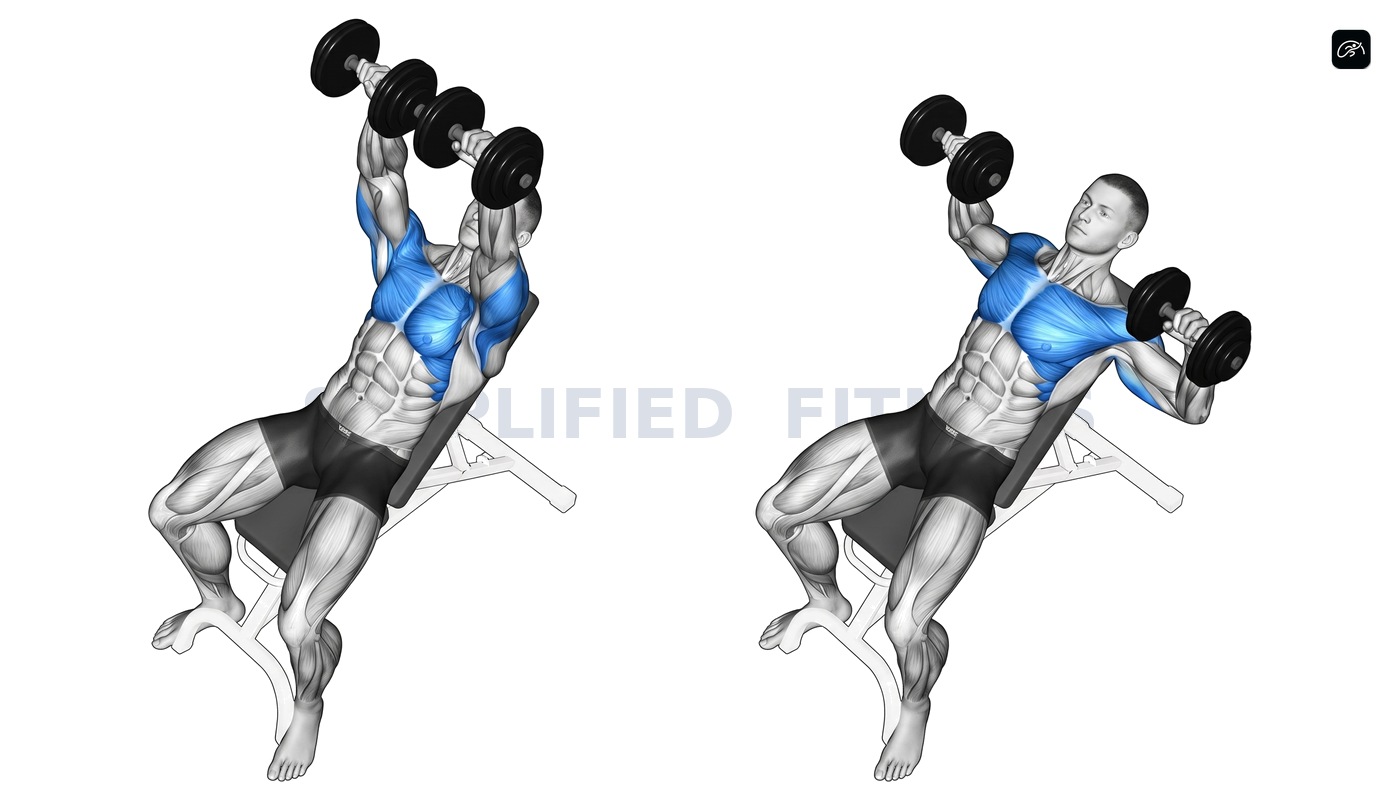
Two-dumbbell press, weak side leads. If the single-arm version feels awkward, press both dumbbells and let the weaker arm choose the weight and the rep count. The stronger arm must match it. Our comparison of dumbbell versus barbell pressing explains how the two compare.
Single-arm cable press or fly. Set the pulley at chest height, stand in a split stance and press forward without rotating your torso. Constant cable tension is useful on the weaker side, and our cable crossover angle guide shows how pulley height changes the line of pull.
Fix the torso twist
Single-arm pressing has one classic cheat: rotating. You twist toward the working arm to help the press. It feels like strength, but it moves the work off the pec.
Brace your abs, keep your ribs down and squeeze your glutes. If the weight drags you around, it is too heavy. On a flat bench, plant both feet and keep your hips level.
Mind-muscle connection for the weaker pec
Neuromuscular cues are worth trying on the weaker side, as long as you keep expectations realistic. In an 8-week trial of 30 untrained men, an internal focus (thinking about contracting the target muscle) produced 12.4% elbow flexor growth versus 6.9% with an external focus (thinking about the lift), with similar changes in the quadriceps (Schoenfeld et al., 2018). Strength changes did not reach significance.
That is a small study in untrained men looking at the biceps, not the chest. It is a reasonable reason to try, not a guarantee.
In the gym, here is what it looks like. Lower the weight slowly, feel the stretch across the pec, and think about bringing the upper arm toward your sternum, not just pushing your hand up. Keep your shoulder blades set so the shoulder is not doing the work, and our guide on scapular retraction and depression walks through that setup.
A simple weekly plan
Two chest sessions a week is plenty. Here is an example (illustrative, adjust for your own level):
| Session | Exercise | Sets x reps | Notes |
|---|---|---|---|
| Day 1 | Incline dumbbell press (weak side leads) | 3 x 8-12 | Cap strong side at weak-side reps |
| Day 1 | Single-arm cable press | 2-3 x 10-15 | No torso rotation |
| Day 2 | Flat dumbbell press (weak side leads) | 3 x 8-12 | Same tempo both sides |
| Day 2 | Single-arm cable fly | 2 x 12-15 | Stretch, then squeeze |
If you still want a barbell, keep it for one heavy set and film the bar from the front. If one end rises faster or your torso twists, drop the weight. If the heavy pressing makes your shoulder hurt, see our guide to shoulder pain on the bench press before pushing through.
An optional extra: add one or two weak-side-only sets at the end of the session. Keep it small, because extra volume can mean extra fatigue.
If you want the weekly volume of your whole program on paper, our push day plan is a useful template to adapt.
How long until you see a change?
Judge at 8-12 weeks, not at week two. Strength differences usually even out first, because a lot of early strength gain is neural. Visible size differences take longer, and a small difference may never vanish completely.
Track it properly. Take front-facing photos once a month, same time of day, same light, same pose, arms relaxed. Log the weight and reps for each side. If you see no change after 12 weeks of consistent work, check form first, then consider seeing a physio.
Be realistic. Many lifters keep a small asymmetry for life, and that is fine. The goal is a pec that pulls its weight, not a mirror image.
Key takeaways
Check for a structural cause first if the difference is visible at rest. Use unilateral dumbbell and cable presses, start with the weaker side and match reps to it. Skip bonus reps for the strong side. Give it 8-12 weeks, track with photos, and keep your expectations honest.
Frequently Asked Questions
Why is one side of my chest bigger than the other?
Most often it is a mix of arm dominance, small differences in how you press, and normal body asymmetry. A bar that tilts or a stronger arm that quietly takes more of the load can widen the gap over months. Film your top set from the front and check whether one elbow flares or one shoulder rolls forward.
Is uneven chest normal?
Yes, mild asymmetry is normal in most people and rarely means anything is wrong. Bodies are not perfect mirrors, and a small difference often looks bigger under gym lighting or in a certain pose. See a doctor if the difference is obvious at rest, has appeared recently, or comes with pain, a lump or numbness.
Can scoliosis cause an uneven chest?
It can. Adolescent idiopathic scoliosis affects roughly 2% to 4% of adolescents and can change how the ribs and torso sit, which may make one side of the chest look different. A doctor can check with a forward bend test and decide whether imaging is needed, so get it looked at before blaming your training.
Do dumbbells fix chest imbalances better than a barbell?
They give you more control over each side, but there is no strong evidence they build more muscle. A 2025 meta-analysis found no difference in muscle growth between unilateral and bilateral training. Dumbbells let the weaker side set the pace, and a barbell lets the stronger side hide the gap.
Should I start with my weaker side?
Yes. Your first reps on a set are your best reps, so giving them to the weaker pec means it gets the highest-quality work. The stronger side then copies the weaker side's rep count rather than doing more. This is a coaching convention backed by logic more than by trials of chest asymmetry.
How many reps should I do on the stronger side?
The same number you managed on the weaker side, and no more. If the weaker arm hits 9 reps, the stronger arm stops at 9 even if it has more in the tank. Extra reps on the strong side keep the gap open, and cross-education research shows training one side can also nudge the other side's strength.
How long does it take to fix chest asymmetry?
Plan on at least 8-12 weeks before judging, and expect improvement rather than perfection. Strength differences usually even out faster than visible size differences. Take front-facing photos once a month in the same lighting and pose, because the mirror changes day to day.
Are single-arm cable presses good for chest asymmetry?
They are a good option because the cable keeps tension on the pec through the whole range and each arm works independently. Stand in a split stance and resist the urge to rotate your torso to cheat the rep. Pair them with a dumbbell press so you are not relying on one exercise.
What is the mind-muscle connection and does it help?
It means focusing on squeezing the target muscle during a rep instead of just moving the weight. In an 8-week trial of 30 untrained men, an internal focus gave 12.4% elbow flexor growth versus 6.9% for an external focus. Evidence for the chest specifically is limited, so try it on light weaker-side sets without making it your whole plan.
Should I use a barbell if I have an uneven chest?
You can, but check what the bar is doing. If one side of the bar rises faster or your torso twists, the stronger side is compensating. Keep barbell work for heavy sets with a spotter and let dumbbells and cables handle most of your chest volume until the sides match.
Does the dominant arm always have the bigger chest?
Not always. One 12-week study found preferred and nonpreferred limbs started with small strength differences and showed similar muscle thickness gains. Dominance gives a hint, not a rule, so test both sides honestly with the same load and rep count.
When should I see a doctor about a lopsided chest?
See one if the difference is visible when you relax, is new or getting worse, or comes with pain, numbness, a lump or breathing trouble. A doctor or physio can separate normal asymmetry from a rib cage, spine or chest wall issue. Do that before you build a training plan around it.
Can I fix an uneven chest with only push-ups?
Standard push-ups load both arms at once, so the stronger side can still take over. Single-arm or archer-style variations help, but dumbbell and cable work make it easier to match load and reps. Use push-ups as a finisher, not as your only plan.
Sources & References
Every claim above is checked against peer-reviewed research (PubMed, U.S. National Library of Medicine) or guidance from established health bodies. How we fact-check.
- Kassiano W, et al. Comparison of muscle growth and dynamic strength adaptations induced by unilateral and bilateral resistance training: a systematic review and meta-analysis. Sports Med. 2025. PMID: 39794667
- Manca A, et al. Cross-education of muscular strength following unilateral resistance training: a meta-analysis. Eur J Appl Physiol. 2017. PMID: 28936703
- Hernando-Garijo I, et al. Cross-education of upper-limb strength and muscle thickness following unilateral resistance training: a systematic review and meta-analysis. Physiother Theory Pract. 2026. PMID: 42323824
- Baroni BM, et al. Are the responses to resistance training different between the preferred and nonpreferred limbs? J Strength Cond Res. 2016. PMID: 26900654
- Schoenfeld BJ, et al. Differential effects of attentional focus strategies during long-term resistance training. Eur J Sport Sci. 2018. PMID: 29533715
- Patterson JM, et al. Differences in unilateral chest press muscle activation and kinematics on a stable versus unstable surface while holding one versus two dumbbells. PeerJ. 2015. PMID: 26528421
- Horne JP, et al. Adolescent idiopathic scoliosis: diagnosis and management. Am Fam Physician. 2014. PMID: 24506121
- Refalo MC, et al. Influence of resistance training proximity-to-failure on skeletal muscle hypertrophy: a systematic review with meta-analysis. Sports Med. 2023. PMID: 36334240

Umair Hazrami · Founder & Head Coach, Simplified Fitness
Umair Hazrami founded Simplified Fitness and the Simplified Lifter channel to cut through fitness noise. With 4+ years of consistent training and 10+ coaching clients, he writes every guide from the peer-reviewed research and links the sources so you can check them. Our editorial standards.
Educational content only, not medical advice. If you have a medical condition, are pregnant, or take medication, talk to a qualified doctor before changing your diet, supplements or training. Full disclaimer.
Keep reading
Exercise Technique
Arching on the Bench Press: Powerlifting Spine Arch vs Bodybuilding Setup
Is a bench press arch cheating or dangerous for your back? Learn the difference between a powerlifting arch and a natural upper back setup, with study data.
8 min read
Exercise Technique
Bench Press Grip Width: Pec Activation, Triceps and Shoulder Clearance
Bench press grip width changes triceps load, shoulder stress and little else for your pecs. See what EMG and joint-load studies show and how to pick your grip.
7 min read
Exercise Technique
Cable Crossover Angles: High-to-Low vs Low-to-High vs Horizontal Fly
Cable crossover angles explained: what high-to-low, low-to-high and horizontal flys likely train, what the research really says, and how to set each one up.
9 min read
Exercise Technique
Chest Dips: Forward Lean Angle, Scapular Position, and Shoulder Safety
Chest dips can build your chest if you lean, set your shoulders and stop at a depth that suits you. See what the research says and how to dip safely.
8 min read