Scapular Retraction vs Depression: Feel Your Back in Every Pull
Scapular retraction vs depression explained: how your shoulder blades move in rows and pulldowns, which cues work, and drills to stop arm-dominant pulling.
TL;DR. The short answer
- Retraction means the shoulder blades slide toward the spine (mid traps and rhomboids). Depression means they slide down the back (lower traps, with the lats assisting). Rows lean on retraction, pulldowns and pull-ups lean on depression.
- Most 'I can't feel my back' problems come from the arms moving first. Setting the shoulder blades before you bend the elbows fixes the order.
- Thinking about the target muscle can raise its EMG activity at light to moderate loads in trained lifters, and one 8-week trial in untrained men found more arm growth with a muscle focus. It tends to fade near maximal loads.
- Drills like scapular pulls and band pull-aparts are cheap ways to practise the motion, but the research behind them is mostly lab EMG, not long-term back growth.
- Sharp pain, numbness or a winging blade that does not settle is a reason to see a doctor or physio, not to push harder.
Part of our complete guide: Complete Back Training Guide: Lats vs Upper Back, Best Exercises and a Hypertrophy Workout
Table of contents
Scapular retraction vs depression comes down to direction. Retraction slides your shoulder blades toward your spine (mid traps and rhomboids), and depression slides them down your back (lower traps, with the lats assisting). Rows lean on retraction, pulldowns and pull-ups lean on depression, and most lifters who “can’t feel their back” are skipping both and pulling with the arms.
This guide gives you the coaching cues, a short drill list and a plain look at what the research does and does not show. It sits inside our complete back training guide, and it pairs well with the arm-path side of the story in lats vs upper back: arm path and elbow flare.
Scapular retraction vs depression: what each movement is
Your shoulder blade is not bolted down. It glides on your rib cage, and every pull changes where it sits.
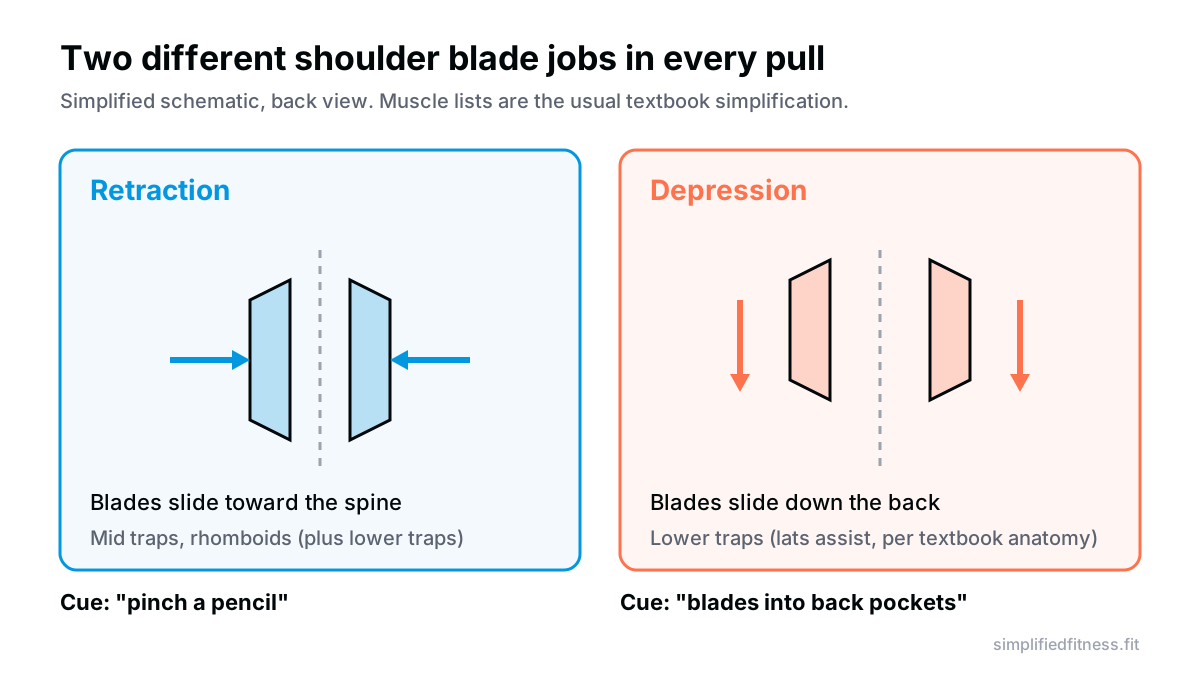
- Retraction: blades move toward the midline. Think rowing a handle back. The middle trapezius and rhomboids are the textbook movers.
- Depression: blades move down, away from your ears. The lower trapezius is the main mover, and the lats also pull the shoulder blades downward as the arms come down.
- Protraction and elevation are the opposites: blades forward and blades up (the shrug). You need them at the start and end of a rep, which is where the stretch comes from.
Real pulls blend these. A pulldown or pull-up usually has the blades moving down and slightly back as the elbows come to your sides. A row has more of a back-and-together feel. That is a simplification, and individual bodies vary, so use it as a map and not a rule.
Why your back “does not fire” in the first place
The most common mistake here is simple: the elbows bend first and the shoulder blades follow late, or never. Your biceps and forearms are small, easy to feel and quick to take over, so the pull becomes an arm curl with a heavier handle.
There is also a loading issue. If the weight is too heavy for your current control, the body finds the easiest path, which is usually grip, biceps and a bit of swinging.
How to retract your shoulder blades in rows
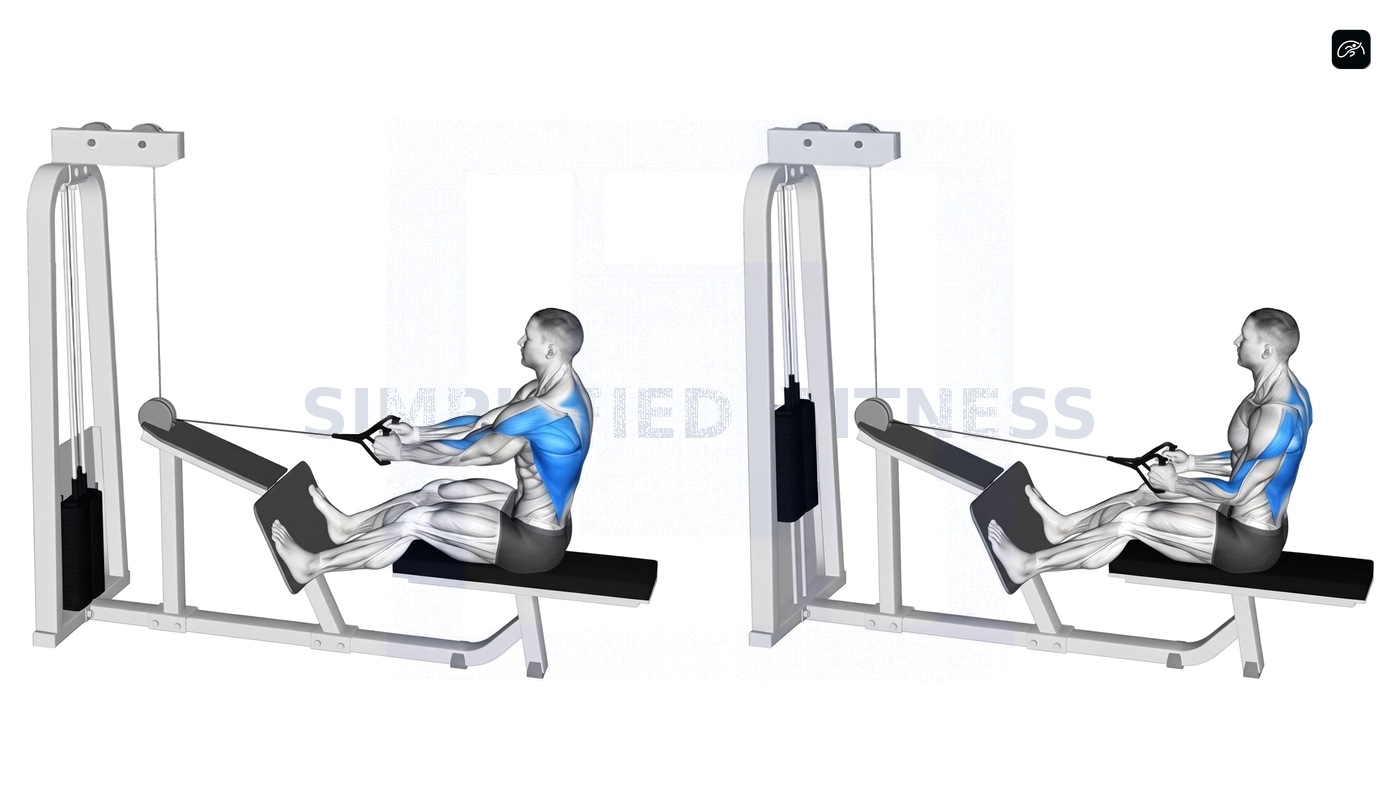
The question most lifters search is how to retract their shoulder blades without just cranking the shoulders back. Try this on a seated cable row or chest-supported row.
- Sit tall with arms long and let the blades drift forward. That is your stretch.
- Without bending the elbows, slide the blades back toward your spine.
- Now bend the elbows and drive them toward your hips.
- Pause for a second, then lower slowly and let the blades glide forward again.
Two cues that work for different people. “Crush a pencil between your blades” tends to suit rows, because it points the movement toward the spine. “Put your shoulder blades in your back pockets” tends to suit pulldowns and pull-ups, because it points the movement down. Neither is magic. Pick the one you can actually feel, and swap if it stops working.
For setup and attachment choices on this exercise, see seated cable rows: attachments and elbow drive. If lower back fatigue is limiting you, chest-supported rows remove that variable.
What the research says about retraction
The evidence here is mostly short lab EMG studies, so it is useful for exercise choice and cueing, not proof of growth.
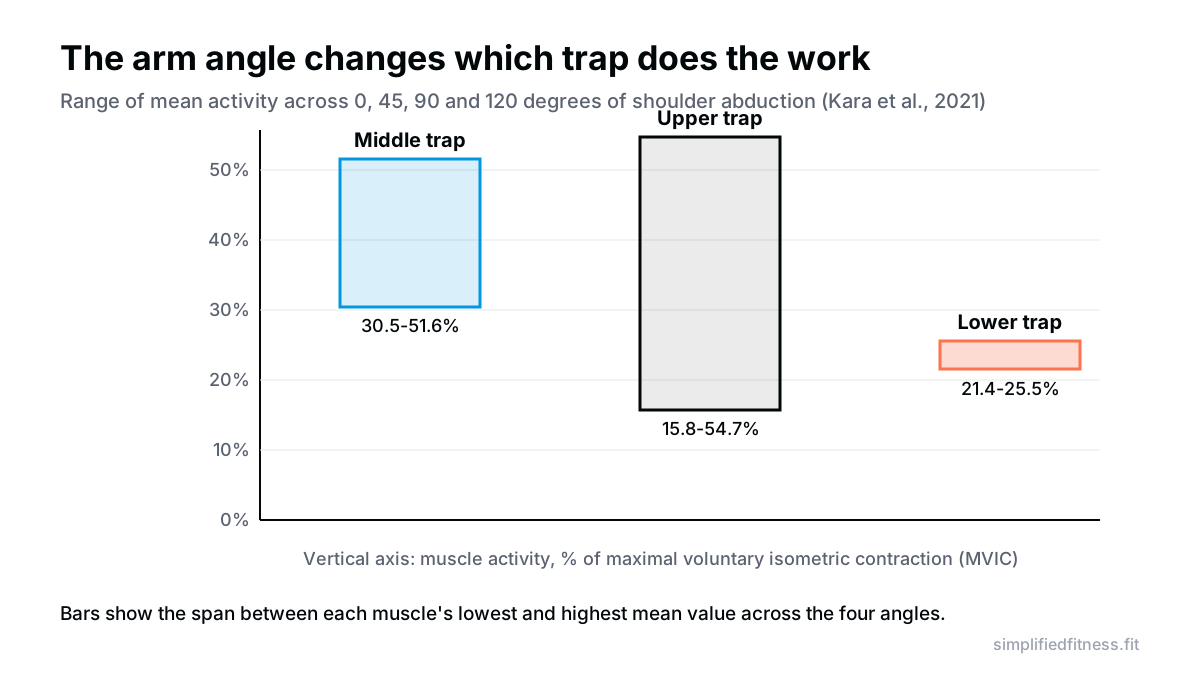
In 35 healthy people doing band retraction at four shoulder angles, the mean activity ranged from 15.8% to 54.7% of maximum for the upper trapezius, 30.5% to 51.6% for the middle trapezius and 21.4% to 25.5% for the lower trapezius (Kara et al., 2021). The middle trapezius beat the upper and lower trapezius at 0 and 120 degrees of abduction, and retraction at 90 degrees was the most effective at working all parts of the trapezius.
Another lab study of 26 people found that retraction with the arms overhead was the most effective exercise for activating the medial scapular muscles, and that upper trapezius activity was high across all shrug and retraction variations (Castelein et al., 2016). This is why the “shrug up” habit is so easy to fall into. Participants were healthy, the tasks were not heavy rows, and the results describe muscle activity, not growth.
For rows specifically, a study of 26 healthy people doing an inverted row noted that physical therapists use it to train scapular retraction, shoulder depression and arm extension together (Youdas et al., 2020). It is a handy bodyweight option if you want to practise the pattern.
Scapular depression: what to do in pulldowns and pull-ups
Depression is the half most lifters never practise. A pull-up or pulldown starts with the blades up around your ears, and if you never pull them down first, the arms do all the work.
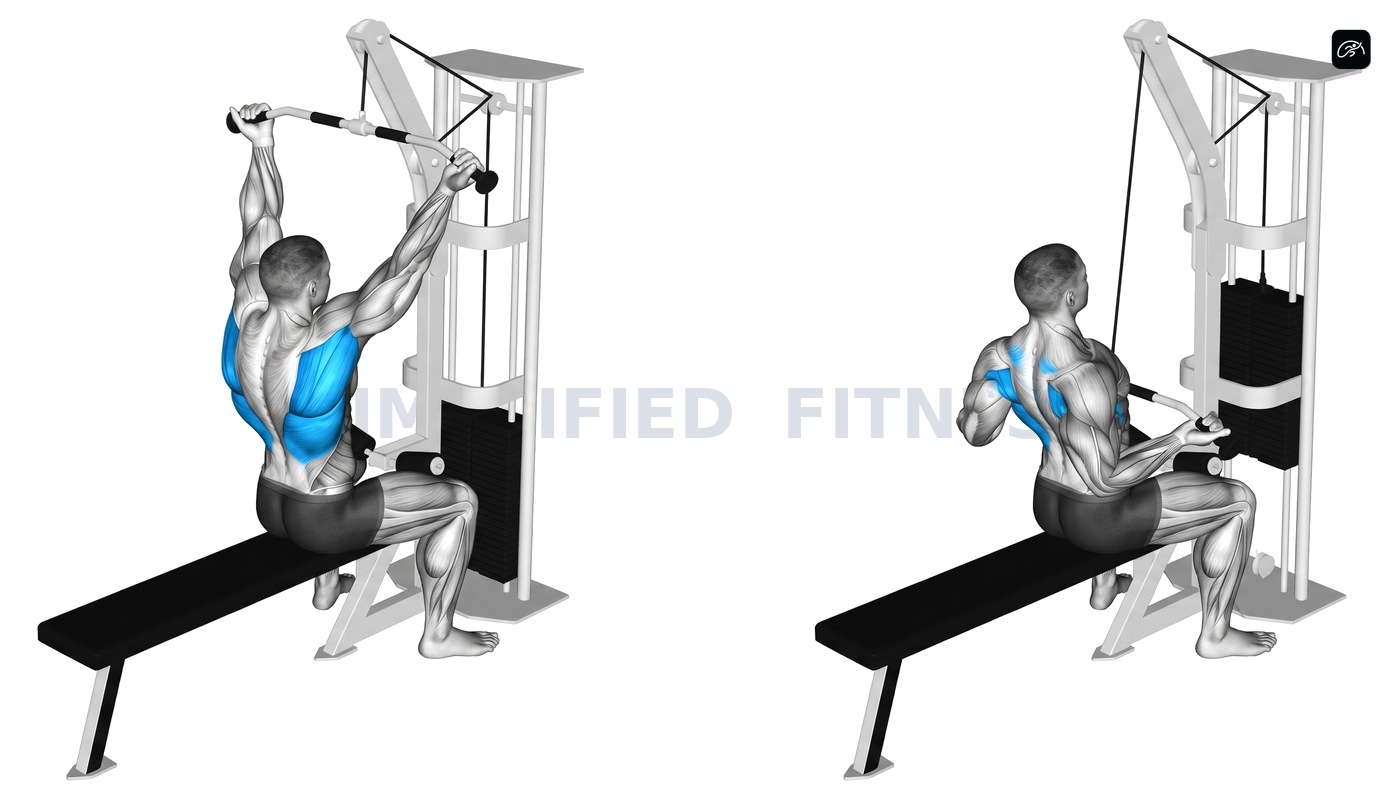
Try this:
- Reach up and let the blades rise (a safe, relaxed hang).
- Pull the blades down and slightly back without bending the elbows.
- Then drive the elbows down toward your sides.
- Keep your ribs stacked over your hips and avoid leaning back to cheat the weight.
A review of EMG studies in the lat pulldown found that an anterior bar path (bar to the upper chest) was most consistently linked with higher lat activity, while effects of grip width were inconsistent (Di Fonza et al., 2026). It is a narrative review of acute EMG amplitude and the authors say to treat it as a starting point, not a final prescription. For grip choices, see lat pulldown grips compared.
Does the mind-muscle connection actually work?
Short answer: sometimes, and mainly at lighter loads. We cover the full research picture for lats in lat flare and mind-muscle activation cues, so here is the short version as it applies to scapular cues.
In 18 resistance-trained men, focusing on the pecs or triceps during bench press raised their EMG at 20 to 60% of 1RM, but not at 80% (Calatayud et al., 2016). In an 8-week trial in 30 untrained men, elbow flexor thickness rose 12.4% with an internal focus vs 6.9% with an external focus, while quadriceps changes were similar (Schoenfeld et al., 2018). On the other side, a meta-analysis of ten studies found an external focus gave an acute strength advantage, and long-term strength gains did not differ significantly overall (Grgic et al., 2021).
Put together: internal cues (“feel the blades pull down”) suit lighter, controlled sets, and external cues (“elbows to the hips”) suit heavy compound pulls where your attention needs to be on moving the load.
Scapular control drills and warm-ups
Do these before your first back movement. Keep them easy, slow and a long way from failure.
| Drill | Targets | Dose | Cue |
|---|---|---|---|
| Scapular pull (hang) | Depression | 2 x 5-8 | Blades down, elbows straight |
| Band pull-apart | Retraction | 2 x 10-15 | Hands apart, ribs down |
| Paused cable row, light | Retraction | 1-2 x 8-12 | 1 second pause at the back |
| Straight-arm pulldown, light | Depression and lats | 2 x 10-12 | Reach long, sweep to thighs |
Practice at light weights is a coaching approach and not a proven protocol. The research on scapular exercise comes largely from rehab settings. In one randomised trial of 64 people with chronic shoulder pain, scapular movement training was not superior to standardised exercises for pain, disability or scapular biomechanics (Kamonseki et al., 2023). So there is no need to overdo it. A few minutes is enough.
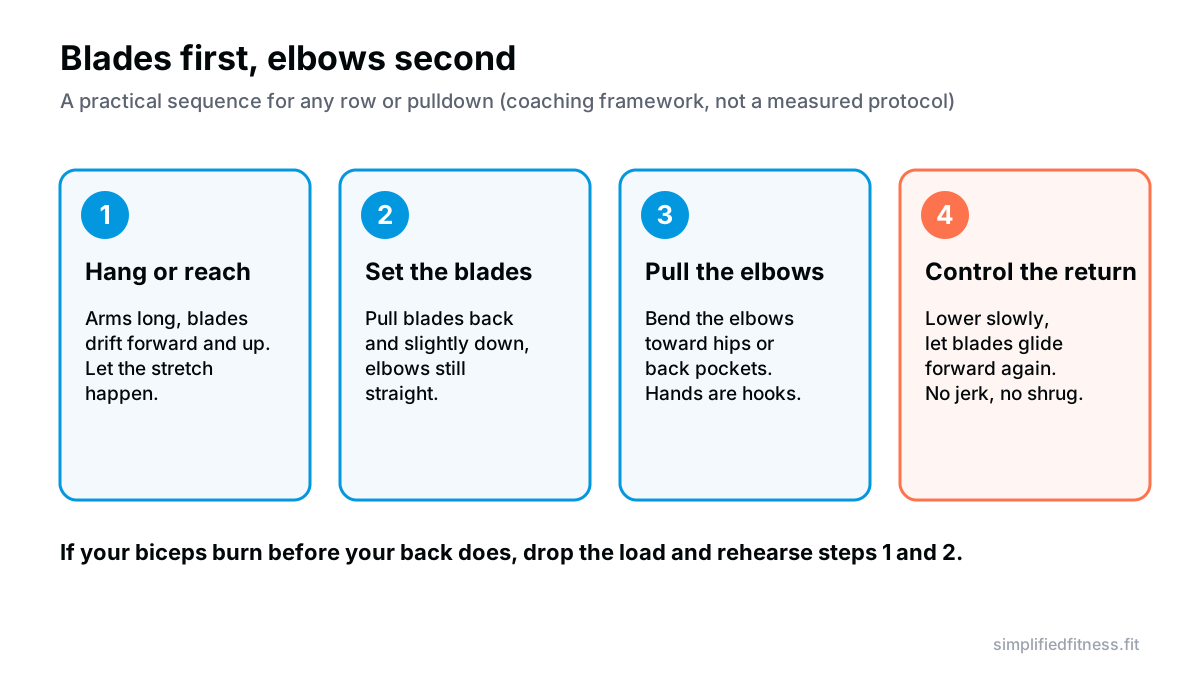
How to put it into a pull day
Pick two exercises and use them to practise the skill, not all of them at once.
- First pull (heavy): a pulldown or row at 6-10 reps where you set the blades, then pull. Use an external cue (“elbows to the hips”) if the weight is demanding.
- Second pull (lighter): a chest-supported or cable row at 10-15 reps with a one-second pause and an internal cue.
- Progress by adding reps with the same control before adding load.
You can follow this inside our pull day plan, and you can pair it with the cues in lat flare and mind-muscle activation cues.
On a budget or in a hot, crowded gym in India? A single resistance band and a pull-up bar cover all the drills above. Eat enough protein from dal, paneer, curd, soya chunks, eggs or chicken, which you can estimate with the protein calculator, since better technique only pays off if recovery is covered.
When to get checked
Technique cues are for healthy shoulders. See a doctor or physiotherapist if you notice:
- sharp or catching pain in the shoulder or between the blades
- numbness or tingling into the arm or hand
- a shoulder blade that visibly sticks out and does not settle
- pain at night or after a fall
I cannot diagnose anything from an article, and a stubborn problem deserves a proper exam.
The bottom line
Retraction moves the blades toward your spine and depression moves them down your back. Practise each one separately with light loads, set the blades before you bend the elbows and use the cue that makes your back work, not your biceps. Keep the research in perspective: it supports scapular cueing for muscle activity, but it does not prove it builds a bigger back.
If you want a structured way to apply it, start with the complete back training guide and run the cues in your next pull session.
Frequently Asked Questions
What is the difference between scapular retraction and depression?
Retraction moves your shoulder blades toward your spine, while depression moves them down your back away from your ears. Retraction is mostly the middle trapezius and rhomboids, and depression is mostly the lower trapezius with help from the lats. In training, think blades together for rows and blades down for pulldowns, then practise each as a separate movement.
How do I retract my shoulder blades during rows?
Start the pull by sliding your blades back toward your spine before your elbows bend. Lab studies show the middle trapezius and rhomboids work in scapular retraction, which is why the cue transfers to rowing. Use a lighter weight, pause for one second at the end of each rep and check that your shoulders are not shrugging up.
Should I squeeze my shoulder blades together on every rep?
Not on every exercise, and not as hard as you can. A full pinch suits rows, but on pulldowns and pull-ups your blades should mostly move down and back rather than only together. Treat the squeeze as part of the rep, then let the blades glide forward again on the way back.
How do I stop my biceps from taking over on back exercises?
Biceps take over when the elbows bend before the shoulder blades move. Cue the elbows to drive toward your hips, let the hands act as hooks and drop the load until your back is the first thing that burns. Straps or a thumbless grip can also help some lifters think less about the hands.
What does it mean to depress the scapula?
It means pulling your shoulder blades down and away from your ears, the opposite of a shrug. The lower trapezius does most of this, with the lats pulling the shoulder blades downward as the arms come down. In a pulldown, start by pulling the blades down before the elbows travel to your ribs.
Is the mind-muscle connection real or bro science?
It is partly real. A 2016 study in 18 trained men found that focusing on the pecs or triceps raised their EMG activity at 20-60% of 1RM but not at 80%, and an 8-week trial in untrained men found larger elbow flexor growth with an internal focus. The long-term evidence is small, so use it on lighter, controlled sets and not on heavy singles.
Does thinking about my lats actually grow them?
It might help, but the direct evidence for lats is thin. The best growth trial measured the arms and thighs in untrained men, not the lats, and found larger elbow flexor gains with an internal focus. Try muscle-focused cues on your lighter sets and judge by whether the target muscle works harder.
What are good warm-up drills for scapular control?
Scapular pulls on a bar, band pull-aparts and a few light rows with a pause work well. They let you practise moving the blades without a heavy load. Do 1-2 sets of 8-12 slow reps before your first working back exercise.
What are scapular pull-ups and are they worth doing?
A scapular pull-up is a small hang movement where you pull your blades down and back without bending your elbows. It is a simple way to practise depression before a full pull-up, though the evidence is mostly from lab and clinic studies. Start with 2 sets of 5-8 and stop if you feel shoulder pain.
Why do my traps and neck take over during pulling?
The upper trapezius is highly active in many retraction and shrug variations, so shrugging up is an easy habit. Measuring 35 people, one study found upper trap activity ranging from about 16% to 55% of maximum depending on arm angle. Keep your shoulders away from your ears, lower the load and change the arm angle if the neck takes over.
Where should I feel back exercises if I am doing them right?
Rows are usually felt between and below the shoulder blades, and pulldowns along the sides of your back. If you only feel your forearms and biceps, your technique or load is probably off. Reduce the weight, slow the lowering phase and shorten your set until the right area is working.
How long does it take to learn scapular control?
Most lifters notice a better feel within a few sessions if they practise deliberately. No study gives a firm timeline for this skill, so treat that as coaching experience and not data. Practise the drills before every pull session for 3-4 weeks and then reassess.
When should I see a doctor about shoulder blade problems?
See a doctor or physiotherapist if you have sharp pain, numbness, tingling, a blade that visibly sticks out or pain that wakes you at night. A scapula that does not move well can have causes beyond technique, and cueing will not fix those. Meanwhile, stop the movement that provokes it.
Sources & References
Every claim above is checked against peer-reviewed research (PubMed, U.S. National Library of Medicine) or guidance from established health bodies. How we fact-check.
- Schoenfeld BJ, et al. Differential effects of attentional focus strategies during long-term resistance training. Eur J Sport Sci. 2018. PMID: 29533715
- Calatayud J, et al. Importance of mind-muscle connection during progressive resistance training. Eur J Appl Physiol. 2016. PMID: 26700744
- Grgic J, et al. Acute and long-term effects of attentional focus strategies on muscular strength: a meta-analysis. Sports (Basel). 2021. PMID: 34822352
- Kara D, et al. Shoulder-abduction angle and trapezius muscle activity during scapular-retraction exercise. J Athl Train. 2021. PMID: 34911072
- Castelein B, et al. Modifying the shoulder joint position during shrugging and retraction exercises alters the activation of the medial scapular muscles. Man Ther. 2016. PMID: 26409441
- Youdas JW, et al. Scapular muscle balance and spinal stabilizer recruitment during an inverted row. Physiother Theory Pract. 2020. PMID: 29944029
- Di Fonza D, et al. Electromyographic analysis of latissimus dorsi activation during common resistance training exercises: a narrative review. J Funct Morphol Kinesiol. 2026. PMID: 42647355
- Kamonseki DH, et al. Scapular movement training is not superior to standardized exercises in the treatment of individuals with chronic shoulder pain and scapular dyskinesis: randomized controlled trial. Disabil Rehabil. 2023. PMID: 36000960

Umair Hazrami · Founder & Head Coach, Simplified Fitness
Umair Hazrami founded Simplified Fitness and the Simplified Lifter channel to cut through fitness noise. With 4+ years of consistent training and 10+ coaching clients, he writes every guide from the peer-reviewed research and links the sources so you can check them. Our editorial standards.
Educational content only, not medical advice. If you have a medical condition, are pregnant, or take medication, talk to a qualified doctor before changing your diet, supplements or training. Full disclaimer.
Keep reading
Exercise Technique
Barbell Bent-Over Rows: Spinal Load, Hamstring Fatigue and Lat Growth
Is the barbell bent over row hypertrophy gold or a fatigue generator? See what the research says about spinal load, torso angles and better rows for lat growth.
8 min read
Exercise Technique
Chest-Supported Rows: Train Your Upper Back Without Lower Back Fatigue
Chest supported row hypertrophy explained: why your lower back quits first, how T-bar, incline and seal rows fix it, and what the research says.
8 min read
Exercise Technique
Complete Back Workout Design: Balancing Vertical Pulls, Horizontal Rows, and Lumbar Recovery
A science-based back workout routine: weekly sets, how to balance pulldowns and rows, and how to protect your lower back, with a sample pull day plan.
9 min read
Exercise Technique
Conventional Deadlifts for Back Hypertrophy: Stimulus-to-Fatigue Ratio Analysis
Are deadlifts good for back hypertrophy? A stimulus-to-fatigue breakdown of what they build, what they miss for lats, and how to program or replace them.
8 min read