Tart Cherry Juice for Muscle Recovery: What the Research Says (and Where Ibuprofen Fits)
Does tart cherry juice muscle recovery really work? See what trials show on strength loss, soreness and sleep, and how it compares with ibuprofen.
TL;DR. The short answer
- Tart cherry juice may help you regain strength faster after a very damaging session. A 2026 meta-analysis of 19 trials in athletes found better strength recovery, but with high heterogeneity and low-to-moderate certainty.
- Its effect on soreness is inconsistent. Some trials show less pain, but the pooled analysis found no significant effect on muscle soreness or creatine kinase.
- There is no head-to-head trial of tart cherry versus ibuprofen. Do not treat it as a proven drug replacement, and do not assume it protects muscle growth.
- Evidence for sleep is mixed: small trials report more melatonin and longer sleep, while a 30-day trial found no sleep benefit.
- It fits best around races, tournaments or brutal training blocks, not as a daily habit for a normal hypertrophy phase.
Part of our complete guide: Creatine, Protein Powders, Pre-Workouts and Caffeine: The Science and Safety Guide
Table of contents
Tart cherry juice muscle recovery is one of the better-studied “food as supplement” stories in sports nutrition, but it is not a miracle. The best evidence says it may help you regain strength faster after very damaging exercise. It is much less convincing for soreness, and it has not been shown to boost muscle growth.
If you are building a supplement stack, this sits in the “optional extras” tier, well below the basics covered in our guide to creatine, protein powders and caffeine. Here is what the studies show, where the hype runs ahead, and who might actually benefit.
What is in tart cherry juice, and why might it help?
Tart cherries, including the Montmorency variety used in much of the sports research, are rich in polyphenols such as anthocyanins. These are plant pigments with antioxidant and anti-inflammatory properties. A review of tart cherry in athletes describes both qualities, and notes lower blood markers of inflammation and oxidative stress in studies (Vitale et al., 2017).
The theory goes like this. A hard, damaging session causes a first wave of muscle damage, then a second wave of inflammation and oxidative stress that can add to the damage and slow your return to full strength. If a polyphenol-rich drink calms the second wave, you may recover function faster.
That is a plausible mechanism, not a proven one. Most of the human trials measure outcomes (strength, pain, blood markers), not the cellular mechanism itself. So when a product page talks confidently about “COX inhibition” or “resolving inflammation”, treat it as a hypothesis.
Does tart cherry juice help muscle recovery? The best evidence
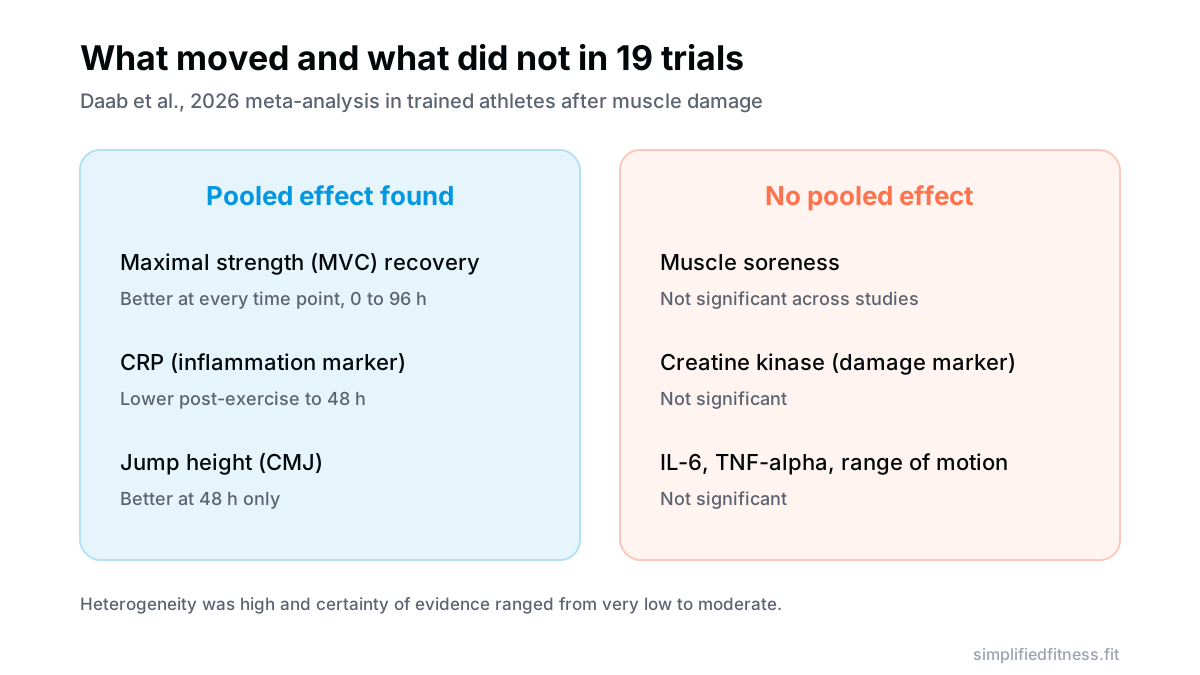
The most recent synthesis is a 2026 systematic review and meta-analysis of 19 trials in trained athletes. It found tart cherry juice improved recovery of maximal voluntary contraction (MVC, a measure of peak strength) at every time point from immediately after exercise up to 96 hours, with substantial heterogeneity (I² 69-93%) (Daab et al., 2026).
Other findings from the same analysis:
- Countermovement jump improved at 48 hours but not at earlier time points.
- C-reactive protein (CRP), a general inflammation marker, was lower post-exercise and up to 48 hours.
- No significant pooled effects for muscle soreness, creatine kinase, IL-6, TNF-alpha or range of motion.
- Some significant results depended on individual studies, and certainty of evidence ranged from very low to moderate.
The authors’ own conclusion is cautious: it may support recovery of selected markers, but results are heterogeneous and need careful interpretation.
The classic trials: what they found
Three older studies explain most of the excitement.
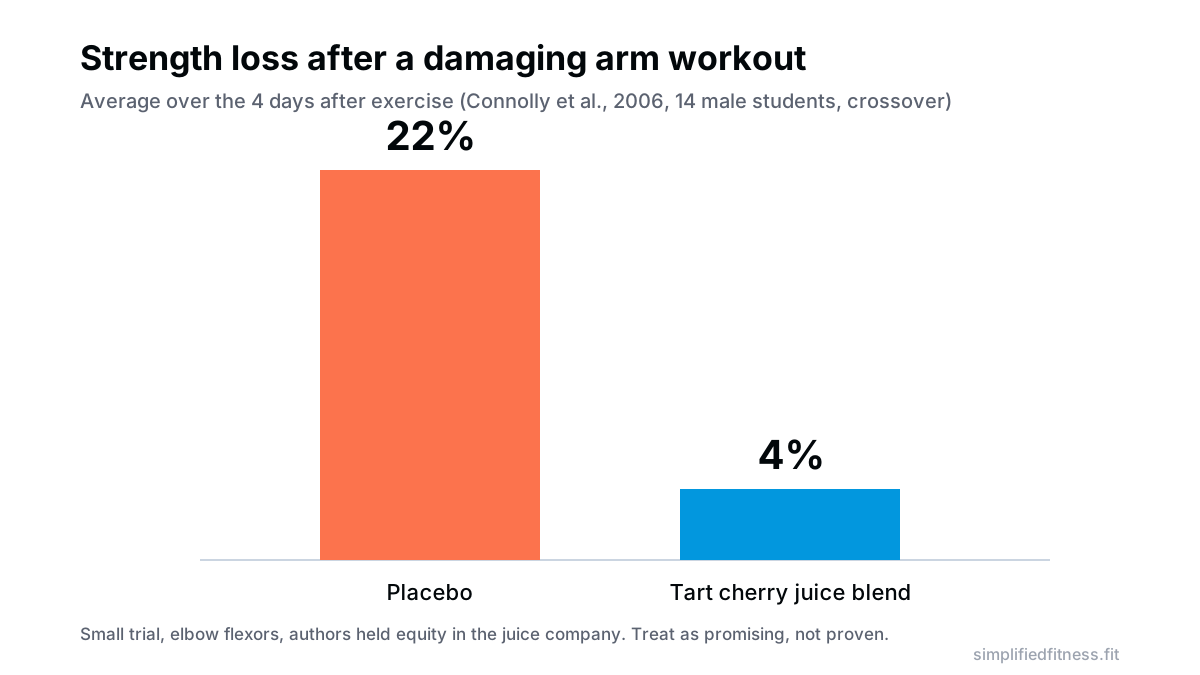
Connolly et al. (2006) had 14 male college students drink 12 fl oz of a cherry juice blend or placebo twice a day for 8 days, with a damaging bout of eccentric elbow flexion on day four. Strength loss and pain were significantly lower with cherry juice. Strength loss averaged 22% over the four days after exercise on placebo, versus 4% with cherry juice (Connolly et al., 2006). Muscle tenderness and relaxed elbow angle did not differ. One caveat worth knowing: the authors disclosed holding equity in the company behind the juice.
Kuehl et al. (2010) studied 54 runners in a 24-hour relay race (about 26 km each). They drank 355 mL of tart cherry juice or a placebo drink twice daily for 7 days before and on race day. Pain rose by 12 mm on a 100 mm scale with cherry juice versus 37 mm with placebo (Kuehl et al., 2010).
Howatson et al. (2010) gave 20 recreational marathon runners cherry juice or placebo for 5 days before, on the day of, and for 48 hours after a marathon. Isometric strength recovered faster, and IL-6, CRP and uric acid were lower, though other muscle damage indices (including soreness and creatine kinase) did not differ significantly (Howatson et al., 2010).
The pattern is consistent: the most reliable benefit is faster strength return, with soreness benefits turning up in some trials but not holding up when everything is pooled.
Does tart cherry juice help with DOMS?
Sometimes. Kuehl found less pain, Connolly found less pain but no change in tenderness, and the meta-analysis found no significant pooled effect on soreness. Why might results differ? Different exercise types (running, eccentric arm curls, whole-body protocols), different products and doses, small samples, and different ways of rating pain.
My practical read: if you hope cherry juice will erase DOMS after leg day, expect disappointment. If you want your squat strength back sooner after something genuinely brutal, it is more plausible. If soreness is your main concern, our guide to nutrition for muscle soreness compares cherry juice with protein and omega-3. For the bigger picture on what soreness does and does not tell you, see DOMS and muscle growth and our muscle soreness and recovery guide.
Tart cherry vs ibuprofen: the honest comparison
You will see claims that tart cherry is a “natural NSAID” that dampens damage without the downsides of ibuprofen. Here is what the evidence supports and what it does not.
No head-to-head trial exists in the studies I reviewed. Anyone claiming one beats the other for recovery is extrapolating.
High-dose ibuprofen may blunt gains. In an 8-week trial, young adults taking 1,200 mg of ibuprofen daily gained less quadriceps volume (3.7%) than those on 75 mg of aspirin (7.5%). Strength gains were similar on the conventional weight-stack leg but smaller with ibuprofen on the flywheel-trained leg (Lilja et al., 2018). The authors advised young people training for size or strength to avoid excessive anti-inflammatory drug intake.
But the mechanism is not settled. A follow-up analysis of the same project found mTOR signaling, ribosome biogenesis, satellite cell content, myonuclear accretion and angiogenesis were not differentially affected between groups, so these established hypertrophy regulators did not explain the ibuprofen effect (Lilja et al., 2023). So the popular line that ibuprofen “shuts down satellite cells” is not what that study found.
Tart cherry has not been shown to protect hypertrophy. The trials measured recovery, not muscle growth over months. The literature review even suggests tart cherry may not be optimal during the adaptation or build stage of training, and may suit periods where recovery rather than adaptation is the priority (Vitale et al., 2017). The same logic is why we discuss vitamin C and the antioxidant paradox: heavy antioxidant loading is not obviously good for adaptation. Our dedicated piece on NSAIDs and muscle growth covers the drug side in depth.
Tart cherry juice, melatonin and sleep
Tart cherries contain some melatonin, which is why people ask about sleep. The evidence is thin and conflicting.
A randomized, double-blind crossover trial in 20 healthy volunteers found 7 days of tart cherry juice concentrate raised total urinary melatonin and improved time in bed, total sleep time and sleep efficiency (Howatson et al., 2012).
A later randomized trial in 44 healthy adults gave tart cherry juice or capsules versus placebo for 30 days and found no significant differences in sleep time or quality (Hillman et al., 2026). The authors noted that their findings conflict with earlier data.
Possible reasons: small samples, different products and doses, different sleep measures, and baseline sleep quality. The cautious takeaway is that any sleep benefit is probably small. If your sleep is the real problem, fix timing, caffeine and bedroom setup first, and see our audit of sleep supplements. Persistent insomnia deserves a conversation with a doctor.
Juice vs powder or capsules
Most evidence is for juice or concentrate, which carries sugar and calories. A small crossover trial of 13 men tested 500 mg of a tart cherry extract for 7 days before a heavy squat protocol (6 sets of 10 at 80% 1RM). Compared with placebo, the extract was associated with lower protein carbonyls, creatine kinase and CK-MB, and handgrip strength held up better at 24 hours (Hooper et al., 2021). The study was funded by Specnova, a supplier of tart cherry extract, and was small, so I would not lean on it heavily.
| Format | What the evidence looks like | Practical note |
|---|---|---|
| Juice (about 355 mL twice daily in trials) | Most trials, mixed outcomes | Adds sugar and calories, can be pricey |
| Concentrate (about 1 oz twice daily in reviews) | Used in many protocols | Smaller volume to drink, check label for dilution |
| Extract capsules | Very few trials, one industry-funded | Low calories, less evidence |
How and when to use it (if you want to)
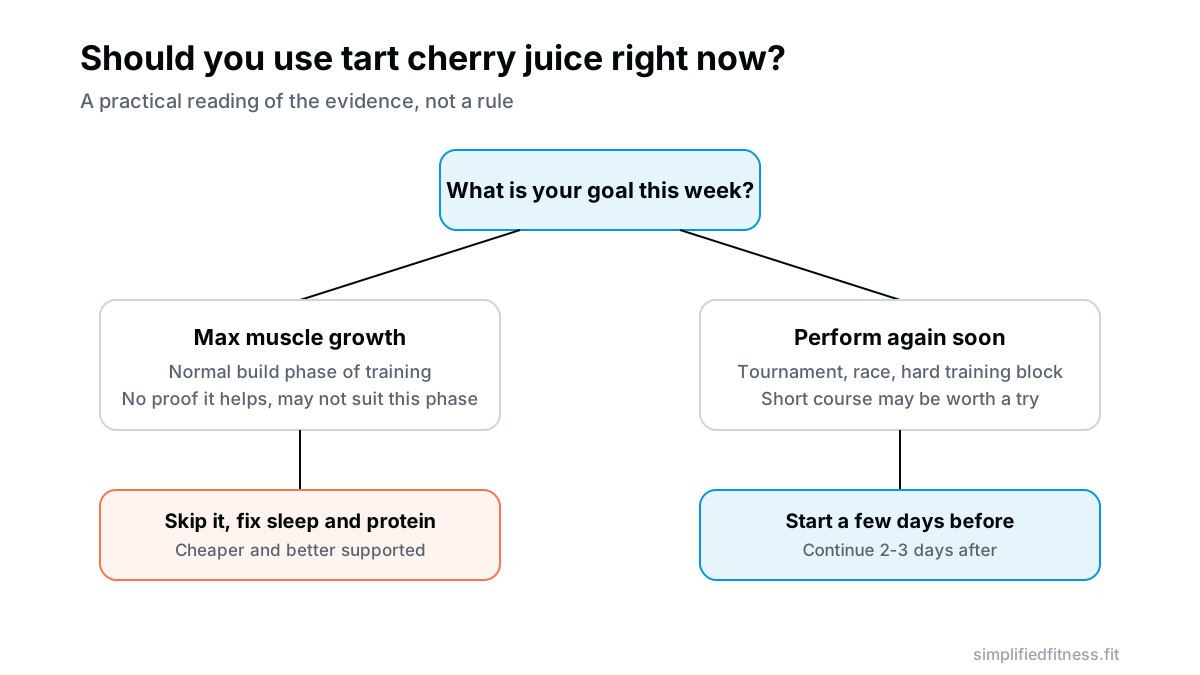
If you decide to try it, the research gives a template. A review notes that most studies used 8-12 oz (1 oz of concentrate) twice a day, started 4-5 days before the event, and continued 2-3 days afterwards (Vitale et al., 2017).
In practice for Indian lifters:
- Availability and cost matter. Tart cherry products are often imported and priced well above dal, eggs, curd or milk. If budget is tight, that money usually buys more recovery from extra protein and a better sleep schedule.
- Check sugar on the label, especially on a cut. Our protein calculator is a better first stop than any recovery drink.
- Do not stack many antioxidants at once. Curcumin has similar hype; read curcumin and piperine for joint pain before you add it too.
Who should skip it or ask a doctor first
- People with diabetes or watching blood sugar, because juice and concentrates contain sugar.
- Anyone on regular medication, including blood thinners or painkillers, or with a medical condition. Ask your doctor or pharmacist before adding concentrated products.
- Anyone using NSAIDs frequently for pain. The pain deserves a proper assessment, not a substitute.
- Pregnant or breastfeeding women, because supplement data in those groups are limited.
The bottom line
Tart cherry juice has real but modest support for speeding strength recovery after damaging exercise, weaker support for soreness and sleep, and no demonstrated advantage for muscle growth. The studies are mostly small, short and sometimes industry-linked, and the 2026 meta-analysis itself calls for cautious interpretation.
Use it, if at all, as a short course before and after a hard event. For everything else, protein, sleep and sensible training volume remain the foundation of recovery.
Frequently Asked Questions
Does tart cherry juice help muscle recovery?
It may help, mainly by speeding the return of strength after muscle-damaging exercise. A 2026 meta-analysis of 19 trials in athletes found improved maximal strength recovery, but results varied a lot and certainty was low to moderate. Try it only if you have a hard event or block where fast recovery matters.
Does tart cherry juice reduce DOMS?
Sometimes, but not reliably. One trial in runners found a much smaller rise in pain with tart cherry juice, while a pooled analysis of 19 trials found no significant effect on muscle soreness overall. Do not expect it to switch soreness off.
Is tart cherry juice better than ibuprofen?
Nobody has tested them head to head, so no one can say. They also do different jobs: ibuprofen is a drug taken for pain, while tart cherry is a food product studied for recovery of strength. If you take medication regularly, talk to your doctor or pharmacist rather than swapping it for juice.
Does ibuprofen really hurt muscle growth?
At high doses, possibly. An 8-week trial in young adults found 1,200 mg a day of ibuprofen led to smaller gains in muscle volume than 75 mg of aspirin, though a follow-up analysis could not explain why. Avoid taking maximal doses routinely just to blunt soreness after training.
Does tart cherry juice protect muscle growth the way people claim?
There is no good evidence for that claim. The studies measured recovery of strength, soreness and blood markers, not long-term hypertrophy. A review in athletes even suggests it may not be ideal during the adaptation phase of training.
How much tart cherry juice should I drink?
Trials used about 355 mL of juice twice a day, and a review notes most protocols use 8-12 oz (about 240-350 mL) twice daily, or 1 oz of concentrate. Doses were typically started several days before an event and continued for 2-3 days after. Check the label, because products differ in strength and sugar.
Does tart cherry juice help you sleep?
Possibly a little. A small crossover trial found more urinary melatonin and longer sleep with tart cherry concentrate, but a 30-day trial in healthy adults found no sleep benefit. Sleep hygiene is still the bigger lever, so treat cherry juice as an optional extra.
Is Montmorency tart cherry special?
Montmorency is the tart variety used in much of the sports research, which is why labels mention it. Studies of other cherry products and extracts exist too, but results are not interchangeable. Pick a product that states its cherry type and serving.
Juice or capsules, which is better?
Both have been studied, but juice has more trials behind it. One small trial using a 500 mg tart cherry extract found lower oxidative stress and damage markers after heavy squats, but it was funded by an extract supplier. Capsules avoid the sugar, so they are a reasonable option if you are watching calories.
When should I take tart cherry juice?
Trials usually began several days before the damaging event and continued afterwards, rather than starting after soreness appeared. The idea is to have it on board when the damage happens. Plan a short course around a race or tournament instead of random daily use.
Can I drink tart cherry juice every day?
There is little evidence on long-term daily use for lifters. Long-term benefit for hypertrophy is unproven, and juice adds sugar and calories. Keep it for the periods when recovery is the priority.
Are there side effects of tart cherry juice?
The trials in healthy adults did not highlight serious problems, but they were short and small. The obvious practical issues are sugar, calories and cost. If you have diabetes, take blood thinners or have a medical condition, check with your doctor before adding concentrated products.
Can tart cherry juice replace sleep and protein for recovery?
No. The effects in studies are modest and sometimes inconsistent, while sleep and adequate protein underpin recovery. Sort those first, then consider cherry juice as a small add-on.
Sources & References
Every claim above is checked against peer-reviewed research (PubMed, U.S. National Library of Medicine) or guidance from established health bodies. How we fact-check.
- Daab W, et al. Effects of Tart Cherry Juice Supplementation on Recovery from Exercise-Induced Muscle Damage in Athletes: A Systematic Review and Meta-Analysis. Sports Med Open. 2026. PMID: 41945263
- Connolly DA, et al. Efficacy of a tart cherry juice blend in preventing the symptoms of muscle damage. Br J Sports Med. 2006. PMID: 16790484
- Kuehl KS, et al. Efficacy of tart cherry juice in reducing muscle pain during running: a randomized controlled trial. J Int Soc Sports Nutr. 2010. PMID: 20459662
- Howatson G, et al. Influence of tart cherry juice on indices of recovery following marathon running. Scand J Med Sci Sports. 2010. PMID: 19883392
- Vitale KC, et al. Tart Cherry Juice in Athletes: A Literature Review and Commentary. Curr Sports Med Rep. 2017. PMID: 28696985
- Lilja M, et al. High doses of anti-inflammatory drugs compromise muscle strength and hypertrophic adaptations to resistance training in young adults. Acta Physiol. 2018. PMID: 28834248
- Lilja M, et al. Limited effect of over-the-counter doses of ibuprofen on mechanisms regulating muscle hypertrophy during resistance training in young adults. J Appl Physiol. 2023. PMID: 36794689
- Howatson G, et al. Effect of tart cherry juice (Prunus cerasus) on melatonin levels and enhanced sleep quality. Eur J Nutr. 2012. PMID: 22038497
- Hillman AR, et al. Montmorency tart cherry supplementation does not impact sleep, body composition, cellular health, or blood pressure in healthy adults. Nutr Health. 2026. PMID: 35790450
- Hooper DR, et al. Broad Spectrum Polyphenol Supplementation from Tart Cherry Extract on Markers of Recovery from Intense Resistance Exercise. J Int Soc Sports Nutr. 2021. PMID: 34126996

Umair Hazrami · Founder & Head Coach, Simplified Fitness
Umair Hazrami founded Simplified Fitness and the Simplified Lifter channel to cut through fitness noise. With 4+ years of consistent training and 10+ coaching clients, he writes every guide from the peer-reviewed research and links the sources so you can check them. Our editorial standards.
Educational content only, not medical advice. If you have a medical condition, are pregnant, or take medication, talk to a qualified doctor before changing your diet, supplements or training. Full disclaimer.
Keep reading
Supplements
Alpha-GPC and Huperzine A Pre-Workout: Do Cholinergic Nootropics Help Lifting?
Does an alpha GPC pre workout add power or focus? See what small trials found, why Huperzine A is a poor lifting bet, and the safety flags to know first.
10 min read
Supplements
The Antioxidant Paradox: Can Vitamin C and E Pills Blunt Muscle Growth and Endurance?
Does vitamin C blunt muscle growth? See what trials of 1000 mg vitamin C plus E found for strength, hypertrophy and endurance, and when pills are worth taking.
8 min read
Supplements
Caffeine Powder vs Coffee Before Lifting: Does the Source Really Matter?
Caffeine anhydrous vs coffee for lifting: what research says on absorption speed, peak levels and stomach upset, and whether pills beat your daily cup.
7 min read
Supplements
Caffeine Dosing for Strength and Power: 3-6 mg/kg and When to Take It
Caffeine dosage for strength is 3-6 mg/kg, about 210-420 mg for a 70 kg lifter, taken around 60 minutes before training. Doses, timing and when to stop.
8 min read