Satiety and Thermic Effect of Protein (TEF): Why Protein Makes Dieting Easier
Thermic effect of protein explained: what TEF really is, why protein fills you up, and what the studies show, so a high-protein cut feels less like starving.
TL;DR. The short answer
- Protein has the highest thermic effect of food. The commonly quoted textbook figures are 20-30% of its calories for protein, 5-10% for carbs and 0-3% for fat, and real values vary with the person and the meal.
- In a 2011 crossover trial in 23 lean adults, meals that were 50% protein had a thermic effect of about 12-14% of the whole meal's energy, roughly double the 6.6% of a high-carbohydrate meal.
- Protein also fills you up. A 2020 meta-analysis of acute trials found lower ghrelin, higher GLP-1 and CCK, and modestly lower hunger, but long-term trials were inconclusive.
- The calorie burn is real but small in daily terms. The bigger payoff is feeling fuller, which is one reason a 2015 review suggests about 1.2-1.6 g/kg a day when dieting.
- Higher-protein diets during energy restriction gave modestly better fat loss and less loss of lean mass in a 24-trial meta-analysis. Check with a doctor first if you have kidney disease.
Part of our complete guide: Complete Protein Guide: How Much, What Type, and When to Eat It for Muscle Growth
Table of contents
The thermic effect of protein is the extra energy your body spends digesting and processing it, and it is higher than for carbs or fat. The number people quote is 20-30% of protein’s calories, and that is a textbook estimate rather than something you will see on a meal-by-meal basis. The bigger reason a high-protein diet feels easier is that protein also keeps you fuller.
Both effects matter when you are trying to eat less without feeling miserable. This article is a deep dive from our complete protein guide for hypertrophy, and it separates the solid findings from the hype.
What is the thermic effect of protein (TEF)?
TEF is the rise in metabolic rate after a meal. Your body has to break food down, absorb it and store or process it, and all of that costs energy. A 2019 review describes TEF as a potentially modifiable part of energy expenditure and notes it is higher with carbohydrate and protein than with dietary fat (Calcagno et al., 2019).
Protein is the most expensive macro to process. The body does not store spare amino acids the way it stores fat, so it has to build them into new proteins or break them down and remove the nitrogen, and that work costs more than storing fat. For where TEF fits into your daily burn, see TDEE deconstructed.
Protein vs carbs vs fat: how big is the difference?
The commonly quoted ranges are about 20-30% for protein, 5-10% for carbs and 0-3% for fat. Read those as textbook ranges, not guarantees. Measured values depend on the person, the meal and how long you track the response.
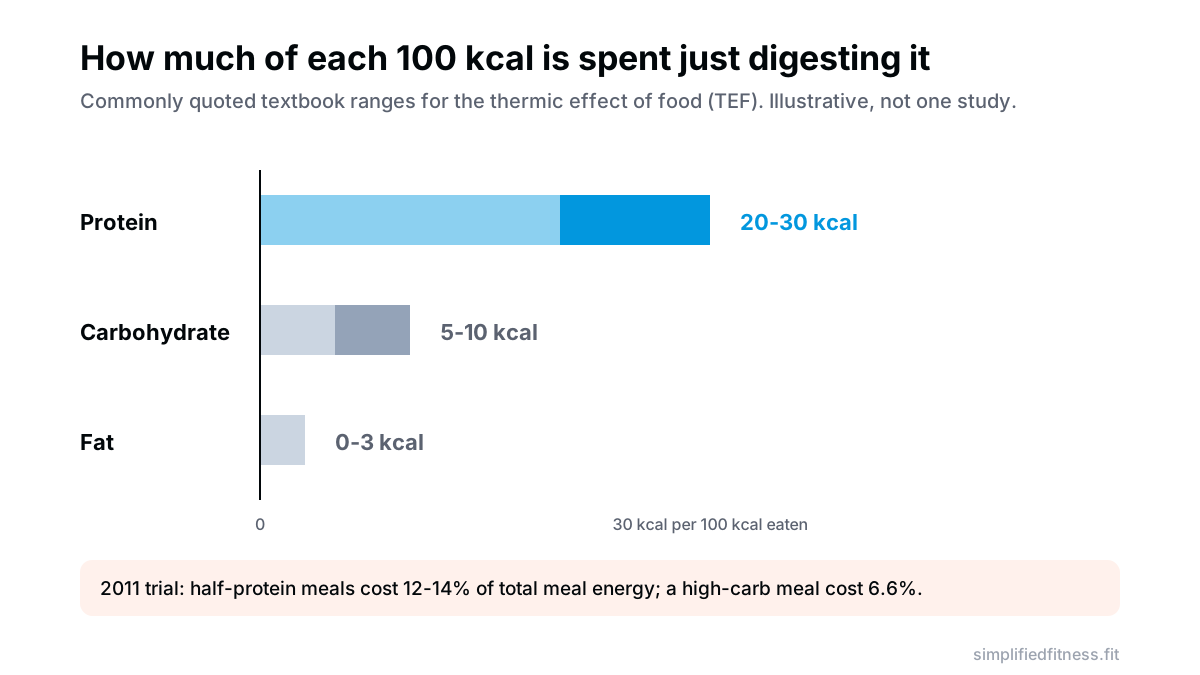
Here is a controlled example. In a randomized crossover trial of 23 lean adults, meals of 50% protein (whey, casein or soy) were compared with a high-carbohydrate meal. The thermic effect was 14.4% after whey, 12.0% after casein and 11.6% after soy, versus 6.6% after the high-carb meal (Acheson et al., 2011).
So the protein-rich meals cost roughly double what the carb meal cost. Note that these percentages are of the whole meal’s energy, and only half of each meal was protein, so a 12-14% figure here does not contradict the textbook range for protein itself.
How many calories does protein actually burn?
Here is some illustrative arithmetic. Say you eat 150 g of protein a day, which is 600 kcal. At the textbook 20-30%, that would be 120-180 kcal of digestion cost, and the real figure for your diet could be somewhat lower. Part of that cost would also have been spent if you had eaten the same calories as carbs, so the true extra from choosing protein is smaller still.
Even the optimistic number is the energy of a banana and a few biscuits. Helpful, not magic.
There is also a nuance on protein sources. In that same trial whey had a higher thermic effect than casein or soy, and casein and soy were more satiating than whey (Acheson et al., 2011). One study cannot settle which source to prefer, so pick what fits your budget and digestion.
Why is protein so filling?
Protein changes the hormones that tell your brain whether you have eaten. A 2020 meta-analysis pooled 49 acute trials in healthy adults using isocaloric comparisons. Protein lowered hunger by about 7 mm on a 100 mm scale, raised fullness by about 10 mm, lowered ghrelin and raised cholecystokinin and GLP-1. Peptide YY did not change (Kohanmoo et al., 2020).
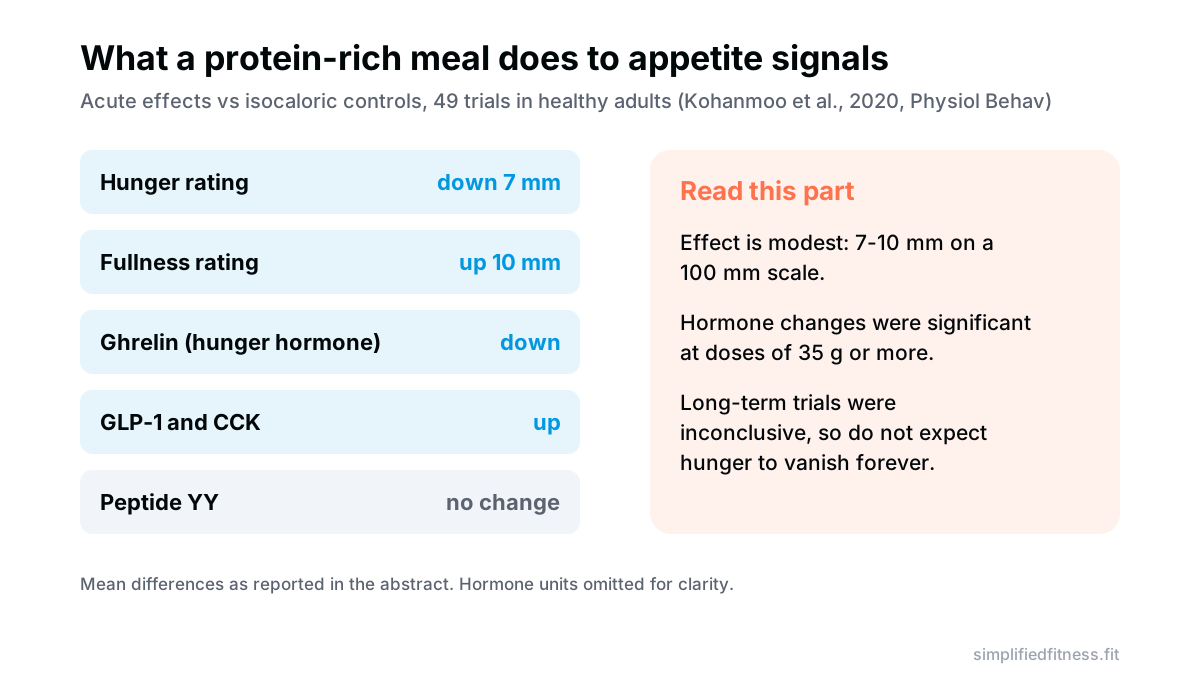
Many articles claim protein raises peptide YY. In this pooled analysis it did not. The honest summary is ghrelin down, GLP-1 and CCK up, and a modest drop in hunger.
The same analysis found that appetite ratings shifted at doses below 35 g, while the hormone changes were significant at 35 g or more. And the long-term trials? Inconclusive, with GLP-1 actually lower (Kohanmoo et al., 2020). The short-term effect may fade over time, so treat protein as a helper rather than a permanent off switch.
Does a high-protein diet help you stay in a deficit?
Mostly yes, with caveats. Let us look at the evidence on both sides.
What helped. In a 12-day randomized crossover study of 58 adults, energy intake was lower on a diet with 30% of energy from protein (about 8.7 MJ/day) than on 5% (9.5 MJ/day) or 15% (9.3 MJ/day), with hunger and desire to eat higher on the 5% diet (Martens et al., 2014). People ate less without being told to.
A 24-trial meta-analysis of energy-restricted diets with 1,063 participants found high-protein diets produced modestly greater reductions in body weight (-0.79 kg), fat mass (-0.87 kg) and triglycerides, and mitigated the loss of fat-free mass and resting energy expenditure. The mean duration was about 12 weeks, and only 3 of 5 studies reported greater satiety (Wycherley et al., 2012).
What did not. A 4-week crossover study in overweight and obese adults on energy restriction compared 10%, 20% and 30% protein diets. It found only a modestly higher daily fullness rating at 30% versus 10%, and no effect on hunger, desire to eat or TEF (Li et al., 2016).
Why they might differ. Studies differ in duration, population, protein source and how strictly people stuck to the plan. A 2015 review found longer trials gave limited and conflicting findings, with benefits mainly in people who actually adhered to the higher-protein regimen (Leidy et al., 2015).
What to do with that. Use protein as a satiety tool and a muscle-protection tool, and treat the extra burn as a bonus. The same review suggests 1.2-1.6 g/kg/day, with at least about 25-30 g per meal, as a range that improved appetite, weight management or both (Leidy et al., 2015). Our cutting guide on protein in a deficit goes further for lifters.
How do you use this on an Indian plate?
Think in meals, not macros. A bowl of dal with rice can be mostly carbs, while the same bowl with paneer bhurji or an extra curd serving moves toward a protein-anchored meal. Soya chunks are a cheap, high-protein add for vegetarians. Eggs, chicken and fish do the same for non-vegetarians.
- Aim for about 25-30 g at each main meal. That is roughly 4 eggs, 100 g of paneer plus a bowl of dal, or about 90-100 g of cooked chicken breast. Check portions against top high-protein foods ranked.
- Build the plate around the protein. Put it on the plate first, then fill the rest.
- Pair it with bulk. Salad, sabzi and fruit add volume at low calories, as covered in high-volume, low-calorie foods for cutting.
- Do not forget cooking oil. A protein-rich dish does not stay low-calorie if it floats in ghee.
To set a daily target, use the protein calculator, or see a full day laid out in our free diet plan.
Does meal size or frequency change TEF?
Probably a little. The 2019 review reports that TEF is increased by larger meal sizes as opposed to frequent small meals, and notes that the effects of habitual diet and meal timing still need clarifying (Calcagno et al., 2019). That does not mean you should force three giant meals on yourself.
Pick a pattern you can repeat on a busy workday. If that is three solid meals with protein in each, great. If it is four, also fine. Consistency of protein matters more than squeezing out a few extra kilocalories of digestion cost, and the difference between patterns is small compared with your total intake.
Caveats before you go all in
Most of the appetite studies are short and use healthy adults, and long-term results are mixed. TEF measurements depend on method and meal. And higher protein is not a replacement for a calorie deficit; it makes a deficit easier to live with.
Higher intakes need a sense of context. If you have kidney disease, diabetes affecting the kidneys, or any condition that changes how you should eat, talk to your doctor or a registered dietitian before raising protein. The kidney evidence is covered in our high-protein and kidney function guide.
Also worth knowing: your body can slow its energy use during a long diet regardless of protein. We cover that in metabolic adaptation.
The bottom line
Protein burns more calories during digestion than carbs or fat, but in daily terms the extra is roughly a snack’s worth, not a meal’s. It also lowers hunger signals in the short term. Together that makes a deficit more manageable, particularly when you spread 25-30 g across your main meals.
Do not expect a metabolic miracle. Expect a bit more burn, a bit more fullness and a bit better muscle retention, which is plenty.
Frequently Asked Questions
What is the thermic effect of protein?
It is the extra energy your body spends digesting, absorbing and processing protein after you eat it. Breaking protein into amino acids and then handling them (including removing nitrogen) costs more energy than handling carbs or fat. You can use it by simply keeping protein in every meal rather than hunting for a special trick.
How many calories does protein burn during digestion?
The commonly quoted range is 20-30% of the protein's calories, so about 20-30 kcal per 100 kcal of protein. In one crossover trial, meals that were half protein cost about 12-14% of the whole meal's energy, roughly double a high-carb meal. On a 150 g protein day that works out to something like 100-180 kcal, a useful bonus rather than a diet plan.
Is TEF for protein really 20-30%?
It is a textbook estimate, and it is hard to measure protein on its own because people eat it in mixed meals. Studies usually report TEF as a share of the whole meal, which will always look lower than 20-30% when carbs and fat are in the meal too. Values also vary with the person and the protein source, so plan around the satiety benefit and a modest calorie bonus, not the headline number.
TEF of protein vs carbs vs fat: which is highest?
Protein is highest, carbohydrate is in the middle and fat is lowest. A 2011 trial measured 11.6-14.4% for 50%-protein meals and 6.6% for a high-carb meal. Swapping some refined carbs for dal, paneer, eggs or chicken nudges your daily expenditure up a little.
Why is protein so filling?
Protein changes appetite signals: a 2020 meta-analysis found lower ghrelin and higher GLP-1 and cholecystokinin after protein, plus lower hunger and higher fullness ratings. A 2015 review called the effect modest and found it does not reliably reduce how much people eat at the next meal. Build each meal around a protein source and judge the effect on your own hunger over a week or two.
Does protein really suppress hunger?
In short-term trials, yes, modestly. The meta-analysis found hunger ratings about 7 mm lower and fullness about 10 mm higher on a 100 mm scale, which is real but not dramatic. Long-term trials were inconclusive, so treat protein as one helpful tool rather than an appetite off switch.
How much protein per meal is needed for satiety?
The 2020 meta-analysis saw appetite changes below 35 g, but ghrelin, CCK and GLP-1 shifted significantly at 35 g or more. A 2015 review suggests at least about 25-30 g per meal as a practical target. Aim for a palm-sized portion of dal plus paneer, eggs or chicken at each main meal.
Does eating more protein speed up your metabolism?
Slightly. A meta-analysis found that high-protein diets during weight loss softened the drop in resting energy expenditure compared with standard-protein diets. That is part of the story alongside keeping more lean mass. Do not expect a big change; expect a smaller slowdown.
Can a high-protein diet help you stay in a calorie deficit?
Often, yes. A 12-day crossover trial found people ate less on a 30% protein diet than on 5% or 15% protein diets, without being told to. If hunger is what usually breaks your diet, raising protein is the first lever to pull.
Do plant proteins have the same thermic effect?
Possibly slightly lower for some sources. In the 2011 trial, soy and casein meals had a thermic effect of 11.6% and 12.0% versus 14.4% for whey, though all beat the high-carb meal. In the same trial, soy and casein were rated more filling than whey, so dal, soya chunks and curd are perfectly good choices.
Does the thermic effect of protein matter for fat loss?
It helps, but it is a small part. A few extra calories burned per meal will not carry a diet by itself. The larger gain is eating less naturally and protecting muscle while you cut.
Is the protein effect on appetite permanent?
Not necessarily. One 4-week trial in overweight adults on energy restriction found only a modestly higher fullness rating at 30% vs 10% protein and no change in hunger. Expect some adaptation and keep your food choices, sleep and steps in order too.
Is a high-protein diet safe?
For healthy people it is generally considered safe at the intakes discussed here, but people with kidney disease should speak to their doctor before raising protein. If you have any medical condition or take medication, get personalised advice. Our article on kidney function and protein covers the evidence.
Does the thermic effect of food change with age or training?
A 2019 review noted age and physical activity may play roles in TEF, and that meal size and macronutrient mix matter too. The details are not settled. Eat enough protein, lift regularly and do not chase small differences.
Sources & References
Every claim above is checked against peer-reviewed research (PubMed, U.S. National Library of Medicine) or guidance from established health bodies. How we fact-check.
- Calcagno M, et al. The Thermic Effect of Food: A Review. J Am Coll Nutr. 2019. PMID: 31021710
- Halton TL, et al. The effects of high protein diets on thermogenesis, satiety and weight loss: a critical review. J Am Coll Nutr. 2004. PMID: 15466943
- Acheson KJ, et al. Protein choices targeting thermogenesis and metabolism. Am J Clin Nutr. 2011. PMID: 21228266
- Kohanmoo A, et al. Effect of short- and long-term protein consumption on appetite and appetite-regulating gastrointestinal hormones, a systematic review and meta-analysis of randomized controlled trials. Physiol Behav. 2020. PMID: 32768415
- Leidy HJ, et al. The role of protein in weight loss and maintenance. Am J Clin Nutr. 2015. PMID: 25926512
- Wycherley TP, et al. Effects of energy-restricted high-protein, low-fat compared with standard-protein, low-fat diets: a meta-analysis of randomized controlled trials. Am J Clin Nutr. 2012. PMID: 23097268
- Martens EA, et al. Protein leverage effects of beef protein on energy intake in humans. Am J Clin Nutr. 2014. PMID: 24760974
- Li J, et al. Effects of Dietary Protein Source and Quantity during Weight Loss on Appetite, Energy Expenditure, and Cardio-Metabolic Responses. Nutrients. 2016. PMID: 26821042

Umair Hazrami · Founder & Head Coach, Simplified Fitness
Umair Hazrami founded Simplified Fitness and the Simplified Lifter channel to cut through fitness noise. With 4+ years of consistent training and 10+ coaching clients, he writes every guide from the peer-reviewed research and links the sources so you can check them. Our editorial standards.
Educational content only, not medical advice. If you have a medical condition, are pregnant, or take medication, talk to a qualified doctor before changing your diet, supplements or training. Full disclaimer.
Keep reading
Nutrition
The Anabolic Window Myth: Do You Really Need a Shake Within 30 Minutes?
The anabolic window myth, debunked: what meta-analyses show about the 30-minute post-workout shake, how wide your real window is, and when timing still matters.
8 min read

Nutrition
Casein Protein: Slow Digestion, Nighttime Satiety and Muscle Growth
Casein protein benefits for muscle growth: how slow digestion works, what pre-bed trials show, casein vs whey, satiety on a cut and a curd pudding recipe.
8 min read
Nutrition
Collagen Protein: Joint and Tendon Support vs Muscle Building Protein
Does collagen protein build muscle? Here is why 20 g of collagen should not count toward your daily protein goal, and where it may help tendons and joints.
8 min read

Nutrition
Protein Distribution: 3 Meals vs 5 Meals and the 'Muscle Full' Effect
Protein distribution throughout the day: do you need 5-6 meals for muscle? See what research says on 3 vs 5 meals, the muscle full effect and grams per meal.
9 min read