High-Protein Diets and Bone Density: Does Protein Really Leach Calcium?
Does a high protein diet hurt bone density? See what meta-analyses and calcium isotope studies show about the acid ash myth, and what it means for lifters.
TL;DR. The short answer
- A high protein diet does not appear to weaken bones in healthy adults. Meta-analyses of trials and cohorts found no harm, and several found small benefits at some sites.
- The acid ash idea says protein acidifies the blood and bone dissolves to buffer it. A meta-analysis of the best calcium balance studies found no link between diet acid load and calcium balance or bone breakdown.
- Protein does raise calcium in the urine, but isotope studies show more calcium is absorbed from food at the same time, so net bone balance does not change.
- The benefit is modest, not magical. Lumbar spine density was about 0.5% higher with more protein in one meta-analysis, and hip fracture risk was 11-16% lower in two cohort-based analyses, but another found no clear fracture effect.
- Eat enough calcium and protein, lift heavy and keep vitamin D in range. If you have osteoporosis, kidney disease or a fracture history, plan your protein with your doctor.
Part of our complete guide: Complete Protein Guide: How Much, What Type, and When to Eat It for Muscle Growth
Table of contents
A high protein diet does not appear to weaken bones in healthy adults. Reviews of trials and cohort studies found no harm to bone density, and several found small benefits, especially at the lumbar spine and for hip fracture risk in older people. The old claim that protein “leaches calcium” rests on an idea called the acid ash hypothesis, and the best evidence no longer supports it.
If you lift and eat 1.6-2.2 g of protein per kg, this is a fair thing to wonder about. It is also a claim you will hear often, from relatives, coaches and sometimes clinicians. Here is what the research shows, what it does not show, and where the limits are. (This sits alongside our complete protein guide for hypertrophy.)
What is the acid ash hypothesis?
The idea goes like this. Protein, especially meat and grains, produces acid when your body breaks it down. Your blood has to stay at a tightly controlled pH, so, the theory says, your skeleton donates calcium (an alkaline mineral) to neutralise the acid. That calcium shows up in your urine. Do it for decades and you get osteoporosis.
It sounds tidy. Biology is not tidy.
Two parts of the story are true. Protein does increase the acid your body has to handle, and it does increase calcium in the urine. The leap is the middle step: that the urinary calcium comes out of your bones. That step is what researchers went and tested.
Does protein leach calcium from bones?
Not in a way that has been shown to cost you bone. Three lines of evidence point the same way.
First, the best calcium balance trials. A 2009 meta-analysis kept only the highest-quality studies, in which healthy adults were randomised to diets that changed acid load and calcium balance was measured carefully. Five of 16 studies qualified. More diet acid load did raise urinary calcium. But it showed no relationship with calcium balance or with N-telopeptides, a marker of bone breakdown. The authors concluded there was no evidence from superior balance studies that a higher diet acid load promotes bone mineral loss or osteoporosis, and that urine calcium does not accurately represent calcium balance (Fenton et al., 2009).
Second, tracing where the calcium comes from. Researchers gave 13 healthy women either 1.0 g/kg or 2.1 g/kg of protein for 10 days each, in random order, and tracked calcium with stable isotopes. On the high protein diet, calcium absorbed from food rose from 18.5% to 26.2%, and urinary calcium rose too. The fraction of urinary calcium that came from bone dropped significantly, and net bone balance did not change (Kerstetter et al., 2005).
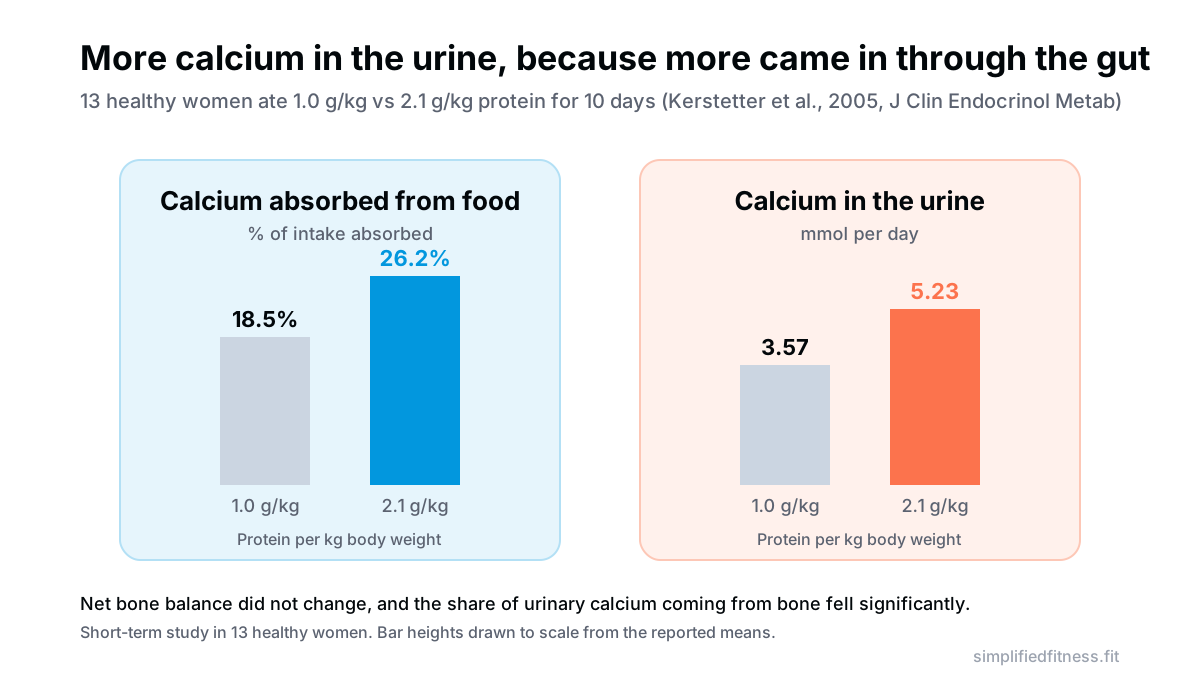
Think of it like a bigger pay cheque and bigger spending. The money moving through your account goes up, but your savings are not draining.
Third, long trials measuring bone itself. More on these below. In short, adding 30-45 g/day of whey for 18-24 months did not change bone density compared with placebo in older adults.
Does a high protein diet increase or decrease bone density?
Mostly neutral to slightly positive, depending on the bone site and the study. This is where I would push back on anyone claiming protein “significantly builds bone”. The data do not say that.
A 2017 meta-analysis commissioned by the National Osteoporosis Foundation pooled 16 randomised trials and 20 prospective cohort studies. Higher protein intake was linked to a small protective effect on lumbar spine density (net gain 0.52%, 95% CI 0.06% to 0.97%, 5 trials), but no effect on total hip, femoral neck or total body density, or bone markers. The authors concluded there were no adverse effects of higher protein, positive trends at most sites, and that studies were heterogeneous and confounding could not be excluded (Shams-White et al., 2017).
A larger 2019 analysis of 127 papers was more lukewarm. Protein intake explained 0-4% of the variation in bone density in adults, and once studies adjusted for confounders, the lumbar spine and femoral neck associations were not statistically significant. Pooled supplementation trials also did not reach significance for spine density (mean difference 0.04 g/cm2, P = 0.07) or femoral neck density. The authors concluded there is little benefit of increasing protein for bone health in healthy adults, but clearly no indication of detrimental effect within the intakes studied, around 0.8-1.3 g/kg/day (Darling et al., 2019).
So who is right? Both, really. They reach the same safety conclusion and differ on whether there is a small benefit. Differences in which studies were included, how bone sites were pooled and whether confounders were adjusted for probably explain the gap.
Do older adults on high protein diets have fewer hip fractures?
Possibly, but this is the weakest-sounding claim to state flatly, because the evidence is observational.
A 2017 meta-analysis of prospective cohorts found that high versus low protein intake went with a 16% decrease in hip fractures, and that protein above the RDA may have some beneficial role in preventing hip fractures and bone density loss. It found no differences between animal and plant protein, although data were scarce (Wallace and Frankenfeld, 2017).
A 2019 review in adults aged 65 and over pooled four cohort studies and reported a hazard ratio of 0.89 (95% CI 0.84 to 0.94) for hip fracture with higher protein intake. That review included twelve cohorts but only one RCT (Groenendijk et al., 2019).
The wider 2019 analysis above, covering osteoporotic fractures in adults, found no significant association: relative risk 0.94 (0.72 to 1.23) for total protein, and similar for animal and vegetable protein (Darling et al., 2019).
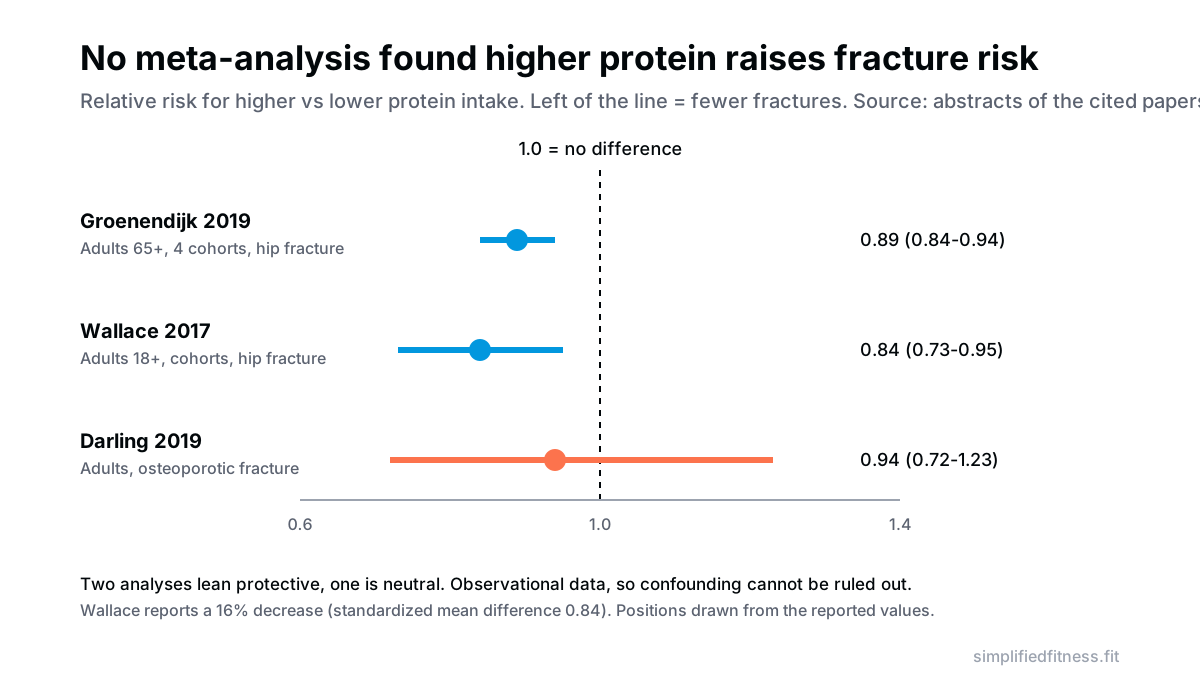
Why the difference? The fracture outcomes differ (hip fracture versus all osteoporotic fractures), and so do the populations (older adults versus all healthy adults). People who eat more protein may also be healthier, more active and better nourished overall, which cohort studies cannot fully strip out. A cautious reading: higher protein is not linked to more fractures, and may be linked to fewer hip fractures in older adults. It is not proof that protein prevents them.
What do long supplementation trials show?
Two long randomised trials of whey protein in older adults are worth knowing, because they test the question directly and mostly came back null.
- 18 months, 208 older adults (BMI 19-32, usual intake 0.6-1.0 g/kg). 45 g/day of whey versus a calorie-matched placebo. No significant difference in lumbar spine density (the primary outcome) or other sites. Truncal lean mass was higher in the protein group, and kidney filtration (eGFR) did not differ. One bone breakdown marker (C-terminal telopeptide) was higher in the protein group, a reminder that not every signal was neutral. The authors concluded that protein above the RDA may preserve fat-free mass without harming bone or kidney function in healthy older adults (Kerstetter et al., 2015).
- 2 years, 219 women aged 70-80 (usual intake about 1.1 g/kg). 30 g/day of whey versus placebo, both with 600 mg calcium. Hip density fell in both groups with no between-group difference, and femoral neck strength did not change. Serum IGF-1 was 7.3-8.0% higher in the protein group. The authors concluded that in protein-replete women, extra protein had neither beneficial nor deleterious effects on bone mass or strength (Zhu et al., 2011).
Notice the IGF-1 point. You will see claims that protein builds bone via IGF-1. Protein did raise IGF-1 in that trial, but bone did not improve, so the IGF-1 route is a plausible mechanism, not a proven bone-building effect in these studies.
Also notice who was studied. These were mostly healthy, protein-replete older adults. We have much less direct data in people who were already eating too little protein, in younger lifters, or at very high intakes.
Protein and bone health: practical takeaways for lifters
You do not need to fear your protein target. You do need to look after the other things that actually decide bone health.
| Factor | What to do | Why it matters for bone |
|---|---|---|
| Protein | Hit your normal target, roughly 1.6-2.2 g/kg if you lift, spread over meals | No harm found in reviews, possible small benefit |
| Calcium | Get it from food first: curd, milk, paneer, ragi, leafy greens | Absorption rises with protein, but only if calcium is there |
| Vitamin D | Check your level if you rarely get sun or have symptoms | Needed for calcium absorption. See calcium and vitamin D for lifters |
| Loading | Lift heavy, include squats, deadlifts or hip thrusts | Bone adapts to mechanical load (general physiology, not tested in the studies above) |
A simple Indian vegetarian day can cover both: dal and rajma at lunch and dinner, a glass of milk or a bowl of curd at two meals, paneer or soya chunks as a main protein, and a handful of ragi or leafy greens. If you are unsure how much protein you actually need, our protein calculator gives a starting range for your weight and goal. For how much to aim for in the first place, see optimal daily protein intake for hypertrophy.
What about kidneys, and older lifters?
Two neighbouring worries come up with the bone myth. Kidneys are the first, and we cover them separately in high protein diets and kidney function. In the 18-month trial above, eGFR did not differ between groups, but that was in healthy older adults, not people with kidney disease.
The second is older age. Muscle responds less to a given protein dose as we age, and bone and muscle tend to decline together. Our guides on protein requirements for older adults and strength training for older adults cover what to do about both.
When to see a doctor
Diet is not a diagnosis. See a doctor if you have broken a bone from a minor fall or knock, have lost height, are postmenopausal, have taken steroid tablets for a long time, have a thyroid, kidney or digestive condition, or have a close relative with osteoporosis. A DXA scan and blood tests will tell you far more than any diet theory. If you already have osteoporosis or kidney disease, ask for personalised protein and calcium advice rather than copying a lifter’s plan.
The bottom line
The acid ash hypothesis made a neat story and then failed the tests. Protein raises urinary calcium, but it also raises calcium absorption, and the best balance studies found no net bone loss. Meta-analyses found no harm and possibly small benefits, mostly in the lumbar spine and for hip fractures in older adults, with plenty of caveats about observational data.
Eat your protein, get your calcium, lift something heavy and keep your vitamin D sorted. That is a better bone plan than avoiding dal.
Frequently Asked Questions
Does a high protein diet cause osteoporosis?
No, current evidence does not show that it does in healthy adults. A 2019 meta-analysis of 127 papers found no detrimental effect of protein on bone within the intakes studied (about 0.8-1.3 g/kg/day), and a 2017 National Osteoporosis Foundation review reported no adverse effects of higher protein. If you already have osteoporosis, ask your doctor how much protein suits you.
What is the acid ash hypothesis?
It is an old idea that protein and grain foods make the body slightly acidic, so bone releases calcium to neutralise the acid and slowly weakens. A meta-analysis of the best-designed calcium balance trials found that more diet acid load raised urine calcium but did not change calcium balance or a bone breakdown marker. Treat it as an outdated hypothesis rather than an established cause of osteoporosis.
Does protein leach calcium from your bones?
Not in any way that has been shown to cost you bone. Protein increases calcium in the urine, but stable isotope studies show it also increases calcium absorbed from food, and net bone balance did not change in a 10-day crossover trial in 13 women. Keep your calcium intake adequate so the absorbed calcium is there to be used.
Why does protein increase calcium in the urine?
More dietary protein raises calcium absorption in the gut, and that extra absorbed calcium appears to explain much of the extra calcium in the urine. In a 2005 study, absorption rose from 18.5% to 26.2% on a high protein diet, and urinary calcium rose with it. The extra urinary calcium appears to come largely from food rather than bone, so pair protein with calcium-rich foods like curd, milk and paneer.
Does protein improve bone density?
Possibly a little, and mainly in the lumbar spine. A 2017 meta-analysis found higher protein intake gave about a 0.52% net gain in lumbar spine density, with no clear effect at the hip or total body. Do not expect protein alone to rebuild bone, and combine it with resistance training and calcium.
Does high protein reduce hip fracture risk in older adults?
It may, but the evidence is observational. A 2019 meta-analysis of four cohorts in adults aged 65 and over found a pooled hazard ratio of 0.89 for hip fracture with higher protein intake. Because cohort studies cannot prove cause, older adults should treat adequate protein as one supportive habit alongside strength training, calcium and vitamin D.
Is animal protein worse for bones than plant protein?
The available data do not show a difference. A 2017 review found no differences between animal and plant protein for bone outcomes, though it noted that data were scarce, and a 2019 meta-analysis found no fracture association for either type. A mixed intake of dal, soya, eggs, curd and meat or fish covers both bases.
Do I need more calcium if I eat a lot of protein?
There is no good evidence that you need extra beyond normal recommendations, but adequate calcium matters more when protein is high. Protein raises absorption of calcium, so the calcium has to be present in the diet to benefit. Aim to get calcium from food first, such as curd, milk, paneer, ragi and leafy greens, and ask a doctor before taking calcium supplements.
Can whey protein supplements hurt my bones?
Trials in older adults found no harm to bone. An 18-month trial of 45 g/day of whey in 208 older adults found no difference in spine bone density versus placebo, and a two-year trial of 30 g/day in 219 women aged 70-80 found no beneficial or harmful effect on bone mass. Whey is a convenient way to hit your protein target, not a risk to your skeleton.
Are the acid ash and alkaline diet ideas the same thing?
They are two sides of the same hypothesis. The alkaline diet claims that cutting acid-forming foods protects bone, which only works if the acid ash mechanism is true. A meta-analysis concluded that promoting the alkaline diet to prevent calcium loss is not justified, so you can skip the alkaline water and pH strips.
How much protein is safe for my bones?
Most bone studies looked at intakes from the RDA of 0.8 g/kg up to roughly 1.3 g/kg, with some trials adding 30-45 g of whey on top. Many lifters eat more than that, and there is less bone-specific data at very high intakes. Use our protein calculator for a starting figure and see a doctor if you have kidney or bone disease.
Should I see a doctor about my bone health?
Yes if you have had a fracture from a minor fall, have height loss, are a postmenopausal woman, take long-term steroids, or have a family history of osteoporosis. A bone density (DXA) scan and blood tests give far better information than any diet theory. Diet and lifting support your bones, but they do not replace medical assessment.
Sources & References
Every claim above is checked against peer-reviewed research (PubMed, U.S. National Library of Medicine) or guidance from established health bodies. How we fact-check.
- Shams-White MM, et al. Dietary protein and bone health: a systematic review and meta-analysis from the National Osteoporosis Foundation. Am J Clin Nutr. 2017. PMID: 28404575
- Darling AL, et al. Dietary protein and bone health across the life-course: an updated systematic review and meta-analysis over 40 years. Osteoporos Int. 2019. PMID: 30903209
- Wallace TC, et al. Dietary Protein Intake above the Current RDA and Bone Health: A Systematic Review and Meta-Analysis. J Am Coll Nutr. 2017. PMID: 28686536
- Groenendijk I, et al. High Versus low Dietary Protein Intake and Bone Health in Older Adults: a Systematic Review and Meta-Analysis. Comput Struct Biotechnol J. 2019. PMID: 31462966
- Fenton TR, et al. Meta-analysis of the effect of the acid-ash hypothesis of osteoporosis on calcium balance. J Bone Miner Res. 2009. PMID: 19419322
- Kerstetter JE, et al. The impact of dietary protein on calcium absorption and kinetic measures of bone turnover in women. J Clin Endocrinol Metab. 2005. PMID: 15546911
- Zhu K, et al. The effects of a two-year randomized, controlled trial of whey protein supplementation on bone structure, IGF-1, and urinary calcium excretion in older postmenopausal women. J Bone Miner Res. 2011. PMID: 21590739
- Kerstetter JE, et al. The Effect of a Whey Protein Supplement on Bone Mass in Older Caucasian Adults. J Clin Endocrinol Metab. 2015. PMID: 25844619

Umair Hazrami · Founder & Head Coach, Simplified Fitness
Umair Hazrami founded Simplified Fitness and the Simplified Lifter channel to cut through fitness noise. With 4+ years of consistent training and 10+ coaching clients, he writes every guide from the peer-reviewed research and links the sources so you can check them. Our editorial standards.
Educational content only, not medical advice. If you have a medical condition, are pregnant, or take medication, talk to a qualified doctor before changing your diet, supplements or training. Full disclaimer.
Keep reading

Nutrition
The Anabolic Window Myth: Do You Really Need a Shake Within 30 Minutes?
The anabolic window myth, debunked: what meta-analyses show about the 30-minute post-workout shake, how wide your real window is, and when timing still matters.
8 min read

Nutrition
Casein Protein: Slow Digestion, Nighttime Satiety and Muscle Growth
Casein protein benefits for muscle growth: how slow digestion works, what pre-bed trials show, casein vs whey, satiety on a cut and a curd pudding recipe.
8 min read
Nutrition
Collagen Protein: Joint and Tendon Support vs Muscle Building Protein
Does collagen protein build muscle? Here is why 20 g of collagen should not count toward your daily protein goal, and where it may help tendons and joints.
8 min read

Nutrition
Protein Distribution: 3 Meals vs 5 Meals and the 'Muscle Full' Effect
Protein distribution throughout the day: do you need 5-6 meals for muscle? See what research says on 3 vs 5 meals, the muscle full effect and grams per meal.
9 min read