Fast Food Survival Guide: Macro-Friendly Orders at Major Global Chains
A fast food survival guide for lifters: how to build a high protein order at any chain, cut hidden calories, handle sodium and stay on track while travelling.

TL;DR. The short answer
- You can hit your macros at almost any chain by following four steps: pick a lean protein, strip the sauces and fried extras, add vegetables or beans, then check the chain's own nutrition calculator.
- People underestimate fast food calories. In a study of 1,877 adults at US chains, diners guessed about 175 kcal too low on average, and the gap grew as meals got bigger.
- Protein is the anchor. For lean, trained people in a deficit, reviews suggest 2.3-3.1 g/kg of fat-free mass, so a single meal that supplies 30-50 g is a useful target.
- One salty meal does not wreck a diet. Any scale spike afterwards is not fat gain, so return to normal eating instead of fasting or punishing yourself.
- Exact calories and protein vary by country and change with menu updates, so treat any number you read in a blog (including ours) as a ballpark.
Part of our complete guide: High-Protein Foods List: Protein per 100g, Cost per 30g and Meal Prep Guide
Table of contents
You are at an airport at 9 pm, or stuck on a highway with one food court for 80 km. Can you still hit your numbers? Yes. This fast food survival guide gives you a four-step method that works at any chain: choose a lean protein, strip the sauces and fried extras, add vegetables or beans, and check the chain’s own nutrition calculator. It belongs to our wider high protein foods and meal prep guide, which covers the home-cooked side of the same plan.
One honest note before we start. Chains change recipes, portion sizes and menus often, and they differ a lot by country. So we are not going to hand you a table of “exact” macros copied from memory. A wrong number logged with confidence is worse than a rough number logged honestly. What you get here is the method, plus the research behind why it works.
Can you really eat fast food while cutting?
Yes. Fat loss comes down to a sustained calorie deficit, and the International Society of Sports Nutrition position stand describes fat loss diets exactly that way, adding that a wide range of dietary approaches can be similarly effective for body composition (Aragon et al., 2017). The building is irrelevant. The totals are what count.
The catch is that fast food makes totals easy to blow. Big portions, sugary drinks, sauces and fried coatings stack calories fast while giving you modest protein. The goal of this guide is to flip that ratio.
If you are cutting, pair this with our high protein cutting guide so the meal you order fits a daily plan. Not sure what your numbers are? Use the free macro calculator first.
Why protein is the anchor of every order
When calories drop, muscle is easier to lose. Protein is the lever you control.
A 2014 systematic review of six studies in lean, resistance-trained athletes who were restricting calories concluded that their protein needs are likely 2.3-3.1 g/kg of fat-free mass, scaled upwards with the severity of the deficit and the leanness of the athlete (Helms et al., 2014). That is a recommendation for lean athletes, not everyone, so most recreational lifters sit comfortably below the top end.
A randomized trial adds some direct evidence. Young men did a 4-week hypoenergetic diet with hard training; the group eating 2.4 g/kg/day of protein gained 1.2 kg of lean mass and lost 4.8 kg of fat, while the 1.2 g/kg group gained 0.1 kg of lean mass and lost 3.5 kg of fat (Longland et al., 2016). Note the limits: 40 young men, 4 weeks, a very controlled setting. Treat it as supportive, not final.
What this means at the counter: a meal that carries roughly 30-50 g of protein is a practical target for most lifters. That number is our coaching rule of thumb, not a figure from one of these studies, so adjust it to your own daily total.
Why your eyes cannot judge a fast food meal
Here is the part most people skip. A BMJ study followed 1,877 adults at 89 restaurants (McDonald’s, Burger King, Subway, Wendy’s, KFC and Dunkin’ Donuts) in New England. The average meal contained 836 kcal, and adults underestimated it by 175 kcal on average. The bigger the meal, the bigger the miss (Block et al., 2013).
There was also a “health halo” signal. Adults eating at Subway estimated their meals as 20% lower in calories than McDonald’s diners did, and adolescents 25% lower. It is an observational finding, so it shows a pattern, not a cause. Still, “it is Subway, so it must be light” is a trap worth noticing.
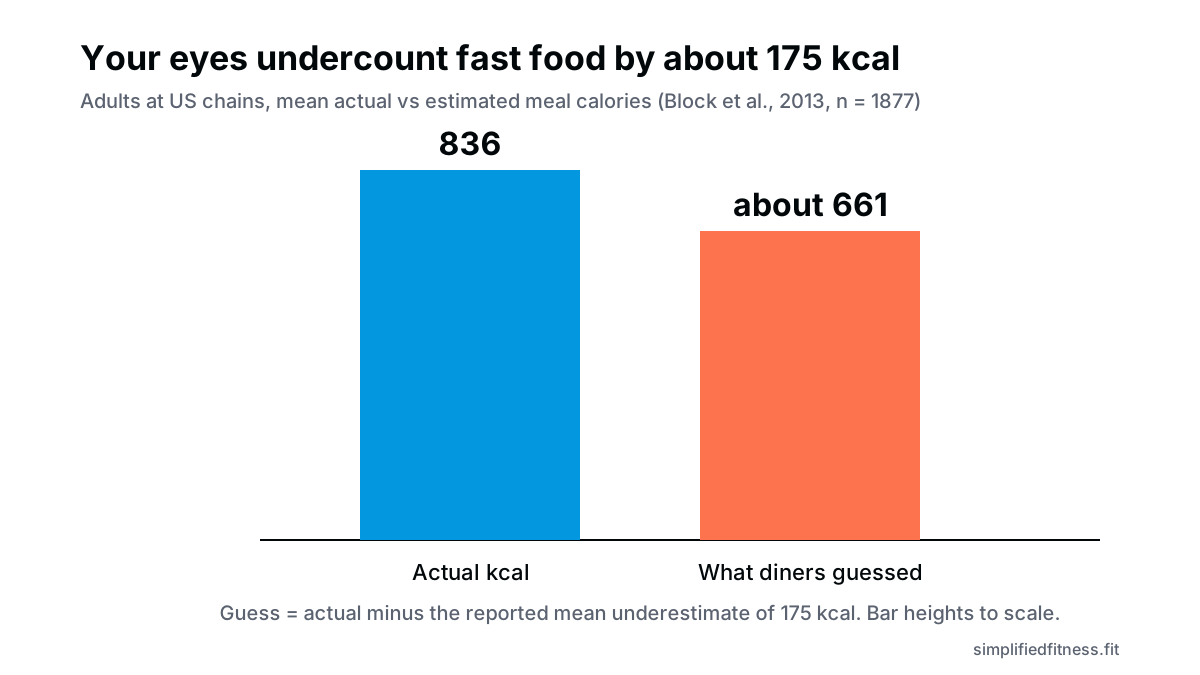
Does a calorie label fix it? Not really. A meta-analysis of 19 studies found menu labels were linked to only about 18 fewer kcal ordered per meal, and in 6 controlled restaurant studies the reduction (about 8 kcal) was not statistically significant (Long et al., 2015). The lesson is not that labels are useless. It is that you have to use them on purpose.
The 4-step method to order at any chain
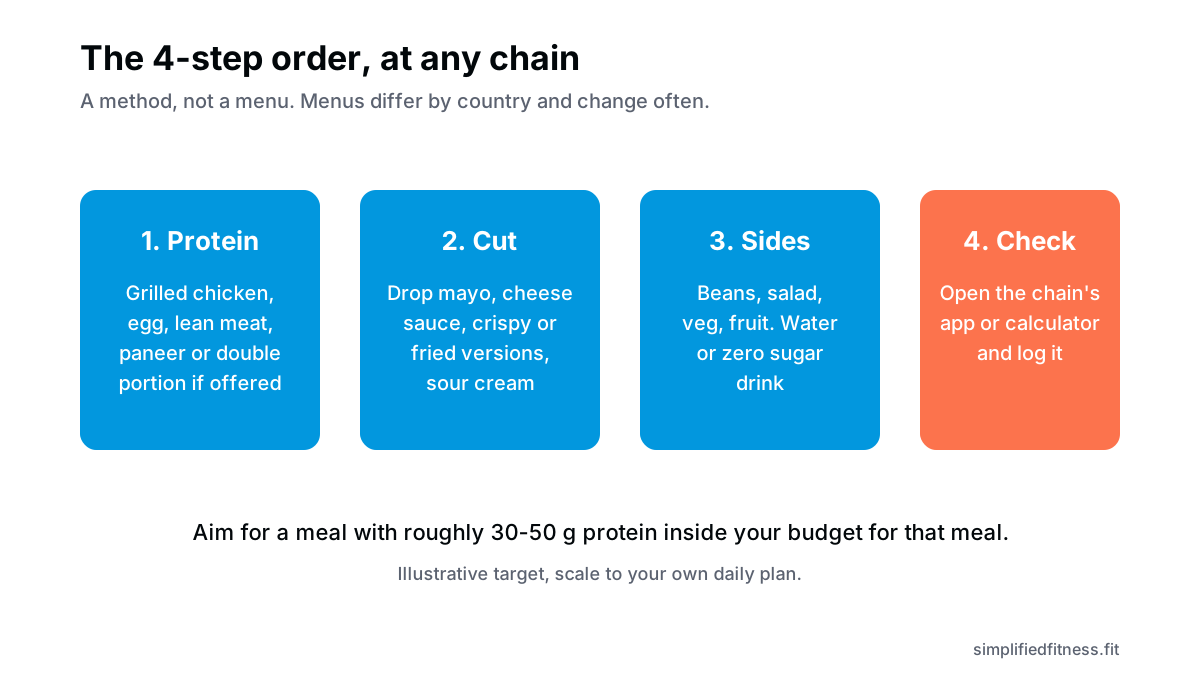
Step 1: Pick the protein. Grilled chicken, egg, lean meat or paneer where offered. If the chain sells a double portion of protein, that is often the single best upgrade.
Step 2: Cut the hidden calories. Mayo, creamy sauces, cheese sauce, sour cream, crispy coatings and buttery buns carry a lot of energy for little protein. Ask for them off, or on the side. Say it plainly: “no mayo, sauce on the side.”
Step 3: Add volume. Beans, salad, vegetables, fruit. These make the meal feel big without a big calorie bill. Pair with water or a zero sugar drink, because a large sugary drink can quietly add hundreds of calories.
Step 4: Check the numbers. Open the chain’s app or calculator for your country. Most let you remove ingredients and see the totals change. Log it.
That is the whole system. The rest is just applying it to the common formats.
How to apply it at the usual chains
We are describing formats, not promising exact calories, because menus move.
| Chain type | Where the protein lives | What to trim |
|---|---|---|
| Burger chains (McDonald’s style) | Plain patty items, egg and grilled chicken options | Mayo, cheese sauce, large fries, sugary drinks |
| Sub shops (Subway style) | Grilled chicken, turkey or egg fillings | Creamy sauces, extra cheese, chips and cookies |
| Burrito bowls (Chipotle style) | Chicken or other meat, beans | Sour cream, extra oil-heavy toppings, a heavy rice portion |
| Rice bowl chains (Panda Express style) | Plain grilled or steamed protein options | Sweet, sticky sauces and fried items |
| Coffee shops (Starbucks style) | Egg bites, protein boxes, plain yoghurt | Sugary syrups, whipped cream, large milk drinks |
A few practical notes on each.
Burger chains. Combo meals are built to be big. Ordering items separately is usually better than a combo, because you can pick the protein item and skip the fries and soda. A breakfast egg sandwich with no sauce is often more protein-dense than a large burger meal, but check the actual numbers for your country.
Sub shops. The bread and sauces are the swing factors. A smaller sub with a double portion of lean protein and a pile of vegetables usually lands better than a foot-long with three sauces.
Burrito bowl chains. A bowl lets you control every ingredient. Protein first, beans and veg next, and treat rice, cheese and sour cream as dials you turn up or down based on your calorie budget. A double chicken salad bowl with beans and fajita veg and no sour cream is a sensible shape. We are not quoting its macros because they vary by country and menu version, so check the calculator.
Rice bowl chains. Choose plain protein, add vegetables, and go light on the sweet sauces and fried items.
Coffee shops. A lot of drinks here are dessert. If you need protein, egg-based or yoghurt-based items are the better bets than a flavoured latte and a pastry.
What if you are in India?
Menus differ here, and it matters. Global chains often run local menus with paneer, vegetarian and spiced items, and the portion sizes and ingredients can differ from the US versions. Never use a US number for an Indian order.
For vegetarians, look for paneer, egg (if you eat it), curd or dal-based items, and add salad or sprouts where offered. For non-vegetarians, grilled chicken, tandoori items and egg dishes are simple wins. Our guide on dining out in India goes deeper on ordering at restaurants where there is no calorie label.
What about the sodium?
Fast food is salty, and the scale can look ugly the next morning. Here is what the research actually supports.
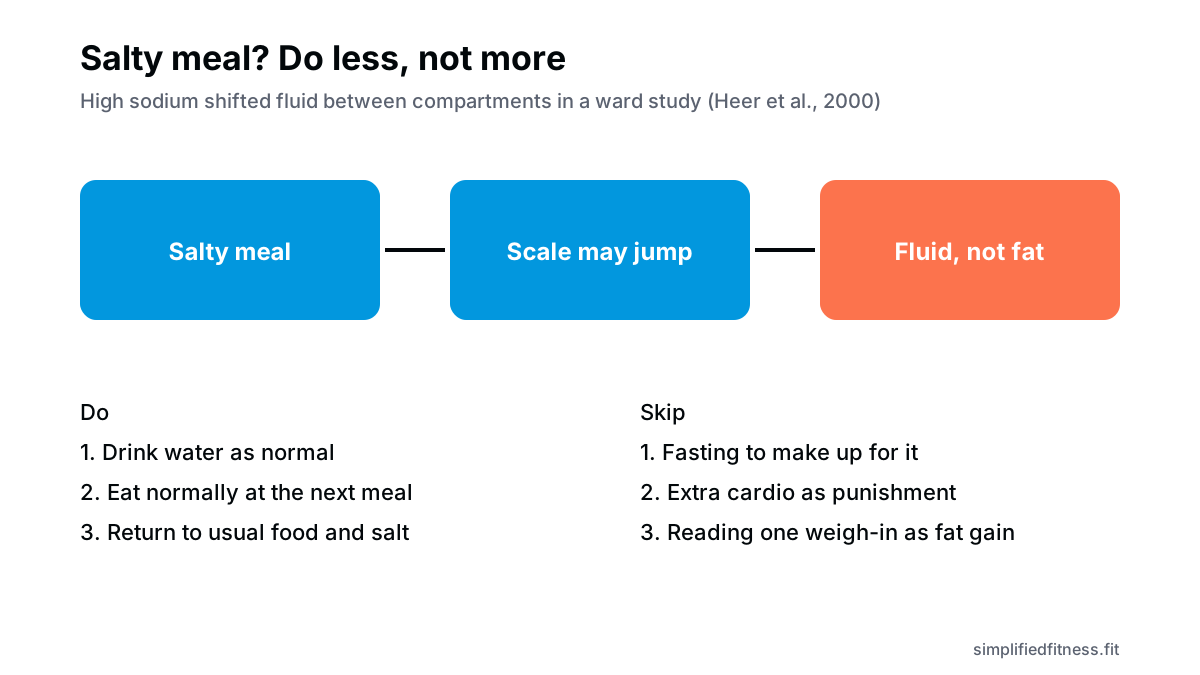
In a controlled metabolic ward study, 32 healthy men ate diets with sodium ranging from low to very high. High sodium raised plasma volume in a dose-dependent way, but total body water and body mass did not increase (Heer et al., 2000). The authors concluded that high sodium shifted fluid between compartments rather than causing overall water storage. That is one small study in healthy men eating fixed diets for days at a time, not a single salty meal, so the scale can still jump after a big restaurant meal from food volume, carbs and water.
The practical takeaway is simple: do not punish yourself. Our guide on daily scale weight fluctuations explains why one weigh-in tells you very little.
How to stay on track while travelling
Staying on track does not mean perfect. It means having a plan for the bad options.
- Eat before you leave. A protein-rich meal before a flight or drive lowers the odds of a desperate order.
- Carry backup. A few non-perishable protein snacks in your bag cover the worst-case scenario. See our list of portable high protein snacks.
- Save your go-to orders. Log them once in your tracking app so ordering takes 30 seconds.
- Think in days, not meals. One imperfect meal barely moves a weekly average.
- Keep the habits that matter. Protein, water, steps and sleep keep working on the road. For a bigger travel plan, read our travel nutrition strategies for flights, road trips and hotels.
If you want a flexible mindset for meals like these, our piece on the 80-20 rule in nutrition explains how to plan for them without guilt.
Quick checklist before you pay
- Is there a clear protein source in the meal?
- Did I remove or reduce the sauces and fried extras?
- Is there a vegetable, bean or fruit in there?
- Am I drinking water or a zero sugar drink?
- Have I checked the calories in the chain’s own calculator?
- Is it logged?
If you can answer yes to most of these, you have done the job. Go eat. And remember, a single meal rarely decides your physique; the next 20 meals do.
Frequently Asked Questions
What is the best high protein fast food order?
The best order is usually a grilled chicken or egg based item with sauces removed and a vegetable or bean side. Protein is what keeps muscle on in a deficit, and grilled items carry far fewer hidden calories than fried ones. Check the chain's nutrition calculator before you order so the numbers are real, not guessed.
Can you eat fast food while cutting?
Yes, because fat loss is driven by your weekly calorie deficit, not by where the food comes from. The ISSN position stand describes fat loss diets as driven by a sustained caloric deficit, with many dietary styles working similarly. Plan the meal around your calorie budget, hit your protein, and log it.
How do I find macros for a fast food menu item?
Use the chain's official app or online nutrition calculator, which lets you remove ingredients and see updated numbers. Menus differ by country, so use the version for the country you are in. Save your usual order in a tracking app so you only do this work once.
Why do I underestimate fast food calories?
Research shows it is common. A BMJ study of fast food diners found adults underestimated their meals by about 175 kcal on average, and larger meals were underestimated the most. Build your order from a menu with listed calories rather than judging by eye.
Is Subway actually healthy for fat loss?
It can be a good option, but the sauces, cheese and extra bread are where calories creep in. The same BMJ study found Subway diners estimated their meals as 20-25% lower in calories than McDonald's diners, which hints at a health halo effect. Choose a lean protein, load vegetables, go easy on creamy sauces and check the numbers.
How much protein should one fast food meal have?
A target of roughly 30-50 g of protein per meal is a sensible practical range for most lifters. It fits the higher intakes suggested for people eating in a deficit, which reviews put at 2.3-3.1 g/kg of fat-free mass for lean trained athletes. Divide your daily protein target by the meals you eat and aim for that number.
What should I order at a burger chain?
Pick a plain grilled or simple patty item, skip mayo and cheese sauce, and avoid the large fries and sugary drink. Sauces, buns and fried coatings carry much of the energy in these meals. A salad, a side of fruit or an extra patty can be better than a combo meal.
Does fast food sodium ruin fat loss?
No. Salt affects water, not body fat, and a high sodium day can make the scale jump temporarily. In a controlled study of 32 healthy men, high salt intake raised plasma volume but did not increase total body water or body mass. Any jump after a big meal is mostly food and water, not fat. Drink water as usual and go back to your plan at the next meal.
Should I skip meals after eating fast food?
Usually not. Skipping meals tends to set up a binge later and makes protein targets harder to reach. Eat your normal next meal, keep protein high and let the weekly average do the work.
What can I eat at an airport or on a road trip?
Look for grilled chicken, eggs, paneer, curd, fruit and nuts, since these are available in most travel hubs. Keep a few non-perishable protein snacks in your bag as a backup for when options are poor. Our guide on portable high protein snacks has ideas that need no fridge.
Are Indian fast food chains different from US ones?
Yes, menus differ a lot. Indian branches of global chains often list vegetarian and paneer items, and ingredients and portion sizes vary from US versions. Always use the Indian nutrition information rather than numbers from a US article.
How many fast food meals per week is okay?
There is no scientific cut-off, since total weekly intake of calories and protein matters most. If most of your diet is built on minimally processed protein, vegetables and carbohydrates, a few planned fast food meals fit easily. If you have a medical condition such as high blood pressure or diabetes, ask your doctor about sodium and sugar limits.
Can I build muscle on fast food?
You can progress if total protein and calories match your goal and you train hard, but food quality still matters for micronutrients and fibre. Use fast food as a tool for busy days, not as the base of your diet. A mostly home-prepared diet with fast food as backup is easier to sustain.
Sources & References
Every claim above is checked against peer-reviewed research (PubMed, U.S. National Library of Medicine) or guidance from established health bodies. How we fact-check.
- Block JP, et al. Consumers' estimation of calorie content at fast food restaurants: cross sectional observational study. BMJ. 2013. PMID: 23704170
- Helms ER, et al. A systematic review of dietary protein during caloric restriction in resistance trained lean athletes: a case for higher intakes. Int J Sport Nutr Exerc Metab. 2014. PMID: 24092765
- Longland TM, et al. Higher compared with lower dietary protein during an energy deficit combined with intense exercise promotes greater lean mass gain and fat mass loss: a randomized trial. Am J Clin Nutr. 2016. PMID: 26817506
- Aragon AA, et al. International society of sports nutrition position stand: diets and body composition. J Int Soc Sports Nutr. 2017. PMID: 28630601
- Long MW, et al. Systematic review and meta-analysis of the impact of restaurant menu calorie labeling. Am J Public Health. 2015. PMID: 25790388
- Heer M, et al. High dietary sodium chloride consumption may not induce body fluid retention in humans. Am J Physiol Renal Physiol. 2000. PMID: 10751219

Umair Hazrami · Founder & Head Coach, Simplified Fitness
Umair Hazrami founded Simplified Fitness and the Simplified Lifter channel to cut through fitness noise. With 4+ years of consistent training and 10+ coaching clients, he writes every guide from the peer-reviewed research and links the sources so you can check them. Our editorial standards.
Educational content only, not medical advice. If you have a medical condition, are pregnant, or take medication, talk to a qualified doctor before changing your diet, supplements or training. Full disclaimer.
Keep reading
Indian Diet
The 3-Hour Weekly Batch Meal Prep: Cooking 5 Days of Lunches and Dinners for Busy Lifters
Batch meal prep for the week in 3 hours: a station-by-station Sunday plan for 10 high-protein lunches and dinners, with Indian options and safe storage rules.
7 min read

Indian Diet
Cost per 30 Grams of Protein: 40 Common Fitness Foods Ranked by Price
Cost per 30g protein for 40 Indian gym foods, from soya chunks to whey and tuna. See the cheapest protein sources per gram and what to buy on a budget.
8 min read
Indian Diet
Eating Healthy on a Student Budget: High Protein Hostel and Dorm Room Meal Prep
A college student bodybuilding diet budget can still hit 130 g of protein. Cheap staples, no-cook hostel prep and a sample day, with the studies linked.
8 min read
Indian Diet
Essential Kitchen Equipment for Lifters: Scales, Air Fryers, Blenders and Containers
The best kitchen equipment for meal prep lifters: which four tools earn their space, what the research says about each, and what to buy first on a budget.
10 min read