Dining Out in India on a Diet: Tandoori Chicken, Paneer Tikka, and Ordering Hacks
Eating out in India on a diet is doable. Here is what to order (tandoori, dry paneer tikka, dal tadka), what to skip, and how to log hidden restaurant oil.
TL;DR. The short answer
- Eating out in India on a diet works if you build the order around dry-heat protein (tandoori chicken, fish or chicken tikka, dry paneer tikka) and keep gravies to one shared side.
- Dal tadka with plain roti or a katori of rice is a much lighter choice than dal makhani, butter chicken or shahi paneer, which are usually finished with butter and cream.
- People underestimate restaurant meals: in a 2013 BMJ study of fast food diners, adults guessed 175 calories too low on average, and the gap grew as meals got bigger.
- A simple habit is to add roughly 15-20 g of fat to your log for hidden cooking oil. It is a rule of thumb, not a measured value, so adjust it to how oily the food looks.
- One restaurant meal rarely wrecks a week. Plan the meal, enjoy it, and go back to your normal routine at the next meal.
Part of our complete guide: Indian High-Protein Nutrition Guide: Cutting and Muscle Building on Vegetarian and Non-Veg Diets
Table of contents
Eating out in India on a diet is very doable. Build your plate around dry-cooked protein like tandoori chicken, fish or chicken tikka and dry paneer tikka, take plain roti or one katori of rice, and keep gravies to a shared side. The gravies are where the butter, cream and oil hide, so that is where most of the damage happens.
This guide is the restaurant half of our high-protein Indian nutrition guide. It is written for the lifter who has a family dinner on Saturday, a friend’s birthday on Sunday and does not want to explain a steel tiffin to anyone.
Why restaurant meals are harder to control than home food
At home you know how much oil went into the pan. At a restaurant you do not, and you are also dealing with bigger portions, shared dishes and a bread basket that appears before you have decided anything.
The research on this is fairly consistent, with caveats. A systematic review of 29 studies concluded that eating out of home is associated with higher energy and fat intake and lower intake of micronutrients like vitamin C, calcium and iron, though the studies were mostly cross-sectional and defined “eating out” in different ways (Lachat et al., 2012). That is an association across populations, not a verdict on your Saturday dinner.
Portion size is part of the story. A meta-analysis of randomized feeding trials in healthy adults found larger portions were linked to higher daily energy intake, by about 295 kcal on average, though the studies varied a lot and could not say what happens to body weight over the long term (Higgins et al., 2022).
The takeaway is not “never eat out”. It is that restaurant food needs a plan, because the default settings (big plates, rich gravies, free bread) lean toward more food.
We guess restaurant calories too low
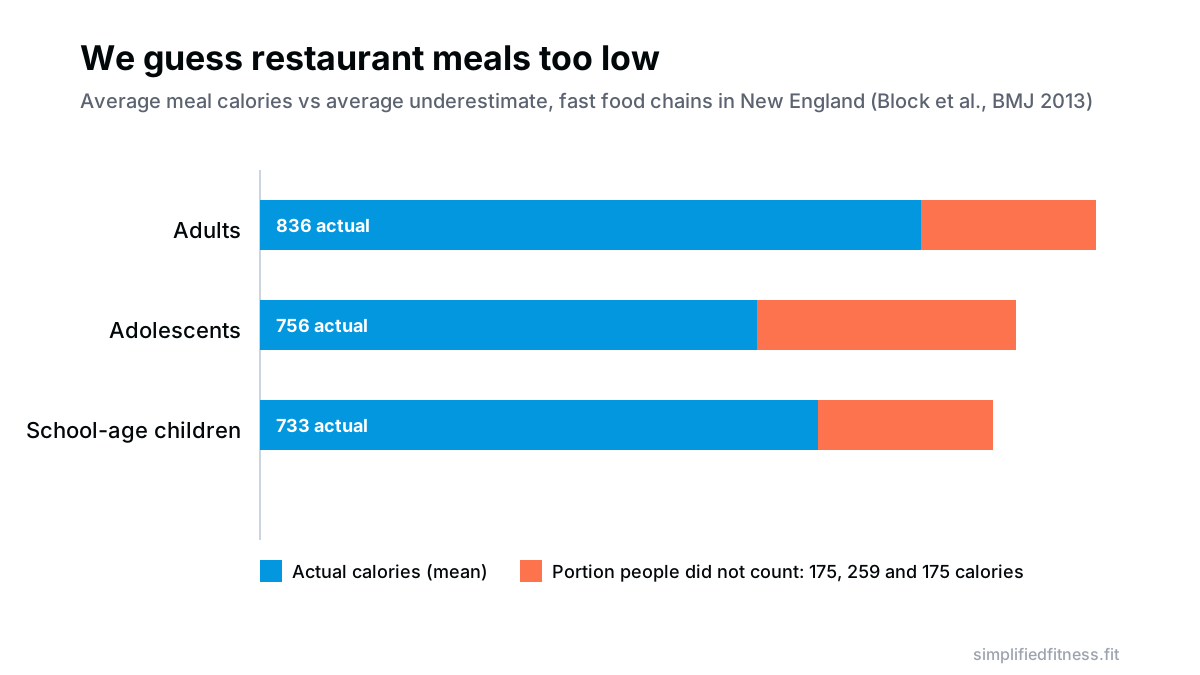
There is a second problem, and it is in our heads. In a cross-sectional study of fast food restaurants in New England, adults who bought meals averaging 836 calories underestimated them by 175 calories on average, adolescents by 259, and children by 175. Underestimation got worse as the meal got bigger (Block et al., 2013).
This was a US fast food study, not an Indian restaurant study, so do not read the exact numbers across. But the direction is useful: when you cannot weigh the food, your gut estimate probably runs low.
What should I order at an Indian restaurant on a diet?
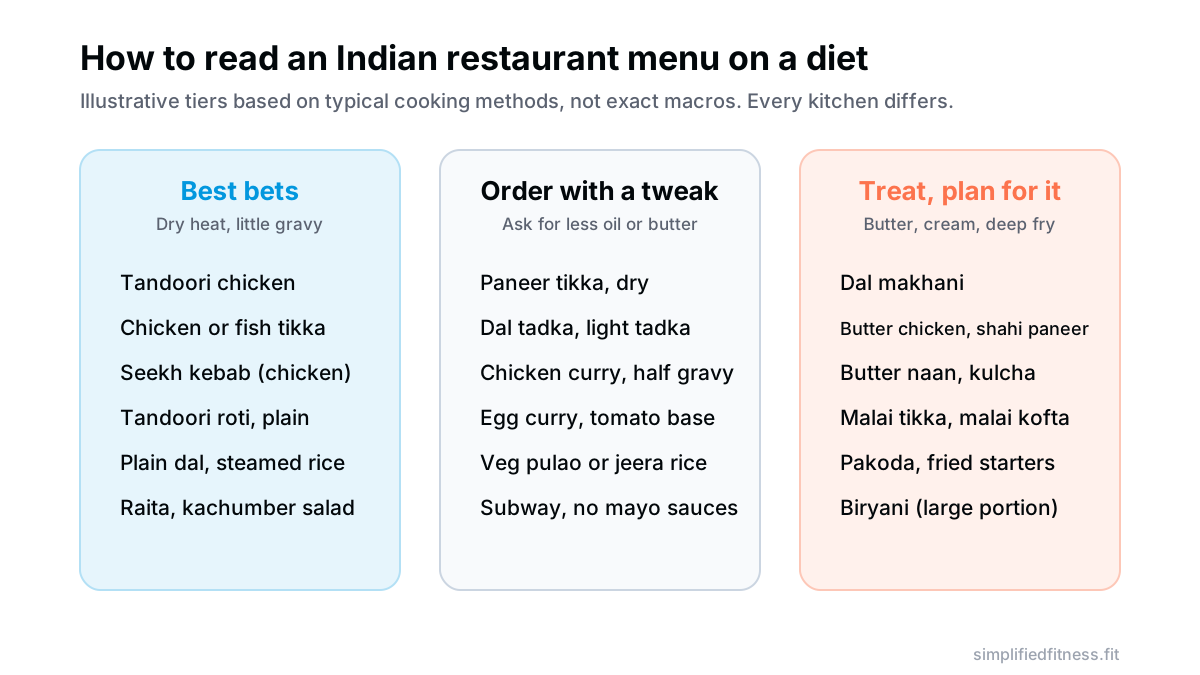
Think in tiers, not in a banned list. The menu below sorts dishes by how they are usually cooked. It is an illustration of typical methods, not a nutrition database, because every kitchen is different.
Tandoori chicken and tikka
Tandoori chicken is roasted in a clay oven at high heat, with the marinade (usually curd and spices) doing most of the flavour work. That is why it is the classic restaurant choice for people watching their intake: lots of protein, relatively little added fat.
Two honest caveats. First, restaurants often baste with butter or oil, so ask for it lightly basted. Second, the cut matters. Boneless chicken tikka or skinless pieces are leaner than a leg quarter with skin. I cannot give you a single macro figure for “restaurant tandoori chicken”, because it varies by cut, marinade and kitchen, so treat any number you see as an estimate and add a fat buffer when you log it (more on that below).
Protein also matters more when you are in a deficit. A systematic review in resistance-trained lean athletes suggested protein needs during energy restriction are likely higher than usual, around 2.3-3.1 g per kg of fat-free mass, scaled up with the severity of the deficit and leanness (Helms et al., 2014). That review covered only six studies in lean, trained athletes, so it applies best to serious lifters getting quite lean. For everyone else, the practical point is simple: make protein the first thing you order, not the last.
Paneer tikka
Paneer tikka can be a good order, with a condition: ask for it dry roasted and skip the mint mayo or creamy dips. Paneer is protein-rich but also fatty, so a full plate eaten solo is a bigger fat dose than it looks. If you are curious how paneer compares with lower-fat versions, see our breakdown of paneer vs low-fat paneer. At a restaurant, sharing one plate between two or three people is the easy fix.
Dal tadka vs dal makhani
This is the classic swap. Dal tadka is dal tempered with a spoon or two of oil or ghee. Dal makhani is traditionally slow-cooked with butter and cream, which makes it far richer. Both are tasty, but if you want dal with your roti, tadka is the lighter pick. If dal makhani is the reason you came, have a small bowl and treat it as your fat for the meal. Our guide to hidden calorie traps in Indian cooking explains why tadka and gravies add up so quickly.
Breads, rice and sides
Plain tandoori roti is the lightest bread on most menus. Butter naan and kulcha are made with refined flour and finished with butter. Take one or two roti, or one katori of rice, rather than both heaped. Raita and a kachumber salad add volume, taste and some protein from the curd for very little cost.
The four step order
When the menu arrives and everyone is talking, you do not need to calculate. You need a routine.
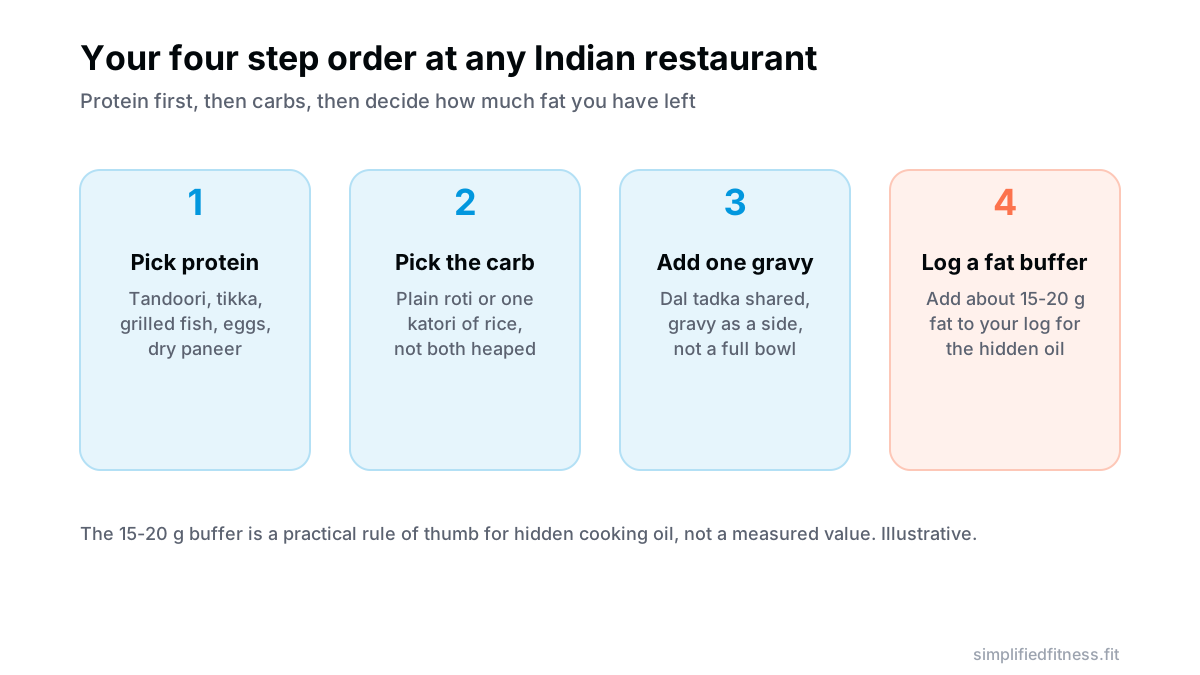
- Pick the protein first. Tandoori chicken, tikka, grilled fish, eggs or dry paneer.
- Pick one carb. Plain roti or a katori of rice.
- Add one gravy, shared. Take it as a side, not a full bowl.
- Log with a buffer. See the next section.
How do I track macros at a restaurant?
Here is the practical system I recommend. Find the closest dish in your tracking app, then add a buffer for hidden oil: roughly 15-20 g of fat per restaurant meal. This number is a rule of thumb from coaching practice, not a value from a trial, so scale it down for a dry tandoori plate and up for a dish swimming in gravy.
Why the buffer? Two reasons. Cooking oil and butter are invisible on the plate and calorie-dense, and as we saw earlier, people tend to guess restaurant meals too low. A slightly high estimate protects your deficit; a slightly low one slowly erodes it.
If you want to see how many calories and how much protein you actually need before you start estimating, run your numbers through our macro calculator, or grab a ready-made Indian diet plan to know your daily targets.
Subway, barbeque and buffet strategies
Subway: choose a lean protein (chicken or egg), load vegetables, pick mustard or a light sauce and skip the mayo-based ones. Remember the Block study: Subway diners gave lower calorie estimates than McDonald’s diners, and everyone in that study tended to guess low.
Barbeque restaurants: these are the easiest place to hit protein. Grilled chicken, fish and paneer are often unlimited, so start with the grilled items and go slowly on fried starters, naan and sweets.
Buffets: do one lap of the room before you pick up a plate. Fill half the plate with protein and vegetables first, then choose one or two things you really want. When food is unlimited, the plan has to come from you.
Alcohol at parties
Alcohol is its own conversation (see our guide on alcohol and muscle growth), but for restaurant planning here is what matters. A review of laboratory and population data concluded that energy from alcohol adds to the rest of your intake, so drinking leads to short-term overconsumption of energy, although long-term links with body weight are more complicated (Yeomans, 2010). In a crossover trial in 24 healthy men, moderate alcohol (20 g) increased food intake at a lunch 45 minutes later by 11%, especially high-fat savoury foods (Schrieks et al., 2015). That was a small study in men, so treat it as suggestive.
Practical version: order your protein first, have a smaller amount, and notice that the pakoda plate gets more attractive after the second drink.
Weddings and big family dinners
Weddings and family functions are a different animal because you do not control the menu. We cover that in more depth in navigating weddings and family dinners on a diet. The short version here: find the grill or tandoor counter, pick protein first, and treat the sweets table as optional.
Does one restaurant meal ruin a diet?
No. Fat gain comes from sustained energy surplus over time, not one meal. If you are running a moderate deficit (see our guide on setting a moderate vs aggressive calorie deficit), one higher-calorie dinner is easy to absorb. The risk is not the dinner. It is the “I blew it, so the whole weekend is gone” spiral that follows.
If a meal runs over, carry on with your next meal as planned. Do not crash diet or add extra cardio as punishment.
When to talk to a doctor or dietitian
If you have diabetes, high cholesterol, kidney disease, a history of disordered eating or any medical condition that changes what you can eat, check your restaurant approach with a doctor or registered dietitian. Anxiety about eating out that stops you from socialising at all is also worth discussing with a professional.
Frequently Asked Questions
Is tandoori chicken good for weight loss?
Yes, it is usually one of the best restaurant choices for a diet because it is cooked by dry heat with little added oil. The protein is high relative to the calories, which helps you feel full on a deficit. Ask for it without extra butter basting and pair it with salad and one roti.
How many calories are in tandoori chicken at a restaurant?
There is no single number, because it depends on the cut, the marinade (curd and oil) and whether it is basted with butter. A leg quarter with skin is much heavier than boneless chicken tikka. Treat any figure as an estimate, add a small fat buffer to your log, and choose tikka or skinless pieces when you are being strict.
Is paneer tikka healthy for a diet?
It can be, if it is dry roasted rather than brushed with butter or served with creamy mint mayo. Paneer is protein-rich but also carries a lot of fat, so portion size matters. Ask for dry roasting, share the plate and skip the mayo dip.
Which is better for a diet, dal tadka or dal makhani?
Dal tadka is usually the lighter choice. Dal makhani is traditionally simmered with butter and cream, which adds a lot of fat per bowl. If you love dal makhani, have a small bowl as your fat for the meal and skip other rich dishes.
What should I order at an Indian restaurant to stay lean?
Start with a dry protein such as tandoori chicken, fish tikka or paneer tikka, add plain roti or a katori of rice, and take one gravy dish as a shared side. This works because protein keeps you full while dry cooking limits added fat. Add salad or raita for volume and skip the bread basket.
How do I track macros at a restaurant in India?
Pick the closest dish in your tracking app, then add a buffer for hidden oil, roughly 15-20 g of fat per meal as a practical rule of thumb. Research shows people underestimate restaurant calories, especially in big meals, so estimating slightly high is safer than slightly low. Do not chase precision: a consistent estimate beats a perfect one you never log.
Is butter naan or tandoori roti better when cutting?
Plain tandoori roti is the lighter option because butter naan is made with refined flour and finished with butter. Both add carbohydrate, so the difference is mostly the fat and the size. Ask for roti without butter and have one or two.
Is biryani okay on a diet?
Biryani can fit if you treat it as the main carb and fat source for the meal. It is usually cooked with oil or ghee, and portions in restaurants are large. Have a smaller serving, take the chicken pieces over the rice, and balance it with raita.
Can I eat Subway on a diet?
Yes, a Subway sub with a lean protein and plenty of vegetables can work well. The sauces add up quickly, so choose mustard or a light option and skip mayo-based dressings. In one US study of fast food diners, people at Subway gave lower calorie estimates than people at McDonald's, so do not assume a sub is automatically light.
Does eating out make you gain weight?
It is associated with higher energy and fat intake, but that is a pattern across studies, not a rule for every meal. A systematic review of 29 mostly cross-sectional studies linked eating out to higher energy intake, more fat and lower micronutrient intake. Choosing dry-cooked protein and sensible portions lets you eat out and still make progress.
Should I skip a meal before going out for dinner?
Usually not. Arriving very hungry tends to push you toward the bread basket and fried starters. Eat your normal meals with enough protein earlier in the day, then enjoy dinner without arriving starving.
How does alcohol affect my diet at a party?
Alcohol adds calories and can nudge you to eat more. In a small crossover trial in 24 men, a moderate alcohol dose raised food intake at the next meal by 11%. If you drink, choose a smaller amount and order your protein first.
What if I overeat at a family dinner?
One big meal does not undo a week of consistent eating. Fat gain comes from sustained surpluses, not one dinner. Go back to your normal plan at the next meal, drink water and skip the urge to punish yourself with a crash diet.
Sources & References
Every claim above is checked against peer-reviewed research (PubMed, U.S. National Library of Medicine) or guidance from established health bodies. How we fact-check.
- Block JP, et al. Consumers' estimation of calorie content at fast food restaurants: cross sectional observational study. BMJ. 2013. PMID: 23704170
- Lachat C, et al. Eating out of home and its association with dietary intake: a systematic review of the evidence. Obes Rev. 2012. PMID: 22106948
- Helms ER, et al. A systematic review of dietary protein during caloric restriction in resistance trained lean athletes: a case for higher intakes. Int J Sport Nutr Exerc Metab. 2014. PMID: 24092765
- Higgins KA, et al. Systematic review and meta-analysis on the effect of portion size and ingestive frequency on energy intake and body weight among adults in randomized controlled feeding trials. Adv Nutr. 2022. PMID: 34687532
- Schrieks IC, et al. Moderate alcohol consumption stimulates food intake and food reward of savoury foods. Appetite. 2015. PMID: 25636235
- Yeomans MR. Alcohol, appetite and energy balance: is alcohol intake a risk factor for obesity? Physiol Behav. 2010. PMID: 20096714

Umair Hazrami · Founder & Head Coach, Simplified Fitness
Umair Hazrami founded Simplified Fitness and the Simplified Lifter channel to cut through fitness noise. With 4+ years of consistent training and 10+ coaching clients, he writes every guide from the peer-reviewed research and links the sources so you can check them. Our editorial standards.
Educational content only, not medical advice. If you have a medical condition, are pregnant, or take medication, talk to a qualified doctor before changing your diet, supplements or training. Full disclaimer.
Keep reading
Indian Diet
Budget Indian Diet for 120g Protein Under ₹100 a Day (Student Plan)
A budget Indian diet for 120g protein under 100 rupees a day: soya, eggs, milk and chana, with protein per rupee maths and two student plans you can copy.
8 min read
Indian Diet
Chicken Breast and Fish in India: Where to Buy, How to Cook, and Cost per 30 g Protein
Chicken breast price per kg India: compare wet market vs apps, learn safe handling, a brine method for juicy meat, and rohu vs chicken cost per 30 g protein.
11 min read

Indian Diet
How to Convince Indian Parents About Whey Protein: Kidney Fears, 'Chemicals' and the Real Evidence
How to convince Indian parents about whey protein: explain it as paneer-water dairy, answer the kidney fear with trial data, and read the label together.
9 min read
Indian Diet
Curd vs Greek Yogurt vs Hung Curd: Protein Yield and the Home Recipe
Curd vs Greek yogurt protein in India: plain dahi gives about 3-4 g per 100 g. See how straining it into hung curd can triple that, and what studies show.
9 min read