Portable High-Protein Snacks for Busy Professionals: Non-Refrigerated Fitness Options
Portable high protein snacks non refrigerated, ranked for your bag, desk or car: jerky, soy, chana, seeds and bars, plus the label traps that wreck your gut.
TL;DR. The short answer
- The best portable high protein snacks non refrigerated are beef jerky or biltong, roasted soybeans, roasted chana, pumpkin seeds, peanuts, single-serve whey sachets and a well-chosen bar. All stay safe and edible for hours without a fridge.
- A snack is worth carrying for protein if it gives roughly 15-25 g per serving. Anything under 10 g is a filler, however healthy the packaging looks.
- Sugar alcohols such as maltitol and lactitol are the main label trap. Gut symptoms are dose dependent, so one bar may be fine and three in a day may not.
- Higher-protein snacks have reduced appetite and delayed the next meal in short randomized trials, mostly in young women and adolescents. Treat that as a helpful tendency, not a guarantee.
- Snacks fill gaps. Your daily total, roughly 1.6 g/kg of body weight for people lifting, still decides most of the result.
Part of our complete guide: High-Protein Foods List: Protein per 100g, Cost per 30g and Meal Prep Guide
Table of contents
The best portable high protein snacks non refrigerated are beef jerky or biltong, roasted soybeans, roasted chana, pumpkin seeds, peanuts, whey sachets and a carefully chosen protein bar. They all survive a briefcase, a gym bag or a desk drawer, and each can deliver roughly 10-25 g of protein in a handful or a pack.
This is a cluster of our high-protein foods, meal prep and cost guide. If you want Indian desi options such as makhana and soya chunks in more depth, see high-protein Indian snacks. Here we go wider: what to carry, what to avoid on the label, and how to keep protein on track when your day is meetings, traffic and flights.
Why bother with a protein snack at all?
Honestly, you might not need one. If three solid meals get you to your daily protein, a snack is optional.
The problem is the busy day. Lunch slips to 3 pm, dinner is a client call, and the 5 pm biscuit packet becomes your fourth meal. A pre-packed protein snack is a cheap insurance policy against that.
There is a muscle argument and an appetite argument.
Muscle. A meta-analysis of 49 randomized trials (1,863 participants) found protein supplementation produced small gains in fat-free mass (0.30 kg on average) and strength during resistance training. The benefit was larger in trained people, and extra protein stopped adding lean mass beyond a total of about 1.62 g/kg/day (Morton et al., 2018). Notice the wording: this is about your daily total, not a magic snack.
Appetite. In a 3-day crossover trial of 31 adolescents, a 26 g protein soy snack delayed eating initiation and reduced appetite more than a high-fat snack, and led to fewer high-fat, high-sugar evening snacks than no snack (Leidy et al., 2015). A separate trial in 20 healthy young women found a 14 g protein yogurt snack reduced afternoon hunger and delayed eating compared with chocolate (Ortinau et al., 2014).
How much protein should a portable snack have?
Think in per-feeding amounts. A review of per-meal protein suggests roughly 0.4 g/kg of body weight per meal, across at least four meals, to reach about 1.6 g/kg/day (Schoenfeld and Aragon, 2018). For a 70 kg person that is about 28 g per feeding.
A snack will rarely hit that, and it does not need to. A rule that works in practice: if you want it to count, look for 15-25 g per serving. Under 10 g, it is a filler and you should treat it that way.
Work out your own daily target with the protein calculator, then decide how many gaps you need to fill.
What are the best non-refrigerated high-protein snacks?
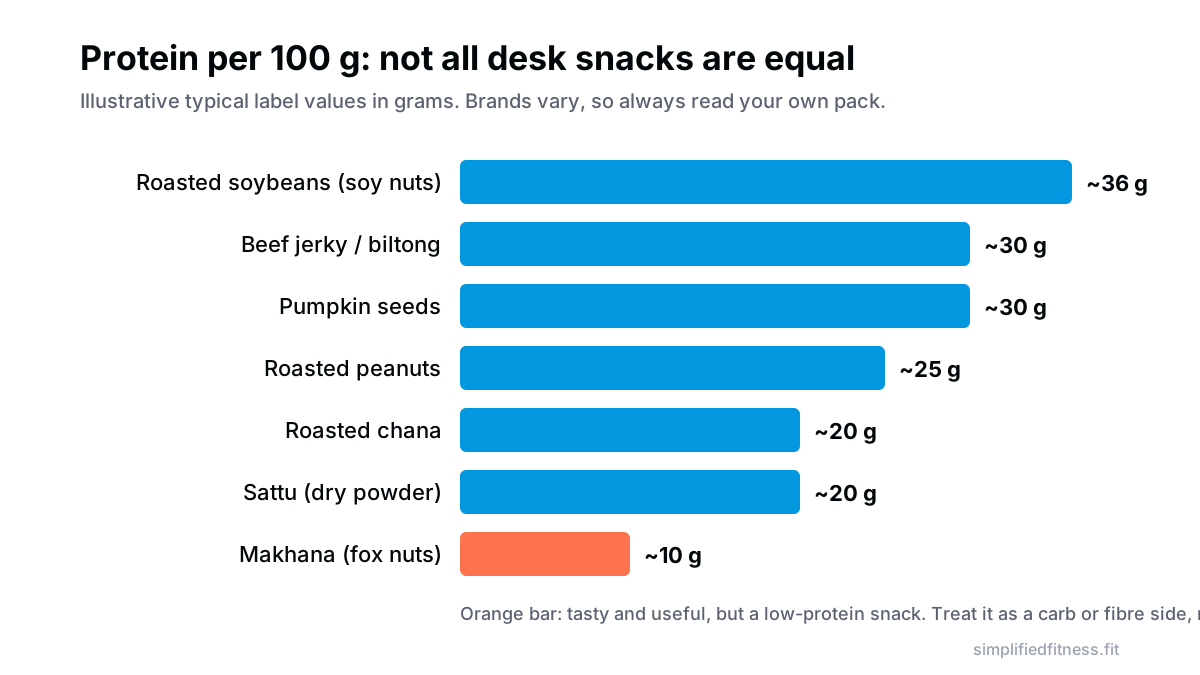
The values above are rounded, typical figures and will differ by brand. Check your own pack. Here is how each one behaves in real life.
Beef jerky or biltong
Dense, light and tasty. Many commercial packs sit around 25-35 g protein per 100 g, though flavoured versions can carry added sugar and a lot of salt. Compare brands per 100 g rather than per pack. Buy sealed, and follow the storage instructions on the pack once opened. In India, chicken or mutton jerky is less common, so check availability and the label.
Roasted soybeans (soy nuts)
The best plant option for protein density. The high-protein soy snack in the Leidy trial above delivered 26 g protein per serving, and soy is a complete protein. A typical 30 g handful of roasted soy nuts gives roughly 11 g. Our soya protein profile and safety guide covers the isoflavone myths if that worries you.
Roasted chana
Cheap, familiar and filling, usually in the range of 18-22 g protein per 100 g. In a small crossover study in healthy women, chickpeas lowered the blood glucose rise and cut energy intake at the next meal compared with white bread (Zafar and Kabir, 2017). It was a short experiment and the sample was small, so read it as encouraging, not definitive. For more on pulses, see our dals and pulses protein guide.
Pumpkin seeds
Roughly 30 g protein per 100 g, plus crunch and minerals. They are also calorie dense: a small handful (about 30 g) gives roughly 9 g of protein. Good as part of a mix, less ideal if calories are tight.
Peanuts
Budget-friendly and everywhere in India. Around 25 g per 100 g, but again calorie dense. Choose plain roasted over masala-coated or candied.
Whey sachets or a pre-measured scoop
The easiest 20-25 g of protein you can carry. Shake with water, done. It needs no fridge and weighs almost nothing. Choose a product with third-party testing where you can.
Protein bars
Convenient, but the widest quality gap on this list. Some bars are basically chocolate with protein added. Use the label check below.
Quick comparison table
| Snack | Typical protein | Strength | Watch out for |
|---|---|---|---|
| Beef jerky or biltong | ~25-35 g per 100 g | High protein, light | Salt, sugar in flavoured packs |
| Roasted soybeans | ~35-40 g per 100 g | Highest plant density | Can be hard on teeth, salt |
| Roasted chana | ~18-22 g per 100 g | Cheap, filling | Lower density than soy |
| Pumpkin seeds | ~30 g per 100 g | Crunch, minerals | Calorie dense |
| Peanuts | ~25 g per 100 g | Budget, easy | Calorie dense, coated types |
| Whey sachet | ~20-25 g per serving | Fast, precise | Needs water and a shaker |
| Protein bar | ~10-25 g per bar | Zero prep | Sugar, sugar alcohols |
All figures are approximate label ranges, not lab values. Brands differ.
How do I read a protein bar label without getting fooled?
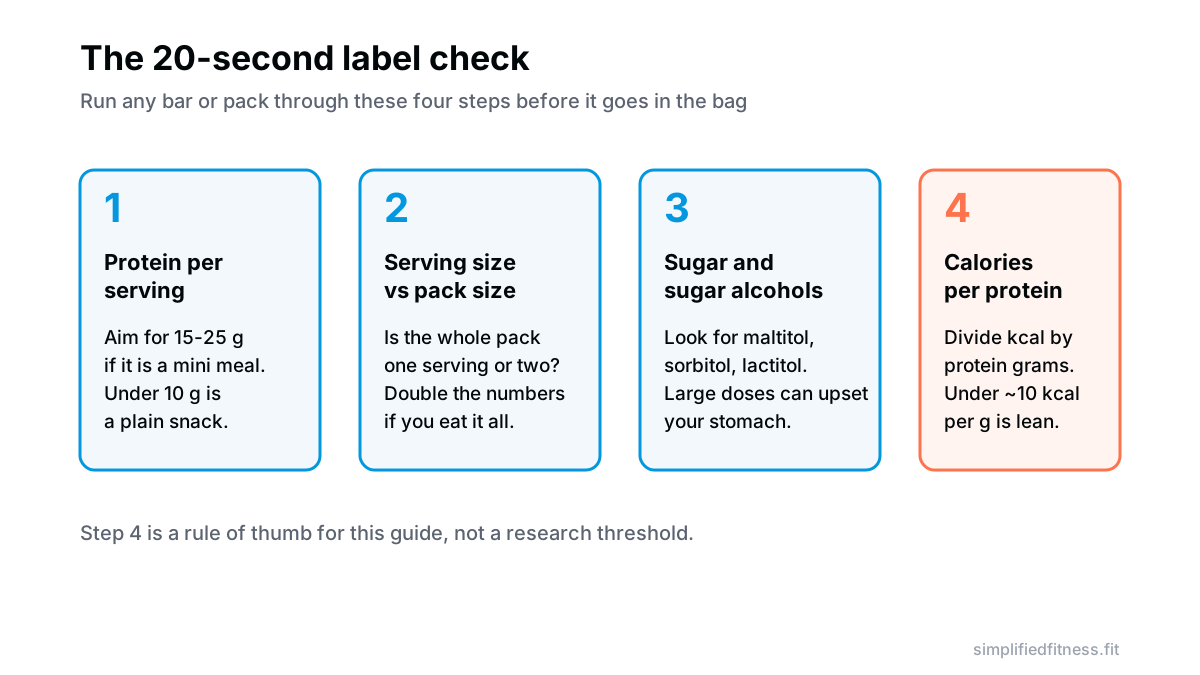
The front of the pack is marketing. The back is where the answer lives.
- Protein per serving. Aim for 15-25 g if the bar is a mini meal.
- Serving size versus pack size. A “2 serving” bar eaten whole doubles every number.
- Sugar and sugar alcohols. This is the big one, covered next.
- Calories per gram of protein. Divide calories by protein grams. Under about 10 kcal per gram is a lean option. That cut-off is our rule of thumb, not a research threshold.
What is the deal with maltitol and other sugar alcohols?
Many “low sugar” bars swap sugar for polyols such as maltitol, sorbitol and lactitol. They are only partly absorbed, so the rest ferments in your gut.
A randomized double-blind crossover trial in 59 healthy young adults gave 100 g milk chocolate containing 40 g of different sweeteners. Lactitol at 30-40 g caused significant gas, rumbling, colic and loose stools. Maltitol at 40 g caused milder symptoms, mainly flatulence, borborygms and colic, with no laxative effect at 30 g or 40 g. The conclusion: symptoms were dose dependent for all of them (Koutsou et al., 1996).
A broader systematic review of 79 articles agrees that polyol malabsorption is generally dose dependent in healthy people, can cause gas, discomfort and laxative effects, and that results in people with irritable bowel syndrome are mixed (Lenhart and Chey, 2017).
What stays safe in a bag, desk or hot car?
A snack that does not need a fridge is not the same as a snack that lasts forever.
- Sealed packs (jerky, bars, roasted legumes, sachets) are the safest bet. Follow the date and storage instructions on the pack.
- Nuts and seeds can go rancid faster in heat because their fats oxidise. Buy small packs and keep them in your bag, not in a parked car through an Indian summer afternoon.
- Opened packs should be finished or resealed. Do not carry a half-eaten bag for a week.
- Dairy-based snacks such as curd, paneer or milk shakes need cold storage. Leave them out of this plan unless you have a cooler bag.
If something smells sharp, bitter or like paint, bin it. That is rancid fat, and no protein number is worth it.
A simple stock list for the office and the road
You do not need a spreadsheet. Build a small standing kit.
- Desk drawer: one jar of roasted chana or soybeans, one pack of jerky, two bars.
- Gym bag: two whey sachets and a shaker.
- Car or briefcase: a small sealed pack of peanuts or pumpkin seeds, refreshed weekly.
- Travel days: hand luggage with soybeans, a bar and a sachet. See our travel nutrition strategies for meals on flights and in hotels.
A realistic mini plan for a long workday: a sachet shake mid-morning, a handful of roasted soybeans in the afternoon, and your normal meals. That alone can add roughly 30-40 g of protein to the day. Pair it with the diet plan if you need meal structure.
Which snack suits which situation?
- Meeting-heavy day: a quiet, low-mess snack such as roasted chana or soybeans.
- Post-gym, no kitchen: a whey sachet with water.
- Long drive: jerky and nuts, plus a water bottle.
- Tight calories (cutting): jerky, soybeans, whey. Watch pumpkin seeds and peanuts, because they pack calories fast.
- Vegetarian, no fridge: soybeans, chana, sattu, peanuts, a whey sachet if you eat dairy.
- Sensitive gut: skip bars heavy on sugar alcohols and choose whole-food options.
When to see a doctor
A packaged snack is not a treatment. If you have kidney disease, diabetes, a nut or soy allergy, a history of eating disorders, or ongoing digestive problems, check with a doctor or registered dietitian before changing your protein intake or leaning on bars and powders. Persistent bloating, pain or loose stools after snacks deserve a proper check, not another brand swap.
The bottom line
Portable high-protein snacks are about closing gaps, not replacing meals. Jerky, roasted soybeans, roasted chana, seeds, peanuts and whey sachets all work without a fridge. Pick ones with 15-25 g of protein per serving, read the label for sugar and sugar alcohols, and test new products at home.
The research here is supportive but modest: small, short trials on appetite, and a meta-analysis showing your daily total matters most. So set your target with the protein calculator, keep a small stock where you spend your day, and let the snacks do the boring job of keeping you on track.
Frequently Asked Questions
What are the best high-protein snacks that do not need refrigeration?
Beef jerky or biltong, roasted soybeans, roasted chana, pumpkin seeds, peanuts, whey sachets and a low-sugar protein bar are the most practical. They are dense in protein for their weight and survive a bag or a desk drawer. Pick one or two you like and keep a standing stock at work and in the car.
How much protein should a snack have?
For a snack meant to count toward your protein target, 15-25 g per serving is a sensible goal. Research on per-meal intake suggests about 0.4 g/kg of body weight per feeding across at least four feedings a day, which works out to roughly 25-35 g for most adults. If your snack is smaller, it still helps, it just contributes less to the daily total.
Is beef jerky a good protein snack?
Yes for protein, with a catch. Many commercial packs give roughly 25-35 g per 100 g, but flavoured versions can be heavy on sugar and salt. Read the label, compare brands per 100 g, and drink water alongside it.
Are protein bars actually healthy?
They can be a practical backup, but quality varies enormously. Some are essentially sweets with added protein, while others are short-ingredient bars with 15-20 g of protein. Check protein per serving, total sugar, sugar alcohols and calories before you buy a box.
What are sugar alcohols and why do they upset my stomach?
Sugar alcohols such as maltitol, sorbitol and lactitol are sweeteners that are only partly absorbed in the small intestine. The unabsorbed part ferments in the gut, which can cause gas, cramps and loose stools in a dose-dependent way. Check the ingredient list and test a new bar at home before a flight or an important meeting.
Are roasted chana and makhana good protein snacks?
Roasted chana is a decent option at roughly 18-22 g of protein per 100 g, while makhana is mostly carbohydrate with far less protein, around 10 g per 100 g. Both are filling and shelf stable. Use chana as a protein snack and makhana as a light crunchy side.
Can I carry protein powder to work or on a trip?
Yes, single-serve sachets or a pre-measured shaker scoop are the easiest way to get 20-25 g of protein with no fridge. Powder is shelf stable and only needs water. Pack a shaker bottle, and avoid mixing with milk unless you can keep it cold.
How do I stop nuts and seeds going rancid in a hot car?
Heat speeds up the oxidation of fats in nuts and seeds, so a car in an Indian summer is a poor storage place. Keep them in a sealed container, buy small packs, and carry them in your bag rather than leaving them in the parked car. If a snack smells sharp, paint-like or bitter, throw it out.
Do high-protein snacks really keep you full?
In short randomized trials, higher-protein afternoon snacks reduced hunger more than higher-fat snacks, and in some comparisons delayed the next meal. Those studies were small and mostly in young, healthy participants, so results may differ for you. Test a protein snack at your usual 4 pm slump and see whether dinner portions change.
Is a snack even necessary if I eat three meals?
Not strictly. Total daily protein and calories matter most, and plenty of people reach them with three well-built meals. Snacks help when long gaps, travel or meetings leave you under-eating protein, or when you tend to grab biscuits at 5 pm.
What can I eat on a flight or a long train journey without a fridge?
Roasted soybeans, chana, nuts, a protein bar and a whey sachet all travel well and need no preparation. Carry them in your hand luggage and check airline rules on liquids if you plan to bring a ready shake. Our travel nutrition guide covers meals as well as snacks.
Can vegetarians get enough protein from non-refrigerated snacks?
Yes, soy, chana, peanuts, pumpkin seeds, sattu and whey sachets are all shelf stable and vegetarian. Plant snacks tend to carry less protein per gram than meat, so combine them or check the label for 15 g or more per serving. Eating dal, paneer or curd at meals fills the rest.
Do protein snacks help build muscle?
They help if they close a gap in your daily protein. A 2018 meta-analysis of 49 trials found protein supplementation added a small amount of lean mass during resistance training, with no extra benefit beyond about 1.6 g/kg/day in total. Hit your total first, then use snacks to get there.
Sources & References
Every claim above is checked against peer-reviewed research (PubMed, U.S. National Library of Medicine) or guidance from established health bodies. How we fact-check.
- Morton RW, et al. A systematic review, meta-analysis and meta-regression of the effect of protein supplementation on resistance training-induced gains in muscle mass and strength in healthy adults. Br J Sports Med. 2018. PMID: 28698222
- Schoenfeld BJ, Aragon AA. How much protein can the body use in a single meal for muscle-building? Implications for daily protein distribution. J Int Soc Sports Nutr. 2018. PMID: 29497353
- Leidy HJ, et al. Consuming high-protein soy snacks affects appetite control, satiety, and diet quality in young people and influences select aspects of mood and cognition. J Nutr. 2015. PMID: 25995282
- Ortinau LC, et al. Effects of high-protein vs. high-fat snacks on appetite control, satiety, and eating initiation in healthy women. Nutr J. 2014. PMID: 25266206
- Koutsou GA, et al. Dose-related gastrointestinal response to the ingestion of either isomalt, lactitol or maltitol in milk chocolate. Eur J Clin Nutr. 1996. PMID: 8617186
- Lenhart A, Chey WD. A systematic review of the effects of polyols on gastrointestinal health and irritable bowel syndrome. Adv Nutr. 2017. PMID: 28710145
- Zafar TA, Kabir Y. Chickpeas suppress postprandial blood glucose concentration, and appetite and reduce energy intake at the next meal. J Food Sci Technol. 2017. PMID: 28303049

Umair Hazrami · Founder & Head Coach, Simplified Fitness
Umair Hazrami founded Simplified Fitness and the Simplified Lifter channel to cut through fitness noise. With 4+ years of consistent training and 10+ coaching clients, he writes every guide from the peer-reviewed research and links the sources so you can check them. Our editorial standards.
Educational content only, not medical advice. If you have a medical condition, are pregnant, or take medication, talk to a qualified doctor before changing your diet, supplements or training. Full disclaimer.
Keep reading
Indian Diet
The 3-Hour Weekly Batch Meal Prep: Cooking 5 Days of Lunches and Dinners for Busy Lifters
Batch meal prep for the week in 3 hours: a station-by-station Sunday plan for 10 high-protein lunches and dinners, with Indian options and safe storage rules.
7 min read
Indian Diet
Cost per 30 Grams of Protein: 40 Common Fitness Foods Ranked by Price
Cost per 30g protein for 40 Indian gym foods, from soya chunks to whey and tuna. See the cheapest protein sources per gram and what to buy on a budget.
8 min read
Indian Diet
Eating Healthy on a Student Budget: High Protein Hostel and Dorm Room Meal Prep
A college student bodybuilding diet budget can still hit 130 g of protein. Cheap staples, no-cook hostel prep and a sample day, with the studies linked.
8 min read
Indian Diet
Essential Kitchen Equipment for Lifters: Scales, Air Fryers, Blenders and Containers
The best kitchen equipment for meal prep lifters: which four tools earn their space, what the research says about each, and what to buy first on a budget.
10 min read