High-Protein Low-Calorie Desserts: Protein Fluff, Casein Pudding and Greek Yogurt Bowls
High protein low calorie dessert recipes ready in 5 minutes: protein fluff, casein pudding and Greek yogurt bowls, with macros and the research behind them.

TL;DR. The short answer
- The three easiest high protein low calorie dessert recipes are protein fluff (about 180 kcal, 25 g protein), micellar casein pudding (about 130 kcal, 25 g protein) and a Greek yogurt bowl (about 150 kcal, 19 g protein). These are estimates from typical labels, so check your own products.
- Protein fluff works because whipping air into whey and frozen berries multiplies the volume. In a lab study, a 600 mL shake led to 12% less lunch intake than the same calories in 300 mL, though a 2024 study found that making foods airier did not change how much other food people chose to eat.
- Casein pudding is a good late-night option because casein digests slowly, and 20-40 g before sleep has raised overnight protein synthesis in young men.
- Dessert protein only helps if it fits your daily total. The ISSN puts most exercising people at 1.4-2.0 g/kg/day, with 2.3-3.1 g/kg/day possibly useful for trained lifters in a deficit. A dessert is a tool for hitting that number, not a free pass.
- Every recipe takes under 5 minutes of hands-on time. If cravings feel out of control or tied to binge eating, talk to a doctor or dietitian.
Part of our complete guide: High-Protein Foods List: Protein per 100g, Cost per 30g and Meal Prep Guide
Table of contents
The best high protein low calorie dessert recipes are protein fluff, micellar casein pudding and a Greek yogurt bowl. Each gives roughly 19-25 g of protein for about 130-180 kcal and takes under 5 minutes of hands-on time.
If you are in a deficit and the 10 pm sweet craving hits, these let you eat an actual bowl of dessert without wrecking your day. They also help you hit your protein target, which we cover in the high-protein foods and meal prep guide. Below: the recipes, the macros, the research on why they work (and where it is weaker than Instagram suggests), and the mistakes that ruin them.
Which high protein low calorie dessert recipes are worth making?
Three, because each solves a different craving.
- Protein fluff when you want volume. A huge, airy, ice-cream-ish bowl.
- Casein pudding when you want thick and chocolatey, especially late at night.
- Greek yogurt bowl when you want something creamy and tangy with zero blender work.
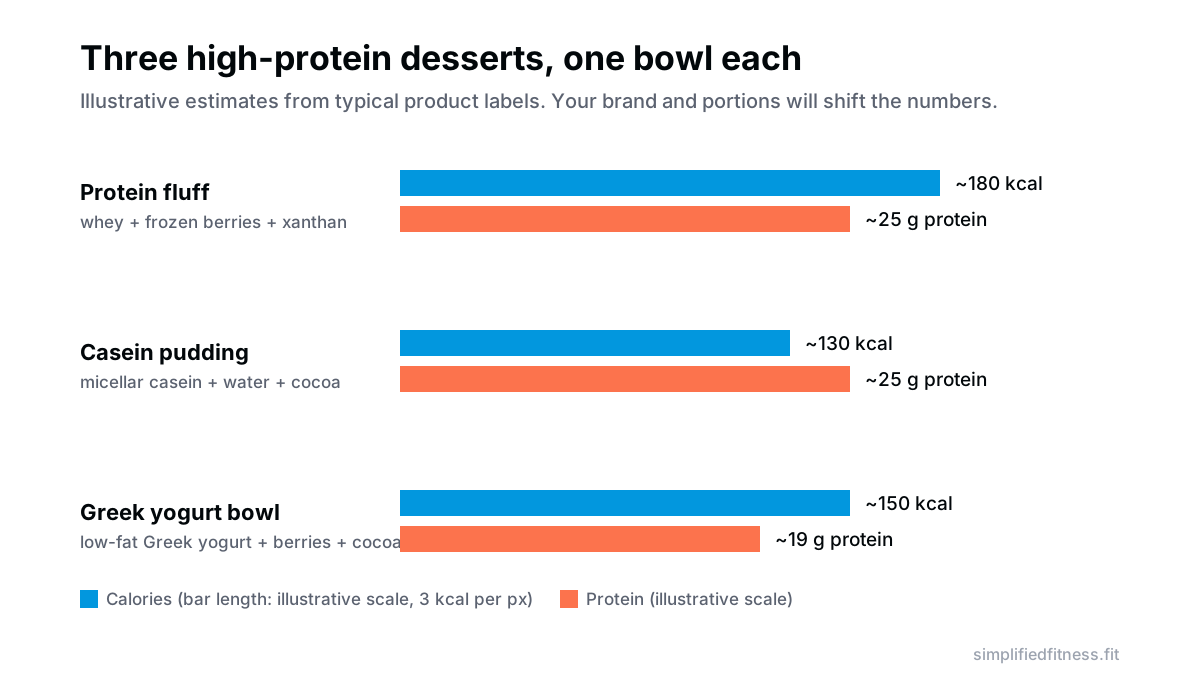
The numbers above are illustrative, built from typical label values (whey roughly 4 kcal and 0.8 g protein per gram, frozen mixed berries around 40 kcal per 100 g). Your tub of whey may differ by 10-20 kcal per scoop, so log your own.
How do you make protein fluff with xanthan gum?
Protein fluff is a foam. You whip air into a protein-and-fruit base until it triples in size, and a tiny amount of xanthan gum (a food thickener) holds the bubbles in place.
Ingredients (one giant bowl)
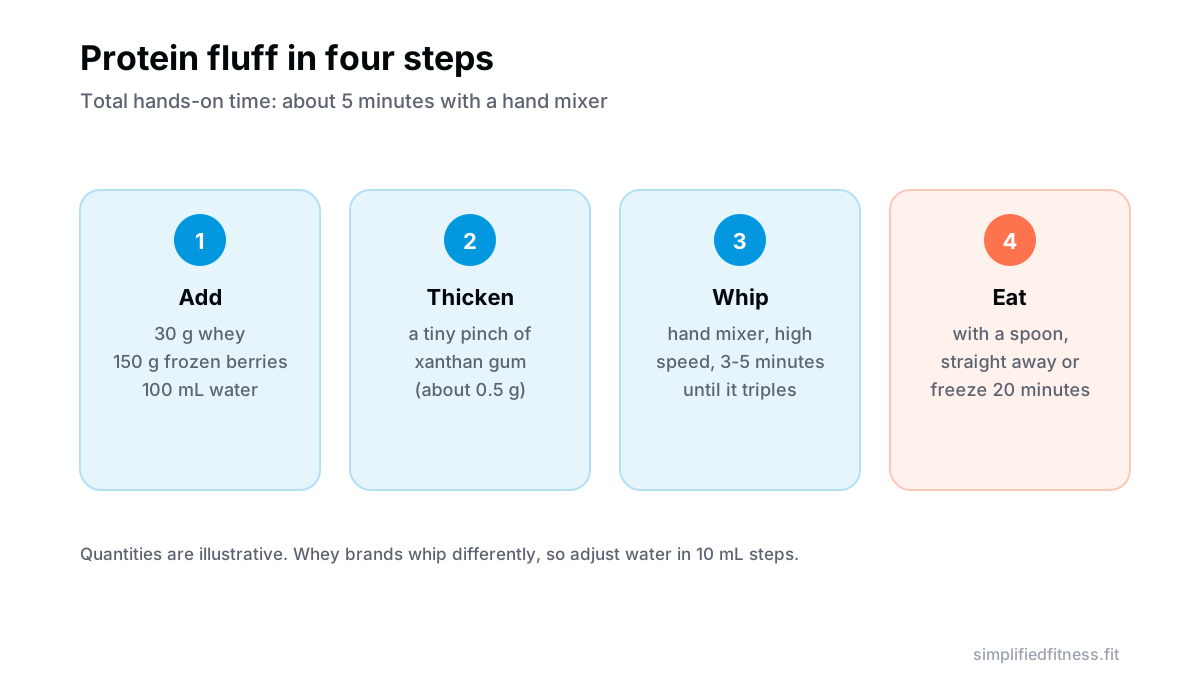
- 30 g whey protein, vanilla or berry flavour (about 24 g protein)
- 150 g frozen berries (strawberries or mixed berries both work)
- 100 mL cold water
- A very small pinch of xanthan gum, roughly 0.5 g
- Optional: zero-calorie sweetener to taste
Method
- Add everything to a large bowl. Use a bigger bowl than you think, because it will triple.
- Whip with a hand mixer on high for 3-5 minutes. The berries break down and the mixture turns pale, thick and fluffy.
- Eat straight away, or freeze it for 15-20 minutes for a softer, ice-cream-like texture.
Estimated total: roughly 180 kcal and 25 g protein.
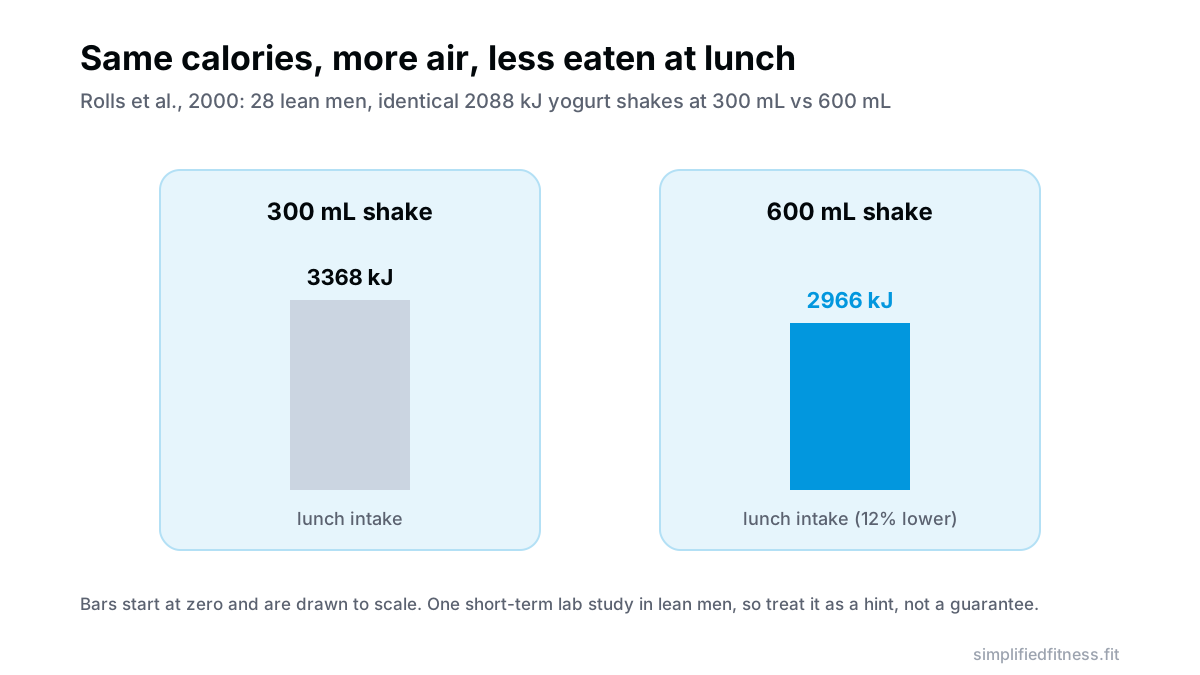
Why it fills a bowl. Whipping adds air, not calories. In a 2000 study, 28 lean men drank isoenergetic yogurt-based shakes of 300, 450 or 600 mL, made by incorporating different amounts of air. Lunch intake was 12% lower after the 600 mL shake than after the 300 mL one, and people reported less hunger and more fullness (Rolls et al., 2000).
Where that evidence is weaker. A 2024 randomized crossover study in 20 healthy men changed how airy or dense a few foods were, using leavening and compression, while keeping portion size the same. People did not adjust how much of their other, freely chosen food they ate in response (Hatch-McChesney et al., 2024). That study was designed around military rations, uses a different food type and only covered two days, so it does not cancel the 2000 result. It does mean volume alone is not magic.
My honest read: the fluff is a fun, satisfying way to eat 25 g of protein for about 180 kcal. Whether the airiness fills you more than a plain shake is plausible but not proven for everyone.
What is casein pudding and why eat it late at night?
Micellar casein is the slow-digesting milk protein. Unlike whey, it forms a gel when mixed with a little liquid, so you can stir it into a thick, spoonable pudding with no cooking.
Ingredients
- 30 g micellar casein (chocolate flavour, or plain plus cocoa)
- 70-90 mL water or low-fat milk
- Optional: 1 tsp cocoa powder, sweetener, a pinch of salt
Method
- Put the casein in a bowl.
- Add liquid a little at a time and stir with a spoon. Start with less than you expect.
- Stop when it looks like thick chocolate mousse. Rest it for 5 minutes, or chill it for 20 for a firmer set.
Estimated total with water: around 130 kcal and 25 g protein. Using milk instead adds roughly 35 kcal per 100 mL for skimmed milk and about 45-50 kcal for toned or low-fat milk.
Is it actually good before bed? In a 2012 study, 16 healthy young men trained in the evening, then took either 40 g of casein or a placebo 30 minutes before sleep. The casein group had higher whole-body protein synthesis and better net protein balance overnight, with muscle protein synthesis about 22% higher at borderline significance (Res et al., 2012).
A 2021 systematic review of nine studies concluded that 20-40 g of casein about 30 minutes before sleep improves overnight protein synthesis in healthy young men, with possible benefits for muscle mass and strength over 10-12 weeks of training. It found too little evidence to judge long-term benefits in older men, and the authors cautioned that protein intake was not always matched between groups (Reis et al., 2021). The ISSN position stand also notes that 30-40 g of pre-sleep casein increased overnight muscle protein synthesis and metabolic rate (Jäger et al., 2017).
What about Greek yogurt dessert bowls?
This is the no-equipment version, and the most Indian-kitchen friendly.
Ingredients
- 170 g low-fat Greek yogurt, or hung curd (see below)
- 1 tsp cocoa powder or a few drops of vanilla
- Sweetener to taste
- 50 g berries or a few chopped strawberries
Stir, top, eat. Estimated total: about 150 kcal and 19 g protein.
Using dahi. Ordinary homemade dahi is much lower in protein per spoonful than Greek yogurt. Hang it in a muslin cloth for a few hours and it thickens and concentrates. We break down how much protein you really get in our hung curd and Greek yogurt guide.
Paneer option. Blend a small portion of low-fat paneer with a splash of milk, cocoa and sweetener for a thick, ricotta-like cream. It is denser than yogurt, so keep the portion modest and weigh it.
Budget note. Whey or casein tubs cost more upfront, but a single 30 g serving is often cheaper than a packaged “protein dessert” at a shop, and curd-based bowls cost even less per portion. Compare your own prices before you decide.
Does eating protein for dessert help on a cut?
It can, mainly because it makes your protein target easier to hit.
A 2015 review in the American Journal of Clinical Nutrition found that higher-protein, energy-restricted diets led to greater weight loss, fat mass loss and lean mass preservation in shorter-term tightly controlled studies. The same review found a modest effect on fullness but no clear effect on food intake at the next eating occasion, and longer-term results were more mixed, partly because people struggle to stick to the diet (Leidy et al., 2015).
In plain gym language: protein helps, but it is not an appetite switch. The real win from these desserts is adherence. If a planned 150 kcal bowl keeps you from a 600 kcal midnight tin of biscuits, your deficit survives.
Remember the totals too. The ISSN says 1.4-2.0 g/kg/day is sufficient for most exercising people, and 2.3-3.1 g/kg/day may help retain lean mass in resistance-trained people during hypocaloric periods (Jäger et al., 2017). Use our protein calculator to find your own number, and see how this fits into high-protein eating during a cut.
How do you keep a low calorie sweet tooth under control?
Recipes are one part. A few habits do more than any gadget.
- Plan it. Add the dessert to your calorie tracker in the morning so it is spoken for.
- Eat enough protein earlier. If you reach dinner short on protein, you may find cravings harder to ignore. A big solid meal beats a small dessert.
- Keep volume foods around. Fruit, vegetables and soups help with fullness. Our guide to high-volume low-calorie foods for cutting goes deeper.
- Protect sleep. Short sleep makes sticking to a diet harder for many people.
- Do not over-restrict. A very aggressive deficit makes a sweet tooth worse, not better.
If you feel out of control around food, eat in secret, or feel intense guilt afterwards, that is worth raising with a doctor or registered dietitian rather than solving with recipes.
Common mistakes with high-protein desserts
- Whey that will not whip. Some brands foam better than others. Use cold water, a deep bowl and a hand mixer, not a spoon.
- Casein turning into cement. Add liquid slowly. It is easier to thin a thick pudding than rescue a runny one.
- Heavy toppings. A tablespoon of peanut butter adds roughly 90 kcal. A handful of granola can double the bowl.
- Sweetened yogurt. Flavoured Greek yogurts can carry a lot of sugar. Buy plain.
- Counting dessert protein twice. If it is already in your tracker, it is not extra.
- Blaming the dessert. One 150 kcal bowl does not stall fat loss. A week of unlogged snacking can.
Quick picks: which dessert for which craving?
| Craving | Best pick | Approx. kcal | Approx. protein |
|---|---|---|---|
| Huge, light, cold | Protein fluff | ~180 | ~25 g |
| Thick, chocolatey | Casein pudding | ~130 | ~25 g |
| Creamy, tangy | Greek yogurt bowl | ~150 | ~19 g |
| No supplements at home | Hung curd with cocoa | ~120-150 | ~12-18 g |
All values are estimates, so check your labels.
The bottom line
These desserts are not magic. They are a practical way to eat something sweet, hit more protein and keep your deficit intact. Start with the recipe that matches your craving, weigh the ingredients once, and log it. If it makes your cut easier to stick to, it is doing its job.
Frequently Asked Questions
What are the best high protein low calorie dessert recipes?
Protein fluff, micellar casein pudding and low-fat Greek yogurt bowls are the three easiest. Each gives roughly 19-25 g of protein for about 130-180 kcal because the protein powder or yogurt supplies most of the calories. Pick the one that matches your craving: airy and cold, thick and chocolatey, or creamy and tangy.
How do you make protein fluff with xanthan gum?
Blend about 30 g of whey, 150 g of frozen berries and 100 mL of water with a very small pinch of xanthan gum, roughly half a gram, then whip it with a hand mixer for 3-5 minutes. Xanthan is a thickener that stabilises the foam so it holds the air you whip in. Start with less xanthan than you think you need, since too much turns the mixture slimy.
Do you really need xanthan gum for protein fluff?
You can make a thinner fluff without it, but it will deflate within minutes. Xanthan gum thickens the liquid so the bubbles stay trapped, which is why most recipes call for it. If you do not have it, eat the fluff straight after whipping or freeze it for 20 minutes to firm it up.
Is casein pudding good as a late night snack?
Yes, it is a sensible choice if you are already hungry late in the evening. Casein digests slowly, and a systematic review found that 20-40 g about 30 minutes before sleep raised overnight protein synthesis in young men. If you are not hungry, you do not need to force it, because your daily protein total matters more than this one serving.
Can I make casein pudding with whey protein instead?
Not really, because whey does not thicken the way micellar casein does. Casein forms a gel-like texture when stirred with a little liquid, while whey stays runny and goes foamy. If you only have whey, make protein fluff instead, or blend whey into thick hung curd.
Does protein fluff actually keep you full?
It can help, though the evidence is mixed. A 2000 study found that adding air to a shake lowered later food intake by 12% in lean men, while a 2024 study found that making part of the diet airier or denser did not change how much of their other, freely chosen food people ate. Treat the volume as a bonus and rely mainly on the protein and your overall plan.
How many calories are in protein fluff?
A typical bowl made with 30 g whey and 150 g frozen berries lands near 180 kcal, with roughly 25 g of protein. The exact number depends on your whey brand and which fruit you use. Weigh your ingredients on a food scale and log them once so you know your own version.
How do I satisfy a sweet tooth while cutting?
Plan a small, protein-rich dessert into your day instead of fighting cravings with willpower. Higher-protein diets modestly improve fullness, and having a defined dessert slot helps you stay in your calorie target. Pick one of the recipes here and put it in your tracking app before the craving hits.
Can I make these desserts without protein powder?
Yes. Hung curd (strained dahi) or Greek yogurt mixed with cocoa, a sweetener and berries gives a creamy dessert, and low-fat paneer blended with milk and a little sweetener also works. These give less protein per rupee than a big tub of whey, but they use ingredients most Indian kitchens already have. Check labels, because homemade dahi has less protein than strained or Greek-style yogurt.
Is xanthan gum safe to eat?
It is a widely used food thickener, and the amounts in these recipes are tiny. Some people notice gas or loose stools if they eat a lot of it. If you have a digestive condition or any concern, ask your doctor, and keep the pinch small.
How much protein should I eat per day while cutting?
The International Society of Sports Nutrition says 1.4-2.0 g/kg/day is sufficient for most exercising people, with higher intakes of 2.3-3.1 g/kg/day possibly useful for lean mass retention in resistance-trained people during calorie deficits. Dessert protein counts toward that total. Use the protein calculator to get your own range.
Can dessert fit into a fat loss diet?
Yes, as long as the calories fit your daily target. Fat loss is driven by your overall energy balance over weeks, not by whether one food is labelled dessert. A 130-180 kcal bowl is a small slice of most cutting budgets.
What if my dessert cravings feel uncontrollable?
Occasional strong cravings are common in a calorie deficit, especially when sleep is poor or the deficit is too aggressive. If you feel a loss of control, eat in secret, or feel intense guilt after eating, speak to a doctor or registered dietitian. Recipes can help with hunger, but they are not a treatment for disordered eating.
Sources & References
Every claim above is checked against peer-reviewed research (PubMed, U.S. National Library of Medicine) or guidance from established health bodies. How we fact-check.
- Rolls BJ, et al. Increasing the volume of a food by incorporating air affects satiety in men. Am J Clin Nutr. 2000. PMID: 10919928
- Hatch-McChesney A, et al. Independent effects of volume and energy density manipulation on energy intake and appetite in healthy adults: A randomized, controlled, crossover study. Appetite. 2024. PMID: 38825013
- Res PT, et al. Protein ingestion before sleep improves postexercise overnight recovery. Med Sci Sports Exerc. 2012. PMID: 22330017
- Reis CEG, et al. Effects of pre-sleep protein consumption on muscle-related outcomes - A systematic review. J Sci Med Sport. 2021. PMID: 32811763
- Leidy HJ, et al. The role of protein in weight loss and maintenance. Am J Clin Nutr. 2015. PMID: 25926512
- Jäger R, et al. International Society of Sports Nutrition Position Stand: protein and exercise. J Int Soc Sports Nutr. 2017. PMID: 28642676

Umair Hazrami · Founder & Head Coach, Simplified Fitness
Umair Hazrami founded Simplified Fitness and the Simplified Lifter channel to cut through fitness noise. With 4+ years of consistent training and 10+ coaching clients, he writes every guide from the peer-reviewed research and links the sources so you can check them. Our editorial standards.
Educational content only, not medical advice. If you have a medical condition, are pregnant, or take medication, talk to a qualified doctor before changing your diet, supplements or training. Full disclaimer.
Keep reading

Indian Diet
The 3-Hour Weekly Batch Meal Prep: Cooking 5 Days of Lunches and Dinners for Busy Lifters
Batch meal prep for the week in 3 hours: a station-by-station Sunday plan for 10 high-protein lunches and dinners, with Indian options and safe storage rules.
7 min read

Indian Diet
Cost per 30 Grams of Protein: 40 Common Fitness Foods Ranked by Price
Cost per 30g protein for 40 Indian gym foods, from soya chunks to whey and tuna. See the cheapest protein sources per gram and what to buy on a budget.
8 min read

Indian Diet
Eating Healthy on a Student Budget: High Protein Hostel and Dorm Room Meal Prep
A college student bodybuilding diet budget can still hit 130 g of protein. Cheap staples, no-cook hostel prep and a sample day, with the studies linked.
8 min read

Indian Diet
Essential Kitchen Equipment for Lifters: Scales, Air Fryers, Blenders and Containers
The best kitchen equipment for meal prep lifters: which four tools earn their space, what the research says about each, and what to buy first on a budget.
10 min read