Freezing and Reheating Meal Prep: High-Protein Dishes That Keep Their Taste and Texture
Freezing meal prep works if you pick the right dishes. See which high-protein meals freeze well, which don't, and how to thaw and reheat without dry chicken.
TL;DR. The short answer
- Saucy, high-moisture dishes (dal, rajma, chole, chicken or paneer curry, keema, chili) freeze and reheat best because the gravy protects the protein from drying out.
- Plain grilled chicken breast, raw potato, cucumber and salad greens freeze badly. Ice crystals damage the structure, and the result is dry, stringy or watery.
- Meat always loses some water on thawing, and lab studies link longer frozen storage and air exposure to more moisture loss. Fast freezing, tight packaging and gravy limit the damage.
- Thaw in the fridge overnight, then reheat covered with a splash of water or stock, stirring halfway. Reheat until piping hot throughout, and do not refreeze what you have already reheated.
- Frozen vegetables are nutritionally comparable to fresh in most tested cases, so the freezer is not costing you much nutrition.
Part of our complete guide: High-Protein Foods List: Protein per 100g, Cost per 30g and Meal Prep Guide
Table of contents
Freezing meal prep works very well, but only for the right dishes. Saucy, moist, high-protein meals like dal, rajma, chicken curry, keema and chili come out of the freezer almost unchanged, while plain chicken breast, raw potato and salad turn dry, stringy or watery.
This guide is the long-term freezer companion to our high-protein foods and meal prep guide. If you want the weekly cooking routine itself, start with the 3-hour batch meal prep blueprint. Here we focus on what survives months in the freezer and how to bring it back to life.
Why does freezing change the taste and texture of food?
Freezing does not delete your protein. The macros on the box stay the same. What changes is structure.
When food freezes, water turns into ice crystals. Those crystals can damage muscle cells and, on thawing, water leaks out. A 2025 review describes how ice crystal formation and recrystallisation cause water migration, cell damage, protein and lipid oxidation and reduced water holding capacity in meat (Zhu et al., 2025). Another review notes that thaw loss generally cannot be avoided when meat is frozen and thawed, and that slow freezing produces more thaw loss than fast freezing (Zhang et al., 2022).
In plain terms: a frozen chicken breast comes back a bit drier than it went in, almost every time. The goal is to shrink that loss, and to pick foods where you will not notice it.
Which high-protein meals freeze best?
The pattern is simple. The more sauce, fat and moisture around the protein, the better it handles the freezer. Dry protein sitting alone has nowhere to hide.
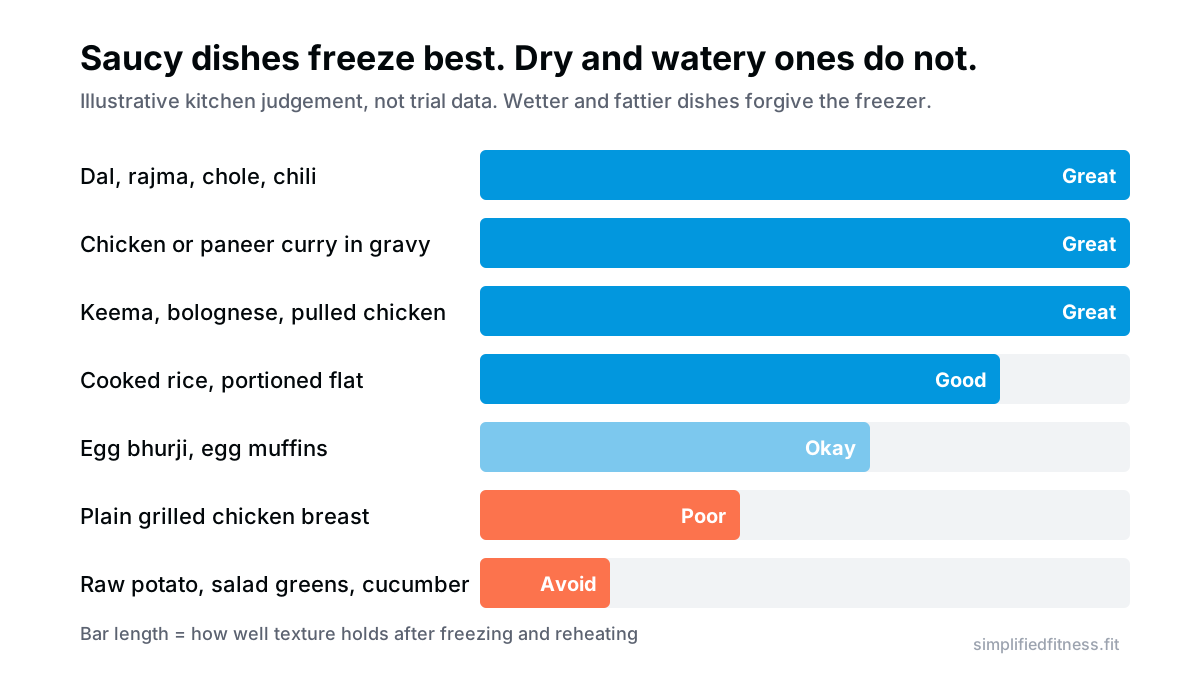
Here is the shortlist worth building your freezer around.
- Dal, rajma, chole. Legumes in a thick base reheat beautifully, often better the next day. Add a squeeze of lemon and fresh coriander after reheating.
- Chicken or paneer curry in gravy. The sauce coats the protein and slows moisture loss. Keep the gravy generous.
- Keema, bolognese, chili. Minced meat in sauce is one of the most forgiving freezer foods. Soya granules keema works the same way.
- Pulled or shredded chicken in sauce. Shred before freezing so the sauce soaks in.
- Egg bhurji and egg muffins. Acceptable, a little rubbery. Fine for a rushed breakfast.
- Cooked rice. Good if portioned flat and reheated with a splash of water.
Want the full paneer story? Our paneer vs low-fat paneer and chenna guide covers the nutrition. For the freezer, the rule is this: paneer in gravy beats plain paneer. Plain frozen paneer tends to turn crumbly and slightly spongy, so many people freeze the curry base and add fresh paneer when reheating. That is culinary experience, not something I can back with a trial.
For a wider plant-based list, see the high-protein Indian vegetarian meal prep blueprint.
Which foods freeze terribly?
Four groups disappoint almost every time.
- Plain steamed or grilled chicken breast. Lean, low-fat meat with no sauce dries out fastest. If your whole prep plan is dry breast and rice, the freezer will make it worse. Our chicken breast and fish cooking guide covers cooking it juicier in the first place.
- Raw potato. Raw potato pieces turn grey and mealy. Cooked and mashed potato holds up better, which is why it works inside cutlets and stuffed parathas.
- Salad greens, cucumber, tomato slices. High water content plus delicate cell walls means mush on thawing. Pack them fresh on the day.
- Crispy or fried foods. Crunch does not survive steam. Reheat in an oven or air fryer if you must.
How do you freeze meal prep without ruining it?
Think of it as a short workflow, and the first and fourth steps matter most.
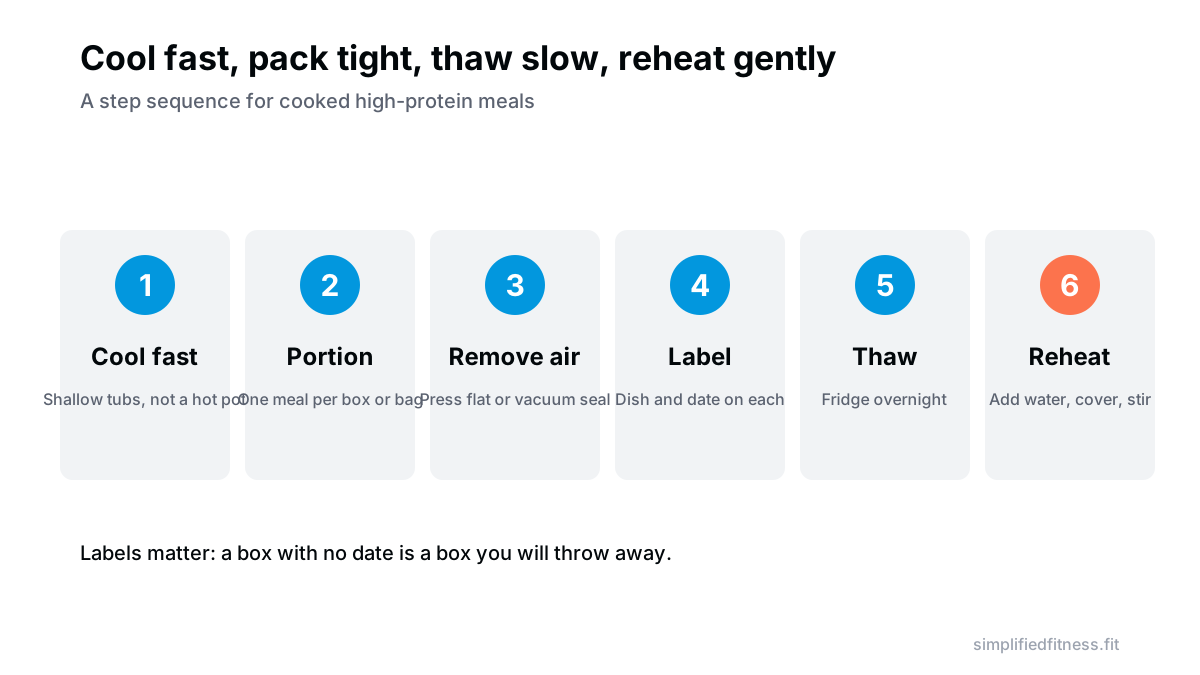
1. Cool quickly. Spread food in shallow containers and let the steam escape before it goes into the freezer. Rice deserves particular care. A 2024 review concluded that the main cause of Bacillus cereus problems in rice is improper handling and storage temperature during cooking, cooling and reheating, and that its heat-resistant spores survive cooking (Woh and Ng, 2024). Do not leave cooked rice sitting out. The details are in our food storage and shelf life guide.
2. Portion in single meals. One meal per box or bag. You thaw only what you will eat, which avoids refreezing.
3. Remove the air. Air is the enemy. In a study of pork frozen at -18 °C for 12 weeks, protein oxidation and loss of water holding capacity were both stronger in minced pork and in samples packed in oxygen-permeable bags, with water holding capacity falling by roughly 10 to 30% over 12 weeks depending on the measuring method (Estevez et al., 2011). Vacuum packing and leaving the meat in intact pieces did better. At home, that translates to pressing air out of zip bags, filling tubs close to the lid, or using a vacuum sealer if you own one.
4. Label. Dish name and date, every box. Mystery frozen blocks get binned.
5. Freeze quickly and keep it cold and steady. Fast freezing means smaller ice crystals and less thaw loss. Spread flat bags on a tray in a single layer, then stack them once solid.
Does the freezer temperature matter?
A little. In a 2025 study of cooked pork, freezing at -18 °C best preserved lean meat, while -35 °C was better for fatty cuts, and liquid nitrogen chilling damaged the meat (Yang et al., 2025). Home freezers are not that precise, so the practical takeaway is to keep yours at a steady cold setting and avoid overfilling it with warm food.
What is the best way to thaw frozen meal prep?
For most meals, fridge overnight. It keeps the food cold while it thaws slowly, and it is the safest default for cooked meat and rice.
The research on thawing is mostly industrial. One 2025 beef study compared ultrasound, solid-state microwave and traditional air thawing, and found that carefully controlled solid-state microwave thawing, stopping at no more than -2 °C, kept better water holding capacity and lower oxidation (Zhu et al., 2025). That equipment is not the microwave in your kitchen, so do not read it as proof that home microwave defrosting is superior. What it does tell us is that gentle, controlled thawing that avoids overheating matters.
Practical rules:
- Fridge overnight for curries, dal, minced dishes and chicken.
- Microwave defrost in short bursts if you are rushed, then eat straight away.
- Soups, dal and gravy dishes can go from frozen into a pan on low heat with a splash of water.
- Do not thaw on the counter for hours.
How do you reheat meal prep chicken without drying it?
This is the question most people really have. Reheating is where the dryness shows up.
In the pork study above, freezing at -35 °C raised reheating loss, reported at 38.2% in lean and 44.5% in fatty pork (Yang et al., 2025). That is a lot of moisture leaving the plate. My reading, which is an inference rather than a finding, is that moisture you add back during reheating (and gravy that was in the food to start with) is doing real work.
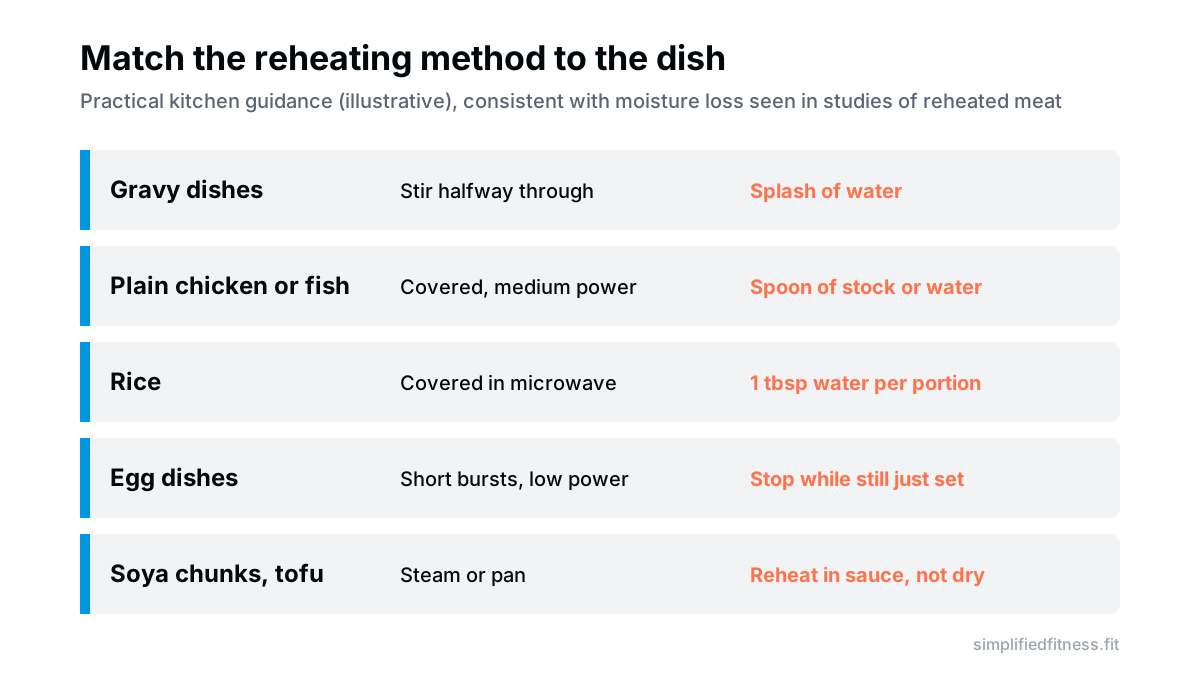
Some practical moves:
- Cover it. A lid, plate or damp paper towel traps steam.
- Add liquid. A tablespoon of water or stock per portion, especially for rice and shredded chicken.
- Use medium power. Blasting on high squeezes moisture out of lean meat. Reheat in two or three rounds and stir between them.
- Reheat in sauce. Slice plain chicken and warm it in curry or a little stock instead of microwaving it dry.
- Heat it until piping hot all the way through. Cold spots in the middle are where problems hide.
Method matters a little too. A 2026 study of reheated crispy pork found that medium-power microwaving gave a good balance of colour, flavour and texture quickly, while steaming kept the meat juicier and gave higher in vitro protein digestibility (Sun et al., 2026). It is one lab study on a specific dish, so treat it as a hint: if you have an extra five minutes, a steamer or a covered pan on low is a gentle option. Microwave is still fine when you are hungry.
Does frozen food lose nutrition?
Your freezer is not stealing your vitamins. A UC Davis study compared frozen and refrigerated storage of eight fruits and vegetables (corn, carrots, broccoli, spinach, peas, green beans, strawberries and blueberries) and concluded that the vitamin content of frozen produce was comparable to, and occasionally higher than, fresh. The exception was beta-carotene, which dropped markedly in some items (Bouzari et al., 2015). A companion paper found that for most commodities there was no significant difference in minerals, fibre or phenolics between fresh and frozen (Bouzari et al., 2015).
That makes a bag of frozen peas or spinach a perfectly good addition to a batch of dal or keema. It also keeps for months without wilting.
Can you freeze cooked rice, and is it still good for you?
Yes. And there is an interesting side effect.
When cooked rice cools, some starch becomes resistant starch. In one small study, white rice cooled for 24 hours at 4 °C and then reheated had 1.65 g of resistant starch per 100 g versus 0.64 g in freshly cooked rice. In 15 healthy adults, that cooled and reheated rice produced a lower glycaemic response than fresh rice (Sonia et al., 2015). That study used fridge cooling, not freezing, and a small sample of healthy people, so I would not promise a blood sugar benefit. It is a nice bonus, not a reason to batch-cook rice.
The key for rice is hygiene, not chemistry. Cool it fast, freeze it in flat portions, and reheat until steaming.
A simple freezer meal prep plan for lifters
Here is a first freezer week that does not take over your Sunday.
- Cook one big legume dish (rajma or chole) and one big protein dish (chicken curry or soya keema).
- Portion eight to ten single-serve boxes, mixing both.
- Cook a pot of rice, spread it on a tray to cool, bag it flat in portions.
- Bag a few portions of shredded chicken in sauce.
- Keep fresh components (salad, curd, chutney, fruit) out of the freezer and add them on the day.
Total protein per box depends on your portions, so use the protein calculator to set a per-meal target, and our free diet plan for structure. Before you pour oil into the pot, check the hidden calorie traps of Indian cooking, because freezer meals are often sauce-heavy. A decent set of airtight boxes and a flat tray helps a lot, and our kitchen equipment guide for lifters lists what is worth buying.
When to be careful
If you are pregnant, elderly, immunocompromised, or cooking for young children, be stricter about cooling, storage time and reheating food until it is steaming hot, and ask your doctor or a dietitian for guidance specific to you. Anyone who gets vomiting or diarrhoea after eating reheated food that has been left out should seek medical advice if symptoms are severe or last more than a day or two. We are not diagnosing anything here, only flagging the cases where the margin for error is smaller.
The bottom line
Pick saucy dishes. Portion them. Push the air out. Thaw in the fridge. Reheat covered with a splash of water. That is the whole system, and it protects both your taste buds and your macros.
Freezing will not make a dry meal juicy, but it does keep a good one good, and it is the cheapest insurance against skipping meals on busy weeks.
Frequently Asked Questions
Can you freeze meal prep and still get good taste and texture?
Yes, if you choose dishes that tolerate freezing. Saucy, moist dishes such as dal, curries, chili and keema hold up well, while dry or watery foods do not. Pack them in single portions with little air and you will notice very little difference after reheating.
What are the best high protein meals to freeze?
Dal, rajma, chole, chicken or paneer curry, keema, chili, bolognese and pulled chicken in gravy are the most reliable. They share a sauce that keeps the protein moist through freezing and reheating. Cook a double batch of one of these on Sunday and freeze half.
How do you stop frozen chicken breast from drying out when reheated?
Freeze it in sauce or gravy rather than plain, because lab tests show frozen meat can lose a lot of moisture when reheated. Covering it and adding a splash of water or stock are practical ways to limit the dryness. If you must freeze plain chicken, shred or slice it and reheat gently at medium power.
Does freezing destroy the protein in meal prep?
No. Freezing does not remove protein, so your macros stay essentially the same. Reviews of frozen meat describe protein oxidation and some quality loss over long storage, which mainly affects texture and juiciness. Use your frozen meals within a few weeks to a couple of months for best quality.
How long can I keep high protein meal prep in the freezer?
For best taste and texture, aim to eat most dishes within about one to three months. Food kept at a steady freezer temperature stays safe for longer, but quality slowly declines as moisture loss and oxidation build up. Label every box with the dish and date so you eat the oldest first.
What is the best way to thaw frozen meal prep?
Move it from the freezer to the fridge the night before. Slow thawing in the fridge keeps the food cold throughout and avoids leaving it at room temperature, which is a safety concern for cooked rice and meat. If you are short on time, use the microwave defrost setting and eat the food straight away.
Can you freeze cooked rice?
Yes, and portioning it flat in bags works well. Rice is a known food-poisoning risk if left warm, because Bacillus cereus spores survive cooking, so cool it fast and freeze it soon after cooking. Reheat it until steaming hot with a little water, and see our food storage guide for the safety details.
Can you freeze paneer?
Yes, but expect the texture to turn slightly crumbly or spongy. Paneer cubes held in a gravy freeze better than plain blocks, and crumbled paneer in bhurji or stuffing handles it best. For a cleaner texture, freeze the curry base and add fresh paneer when you reheat.
Which foods should you never freeze for meal prep?
Raw potatoes, cucumber, lettuce and other watery salad vegetables turn limp and mushy because ice breaks their cell structure. Plain cooked chicken breast and fried or crispy foods also disappoint. Keep these fresh and add them on the day.
Is it better to reheat meal prep in the microwave or on the stove?
Both work. A small study of reheated crispy pork found microwaving gave stronger flavour in less time, while steaming kept the meat juicier. For curries and dal, the stove or microwave are equally fine as long as you stir and cover.
Can you refreeze meal prep after thawing?
It is best not to. Each freeze-thaw cycle damages the muscle structure and increases moisture loss, and thawed food spends time in temperatures where bacteria grow. Freeze in single portions so you only thaw what you will eat.
Does freezing reduce the nutrients in vegetables?
In most tested cases, no. A UC Davis study of eight fruits and vegetables found frozen produce had vitamin and mineral levels comparable to fresh, and sometimes higher. Beta-carotene did fall noticeably in some items such as peas, carrots and spinach.
How do I stop freezer burn on meal prep?
Reduce air contact. Press the air out of bags, leave little headspace in tubs, or vacuum seal. Research on frozen pork found more oxidation and water loss with oxygen-permeable packaging than with vacuum packs.
Sources & References
Every claim above is checked against peer-reviewed research (PubMed, U.S. National Library of Medicine) or guidance from established health bodies. How we fact-check.
- Zhu Y, et al. Effects of Freezing, Frozen Storage and Thawing on the Water Status, Quality, Nutrition and Digestibility of Meat: A Review. Food Sci Nutr. 2025. PMID: 40786821
- Zhang Y, et al. Role of freezing-induced myofibrillar protein denaturation in the generation of thaw loss: A review. Meat Sci. 2022. PMID: 35533633
- Estevez M, et al. Protein carbonylation and water-holding capacity of pork subjected to frozen storage: effect of muscle type, premincing, and packaging. J Agric Food Chem. 2011. PMID: 21506554
- Yang L, et al. Insights into low-temperature strategies for preserving cooked pork quality in ready-to-eat meat products through processing and reheating studies. Food Chem. 2025. PMID: 40398233
- Zhu J, et al. Thawing methods affect quality properties and protein denaturation of frozen beef. Food Chem. 2025. PMID: 39987809
- Bouzari A, et al. Vitamin retention in eight fruits and vegetables: a comparison of refrigerated and frozen storage. J Agric Food Chem. 2015. PMID: 25526594
- Bouzari A, et al. Mineral, fiber, and total phenolic retention in eight fruits and vegetables: a comparison of refrigerated and frozen storage. J Agric Food Chem. 2015. PMID: 25525668
- Sonia S, et al. Effect of cooling of cooked white rice on resistant starch content and glycemic response. Asia Pac J Clin Nutr. 2015. PMID: 26693746
- Woh PY, et al. Bacillus cereus in rice: A review on food poisoning, antimicrobial resistance, and control measures. Trop Biomed. 2024. PMID: 39548784
- Sun X, et al. Reheating strategies for crispy pork: A comparative study of microwave and steaming treatments. Food Res Int. 2026. PMID: 41819874

Umair Hazrami · Founder & Head Coach, Simplified Fitness
Umair Hazrami founded Simplified Fitness and the Simplified Lifter channel to cut through fitness noise. With 4+ years of consistent training and 10+ coaching clients, he writes every guide from the peer-reviewed research and links the sources so you can check them. Our editorial standards.
Educational content only, not medical advice. If you have a medical condition, are pregnant, or take medication, talk to a qualified doctor before changing your diet, supplements or training. Full disclaimer.
Keep reading
Indian Diet
The 3-Hour Weekly Batch Meal Prep: Cooking 5 Days of Lunches and Dinners for Busy Lifters
Batch meal prep for the week in 3 hours: a station-by-station Sunday plan for 10 high-protein lunches and dinners, with Indian options and safe storage rules.
7 min read
Indian Diet
Cost per 30 Grams of Protein: 40 Common Fitness Foods Ranked by Price
Cost per 30g protein for 40 Indian gym foods, from soya chunks to whey and tuna. See the cheapest protein sources per gram and what to buy on a budget.
8 min read
Indian Diet
Eating Healthy on a Student Budget: High Protein Hostel and Dorm Room Meal Prep
A college student bodybuilding diet budget can still hit 130 g of protein. Cheap staples, no-cook hostel prep and a sample day, with the studies linked.
8 min read
Indian Diet
Essential Kitchen Equipment for Lifters: Scales, Air Fryers, Blenders and Containers
The best kitchen equipment for meal prep lifters: which four tools earn their space, what the research says about each, and what to buy first on a budget.
10 min read