Breaking Fat Loss Plateaus: Check Fluid, Hidden Calories and NEAT
How to break a fat loss plateau: a 3-step check of water masking, hidden calories and lower daily steps, plus the exact fix to restart steady fat loss.
TL;DR. The short answer
- Before you cut anything, wait 7 more days and measure your waist. A flat scale with a shrinking waist is often water masking fat loss, not a real plateau.
- Hidden calories are a very common real cause. In one study of obese people who said they could not lose weight, reported intake was 47% lower than measured intake.
- Daily movement (NEAT) can fall quietly as you diet. Compare your weekly steps now with your first month before touching food.
- If the stall is real, make one small change: cut 150-200 kcal a day or add about 2,000 steps a day, then judge it over 2 weeks.
- A true plateau after weeks of accurate logging, or sudden unexplained weight change, is worth a conversation with a doctor.
Part of our complete guide: The No-BS Guide to Energy Balance, Fat Loss, Bulking & Body Recomposition
Table of contents
If you want to know how to break a fat loss plateau, do not start by slashing calories. Check three things in order: whether water is masking fat loss, whether calories have crept back up, and whether your daily movement has dropped. If one of them is the cause, a small fix (about 150-200 kcal less, or about 2,000 more steps a day) usually restarts progress.
This guide is the practical troubleshooting layer of our complete guide to energy balance, fat loss, bulking and recomposition. For the physiology of why your body defends its weight, read metabolic adaptation explained. Here we focus on what to do on Monday morning.
What counts as a real fat loss plateau?
A real plateau is not three bad mornings on the scale. It is roughly 2-3 weeks where your weekly average weight is flat, your waist is flat, and you have been following the plan accurately.
That last part matters. Most people who say “I am stuck” are comparing a feeling of effort with a number, not comparing logged data with a number. So the first job is to find out if you are actually stuck.
Step 1: Is it water? How to read a stalled scale
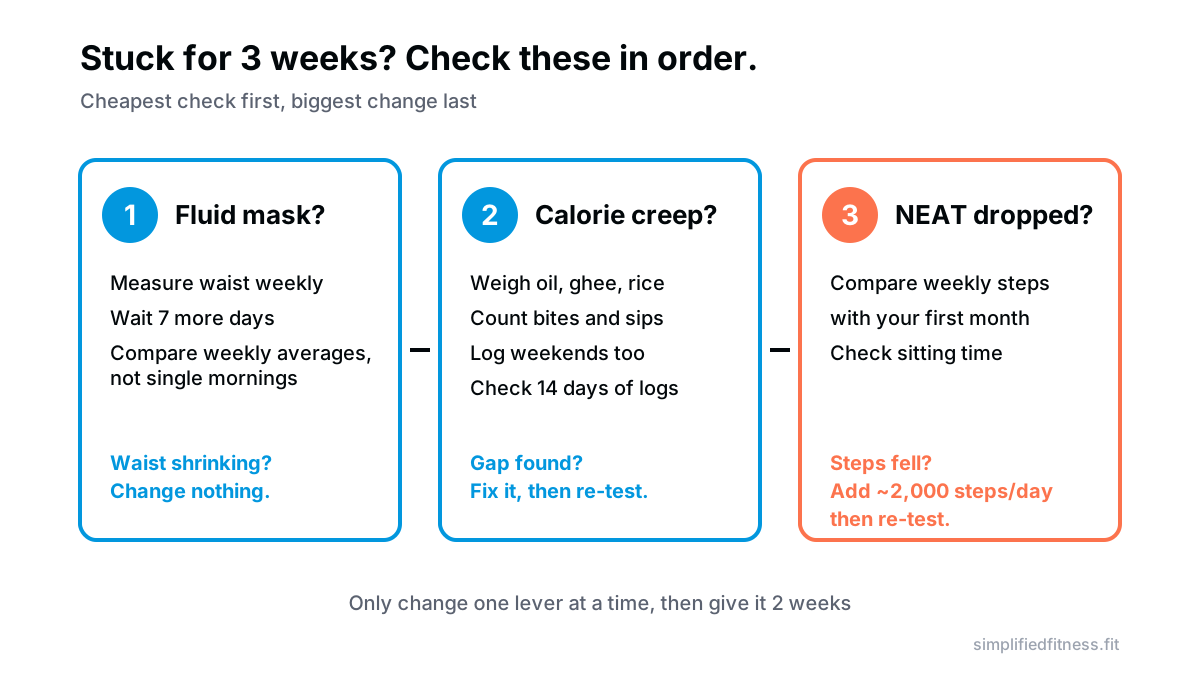
Your scale measures everything: fat, muscle, glycogen, water, food in your gut. Fat loss of 0.3-0.5 kg a week is a small signal inside a large amount of noise. A hard leg day, a salty meal, a high-carb day, a poor night of sleep or a stressful week can each hold extra water and hide the fat that left.
The test is simple.
- Measure your waist at the navel, relaxed, every week, same time of day.
- Take your scale weight daily and average it by week.
- Wait 7 more days before changing anything.
If your waist is smaller or your clothes fit looser, you are probably not stuck. You are most likely losing fat under a layer of water. Do nothing different. For how this “whoosh” can show up suddenly, see our article on water retention and the whoosh effect, and for the daily noise itself, why scale weight swings day to day. You can track the waist trend with our waist-to-height ratio calculator.
Step 2: Is it hidden calories? (often the real cause)
If waist and weekly average are both flat, the next suspect is intake. The evidence here is blunt: people are poor at estimating what they eat.
In a 1992 study in the New England Journal of Medicine, 10 obese people who reported being unable to lose weight on under 1,200 kcal a day were measured carefully. Their energy expenditure was within 5% of predicted values, but they under-reported food intake by an average of 47% and over-reported physical activity by 51% (Lichtman et al., 1992). The authors concluded that the stall was explained by higher intake than reported, not by an abnormal metabolism.
A more recent systematic review of 34 papers found that having a BMI of 30 or more was associated with significant under-reporting of food intake (Wehling & Lusher, 2019).
A caution. The classic study was small (10 diet-resistant people), and both sources concern people with obesity, not lean lifters cutting for a show. The lesson that carries over is the direction of the error, not the exact size. If you are lean and tracking carefully, your error is probably smaller, but it is rarely zero.
Where the extra calories usually hide
In Indian kitchens the same few leaks show up again and again:
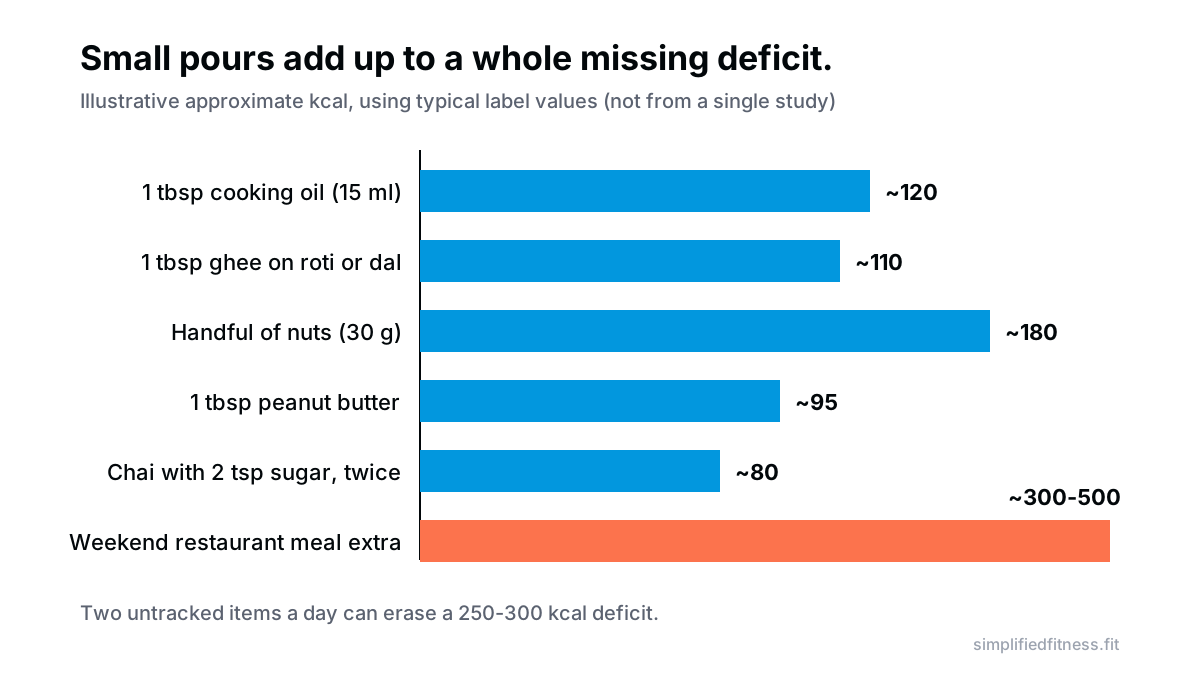
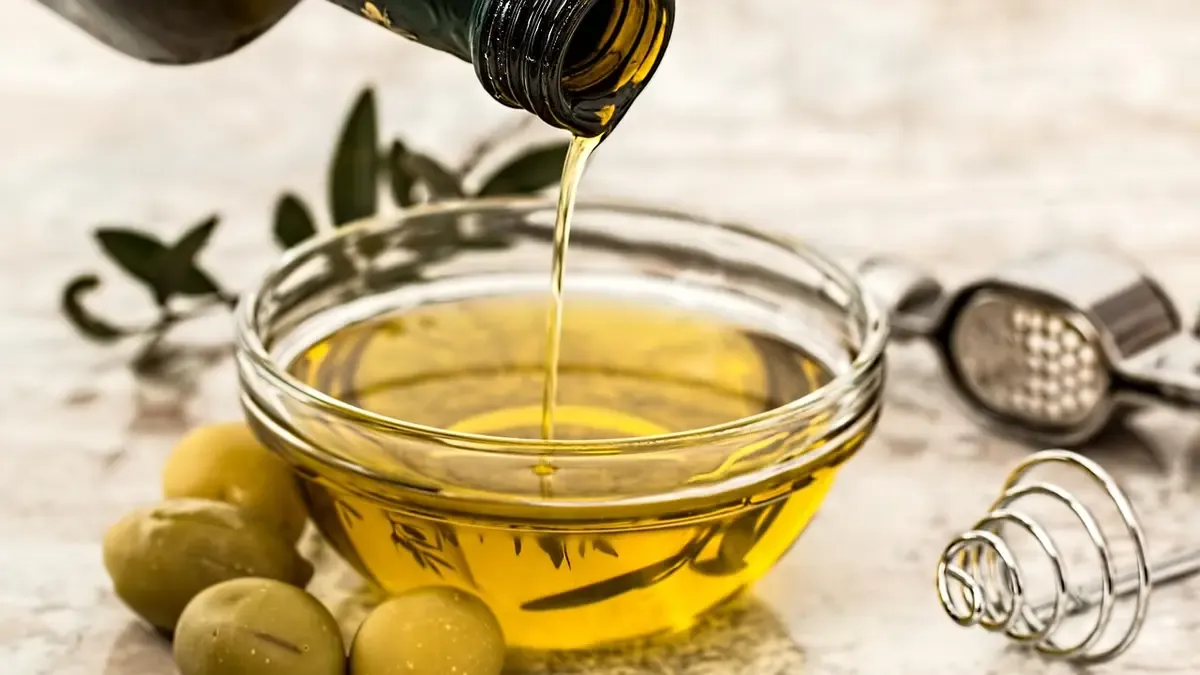
- Cooking oil and ghee. A tablespoon of oil is roughly 120 kcal and gets poured by eye. Ghee on roti or dal is the same story.
- Nuts, peanut butter and “healthy snacks.” A handful of nuts is easily 180 kcal.
- Chai and sugar. Two cups a day with sugar is a small daily surplus.
- Cooked rice and dal, estimated by katori. The same katori can hold 150 or 250 g of rice.
- Weekends. A restaurant dinner with paneer gravy, naan and a drink can carry several hundred extra kcal.
The 14-day audit
- Weigh all calorie-dense foods (oil, ghee, nuts, rice, paneer, peanut butter) with a kitchen scale. Our guide on digital scales vs measuring cups shows how.
- Log everything, including weekends, for 14 days. Self-monitoring is closely tied to weight loss in behavioral programs, though the evidence is largely observational.
- Compare your weekly average intake with your target. If it is 200-400 kcal above, you have found the cause. Fix intake and wait 2 weeks before judging.
Step 3: Has your NEAT dropped?
NEAT, non-exercise activity thermogenesis, is all the energy you burn that is not planned exercise: walking, standing, fidgeting, carrying shopping, taking the stairs. It varies enormously. Levine noted that NEAT can differ between people by up to 2,000 kcal a day, and that obese individuals in one study were seated about 2.5 hours a day longer than sedentary lean counterparts (Levine et al., 2006).
During a diet, NEAT tends to fall without you deciding it. A 2026 narrative review reports that although all components of energy expenditure decrease during weight loss, the largest reduction is often seen in NEAT (Ashtary-Larky & Mohammadi, 2026). Dynamic modelling reviews describe the same pattern: expenditure falls from the start of a diet, which makes weight loss slower than a fixed “3500 kcal per pound” rule predicts (Egan & Collins, 2022). The athlete-focused review by Trexler and colleagues describes how energy restriction brings changes in hormones, mitochondrial efficiency and energy expenditure that blunt weight loss (Trexler et al., 2014).
There is also a counter-finding worth knowing. In 105 obese outpatients attempting self-directed weight loss over six months, armband-measured activity did not increase to support weight loss: steps per day changed by only -156 on average, with no difference between those who lost, held or gained weight (Elbelt et al., 2015). In plain terms, people trying to lose weight on their own often do not move any more than before. This was an observational study in people with obesity, so it does not prove a drop in NEAT in lean lifters, but it fits the picture.
How to audit it
- Pull your step average for your first month of the cut and for the last 2 weeks.
- Look for a gap of more than about 1,500-2,000 steps a day.
- Note desk time, lift sessions that replaced walks, and hot-weather days when you stay indoors.
If steps have clearly fallen, rebuilding them is the cleanest fix. For the evidence on step targets versus intense cardio, see NEAT and 10,000 steps vs intense cardio. Our calorie calculator can help you re-check your maintenance estimate at your current weight.
The fix: one small change, then wait
Once you have worked through the three checks, change one lever.
| What you found | Fix | Judge after |
|---|---|---|
| Waist shrinking | Nothing. Keep going. | 7 more days |
| Logging gaps or weekend leaks | Weigh oil, ghee and rice. Log weekends. | 14 days |
| Steps down by 1,500-2,000+ | Add about 2,000 steps a day (roughly 20 minutes of walking, or two 10 minute walks) | 14 days |
| Accurate log, steps steady, waist flat | Cut 150-200 kcal a day (for example, about 1.5 tbsp oil or ghee) | 14 days |
The 150-200 kcal figure and the 2,000-step figure are practical coaching rules of thumb, not numbers from a trial. They are deliberately small. A big cut tends to raise hunger and lower movement, which is the very thing you are trying to fix.
If you want the steps and the food together, the cheapest 150-200 kcal swap for most Indian diets is measuring the cooking oil rather than pouring it. That alone often covers it.
What if it is still a plateau after all this?
If your waist is flat for 3 weeks, your weighed log is accurate and your steps are steady, then you may be seeing true adaptation. Your body burns less as you get lighter, and appetite rises. The 2026 review above describes reduced expenditure plus higher appetite as creating an energy gap that can cause a plateau (Ashtary-Larky & Mohammadi, 2026). Options include a small further deficit, more steps, a planned diet break (see diet breaks vs refeeds), or simply moving to maintenance and coming back later.
Also ask whether you need to keep cutting at all. If you are already lean, a chronic stall may be your body telling you to stop.
When to see a doctor
A scale stall alone is rarely a medical problem. But talk to a doctor if:
- You cannot lose weight after weeks of verified tracking and normal activity.
- Weight changes suddenly or without explanation (up or down).
- You have swelling in your legs, extreme tiredness, or other new symptoms.
- You take medicines that can affect weight and you are not sure about them.
Do not try to diagnose thyroid, hormonal or fluid problems from a scale. A blood test and a clinician can.
The short version
- Wait 7 days and measure your waist. Water hides fat loss.
- Weigh everything calorie-dense for 14 days. Logging gaps are a very common real cause.
- Compare your steps with your first month. NEAT tends to slip.
- Change one lever by a small amount: 150-200 kcal or about 2,000 steps a day.
- Give it 2 weeks before deciding it did not work.
Frequently Asked Questions
How long is a normal fat loss plateau?
A scale stall of 1-2 weeks is common and usually noise or water, so it is not yet a real plateau. Day-to-day weight shifts with food volume, salt, carbs and bowel contents, which can hide fat loss for a while. Wait for 2-3 weeks of flat weekly averages and a flat waist before changing your plan.
Why has my weight not changed in 3 weeks?
The three usual causes are water masking fat loss, calories creeping back up, or lower daily movement. Small untracked foods and reduced steps can quietly cancel a modest deficit. Work through them in that order: waist measurement, a strict 14-day log, then a step comparison.
Can I be losing fat while the scale stays the same?
Yes, it is possible, especially if you are training and eating enough protein. Water retention from hard training, higher salt or stress can offset fat lost, and some beginners gain a little muscle. Track your waist and photos weekly alongside the scale.
How do I know if hidden calories are the problem?
Weigh everything that is calorie dense for 14 days, including oil, ghee, nuts and sauces. Studies show people routinely under-report intake, and the gap is larger in people with obesity. If your weighed average is above your target, you have found the leak.
How many calories should I cut to break a plateau?
Start small, about 150-200 kcal a day. A large cut can leave you hungry, tired and moving less, which cancels the benefit. Hold the new intake for 2 weeks before judging the result.
Is adding steps better than cutting more food?
Both work, and adding steps is easier to sustain for many people. Pedometer walking programs in a meta-analysis produced modest weight loss of about 1.27 kg on average, so steps help but are not magic. Try about 2,000 extra steps a day first, and cut food only if that is not enough.
What is NEAT and how does it fall during a diet?
NEAT is the energy you burn on everything except planned exercise, such as walking, fidgeting, standing and chores. One recent narrative review reports that NEAT is often the component that drops most during weight loss. Check a step counter's weekly average and rebuild it with walks after meals.
Do I need a diet break or refeed to fix a plateau?
Not usually as a first step. Most stalls in the first weeks come from fluid, logging gaps or lower steps, not hormones. If you have dieted for a long time and tracked accurately, a planned diet break may help, and our guide on diet breaks covers it.
Does metabolic adaptation cause plateaus?
Partly. Reviews describe a drop in energy expenditure beyond what lost weight alone explains, and a 2026 review notes that plateaus typically appear around 6-8 months into a weight loss program, not in the first few weeks. Rule out fluid, tracking errors and NEAT before blaming your metabolism.
Should I do more cardio to break a cutting plateau?
More cardio can work, but for some people it raises hunger or makes them less active the rest of the day, which eats into the extra burn. Start with steps, which are gentler on recovery from lifting.
Do weekend meals really stop fat loss?
They can. A deficit of 300 kcal a day is 1,500 kcal across five weekdays, and one big weekend can win that back. Log Saturday and Sunday with the same care as weekdays.
When should I see a doctor about a stalled weight?
See a doctor if you cannot lose weight despite weeks of accurate tracking, or if weight changes suddenly without a reason. Swelling, extreme fatigue, new symptoms or medicines that affect weight also need medical advice. Do not try to diagnose thyroid or hormone problems from a scale.
Sources & References
Every claim above is checked against peer-reviewed research (PubMed, U.S. National Library of Medicine) or guidance from established health bodies. How we fact-check.
- Lichtman SW, et al. Discrepancy between self-reported and actual caloric intake and exercise in obese subjects. N Engl J Med. 1992. PMID: 1454084
- Wehling H, et al. People with a body mass index 30 or above under-report their dietary intake: a systematic review. J Health Psychol. 2019. PMID: 28810493
- Elbelt U, et al. Self-directed weight loss strategies: energy expenditure due to physical activity is not increased to achieve intended weight loss. Nutrients. 2015. PMID: 26193310
- Egan AM, et al. Dynamic changes in energy expenditure in response to underfeeding: a review. Proc Nutr Soc. 2022. PMID: 35103583
- Trexler ET, et al. Metabolic adaptation to weight loss: implications for the athlete. J Int Soc Sports Nutr. 2014. PMID: 24571926
- Ashtary-Larky D, et al. Weight loss plateau: reasons, challenges, and solutions: a narrative review. Health Sci Rep. 2026. PMID: 42466371
- Levine JA, et al. Non-exercise activity thermogenesis: the crouching tiger hidden dragon of societal weight gain. Arterioscler Thromb Vasc Biol. 2006. PMID: 16439708
- Richardson CR, et al. A meta-analysis of pedometer-based walking interventions and weight loss. Ann Fam Med. 2008. PMID: 18195317

Umair Hazrami · Founder & Head Coach, Simplified Fitness
Umair Hazrami founded Simplified Fitness and the Simplified Lifter channel to cut through fitness noise. With 4+ years of consistent training and 10+ coaching clients, he writes every guide from the peer-reviewed research and links the sources so you can check them. Our editorial standards.
Educational content only, not medical advice. If you have a medical condition, are pregnant, or take medication, talk to a qualified doctor before changing your diet, supplements or training. Full disclaimer.
Keep reading
Nutrition
Body Recomposition: Who Can Lose Fat and Build Muscle at the Same Time?
How to do body recomposition: who can lose fat and build muscle at once, what the trials show, and a protein, training and calorie protocol you can start today.
8 min read

Nutrition
How to Calculate Macros: Step-by-Step Grams per Kilogram Formula for Protein, Fat and Carbs
How to calculate macros in grams per kg: set protein, set fat, fill the rest with carbs. Worked examples for 70, 80 and 90 kg lifters on a cut or a bulk.
9 min read
Nutrition
Daily Scale Weight Fluctuations: Sodium, Bowels, Glycogen and Water
Daily scale weight fluctuations are mostly water, glycogen and gut contents, not fat. Learn why your weight jumps overnight and how a 7-day average fixes it.
8 min read
Nutrition
Diet Breaks vs Refeeds: Do Hormones, Glycogen and Sanity Really Matter?
Diet breaks vs refeeds: which one helps a long cut? See what MATADOR, ICECAP and other trials found on fat loss, metabolism and hunger, and how to schedule one.
9 min read