Zinc Supplementation: Does It Raise Testosterone, and What About Copper?
Does zinc supplementation raise testosterone? Only if you are low. See what the trials show, sensible dose ranges, ZMA, zinc forms and the copper catch.

TL;DR. The short answer
- Zinc supplementation raises testosterone only when someone is zinc deficient. In a small 1996 study, marginally deficient older men saw testosterone rise after zinc, but no trial here shows a boost in men with normal zinc.
- ZMA (zinc, magnesium aspartate and B6) did not improve hormones, body composition or strength in 42 resistance trained men over 8 weeks.
- If you supplement, a modest dose with food (around 15-30 mg elemental zinc) is the usual practical range. Higher doses add side effects without a proven benefit for lifters.
- Long-term high-dose zinc can reduce copper absorption and, in case reports, has caused copper deficiency anaemia. Check your label for copper and talk to a doctor if you take zinc for months.
- Food first: meat, eggs, dairy, dal, chickpeas, seeds and nuts supply zinc, though phytates in plant foods lower absorption.
Part of our complete guide: The Evidence-Based Fitness Supplements Guide: What Works, What's Overhyped & What's a Waste of Money
Table of contents
Zinc supplementation raises testosterone only if you are low on zinc to begin with. If your diet already covers it, extra zinc has not been shown to push testosterone higher, and the marketing that calls zinc a “natural testosterone booster” runs well ahead of the evidence.
That does not make zinc useless. It is an essential mineral, and a genuine shortfall can drag hormones and immunity down. This article sorts out who that applies to, what dose is sensible, whether ZMA works, which form to pick and why long-term use needs a copper check. It sits inside our wider evidence-based supplements guide.
Does zinc supplementation raise testosterone?
Zinc is an essential micronutrient that the body cannot store in significant amounts, so you need a regular supply from food (Stiles et al., 2024). The link to testosterone comes from a classic 1996 paper, and it is worth reading closely.
That paper actually contained several small pieces. In a cross-sectional look at 40 healthy men, cellular zinc levels correlated with serum testosterone. In four young men, restricting dietary zinc for 20 weeks dropped testosterone from 39.9 to 10.6 nmol/L. And in nine marginally zinc-deficient older men, six months of zinc (about 30 mg a day, as zinc gluconate) raised testosterone from 8.3 to 16.0 nmol/L (Prasad et al., 1996).
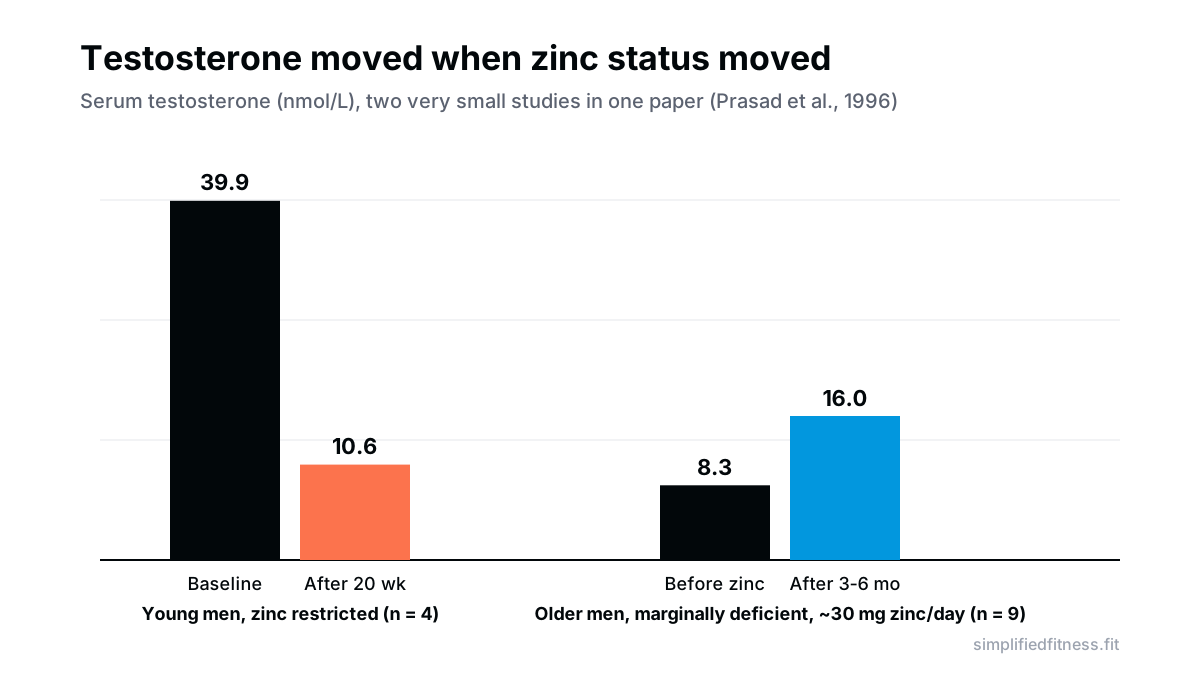
Look at who was studied. Four men, nine men, an older group that was deficient, and no placebo group in the supplementation part. It shows that deficiency can lower testosterone and that repleting it can help. It does not show that a healthy 25-year-old gains anything by adding more.
What about ZMA? The testosterone claim tested
ZMA is a bedtime blend of zinc, magnesium aspartate and vitamin B6, sold as a testosterone and recovery aid. The test that matters is a randomised trial from Baylor University. Forty-two resistance trained men took ZMA or a dextrose placebo before bed through 8 weeks of standardised training. Serum zinc rose 11-17%, which was not statistically significant, and there were no significant differences between groups in anabolic or catabolic hormones, body composition, 1-RM bench or leg press, endurance or cycling power (Wilborn et al., 2004).
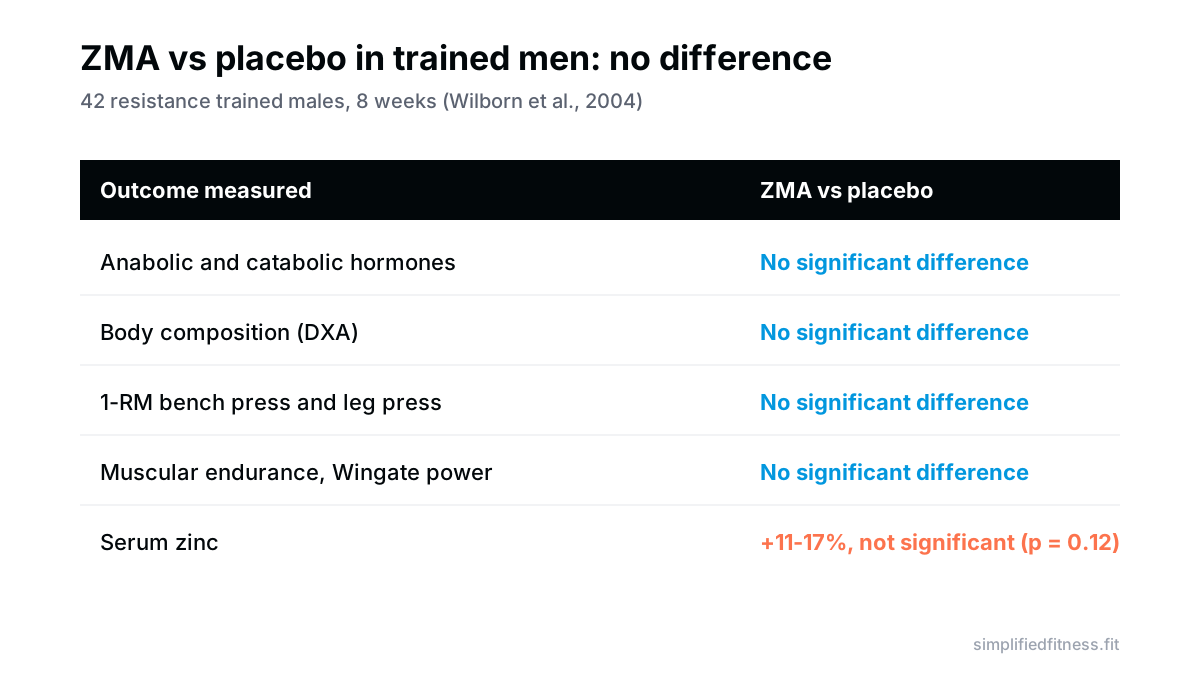
One trial is not the last word, and 8 weeks is short. But a systematic review of mineral supplements in athletes reached a similar overall view: there is little evidence that mineral and trace element supplements improve performance, with iron and magnesium as the stronger exceptions, and zinc studies were few (nine) and not of the highest quality (Heffernan et al., 2019). If you want the wider audit of testosterone products, see our natural testosterone boosters review.
Who might actually be low in zinc?
The honest answer is that you cannot tell from how you feel. Low zinc can show up as frequent infections or slow healing, but those have plenty of other causes. A doctor can test it, and that beats guessing.
Groups worth thinking about:
- Low-meat or vegetarian diets. Zinc from animal foods is easier to absorb. In plant foods, phytates (found in grains and legumes) bind zinc and reduce absorption (Stiles et al., 2024). A diet built on roti, rice and dal with little dairy, egg or meat may be lighter on absorbable zinc.
- People with gut problems or on certain medicines. The same review notes malabsorption, diuretics and some blood pressure drugs can contribute to deficiency.
- Heavy sweaters. This is the claim you see everywhere, so check the data. In 18 athletes cycling for an hour in hot (35 C) and neutral (25 C) conditions, total zinc loss in sweat was estimated to be relatively low compared with the recommended intake, although the authors note moderate exercise may increase surface losses (Tipton et al., 1993). Hot Indian summers will make you sweat, but that alone is not a reason to take zinc.
Zinc dosage for lifters: a sensible range
Here I have to be upfront. No trial gives a “bodybuilding dose,” because zinc has not been shown to improve muscle or strength in people who are not deficient. What follows is a practical range, not a performance protocol.
- Typical supplemental range: around 15-30 mg of elemental zinc per day. Check the label, because “zinc gluconate 50 mg” is the compound, not the elemental zinc.
- Count everything. Multivitamins, ZMA and “immune” blends all contain zinc. See our look at multivitamins for lifters if you already take one.
- Take it with food. The most common complaint from zinc pills is nausea, and a meal usually settles it. Calcium and casein can reduce zinc absorption a little, so a meal that is not dairy-heavy is a reasonable choice (Stiles et al., 2024).
- Higher is not better. The Cochrane review on colds found more non-serious side effects such as bad taste and nausea with zinc treatment (Nault et al., 2024). Higher doses are for a doctor to direct.
There is also an upper limit. The US Institute of Medicine set the adult tolerable upper intake level for zinc at 40 mg a day from all sources, food included. A 30 mg pill on top of a zinc-rich diet can get close to that, so the lower end of the range is the safer default unless a doctor directs otherwise.
Zinc picolinate vs gluconate: does the form matter?
Marketing loves this question. The data are thin. One 1987 double-blind crossover trial gave 15 healthy volunteers 50 mg elemental zinc as picolinate, citrate or gluconate, each for four weeks. Hair, urine and red cell zinc rose significantly with picolinate but not with the other two forms or placebo (Barrie et al., 1987).
Read it with care. It is 15 people, at a 50 mg dose, using indirect markers, and nobody has shown picolinate does anything extra for muscle or testosterone. The mixed picture is that picolinate may be absorbed well, while gluconate and citrate are widely used and tolerated. My practical take: choose a form you tolerate with food, at a modest dose, and do not pay a big premium for the label.
The zinc-copper balance: why long-term use needs a plan
This is the part supplement ads skip. Zinc and copper compete for absorption, and excess zinc can inhibit copper uptake. Over time that can lead to copper deficiency and anaemia (Stiles et al., 2024). Copper deficiency affects blood cell production and the nervous system, and it is diagnosed with serum copper and ceruloplasmin tests and treated with copper replacement (Myint et al., 2018).
The evidence here is mostly case reports, so it tells us the risk is real with sustained high intake but not how often it happens at moderate doses. Sensible steps:
- Use a modest dose rather than the biggest bottle.
- Choose a product that includes copper if you plan to take zinc for months, or ask a doctor or pharmacist about adding a small amount.
- If you take zinc long term, ask your doctor about bloodwork, and see them promptly if you notice unusual tiredness, pallor, numbness or balance problems.
A practical zinc plan for an Indian lifter
If you want a simple routine, start with the plate rather than the pill. Put curd or paneer at one meal, eggs or chicken at another, and rotate dal, chickpeas, rajma or soya through the week. Add a handful of pumpkin seeds or cashews as a snack. That alone covers most people without a bottle.
If you still decide to supplement, run it as a trial rather than a lifestyle. Pick one product, note the elemental dose, take it with lunch or dinner, and review after a few weeks with your doctor if you plan to continue. Keep an eye on stomach upset, and do not add a second zinc-containing product on top.
Remember what zinc will not do. It will not replace sleep, enough calories and protein, or a progressive program, which drive both testosterone and muscle far more than any mineral does.
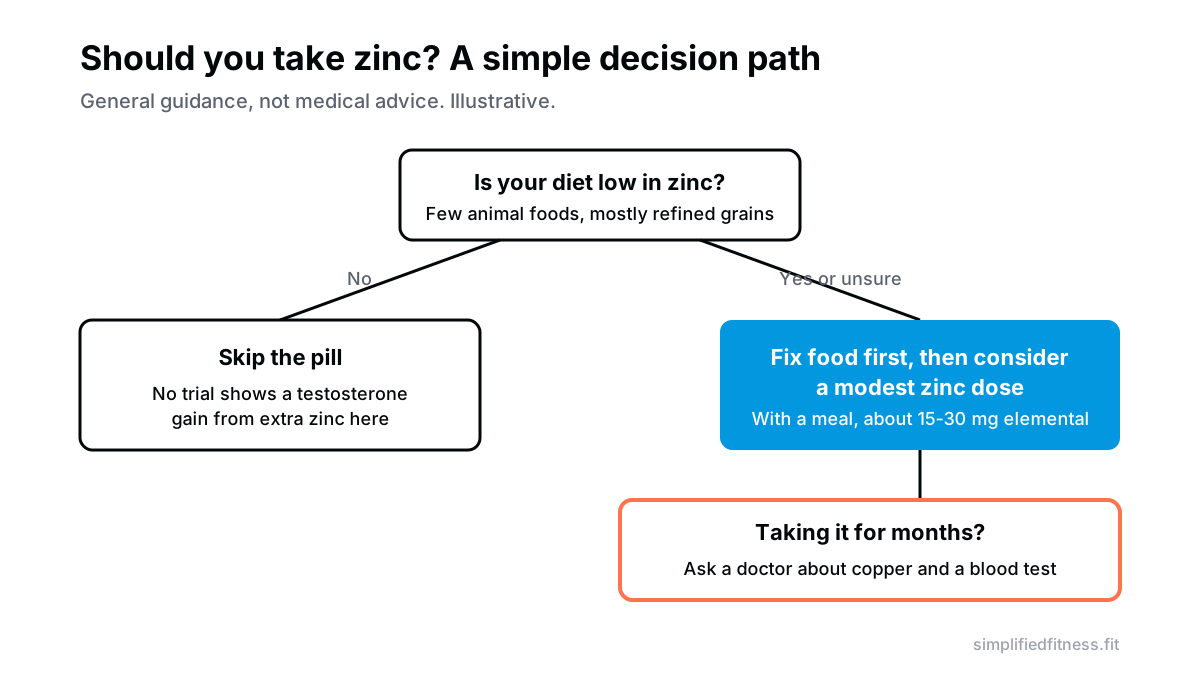
Should you take zinc? A quick decision path
Zinc and immune function
Zinc does matter for immunity, but the pill claim is modest. A 2024 Cochrane review of 34 trials (8,526 participants) concluded zinc may have little or no effect on preventing colds but may shorten an ongoing cold, with low-certainty evidence and an increase in non-serious adverse events (Nault et al., 2024). Most of the evidence came from varied products and doses, so I would not treat daily zinc as an immune shield. If you try it during a cold, keep it short term.
When to see a doctor
Talk to a doctor before supplementing if you are on long-term medication, have kidney or gut disease, are pregnant, or suspect a deficiency. Oral zinc may reduce absorption of drugs such as ciprofloxacin, doxycycline and risedronate (Stiles et al., 2024), so ask your pharmacist how far apart to take them. If you are chasing low testosterone symptoms such as low libido, persistent fatigue or low mood, a blood test beats guessing with supplements.
The bottom line
Zinc supplementation fixes a deficiency; it is not a testosterone hack. ZMA did not outperform placebo in trained men. If you want to try zinc, fix food first, keep to a modest dose with a meal, avoid stacking products, and plan for copper if it becomes a long-term habit.
For gains that actually move the needle, a solid program and enough protein come first. Start with our free training plans and set your intake with the protein calculator.
Frequently Asked Questions
Does zinc increase testosterone?
Only if you are deficient. A 1996 study found testosterone fell when healthy young men were put on a zinc-restricted diet and rose when marginally deficient older men took zinc. There is no good evidence that extra zinc lifts testosterone in men whose zinc status is already normal, so check your diet before buying a pill.
How much zinc should a bodybuilder take?
There is no trial-proven bodybuilding dose, because zinc has not been shown to improve muscle or strength in people who are not deficient. A practical supplemental range is about 15-30 mg of elemental zinc with food, and a doctor can advise if you want to go higher. Count the zinc already in your multivitamin and food so you do not stack doses.
Does ZMA boost testosterone?
In the one randomised trial in resistance trained men that we reviewed, it did not. Forty-two men took ZMA or placebo for 8 weeks of training and showed no significant differences in anabolic hormones, body composition or strength. If ZMA helps you sleep, that is a separate question and the evidence there is limited.
Can too much zinc cause copper deficiency?
Yes, it can with long-term high intake. Excess zinc can inhibit copper absorption, and case reports describe anaemia and nerve problems from zinc-induced copper deficiency. If you supplement zinc for months, choose a product that includes copper or ask your doctor about a blood test.
What are the symptoms of zinc deficiency in athletes?
Symptoms are non-specific, such as frequent infections, slow wound healing or poor appetite, and they overlap with many other issues. Because of that, you cannot diagnose it from symptoms alone. If you suspect low zinc, a doctor can check it with bloodwork before you start high doses.
Do heavy sweaters need extra zinc?
Probably not much extra. A study of 18 athletes found zinc loss in sweat was relatively low compared with the recommended intake, though exercise may increase surface losses. Eating zinc-rich foods regularly is usually enough, and a pill only makes sense if your diet is poor.
Which is better, zinc picolinate or zinc gluconate?
One small 1987 crossover trial in 15 volunteers found picolinate raised hair, urine and red blood cell zinc while gluconate and citrate did not. That is a single old study with indirect markers, so it is not proof that picolinate is better for lifters. Pick any well-tolerated form at a sensible dose, and take it with food.
Should I take zinc on an empty stomach?
Taking zinc with a meal is the safer choice. Nausea is the common complaint with zinc pills, and food usually settles it. A light meal that is not dairy-heavy works, since calcium and casein can slightly reduce zinc absorption.
Does zinc help with colds?
Possibly a little, once a cold has started. A 2024 Cochrane review found zinc may reduce the length of an ongoing cold but may do little to prevent colds, with low-certainty evidence and more non-serious side effects such as bad taste. If you try it, use it short term and do not treat it as a daily immune shield.
What foods are high in zinc for Indian vegetarians?
Dairy (curd, paneer), dal, chickpeas, soya, pumpkin seeds, cashews and whole grains all contribute zinc. Phytates in legumes and grains reduce how much you absorb, and soaking, sprouting or fermenting can help. Vegetarians who eat few of these foods may be the group with the most to gain from checking their intake.
Can I take zinc and magnesium together?
Yes, many people do, and ZMA is built that way. The combination has not been shown to improve hormones or strength in trained men, so the main reason to take magnesium is its own merits. Our magnesium guide covers forms and doses, so decide on each mineral separately.
Who should not take zinc supplements?
Anyone on long-term medication, with kidney or gut disease, or who is pregnant should speak to a doctor first. Zinc may reduce absorption of some drugs, including the antibiotics ciprofloxacin and doxycycline. When in doubt, ask a pharmacist before adding it.
Sources & References
Every claim above is checked against peer-reviewed research (PubMed, U.S. National Library of Medicine) or guidance from established health bodies. How we fact-check.
- Prasad AS, et al. Zinc status and serum testosterone levels of healthy adults. Nutrition. 1996. PMID: 8875519
- Wilborn CD, et al. Effects of zinc magnesium aspartate (ZMA) supplementation on training adaptations and markers of anabolism and catabolism. J Int Soc Sports Nutr. 2004. PMID: 18500945
- Heffernan SM, et al. The role of mineral and trace element supplementation in exercise and athletic performance: a systematic review. Nutrients. 2019. PMID: 30909645
- Tipton K, et al. Zinc loss in sweat of athletes exercising in hot and neutral temperatures. Int J Sport Nutr. 1993. PMID: 8220392
- Barrie SA, et al. Comparative absorption of zinc picolinate, zinc citrate and zinc gluconate in humans. Agents Actions. 1987. PMID: 3630857
- Stiles LI, et al. Role of zinc in health and disease. Clin Exp Med. 2024. PMID: 38367035
- Myint ZW, et al. Copper deficiency anemia: review article. Ann Hematol. 2018. PMID: 29959467
- Nault D, et al. Zinc for prevention and treatment of the common cold. Cochrane Database Syst Rev. 2024. PMID: 38719213

Umair Hazrami · Founder & Head Coach, Simplified Fitness
Umair Hazrami founded Simplified Fitness and the Simplified Lifter channel to cut through fitness noise. With 4+ years of consistent training and 10+ coaching clients, he writes every guide from the peer-reviewed research and links the sources so you can check them. Our editorial standards.
Educational content only, not medical advice. If you have a medical condition, are pregnant, or take medication, talk to a qualified doctor before changing your diet, supplements or training. Full disclaimer.
Keep reading

Supplements
Ashwagandha KSM-66 vs Sensoril: Which Extract, What Dose, and Do You Need to Cycle?
Ashwagandha KSM-66 vs Sensoril for lifters: what the strength trials show, realistic cortisol effects, liver safety and whether to cycle. Every study linked.
8 min read
Supplements
BCAAs vs EAAs: Why BCAAs Are a Waste of Money If Your Protein Is Covered
BCAA vs EAA for muscle growth: BCAAs are only 3 of the 9 essential amino acids. See what Wolfe 2017 and Jackman 2017 found and when EAAs or whey make sense.
8 min read
Supplements
Beetroot Juice for Running and Lifting: How Dietary Nitrate Works (and the Mouthwash Trap)
Does beetroot juice for running actually work? See what meta-analyses show, the 2-3 hour timing and dose, who benefits, and why mouthwash can cancel the effect.
9 min read

Supplements
Beta-Alanine Benefits: Carnosine Buffering, High-Rep Gains and Why It Makes You Tingle
Beta-alanine benefits explained: why pre-workout makes your skin tingle, how carnosine buffers acid, what dose works, and who should skip it. Studies linked.
8 min read