Sattu (Roasted Gram Flour): Nutritional Reality and the 'Desi Whey' Myth
Is sattu desi whey protein? Not quite: 100 g has about 20-22 g protein but also ~65 g carbs and ~400 kcal. See the numbers and how to use sattu well.
TL;DR. The short answer
- Sattu is not desi whey. A 100 g portion of typical roasted gram sattu gives roughly 20-22 g of protein, but also about 65 g of carbohydrate and around 400 kcal, so most of its energy is carbs.
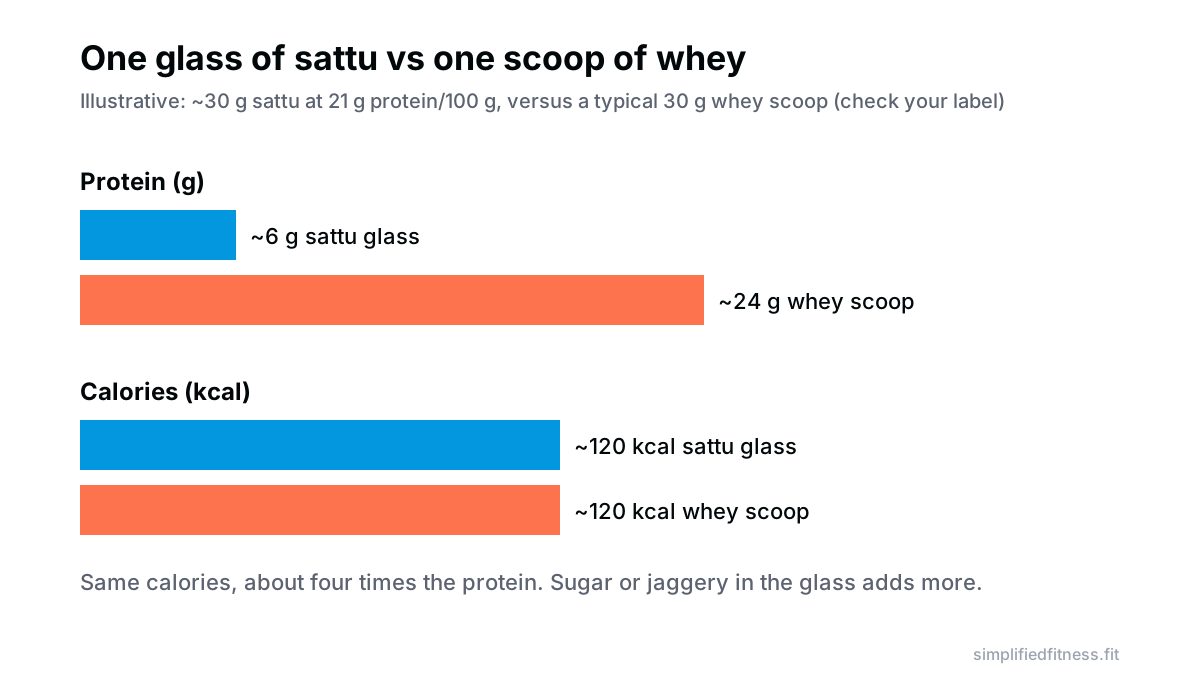
- One glass of sattu sharbat made with 2 heaped tablespoons (about 30 g) gives roughly 6 g of protein and 120 kcal. A typical whey scoop gives about 24 g protein for a similar calorie cost (illustrative, check your labels).
- Legume protein is not fully absorbed. In Indian adults, true ileal amino acid digestibility was 74.6% for chickpea, and sattu-specific figures vary by method.
- Sattu is still a good, cheap carbohydrate with some protein and fibre, and sattu mixes tested medium glycaemic index in one lab study. Use it as a pre-workout drink or a meal component, not as a protein shake replacement.
- If you are hunting for protein per rupee or per calorie, pair sattu with curd, milk, paneer or eggs, and check total daily protein with a calculator.
Part of our complete guide: Indian High-Protein Nutrition Guide: Cutting and Muscle Building on Vegetarian and Non-Veg Diets
Table of contents
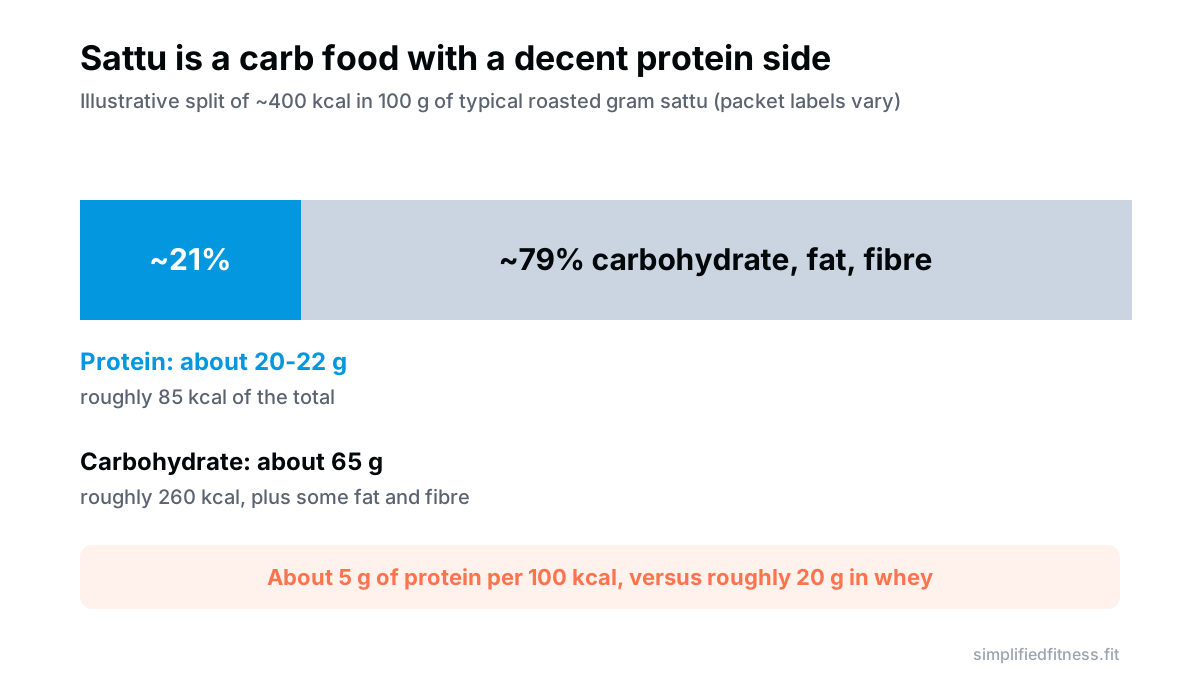
Is sattu desi whey protein? No. Sattu has real protein, about 20-22 g per 100 g on typical labels, but it also carries roughly 65 g of carbohydrate and around 400 kcal. It is a carbohydrate-dense energy food with a protein bonus, not a protein supplement.
That does not make it a bad food. It makes it a different food from what the reels promise. This article sits inside our wider Indian high-protein nutrition guide, and here we will put numbers on a glass of sattu sharbat, compare it with a scoop of whey, and show where it actually fits in a lifter’s day.
Where the “desi whey” idea came from
Sattu is roasted Bengal gram (chana) ground into flour. It is cheap, it travels well, and it is a genuine part of Bihar, UP and Jharkhand food culture. Some of that is worth respecting.
Then social media got hold of it. “20 g protein per 100 g” is a true-sounding line, and the number is roughly right. What the clip leaves out is the second half of the sentence: per 100 g, not per glass, and with a large pile of carbs riding along.
The 100 g figure is also the trap. Nobody drinks 100 g of sattu in one sharbat. Think about how it is actually made at home: two spoons in a glass of water, a pinch of salt or black salt, maybe roasted jeera, maybe sugar. That is 20-40 g of flour, not 100.
Sattu nutritional value: carbs vs protein
Exact numbers vary by brand and by what is mixed in. Food composition work on sattu mixes shows that formulation changes the nutrient profile: a CFTRI study compared a chickpea-based sattu mix with wheat-based and maize-based formulations and found differences in fat, fibre and minerals, while protein did not differ significantly between the chickpea control and either formulation (Shakeb et al., 2022). So read your pack.
For a typical plain roasted gram sattu, these ballpark values are widely quoted (treat them as approximate, not lab results for your brand):
| Per 100 g (approx.) | Plain sattu | Typical whey concentrate |
|---|---|---|
| Protein | 20-22 g | 70-80 g |
| Carbohydrate | ~65 g | 5-8 g |
| Energy | ~400 kcal | ~380-400 kcal |
| Protein per 100 kcal | ~5 g | ~19-20 g |
The last row is the useful one. Per calorie, whey delivers roughly four times the protein. Sattu delivers some protein while mostly supplying energy.
How much protein is in a glass of sattu sharbat?
This is the number most lifters never work out. Using the figures above, here is an illustration. Your spoon size and brand will change the exact numbers.
- 1 glass (about 30 g sattu): roughly 6 g protein, 120 kcal, about 20 g carbs
- 2 glasses (about 60 g sattu): roughly 12-13 g protein, 240 kcal, about 40 g carbs
- 1 scoop whey (about 30 g): roughly 24 g protein, around 120 kcal (label dependent)
Two glasses of sattu get you to roughly half a scoop of whey’s protein, and the calories are about double. Add a spoon of sugar or jaggery and the gap grows.
Sattu protein digestibility: how much do you actually absorb?
There are two honest answers here, and they do not perfectly agree.
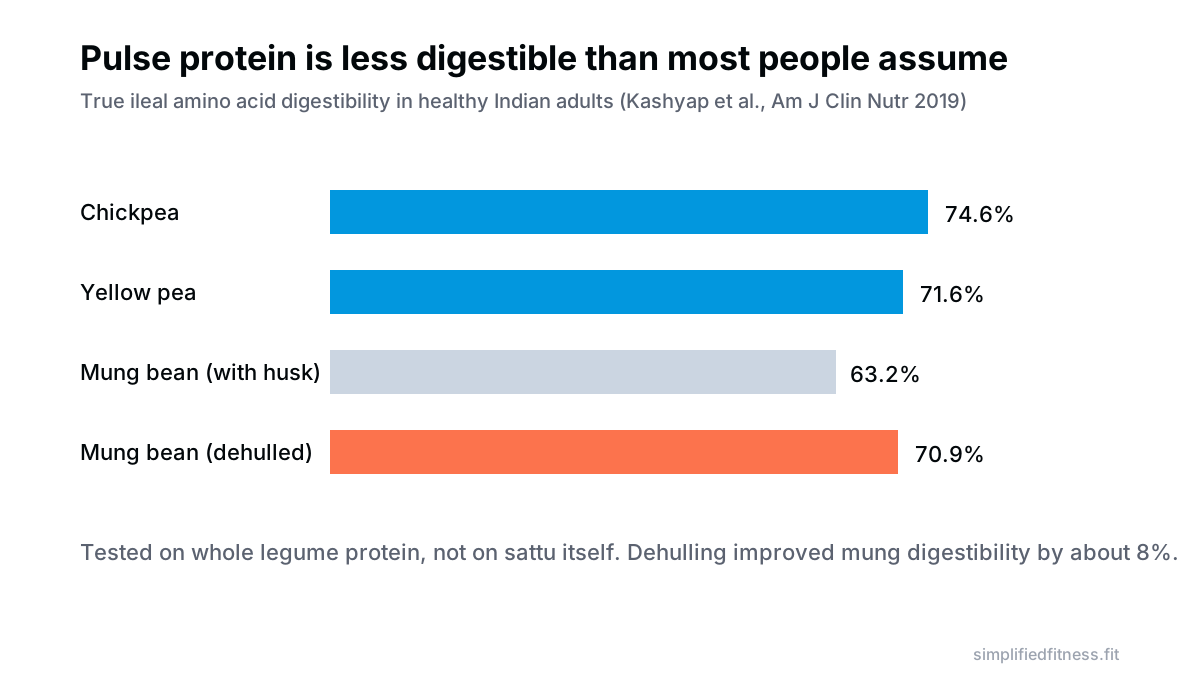
The best human data is on the parent food, not sattu itself. A tracer study in healthy Indian adults measured true ileal digestibility of indispensable amino acids and found 74.6% for chickpea, 71.6% for yellow pea and 63.2% for mung bean. The authors concluded legume digestibility was lower than expected, and that dehulling improved mung bean digestibility by about 8% (Kashyap et al., 2019).
A separate Indian food science paper on fortified Bengal gram sattu reported protein digestibility of 80.6% (Mridula et al., 2010). The abstract does not give the method, and it is a storage study rather than a human trial. The two numbers use different methods and should not be set side by side as a fair contest.
What does this mean in practice? If you eat 20 g of protein from sattu, you should not assume all 20 g is available to your muscles. Some of it is lost. The size of that loss is uncertain, which is another reason to treat sattu as a supporting player. I would not build a muscle-gain plan on a protein source whose absorption data is this thin.
Roasting, grinding and dehulling are all traditional processing steps that may help, but that is not the same as proving sattu matches animal protein.
Sattu vs whey: does the source of protein matter for muscle?
Two questions get mixed up here. One is whether protein powders help at all. The other is whether plant protein does as well as whey.
On the first, a meta-analysis of 49 randomised trials with 1,863 participants found protein supplementation modestly improved strength and muscle size over prolonged resistance training. Gains in fat-free mass levelled off beyond a total intake of about 1.62 g/kg/day (Morton et al., 2018). Note that this is about total daily protein, and supplements were just one route to it.
On the second, the evidence is mixed. A 2021 meta-analysis of 16 trials found protein source did not change absolute lean mass or strength gains, but animal protein favoured percent lean mass, and in adults under 50 it favoured both absolute and percent lean mass (Lim et al., 2021). A 2026 meta-analysis of just five studies in untrained adults found no significant difference between plant protein and whey, though the authors stress that few studies and wide confidence intervals mean this is not proof of equivalence (Callegari et al., 2026).
Why might they differ? The trials used different plant proteins (largely soy and pea, not chickpea), different populations and different durations. None of them tested sattu. So the fair reading is: plant protein can work when total intake and training are matched, but sattu itself has not been tested against whey.
So what is sattu actually good for?
Quite a lot, as long as you call it by its right name.
- A cheap carbohydrate drink. Useful before a morning session, especially in the heat.
- A meal helper. Mixed into dough for litti or stuffed parathas, it lifts the protein a little.
- A medium glycaemic index staple. Sattu mixes in the CFTRI study had glycaemic index values of 56-60 (Shakeb et al., 2022). That is a medium range, but portion and added sugar still matter.
- A base for flavoured drinks. One study built a beverage from sattu with beetroot juice, which tells you it is easy to flavour, though that recipe included sugar and other additives (Sharma et al., 2020).
It is not a good fit as your only protein shake, or as a “high-protein” cutting snack. On a cut, its calories add up fast.
How to use sattu in a high-protein day
The idea is to stack it with foods that carry more protein per calorie.
- Milk or curd base. Blend 30 g sattu with 200 ml milk or a katori of curd. You add roughly 6 g of protein from sattu plus protein from the dairy.
- Paneer or egg on the side. A pre-workout sattu glass plus boiled eggs is a better combination than sattu alone.
- Dal and roti at meals. Sattu does not replace a dal or soya meal. See our guide on dals and pulses protein facts for realistic numbers.
- Savoury, not sugary. Salt, jeera, lemon and mint keep calories down. Sugar or jaggery adds carbs without protein.
If you are a vegetarian trying to hit 100-120 g of protein on a budget, it fits as one piece of the puzzle. Our Rs 100 per day budget protein plan and the vegetarian meal prep blueprint show how to layer foods. For snack options with better protein per calorie, see high-protein Indian snacks.
When to talk to a doctor
If you have diabetes or prediabetes, kidney disease, or a digestive condition such as IBS, do not make sattu a daily staple without checking with your doctor or a registered dietitian. Large or sudden increases in pulses can cause gas and bloating in some people. Persistent symptoms deserve a proper check, not a food experiment.
Parents who are sceptical of supplements often ask whether sattu is a “natural” alternative to whey. Our article on convincing Indian parents about whey protein safety covers that conversation without hype in either direction.
The bottom line
Sattu is a good, cheap, traditional food. It gives you carbohydrate, some fibre and a meaningful but not huge amount of protein. It is not desi whey.
If your goal is muscle, aim for a sensible total daily protein and use sattu as a fuel and convenience food. Work out your target with the protein calculator, and if you want a full day of eating built for your calories, start with our free diet plan.
Frequently Asked Questions
Is sattu desi whey protein?
No. Sattu is a roasted gram flour with about 20-22 g protein per 100 g, but also roughly 65 g carbohydrate and about 400 kcal, so it is mainly an energy food. Whey protein powder is typically around 75-80% protein by weight, which is a very different product. Treat sattu as a useful carbohydrate with a protein bonus and judge it by the label on your pack.
How much protein is in a glass of sattu sharbat?
A glass made with 2 heaped tablespoons (about 30 g) of sattu gives roughly 6 g of protein at 21 g per 100 g. Two glasses would give about 12-13 g, along with around 240 kcal before any sugar or jaggery. Weigh your sattu once on a kitchen scale so you know what your own spoon holds.
Can I replace whey protein with sattu?
Not one for one. You would need around four times the sattu to match the protein in a whey scoop, and the carbohydrate and calories would come with it. If whey is out of budget, use sattu alongside curd, milk, paneer, eggs or dal rather than expecting it to carry your protein target alone.
Is sattu good for bodybuilding?
It can be a useful part of a diet, mainly as a slow-ish carbohydrate source around training. Protein supplementation in general helps strength and muscle gain in resistance-trained people, but total daily protein matters most. A 2018 meta-analysis found no further gains in lean mass beyond about 1.6 g/kg/day total protein, so use sattu to help reach your calories, then fill the protein gap with other foods.
Is sattu protein well digested?
Partly. A human isotope study in Indian adults found true ileal amino acid digestibility of 74.6% for chickpea protein, lower than many people expect. One Indian food science study reported 80.6% protein digestibility for fortified Bengal gram sattu, though the abstract does not describe the method in detail. Roasting and dehulling may help, but eat a mix of protein foods rather than relying on sattu alone.
Does sattu spike blood sugar?
The limited data suggest a medium glycaemic index. A Mysore food technology study measured values of 56-60 for three sattu mixes, which sits at the low end of the medium range. That is one lab study, not a large body of evidence. Adding sugar, jaggery or a roti side changes the picture, so if you have diabetes, check with your doctor or dietitian about portions.
Is sattu a good pre-workout drink?
It can be, particularly in summer, because it supplies carbohydrate in a cheap, cooling drink. Carbs help fuel hard training sessions, and the protein is a small bonus. Have it 60-90 minutes before training, and try it on a normal day first so you know how your stomach handles it.
Should I drink sattu with water or milk?
Either works. Water keeps calories low, while milk adds protein and calcium, roughly 3 g of extra protein per 100 ml for typical full-cream milk (check your pack). If protein is your goal, milk or curd-based sattu gives you more for the same effort.
How much sattu can I have in a day?
For most healthy adults, one or two glasses made with 30-40 g of sattu each is a reasonable amount. Because it adds calories and carbohydrate, count it as part of your meals rather than as a free drink. If you have a medical condition such as diabetes or a digestive disorder, ask your doctor first.
Does sattu help with weight loss?
Sattu is not a fat loss food by itself, since weight change depends on your overall calorie balance. It can help if it fills you up and replaces higher-calorie snacks, because it provides some protein and fibre. Weigh your portion and skip added sugar so it fits your calorie target.
Is sattu better than roasted chana or soya chunks for protein?
For protein per calorie, soya chunks are far denser, and roasted chana is similar to sattu because they are the same food in different forms. Sattu wins on convenience, since you can drink it in a minute. Rotate all three rather than picking one.
Does sattu cause gas or bloating?
It can in some people, because pulses contain fibre and fermentable carbohydrates that some stomachs handle poorly. Start with a small glass and increase slowly, and drink enough water through the day. If you get persistent pain or other symptoms, speak to a doctor rather than guessing.
Is branded sattu protein powder the same as plain sattu?
Not always. Some branded mixes blend sattu with barley, wheat, maize, sugar or added protein, which changes the macros. The 2022 CFTRI study on sattu mixes shows how much composition can differ between formulations, so always read the nutrition table on the pack.
Sources & References
Every claim above is checked against peer-reviewed research (PubMed, U.S. National Library of Medicine) or guidance from established health bodies. How we fact-check.
- Morton RW, et al. A systematic review, meta-analysis and meta-regression of the effect of protein supplementation on resistance training-induced gains in muscle mass and strength in healthy adults. Br J Sports Med. 2018. PMID: 28698222
- Kashyap S, et al. True ileal digestibility of legumes determined by dual-isotope tracer method in Indian adults. Am J Clin Nutr. 2019. PMID: 31374575
- Mridula D, et al. Effect of storage on quality of fortified Bengal gram sattu. J Food Sci Technol. 2010. PMID: 23572613
- Shakeb M, et al. Standardization and quality profile of sattu mix. J Food Sci Technol. 2022. PMID: 35734118
- Sharma A, et al. Formulation, standardization and characterization of novel sattu beverage enriched with beetroot juice. J Food Sci Technol. 2020. PMID: 32327804
- Lim MT, et al. Animal protein versus plant protein in supporting lean mass and muscle strength: a systematic review and meta-analysis of randomized controlled trials. Nutrients. 2021. PMID: 33670701
- Callegari IOM, et al. Is plant-based protein supplementation as effective as whey protein? A systematic review and meta-analysis in untrained adults undergoing resistance training. J Int Soc Sports Nutr. 2026. PMID: 42954267

Umair Hazrami · Founder & Head Coach, Simplified Fitness
Umair Hazrami founded Simplified Fitness and the Simplified Lifter channel to cut through fitness noise. With 4+ years of consistent training and 10+ coaching clients, he writes every guide from the peer-reviewed research and links the sources so you can check them. Our editorial standards.
Educational content only, not medical advice. If you have a medical condition, are pregnant, or take medication, talk to a qualified doctor before changing your diet, supplements or training. Full disclaimer.
Keep reading
Indian Diet
Budget Indian Diet for 120g Protein Under ₹100 a Day (Student Plan)
A budget Indian diet for 120g protein under 100 rupees a day: soya, eggs, milk and chana, with protein per rupee maths and two student plans you can copy.
8 min read
Indian Diet
Chicken Breast and Fish in India: Where to Buy, How to Cook, and Cost per 30 g Protein
Chicken breast price per kg India: compare wet market vs apps, learn safe handling, a brine method for juicy meat, and rohu vs chicken cost per 30 g protein.
11 min read
Indian Diet
How to Convince Indian Parents About Whey Protein: Kidney Fears, 'Chemicals' and the Real Evidence
How to convince Indian parents about whey protein: explain it as paneer-water dairy, answer the kidney fear with trial data, and read the label together.
9 min read
Indian Diet
Curd vs Greek Yogurt vs Hung Curd: Protein Yield and the Home Recipe
Curd vs Greek yogurt protein in India: plain dahi gives about 3-4 g per 100 g. See how straining it into hung curd can triple that, and what studies show.
9 min read