Waist-to-Hip Ratio Calculator: Check Your Belly Fat Risk
Enter your waist and hip measurements to get your waist-to-hip ratio and see where it sits against the cut-off for your sex. Two minutes and a tape measure, that is all it takes.
Your results
Estimates for healthy adults, for education only. Not a medical assessment. Built and reviewed by Umair Hazrami.
How this calculator works
One division. That’s it.
Waist-to-hip ratio = waist circumference ÷ hip circumference
Both measurements go in the same unit (the form converts inches to centimetres for you), so the units cancel out. The result is rounded to two decimal places and compared with a cut-off that depends on your sex:
- Men: 0.90
- Women: 0.85
Below the cut-off, you see “Below the WHO risk threshold.” At or above it, the calculator flags the result as at or above the threshold for substantially increased metabolic risk. The calculator labels these as WHO thresholds; they are the figures widely quoted from the World Health Organization’s 2008 expert consultation on waist circumference and waist-hip ratio.
So a man with a 92 cm waist and 100 cm hips gets 0.92, which is over the line. A woman with a 78 cm waist and 98 cm hips gets 0.80, under hers.
Why the ratio matters
Two people can weigh the same and carry fat very differently. Fat packed around the middle tends to track with worse metabolic health than fat on the hips and thighs, and WHR is a cheap way to capture that.
The evidence is mostly observational, but it is large:
- In INTERHEART, a case-control study of 27,098 people across 52 countries, heart attack risk climbed with every quintile of waist-to-hip ratio. The top quintile had 2.52 times the odds of the bottom one after adjusting for age, sex, region and smoking. At any given BMI, bigger hips were linked to lower risk (Yusuf et al., 2005).
- A meta-regression of 15 prospective studies (258,114 people) found each 0.01 rise in WHR came with about a 5% higher risk of a cardiovascular event, in both men and women (de Koning et al., 2007).
- In the European EPIC cohort of 359,387 adults, WHR predicted risk of death even after accounting for BMI. BMI still mattered too (Pischon et al., 2008).
Associations, not proof that shrinking your ratio by itself fixes anything. But losing waist fat through training and a modest calorie deficit is rarely a bad bet.
Using your number
Measure on the same morning each fortnight, before breakfast, and log it. A single reading is noisy. A bloated evening waist can add a couple of centimetres easily.
If you’re over the line, the plan is boring and it works: a small deficit from the calorie calculator, lifting three or four days a week, and daily steps. Track your waist alongside photos and weekly scale averages, as laid out in our DIY physique tracking guide. Pair it with the waist-to-height ratio calculator for a second view that doesn’t depend on hip size.
Limitations and who it’s not for
- Tape technique. A centimetre either way on the waist moves the ratio by roughly 0.01. Measure the same spot every time.
- Big glutes, small waist. Lifters who build their hips can drop their WHR without any change in belly fat. And when hips shrink on a diet, the ratio can creep up.
- South Asians. The code uses one cut-off per sex for every ethnicity. In a hospital-based Bangalore study of 285 adults, waist circumference flagged abdominal obesity in more Asian Indians than WHR did, and none of the overweight men were flagged by WHR (Kurpad et al., 2003). A “pass” here is not an all-clear if your waist is large.
- Not for: pregnancy, under-18s, people with ascites or abdominal swelling, or anyone using it to self-diagnose. It is a screening number. Blood tests, blood pressure and a doctor’s assessment tell you about actual risk.
If you’re at or above the threshold, especially with diabetes or heart disease in the family, book a check-up and ask for fasting glucose, HbA1c and a lipid profile.
Frequently Asked Questions
What is a healthy waist-to-hip ratio?
This calculator treats a waist-to-hip ratio below 0.90 for men and below 0.85 for women as under the risk threshold. Those are the cut-offs commonly used for substantially increased metabolic risk, but risk in large studies rises gradually rather than switching on at one number. Use the threshold as a flag, and watch the trend over months rather than one reading.
How do I measure my waist and hips for WHR?
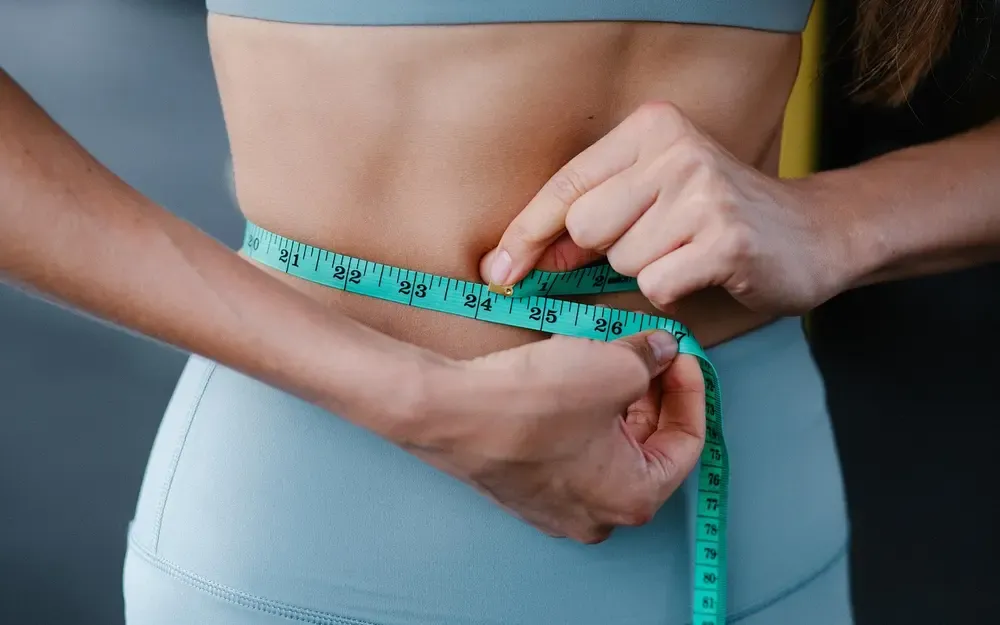
Measure your waist midway between your lowest rib and the top of your hip bone, and your hips around the widest part of your buttocks. Stand relaxed, breathe out normally, and keep the tape snug and level without squeezing the skin. Take each measurement twice in the morning before eating and use the average.
Is waist-to-hip ratio better than BMI?
It measures something BMI cannot: where your fat sits. In the INTERHEART study of about 27,000 people in 52 countries, waist-to-hip ratio was more strongly linked to heart attack than BMI, while a large European cohort found both BMI and waist measures independently predicted risk of death. Use them together, alongside the BMI calculator, instead of picking one.
Is WHR or waist-to-height ratio more useful?
Both track abdominal fat, and studies generally find both are linked to cardiovascular disease and type 2 diabetes. Waist-to-height ratio is simpler because your height never changes, whereas WHR can move if your hips change from glute training or fat loss. If you only track one number at home, waist circumference itself is hard to beat.
Why did my waist-to-hip ratio go up when I lost weight?
WHR is a ratio, so if your hips shrink faster than your waist, the number can rise even though you are leaner. This is common early in a diet, especially for people who store fat around the hips and thighs. Judge progress by waist circumference in centimetres plus scale averages and photos, not the ratio alone.
Do the WHR cut-offs apply to Indians and South Asians?
The calculator uses the same 0.90 and 0.85 cut-offs for everyone because there is no widely agreed South Asian WHR cut-off. A study of Asian Indians in Bangalore found waist circumference picked up abdominal obesity in more people than WHR did, and Asian-specific waist and BMI cut-offs are lower than Western ones. If you are of South Asian origin and close to the threshold, treat it as a reason to check blood sugar and lipids, not as reassurance.
When should I see a doctor about my waist-to-hip ratio?
See a doctor if your ratio is at or above the threshold, or if it keeps climbing, especially with a family history of diabetes or heart disease. A doctor can order simple tests like fasting glucose, HbA1c, lipids and blood pressure, which tell you far more than a tape measure. Also get checked if your waist grows quickly without a clear reason, as that is not something to diagnose at home.
Sources & References
Every claim above is checked against peer-reviewed research (PubMed, U.S. National Library of Medicine) or guidance from established health bodies. How we fact-check.
- Yusuf S, et al. Obesity and the risk of myocardial infarction in 27,000 participants from 52 countries: a case-control study. Lancet. 2005. PMID: 16271645
- de Koning L, et al. Waist circumference and waist-to-hip ratio as predictors of cardiovascular events: meta-regression analysis of prospective studies. Eur Heart J. 2007. PMID: 17403720
- Pischon T, et al. General and abdominal adiposity and risk of death in Europe. N Engl J Med. 2008. PMID: 19005195
- Jayedi A, et al. Anthropometric and adiposity indicators and risk of type 2 diabetes: systematic review and dose-response meta-analysis of cohort studies. BMJ. 2022. PMID: 35042741
- Kurpad SS, et al. Waist circumference correlates better with body mass index than waist-to-hip ratio in Asian Indians. Natl Med J India. 2003. PMID: 14606765