Body Fat Calculator: Estimate Body Fat % With a Tape Measure
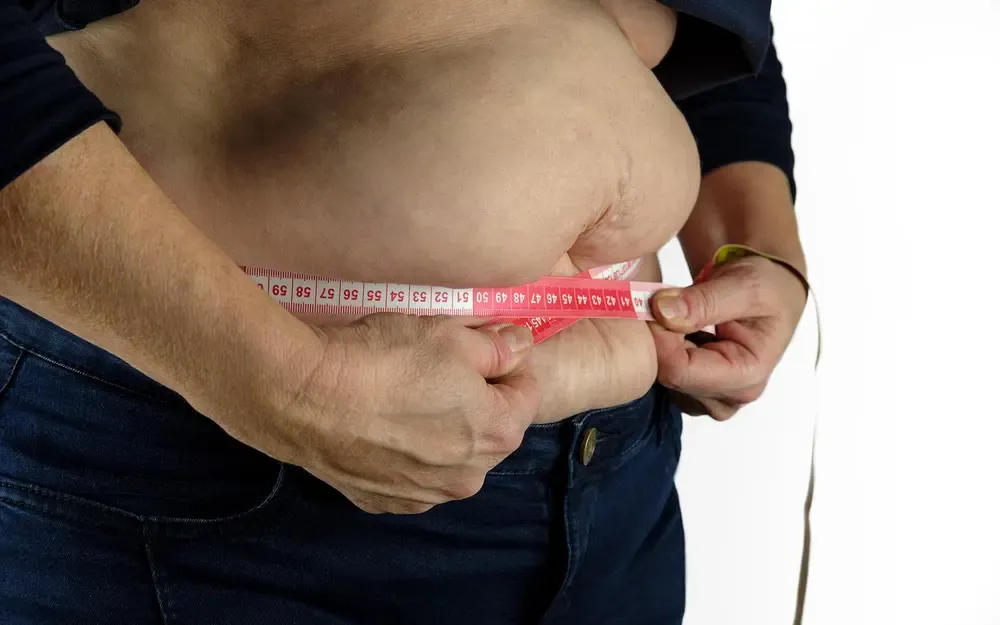
Grab a soft tape measure, take three or four measurements, and get a body fat estimate plus your fat mass and lean mass in kilograms.
Your results
Estimates for healthy adults, for education only. Not a medical assessment. Built and reviewed by Umair Hazrami.
How this calculator works
This is the US Navy circumference method, the tape test the US Navy has long used for body composition screening (Peterson, 2015). It assumes that the bigger your waist is relative to your neck (and hips, for women), the more fat you carry. The calculator runs the metric version of the equations to get body density, then converts density to body fat with the Siri equation (495 ÷ density, minus 450):
- Men: density = 1.0324 − 0.19077 × log10(waist − neck) + 0.15456 × log10(height)
- Women: density = 1.29579 − 0.35004 × log10(waist + hip − neck) + 0.221 × log10(height)
All measurements are in centimetres. Fat mass is your weight × body fat %, and lean mass is everything else (muscle, bone, organs, water). If the result comes out at 2% or lower, or above 70%, you get “n/a” instead, which almost always means a typo or a neck bigger than the waist.
How to read your number
The label under your result uses these bands:
| Category | Men | Women |
|---|---|---|
| Essential fat | under 6% | under 14% |
| Athletic | 6-13.9% | 14-20.9% |
| Fit | 14-17.9% | 21-24.9% |
| Average | 18-24.9% | 25-31.9% |
| Above average | 25% and up | 32% and up |
These are a fitness-industry chart, not a diagnosis. The tape is also a blunt tool. In 31 college men, the Navy equation produced an unacceptable total error of 5.2 percentage points against a three-compartment lab model (Moon et al., 2008). In 1,407 army recruits, tape equations read about 6 points lower than DXA on average (Foulis et al., 2023). In women aged 40-60, the Navy equation’s average (30.3%) was close to underwater weighing (29.5%), yet individual readings agreed poorly (Bathalon et al., 1995). Groups average out. Individuals don’t.
So use the result as a ballpark. The most useful number on the page is often your raw waist measurement, tracked monthly.
Using it to plan a cut or bulk
The lean mass figure is what matters for programming. Feed it into the FFMI calculator to see how much muscle you carry for your height, or into the calorie calculator to set intake. When a cut is going well, the waist drops while lifts hold steady. The tape can miss part of that change: in the recruit study, the tape equations underestimated the fat loss DXA detected over 8 weeks in men and did not detect it at all in women. Compare measurements across months, not days.
Who this is not for
Very muscular lifters with thick necks can read leaner than they are, and people who carry fat mainly on the hips and thighs (common in women) may get misleading numbers. The equations were developed on US military personnel; Asian Indians tend to carry more fat at the same BMI than Europeans (Rush et al., 2009), and the tape method has not been well validated in Indian adults. Pair it with the waist-to-height ratio calculator. It is not suitable for under-18s, during pregnancy, or with fluid retention from heart, kidney or liver disease. If you want a precise number for a medical reason, ask your doctor about a DXA scan.
Frequently Asked Questions
How accurate is the US Navy body fat method?
For an individual, expect an error of several percentage points. In 31 college men, the Navy equation had a total error of about 5 percentage points against a three-compartment lab model, and in army recruits tape-based equations read about 6 points lower than DXA on average. Treat the number as a rough estimate, not a lab result.
Where exactly should I measure my waist and neck?
Men measure the waist horizontally at the navel; women measure at the narrowest point of the waist and also take the hips at the widest point of the buttocks. The neck goes just below the Adam's apple (larynx), with the tape angled slightly down at the front. Stand relaxed, breathe out normally and keep the tape snug without pressing into the skin.
Why did my body fat jump after one measurement change?
The formula is very sensitive to the waist minus neck gap. For a 172 cm man with a 38 cm neck, moving the waist from 80 to 85 cm shifts the estimate from about 13.4% to 17.4%. Measure three times, use the average, and always measure at the same time of day.
Can I use this calculator to track fat loss?
You can, but changes of 1-2 points are within the noise, and in one study of army recruits, tape equations underestimated the fat loss DXA picked up in men over 8 weeks and missed it entirely in women. Watch the waist number itself alongside weekly average scale weight and progress photos. If the waist is shrinking and gym strength is holding, the cut is working, whatever the formula says.
Is this accurate for Indian or South Asian people?
The equations were built mainly on US military personnel, so there is no strong validation in Indian adults. DXA research shows Asian Indians tend to carry more body fat at the same BMI than Europeans, which is why a lean-looking BMI can hide a high body fat level. Pair this estimate with your waist-to-height ratio rather than relying on BMI alone.
What body fat percentage is healthy?
There is no single healthy number, and the categories shown here are a common fitness chart, not medical cut-offs. Use it to track your own trend, and judge health with your doctor using waist size, blood work and blood pressure too. If you are below the 'Essential fat' line, have lost periods, or feel constantly cold and drained, see a doctor.
Sources & References
Every claim above is checked against peer-reviewed research (PubMed, U.S. National Library of Medicine) or guidance from established health bodies. How we fact-check.
- Moon JR, et al. Percent body fat estimations in college men using field and laboratory methods: a three-compartment model approach. Dyn Med. 2008. PMID: 18426582
- Foulis SA, et al. Body composition changes during 8 weeks of military training are not accurately captured by circumference-based assessments. Front Physiol. 2023. PMID: 37351259
- Bathalon GP, et al. Military body fat standards and equations applied to middle-aged women. Med Sci Sports Exerc. 1995. PMID: 7564976
- Rush EC, et al. Body size, body composition and fat distribution: comparative analysis of European, Maori, Pacific Island and Asian Indian adults. Br J Nutr. 2009. PMID: 19203416