Upper / Lower Split · intermediate
Upper Body Workout
An evidence-based, fatigue-managed upper body session targeting the shoulders, biceps, triceps, chest, and back. Combines heavy stable compounds with length-tension optimized isolation movements for maximal hypertrophy with zero junk volume.
- Exercises
- 12 exercises
- Working sets
- 21 working sets
- Duration
- 65-75 min
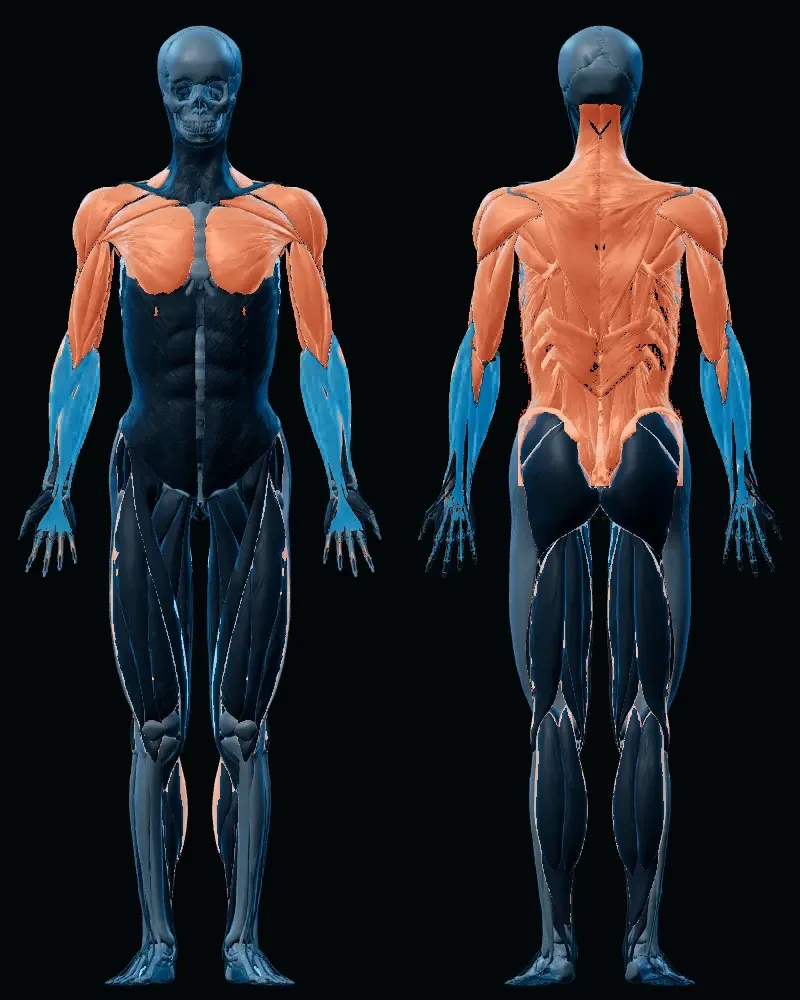
Muscles worked: upper body
Main movers: chest, upper back, lats, shoulders, biceps and triceps
Assisting: forearms and serratus anterior
Exercise Routine
12 movements · 21 working sets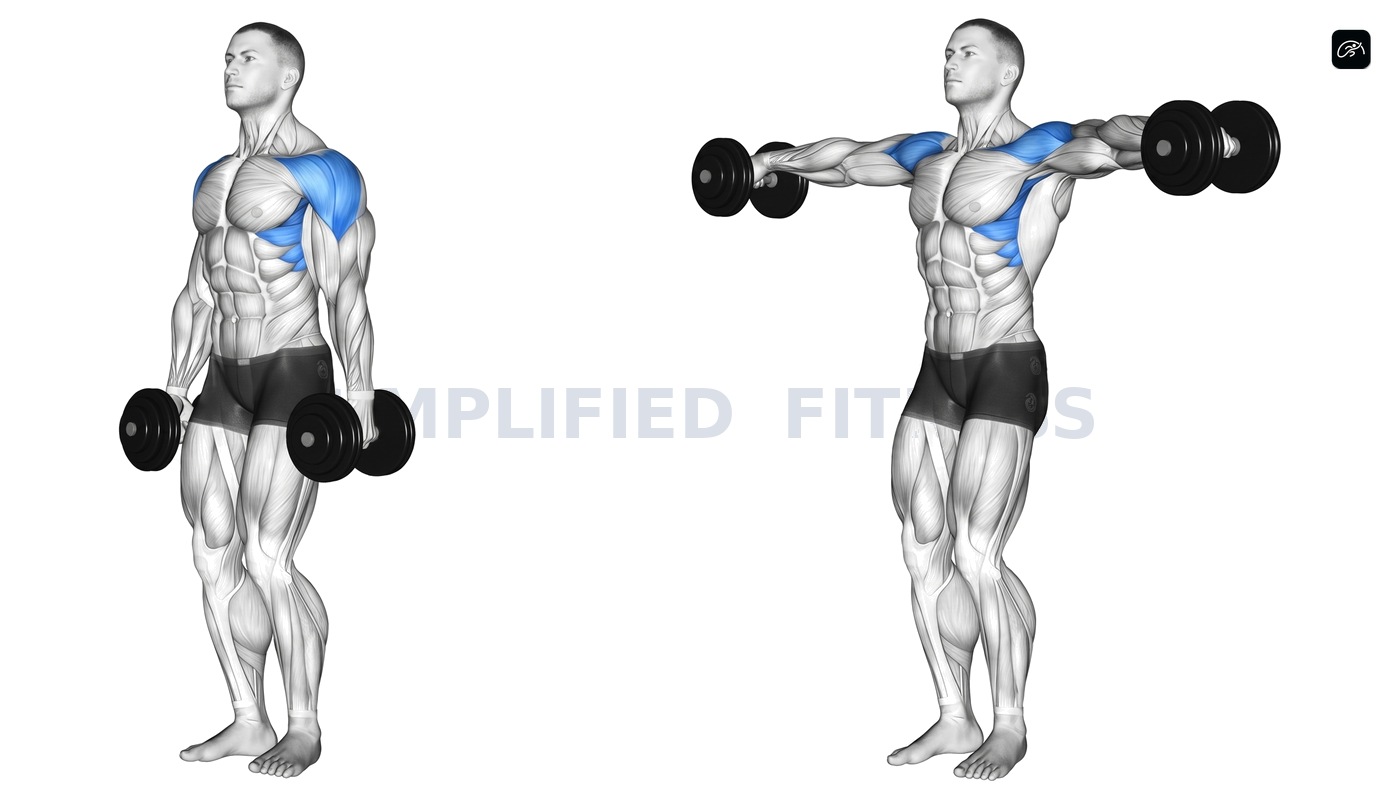 Dumbbell
 Cable
1 · Shoulders (Lateral Deltoid)
Lateral Raises
Scapular Plane Abduction
Sets for Lateral Raises Set Reps Effort 1 8-12 1-2 RIR 2 8-12 0-1 RIR What It Is & Mechanics
Isolates the lateral deltoid through humeral abduction in the scapular plane, optimizing fiber alignment while avoiding subacromial impingement.
Key Execution Cues
- Raise arms 20-30° forward from pure side in the scapular plane to match delt fibers
- Lead outward with the elbows; keep wrists relaxed without externally rotating hands
- Perform seated to remove lower-body sway and enforce strict tension on the delts
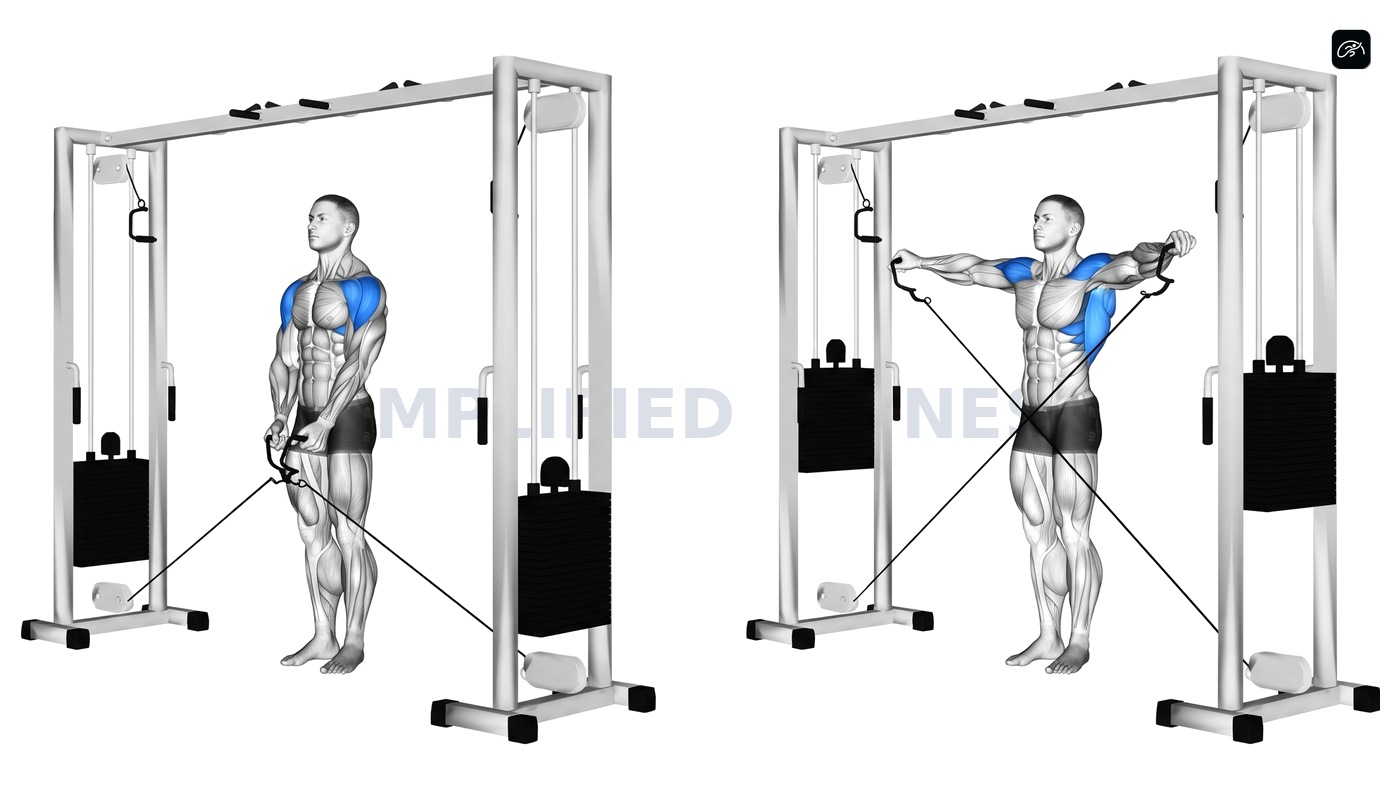
- Control a strict 2-3s descent; use low cables with wrist cuffs for continuous tension
AlternativesCable Lateral RaisesMachine Lateral RaisesSeated Dumbbell Lateral RaisesCross-Body Cable Lateral Raises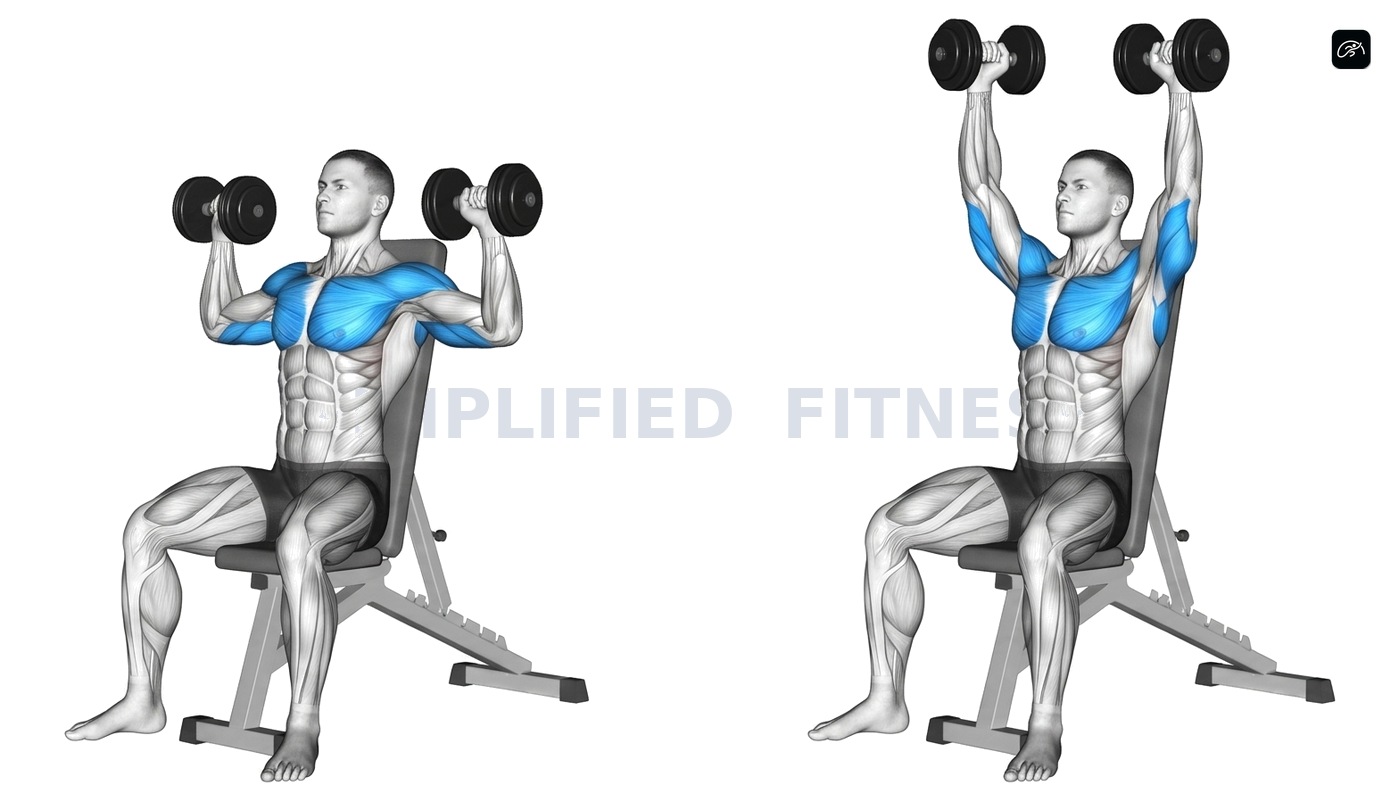
2 · Shoulders (Anterior Deltoid & Clavicular Pec)
Shoulder Press
Overhead Press / Scapular Plane Flexion
Sets for Shoulder Press Set Reps Effort 1 6-8 1-2 RIR 2 6-8 1-2 RIR What It Is & Mechanics
Compound vertical press providing heavy mechanical overload to the anterior deltoids, clavicular chest, and triceps with superior back support.
Key Execution Cues
- Set back pad to 75-85° to protect glenohumeral joint and optimize pressing mechanics
- Tuck elbows 30-45° forward in the scapular plane rather than fully flared
- Lower dumbbells under control until handles reach chin or ear level for a true stretch
- Keep upper back glued to pad and feet planted; avoid hyperextending lumbar spine
AlternativesMachine Shoulder PressSmith Machine Shoulder PressSeated Dumbbell Shoulder PressStanding Barbell Overhead Press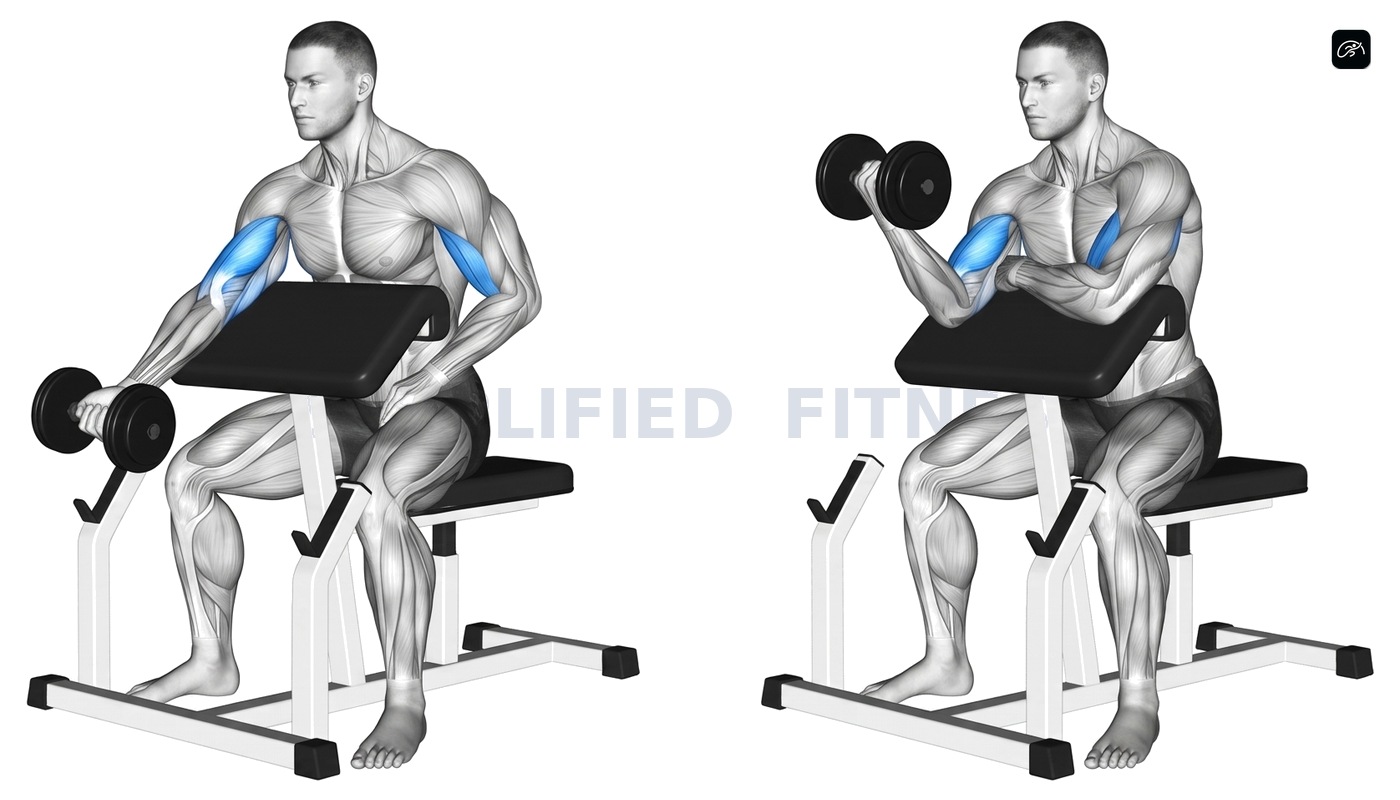
3 · Biceps (Short Head & Brachialis)
Preacher Curl
Elbow Flexion (Shoulder Flexed)
Sets for Preacher Curl Set Reps Effort 1 6-8 0-1 RIR What It Is & Mechanics
Positions the humerus in forward shoulder flexion to place the long head in passive insufficiency, channeling maximum mechanical tension to the short head and brachialis.
Key Execution Cues
- Anchor armpits snugly over top pad edge with triceps flat against the support
- Stop the eccentric lowering 2-3° shy of hyperextended lockout to protect tendons
- Emphasize a strict 3-second eccentric lowering on every single repetition
- Bring the single working set to true 0-1 RIR with consistent execution
AlternativesMachine Preacher CurlEZ-Bar Preacher CurlDumbbell Preacher CurlCable Preacher Curl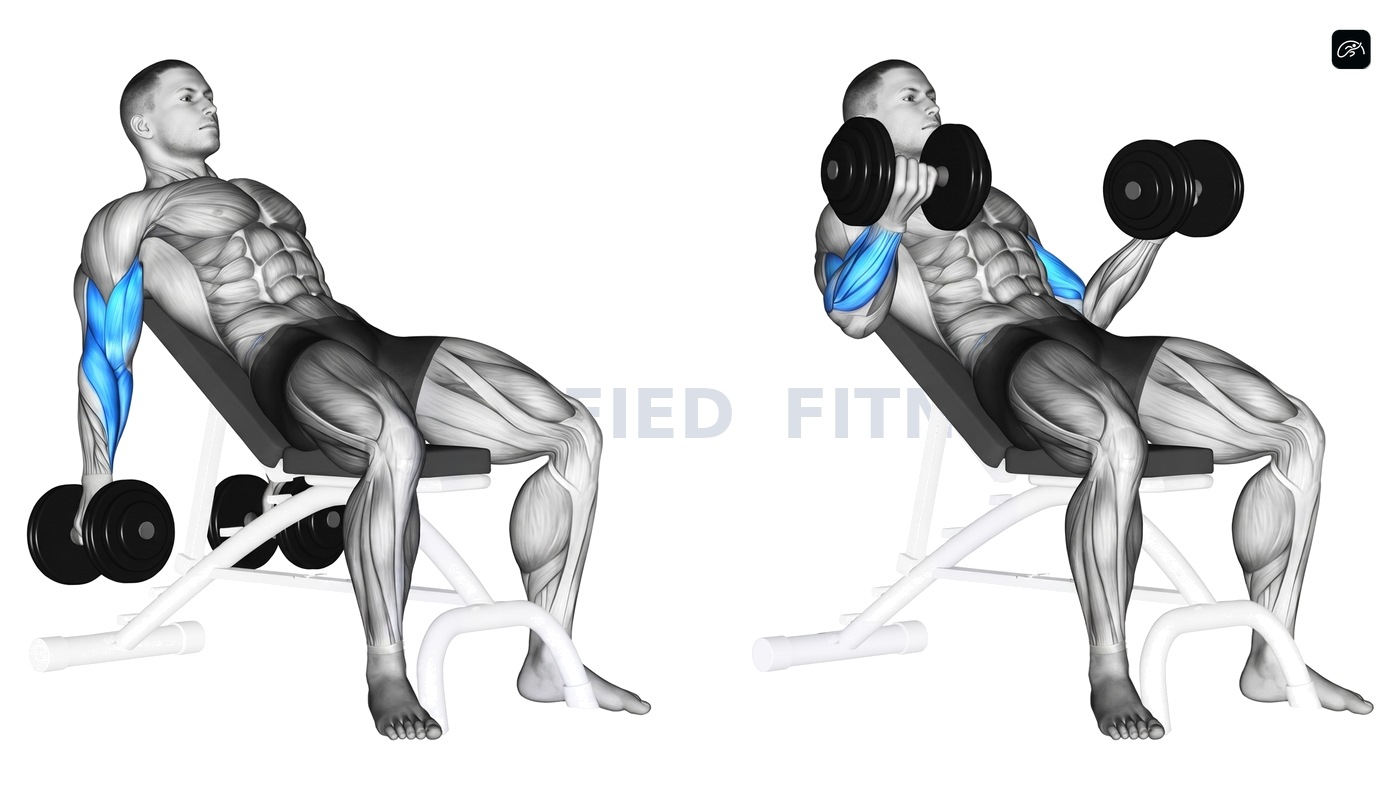 Incline Dumbbell
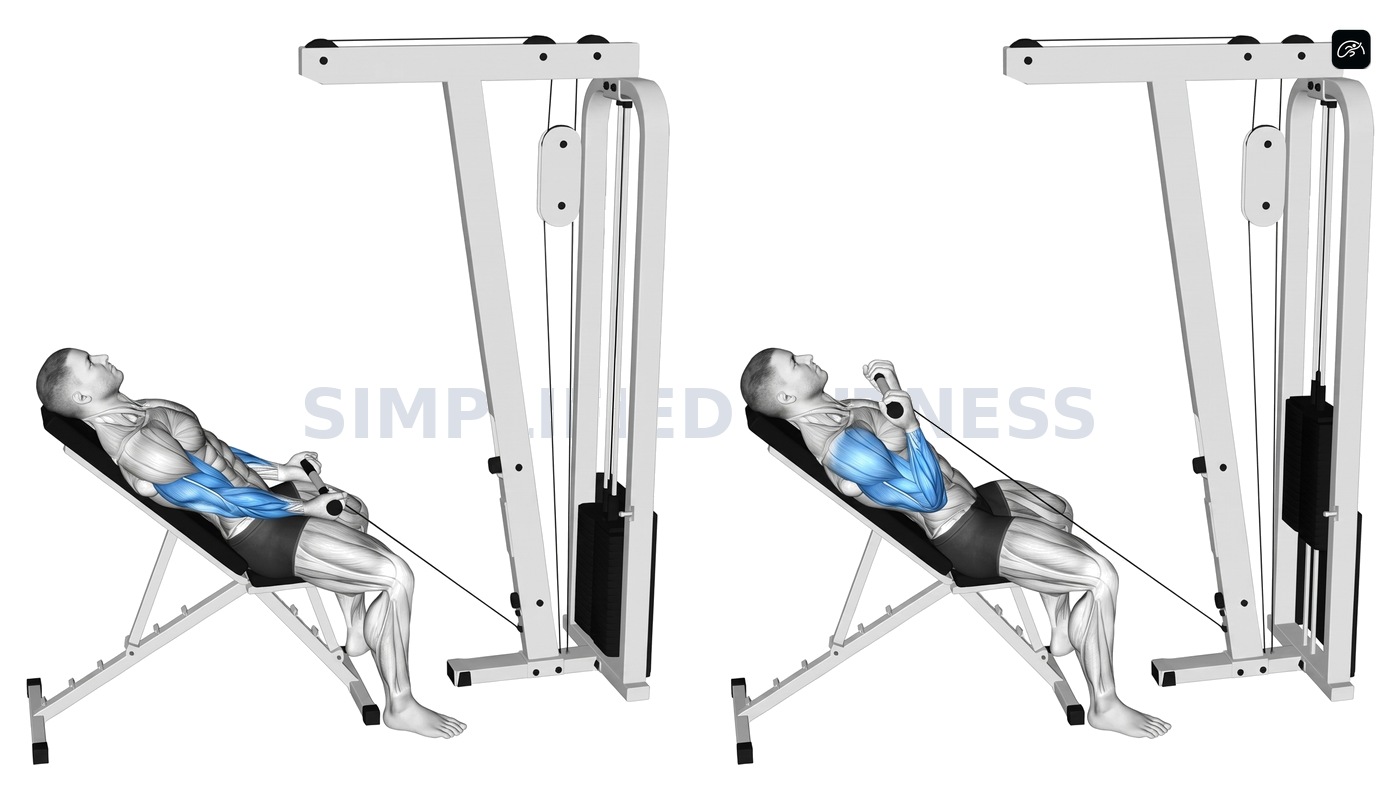 Lying Cable Curl
4 · Biceps (Long Head (Lengthened Overload))
Incline Dumbbell Curl
Elbow Flexion (Shoulder Hyperextended)
Sets for Incline Dumbbell Curl Set Reps Effort 1 8-10 1-2 RIR 2 8-10 0-1 RIR What It Is & Mechanics
Positions the humerus behind the torso in shoulder hyperextension, placing the biarticular long head under profound stretch for stretch-mediated hypertrophy.
Key Execution Cues
- Incline bench at 45-60° to pull arms behind the torso plane
- Keep elbows pinned pointing toward the floor; do not allow them to drift forward
- Rotate wrists into full supination (palms up) through the concentric phase
- Lower fully to a complete hang and pause 1s at bottom stretch before curling
AlternativesLying Cable CurlBehind-the-Back Cable Curl (Bayesian Curl)Standing Barbell CurlStanding Dumbbell Curl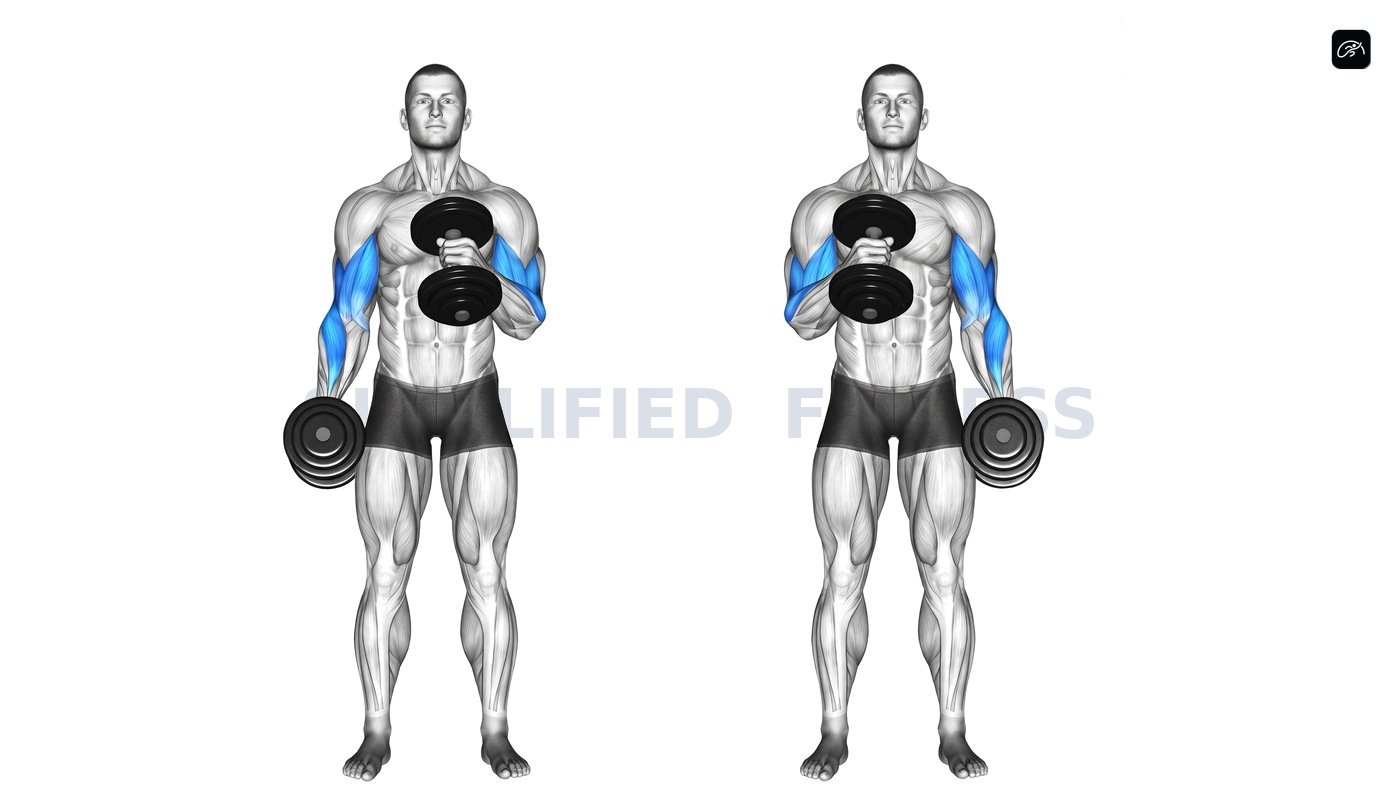 Dumbbell
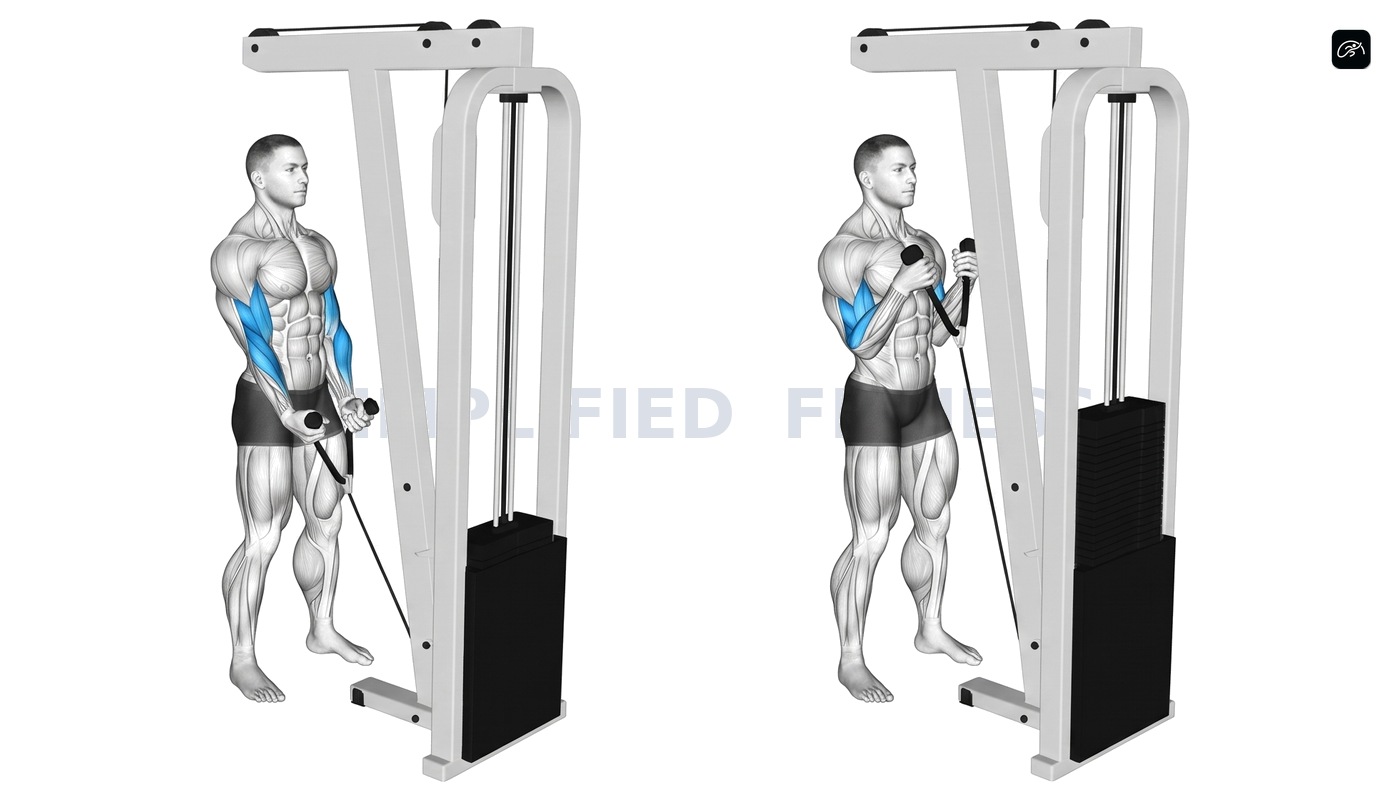 Cable Rope
5 · Biceps (Brachialis & Brachioradialis)
Hammer Curl
Elbow Flexion (Neutral Forearm)
Sets for Hammer Curl Set Reps Effort 1 6-10 1-2 RIR 2 6-10 0-1 RIR What It Is & Mechanics
Neutral-grip flexion shifts prime mover leverage onto the brachialis and brachioradialis, building outer arm thickness and dense forearm musculature.
Key Execution Cues
- Keep palms facing each other and thumbs pointed up throughout the stroke
- Keep torso completely stationary without using hip sway or backward lean
- Lock elbows firmly at your sides without swinging them forward
- Hold and squeeze hard for 1 second at peak contraction
AlternativesDumbbell Hammer CurlCable Rope Hammer CurlCross-Body Hammer CurlReverse Barbell Curl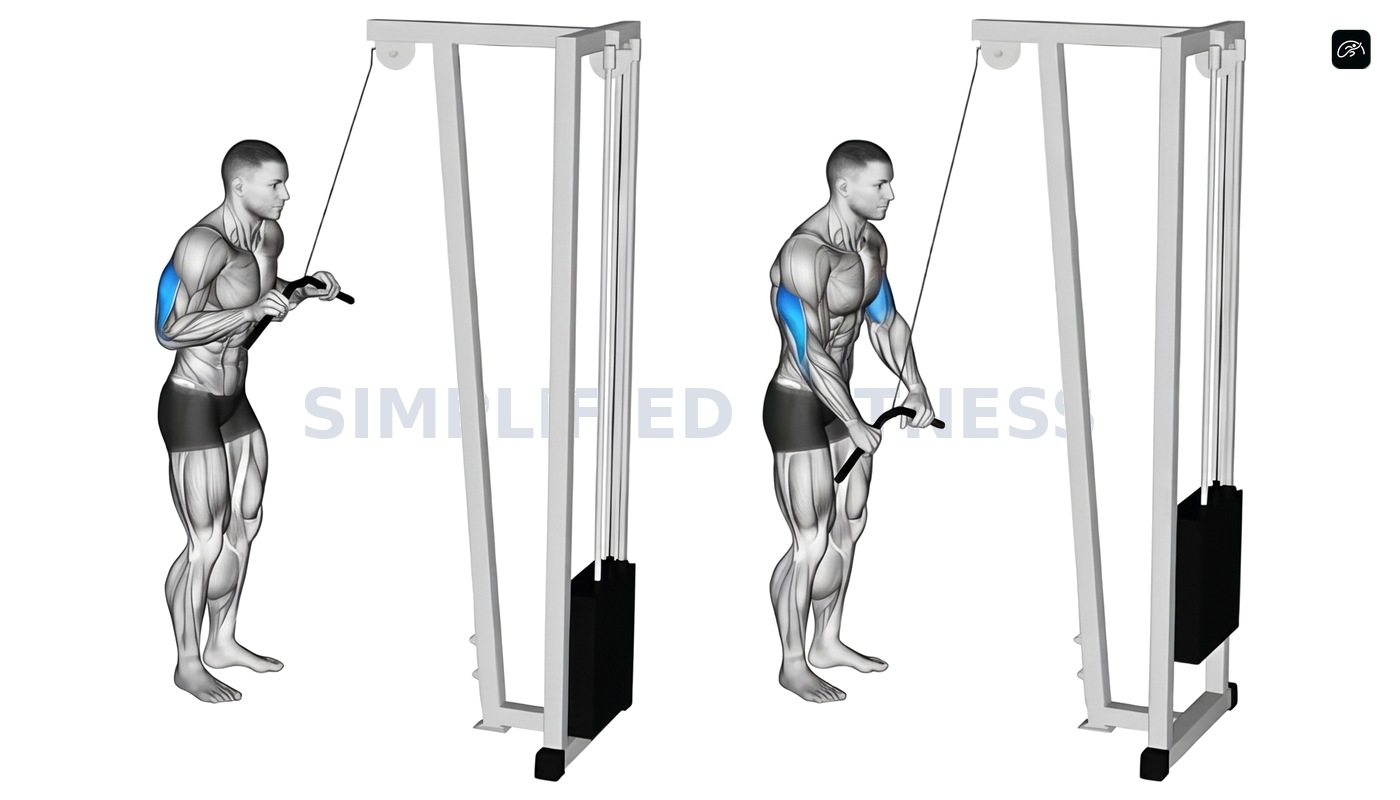 Straight Bar
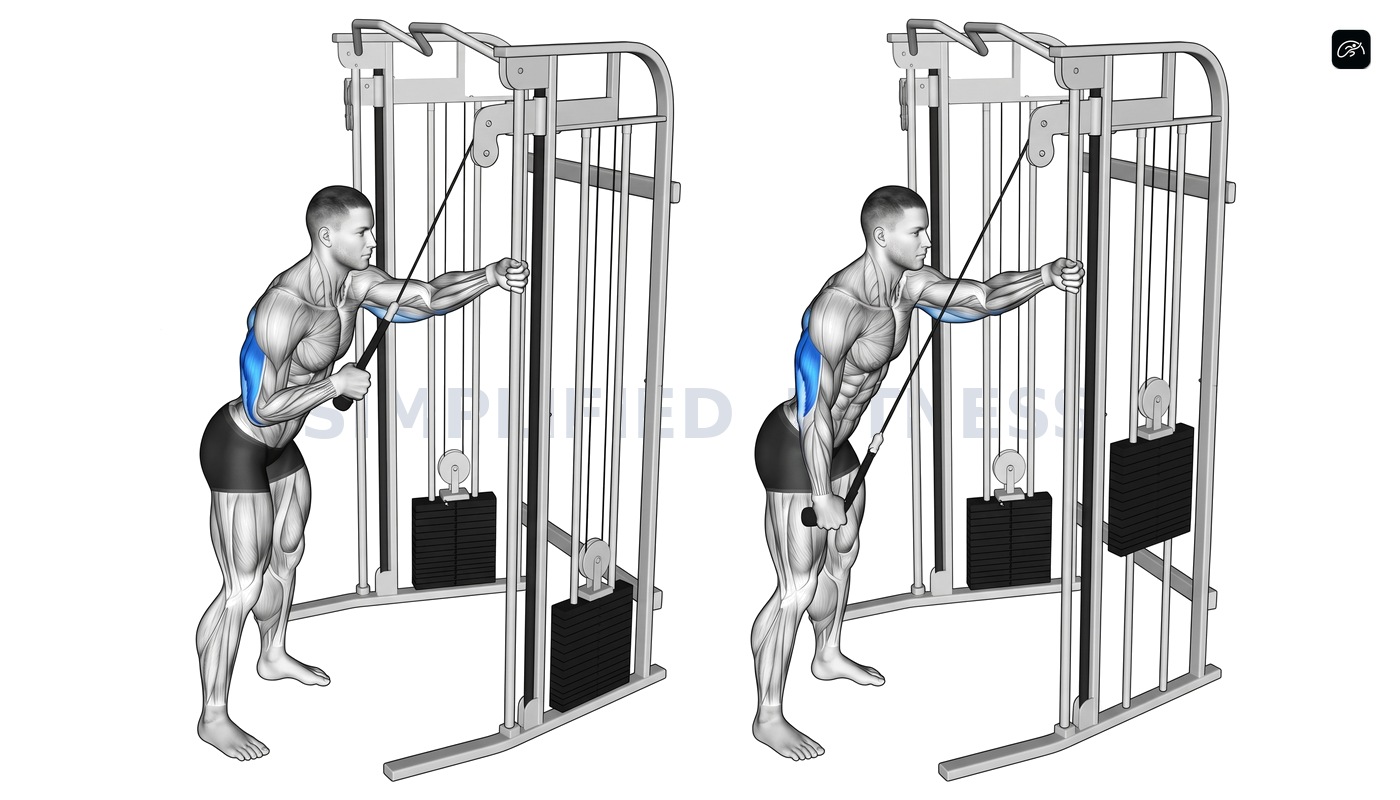 Single-Arm
6 · Triceps (Lateral & Medial Heads)
Tricep Pushdown
Elbow Extension (Neutral Shoulder)
Sets for Tricep Pushdown Set Reps Effort 1 6-8 1-2 RIR 2 6-8 0-1 RIR What It Is & Mechanics
Isolates the monoarticular lateral and medial triceps heads through direct elbow extension, loading the contracted and mid ranges with zero shoulder fatigue.
Key Execution Cues
- Pin elbows tight to sides and depress scapulae down away from ears
- Press straight down to full elbow lockout and squeeze for 1 second
- Allow forearms to rise above 90° for full range of motion while upper arms stay fixed
- Choose straight bar, rope, or single-cable handle based on wrist comfort
AlternativesSingle-Arm Cable PushdownRope Tricep PushdownV-Bar Tricep PushdownStraight Bar Pushdown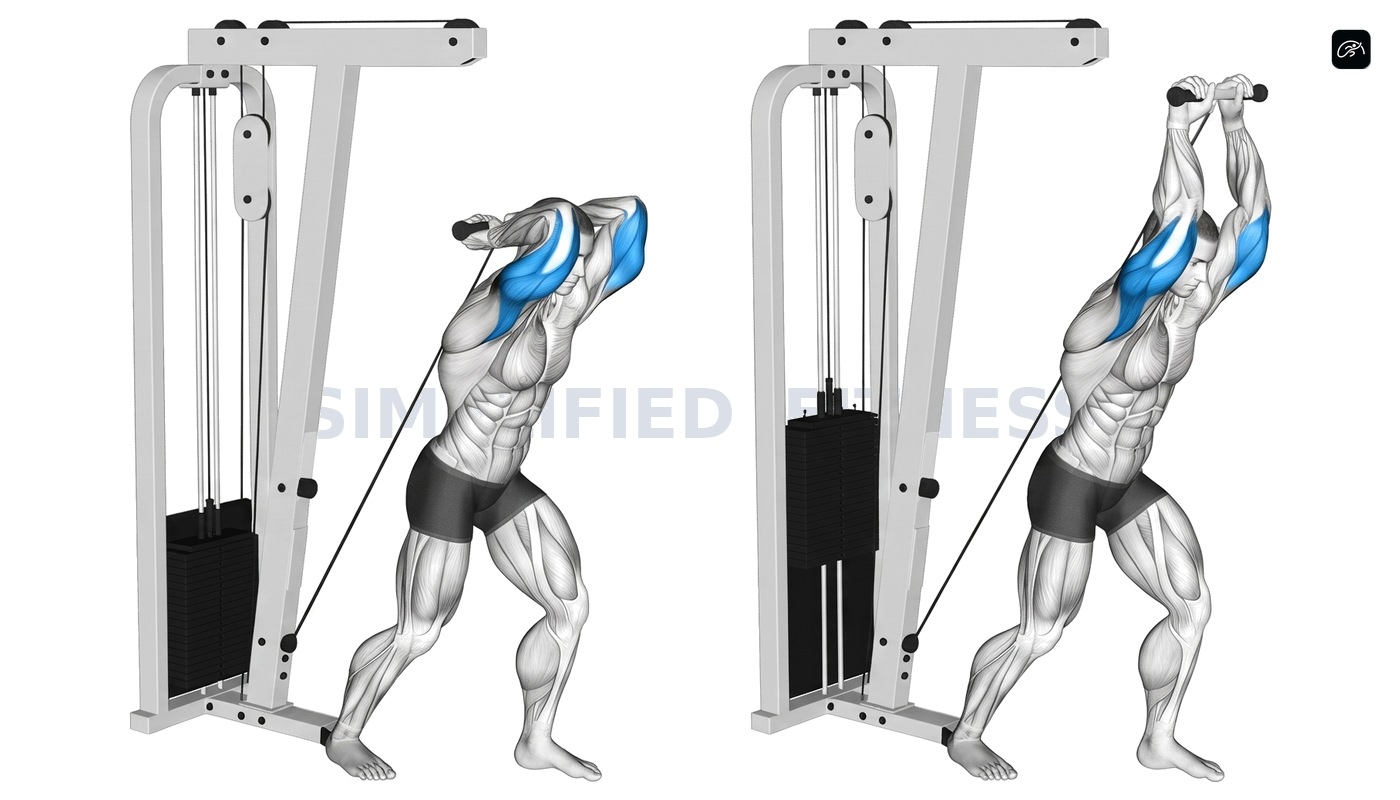 Cable Overhead
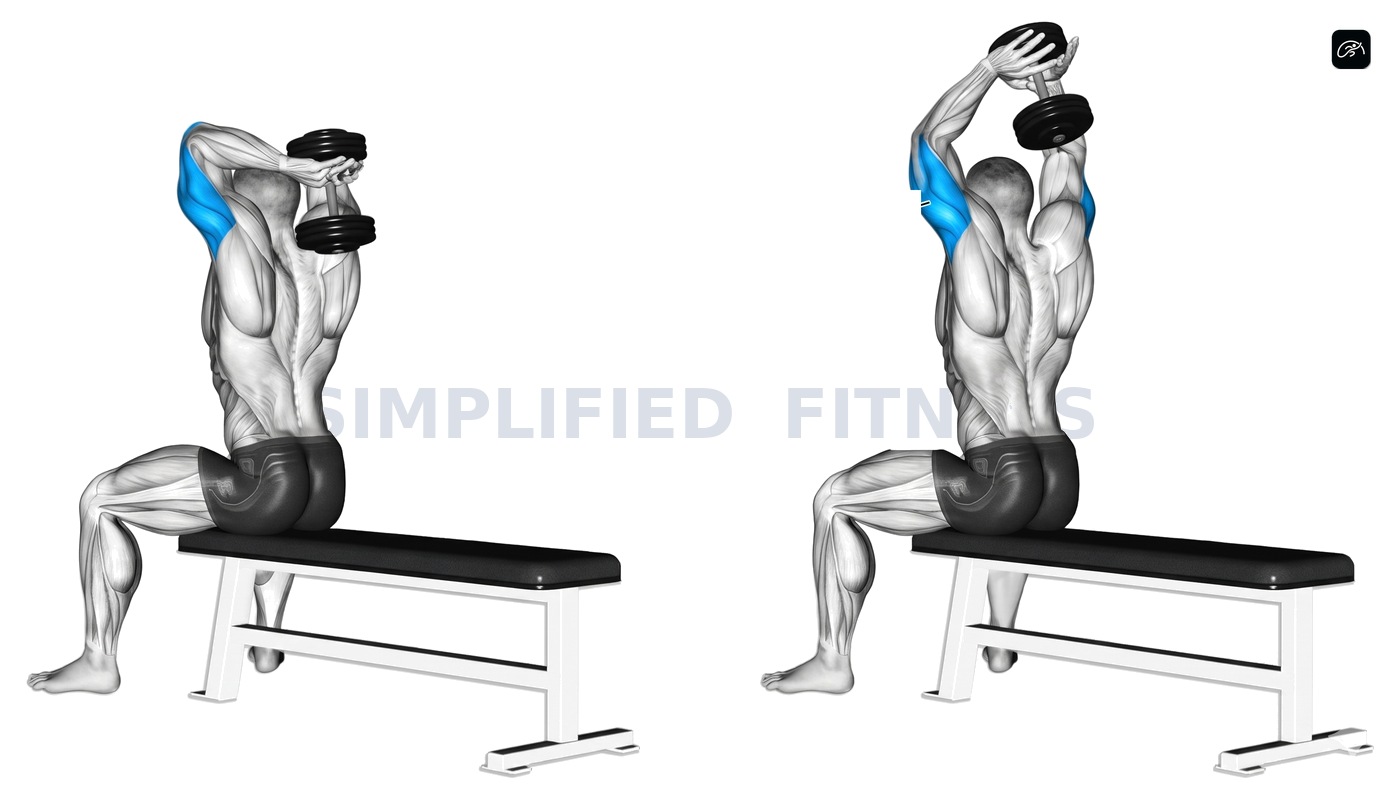 Dumbbell Overhead
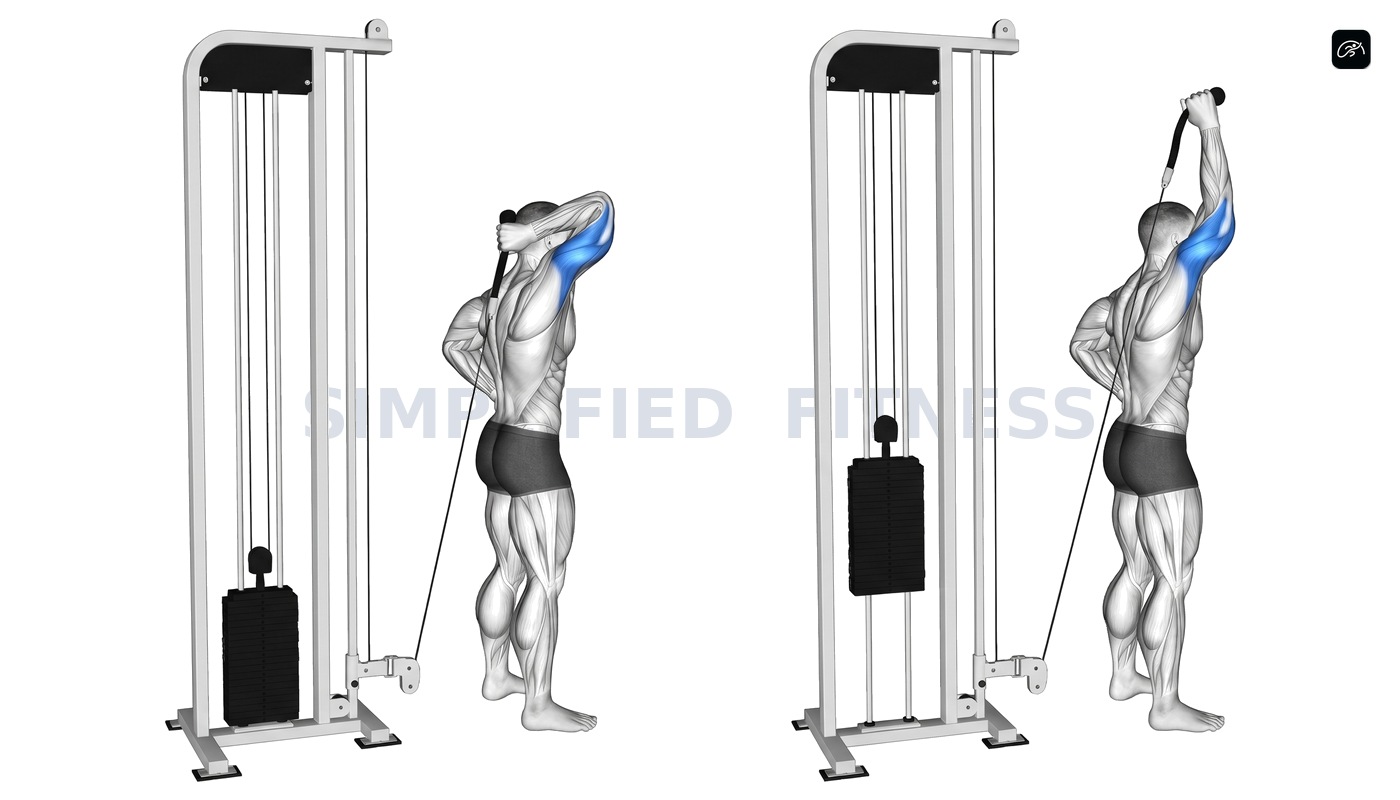 Single-Arm Cable
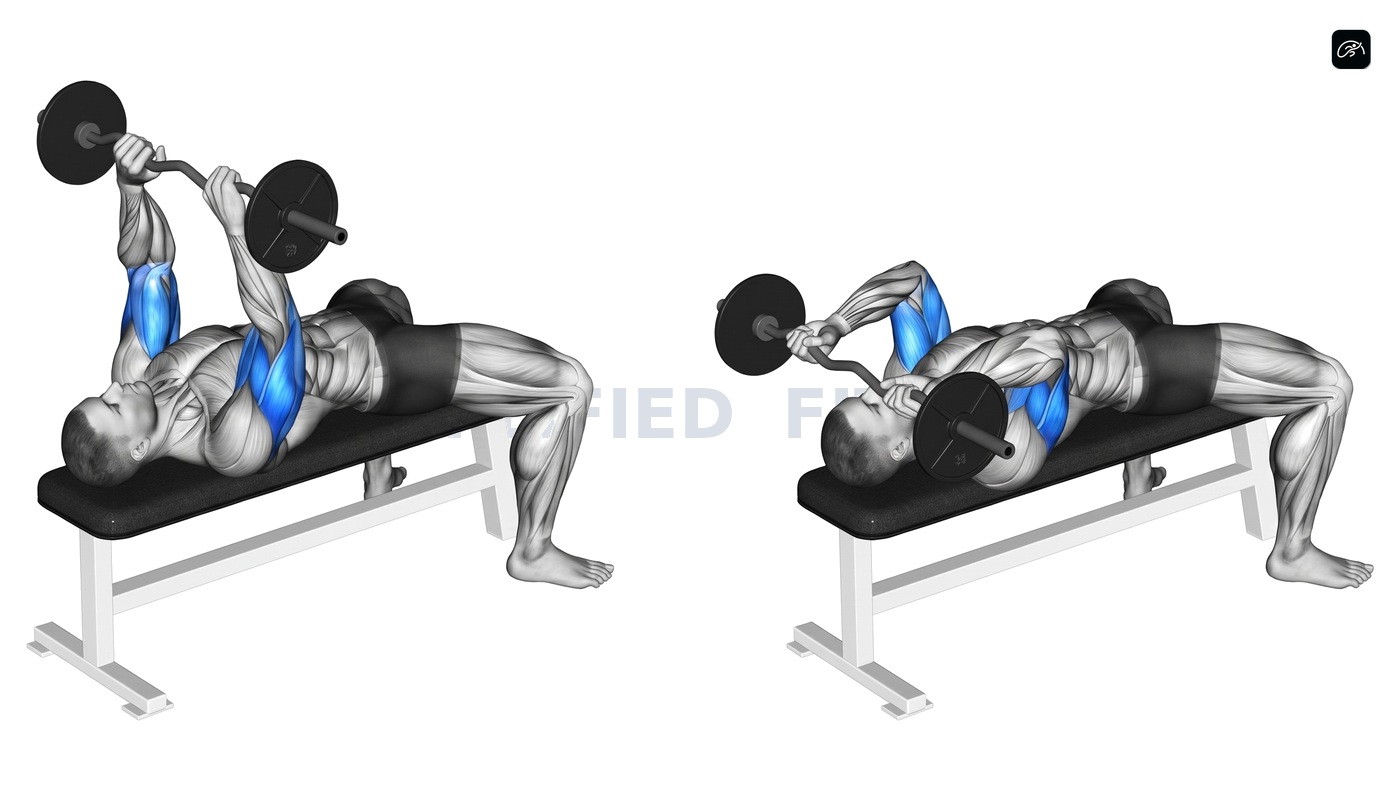 Skull Crusher
7 · Triceps (Long Head (Lengthened Overload))
Overhead Cable Tricep Extension
Overhead Elbow Extension
Sets for Overhead Cable Tricep Extension Set Reps Effort 1 8-12 1-2 RIR 2 8-12 0-1 RIR What It Is & Mechanics
Elevates upper arms overhead to stretch the triceps long head across the shoulder joint, inducing significantly greater hypertrophy through lengthened overload.
Key Execution Cues
- Lean torso 20-30° forward to allow a continuous cable line-of-pull overhead
- Keep upper arms fixed beside ears; bend strictly at the elbow joint
- Allow handles to travel deeply behind head until forearms contact biceps
- Extend smoothly outward and forward without shrugging traps or flaring elbows
AlternativesDumbbell Overhead Tricep ExtensionSingle-Arm Overhead Cable ExtensionDual-Rope Overhead ExtensionIncline Dumbbell Overhead ExtensionSkull Crusher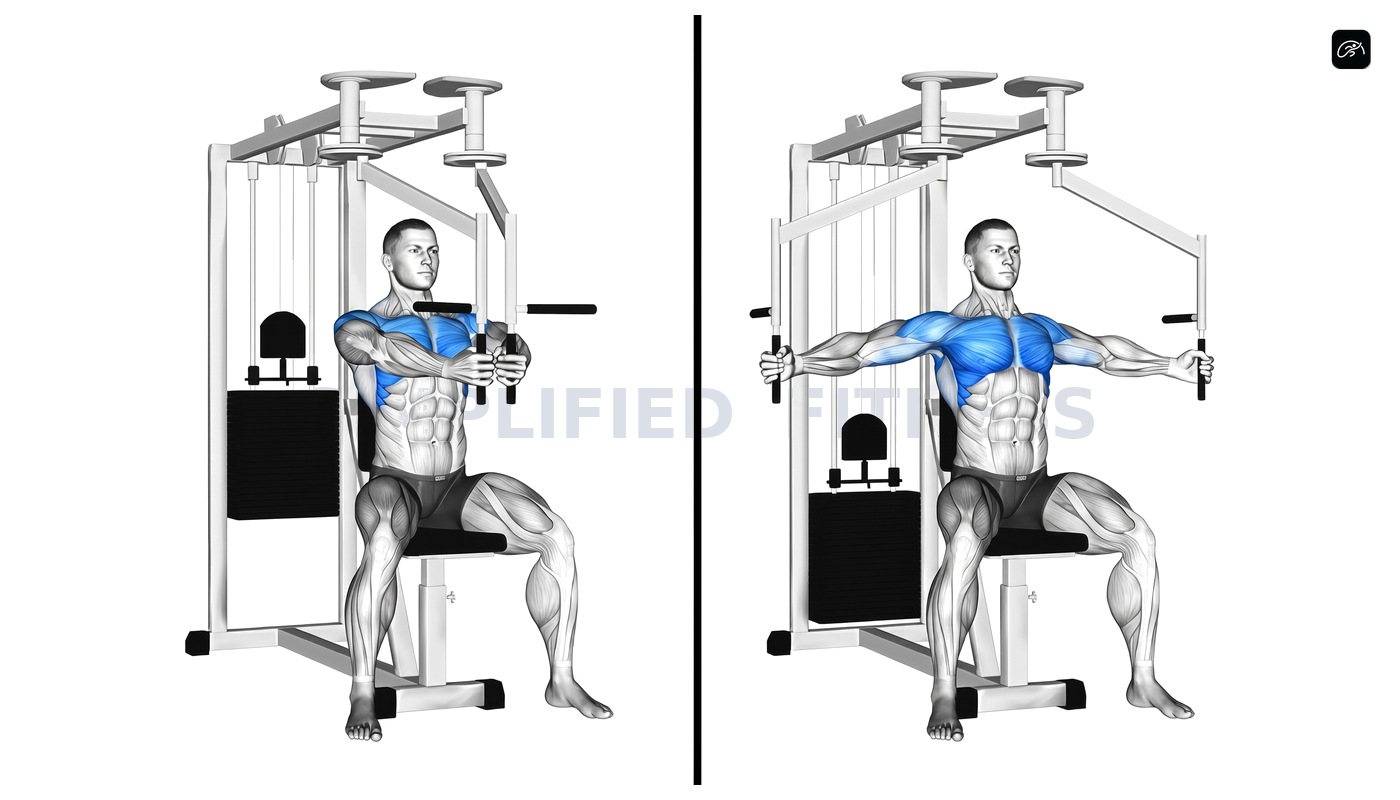 Pec Dec Machine
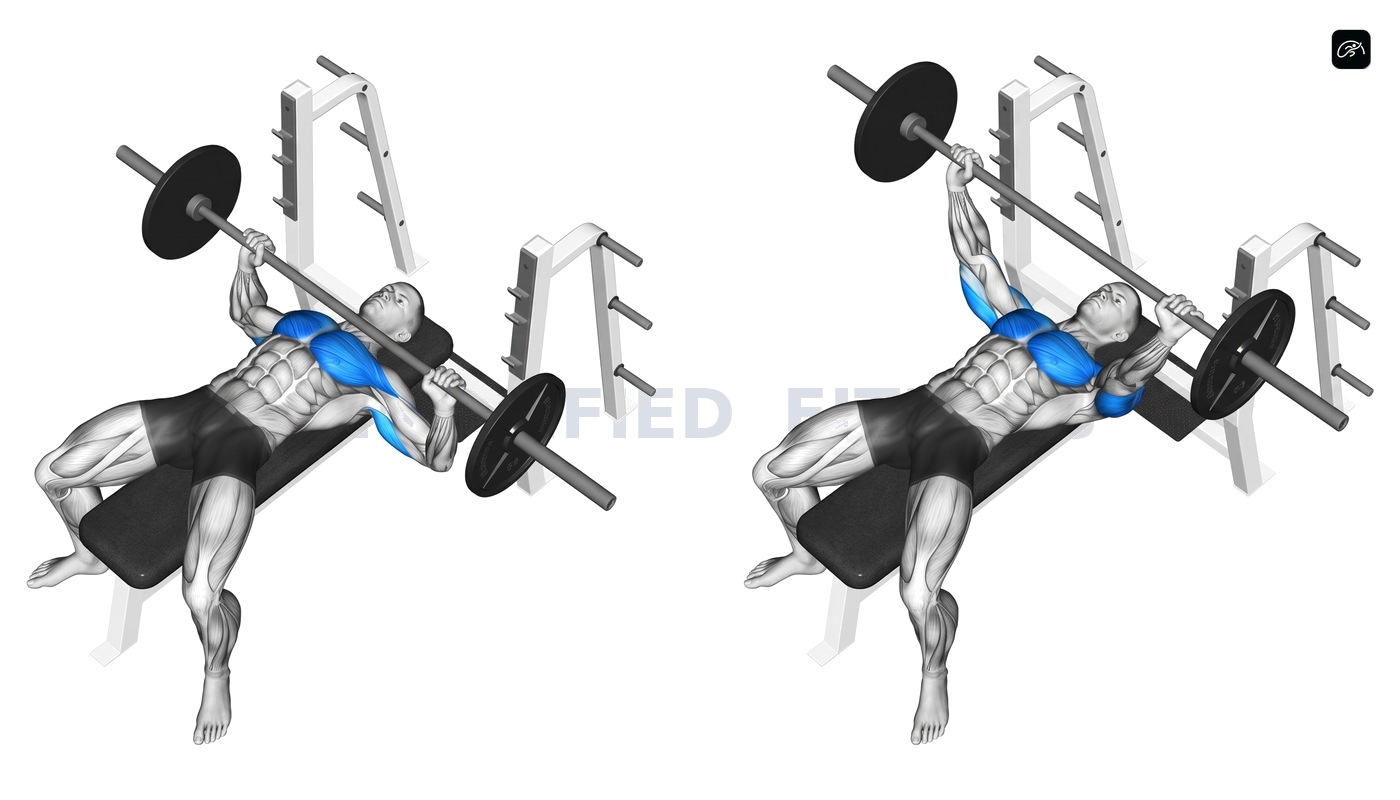 Flat Barbell Bench Press
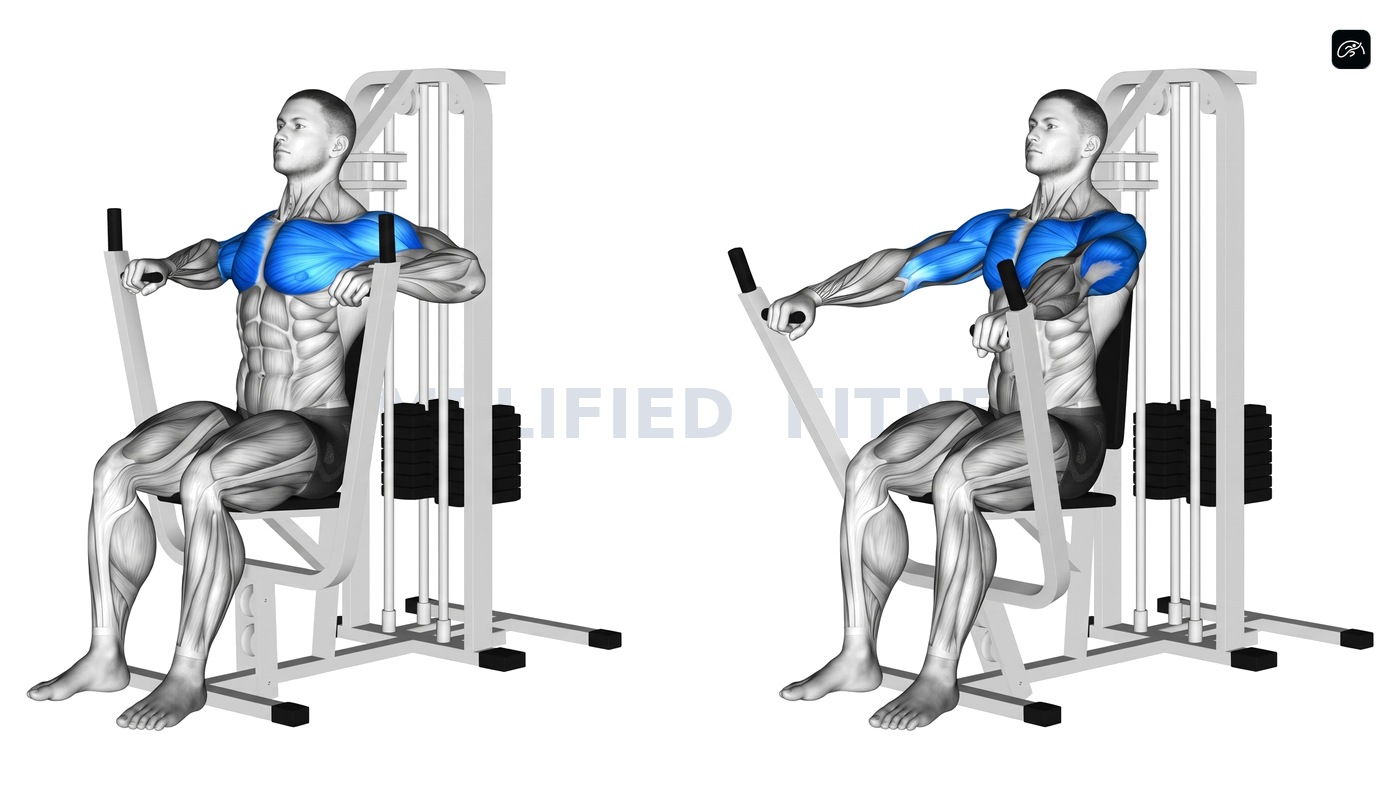 Chest Press Machine
8 · Chest (Sternal-Costal Head)
Pec Dec Fly
Glenohumeral Horizontal Adduction
Sets for Pec Dec Fly Set Reps Effort 1 6-8 1-2 RIR 2 6-8 0 RIR What It Is & Mechanics
Direct horizontal shoulder adduction in the transverse plane. Sharing the identical primary movement pattern with flat barbell and dumbbell pressing, rotary cam resistance provides continuous tension across the full chest excursion, particularly in the deep stretch.
Key Execution Cues
- Set handles level with mid-chest and keep scapulae pinned back against the pad
- Pause for 1 second at full stretch to eliminate elastic rebound and standardize reps
- Think of driving your inner biceps together across your sternum, not your hands
- Maintain a soft, fixed bend in elbows throughout the entire set
AlternativesFlat Barbell Bench PressFlat Dumbbell PressChest Press MachineChest Dips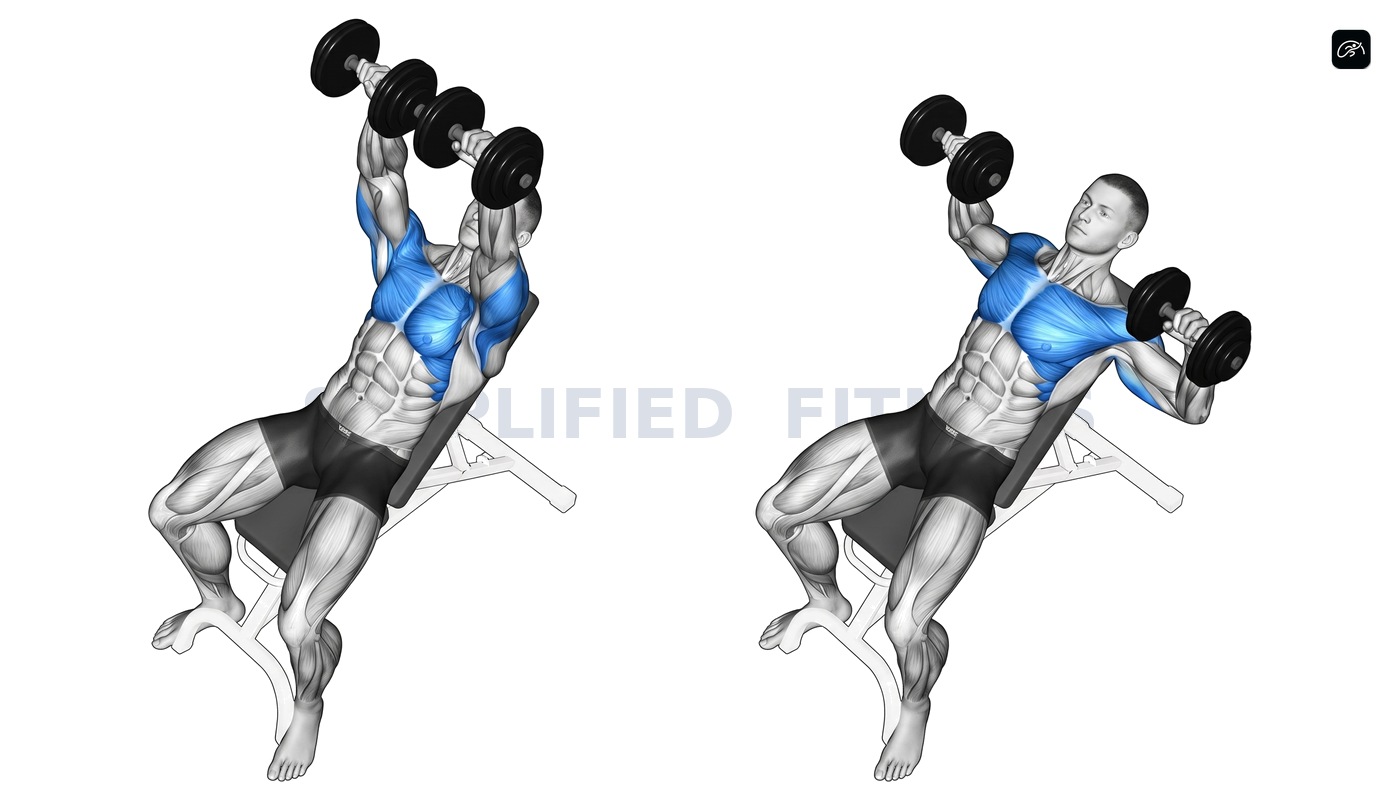 Dumbbell Press
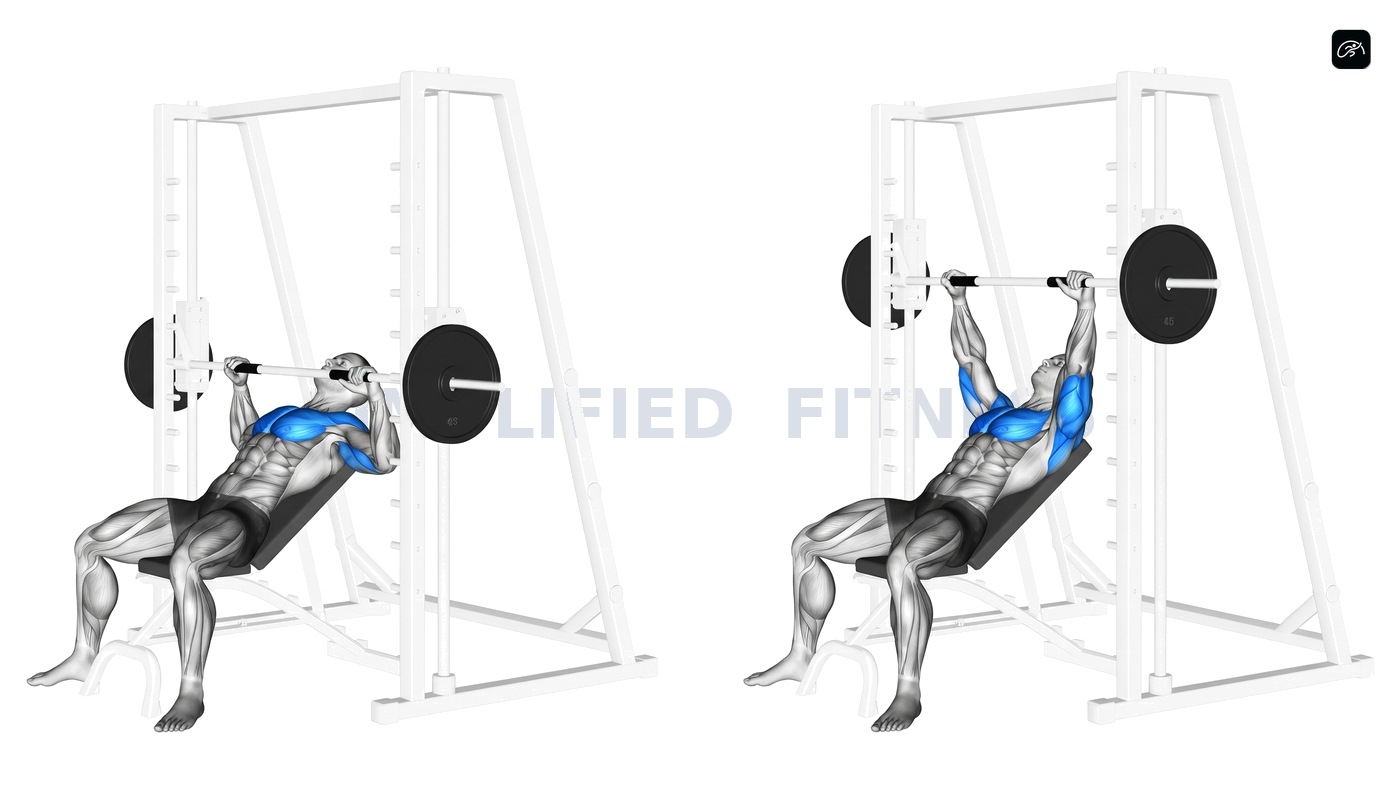 Barbell Press
9 · Chest (Clavicular (Upper) Head)
Incline Dumbbell Press
Shoulder Flexion + Adduction
Sets for Incline Dumbbell Press Set Reps Effort 1 6-8 1-2 RIR 2 6-8 1-2 RIR What It Is & Mechanics
Biases the clavicular head of the pectoralis major through combined shoulder flexion and adduction with a natural converging dumbbell path.
Key Execution Cues
- Set bench to 25-35° incline to maximize clavicular recruitment over anterior deltoids
- Keep elbows angled 30-45° relative to torso in the scapular plane
- Lower under control until dumbbells touch outside upper chest for a deep stretch
- Press up and slightly inward in a smooth arc without clacking weights together
AlternativesIncline Machine Chest PressIncline Barbell PressIncline Smith Machine PressLow-to-High Cable Fly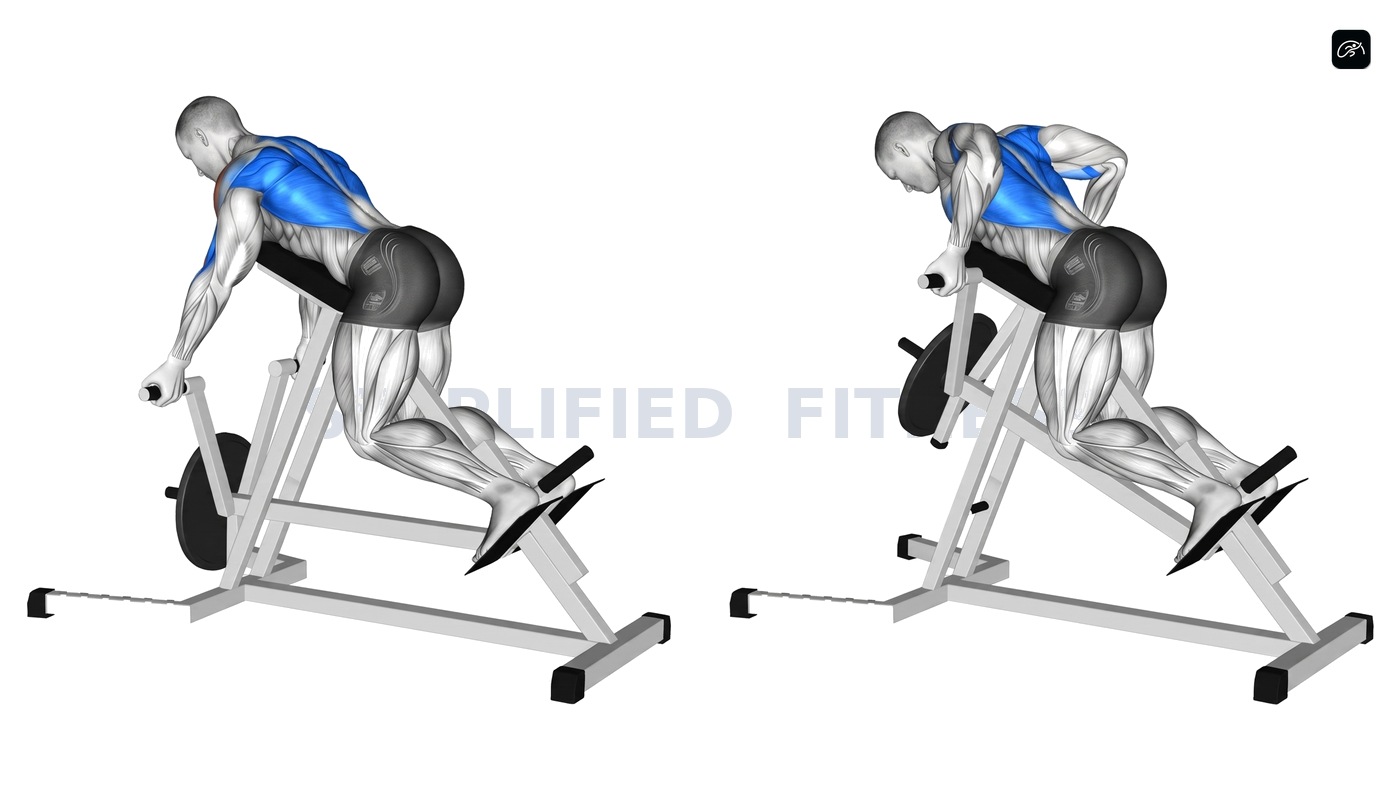 T-Bar Row
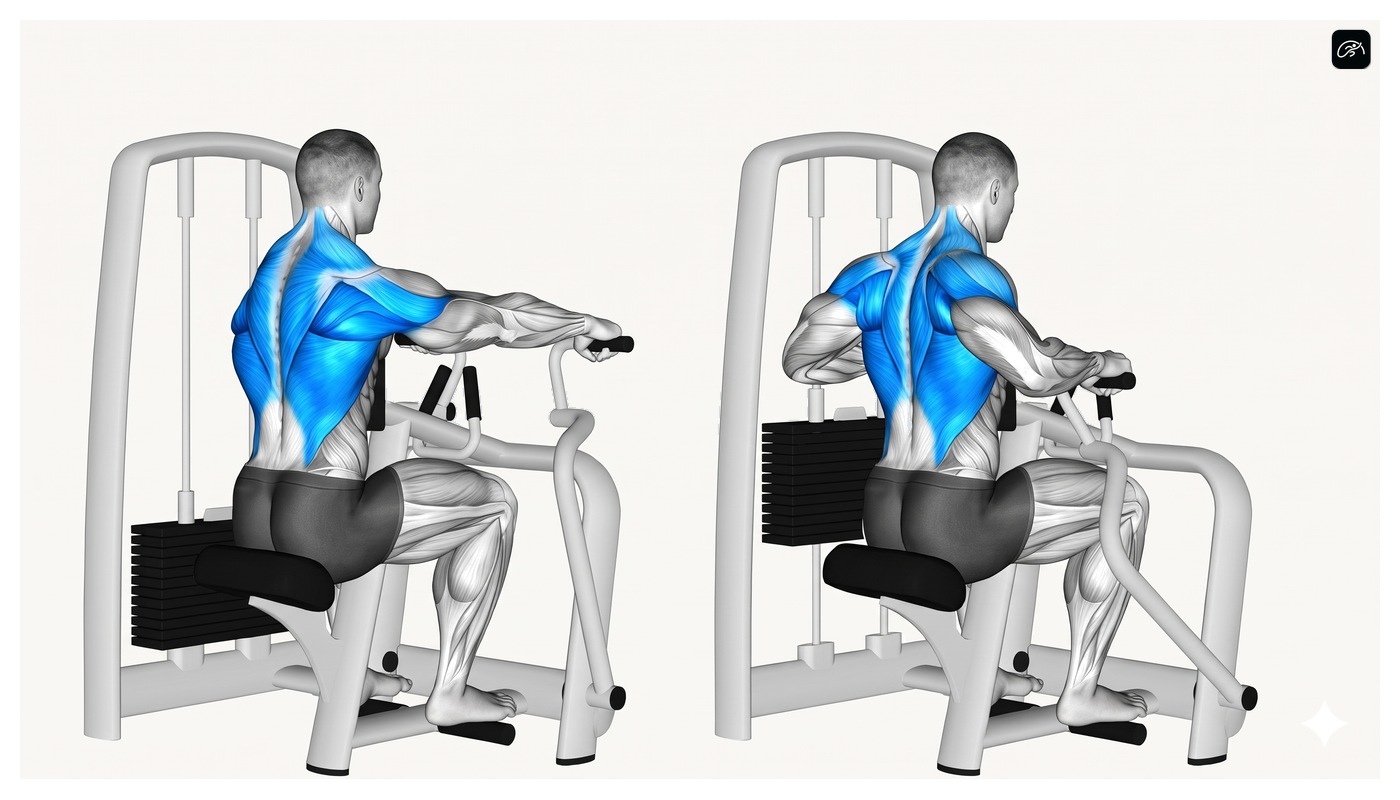 Wide Grip Machine Row
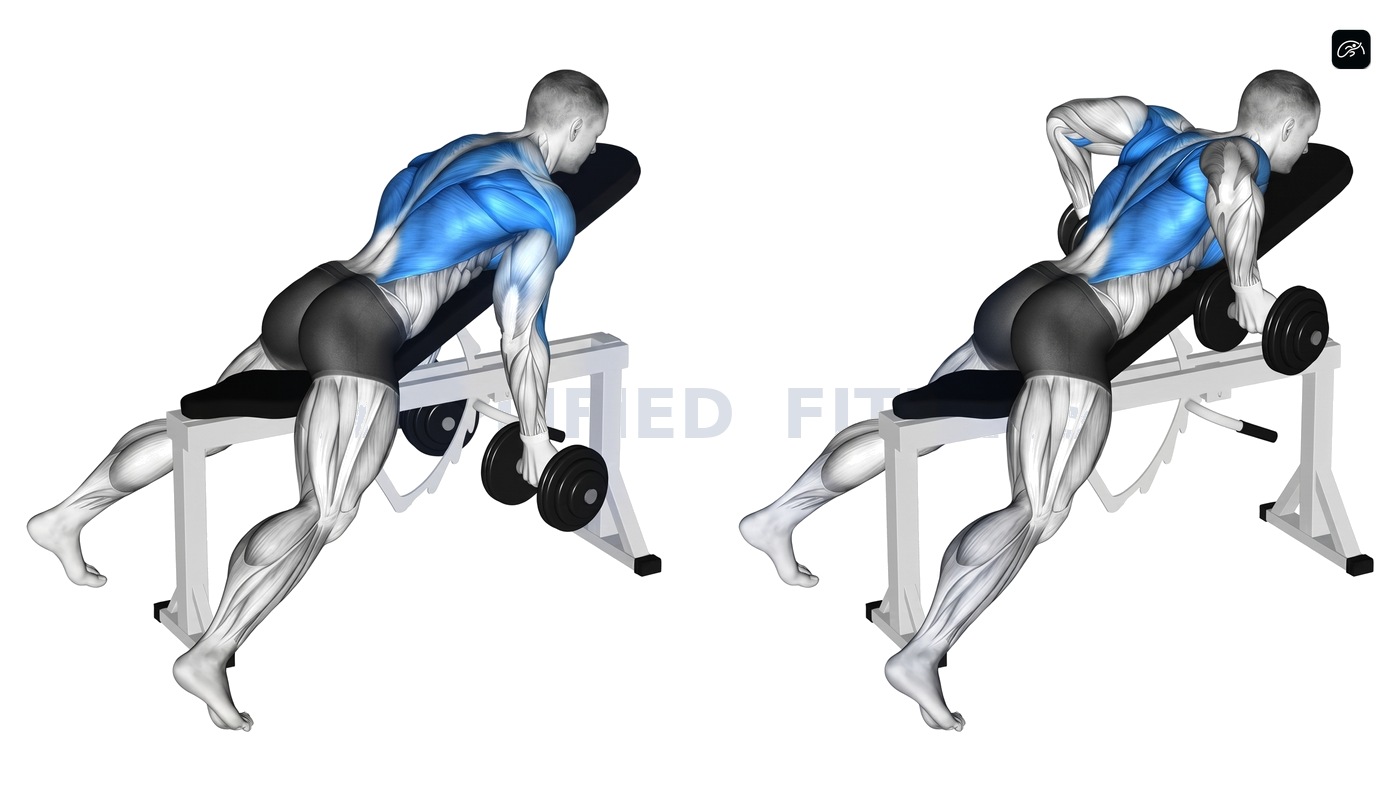 Dumbbell Row
10 · Upper Back (Mid/Lower Traps, Rhomboids, Rear Delts)
Chest-Supported T-Bar Row
Horizontal Shoulder Abduction
Sets for Chest-Supported T-Bar Row Set Reps Effort 1 6-8 1-2 RIR 2 6-8 1-2 RIR What It Is & Mechanics
Horizontal rowing with flared elbows targets rhomboids, mid/lower traps, and rear delts while chest support eliminates spinal fatigue and momentum.
Key Execution Cues
- Flare elbows out 45-75° from torso to bias upper back musculature over lats
- Let shoulder blades spread apart around ribcage at bottom stretch for full excursion
- Keep chest pinned firmly to pad without arching lower back off the bench
- Drive elbows out and back, squeezing shoulder blades together for 1 full second
AlternativesChest-Supported Dumbbell RowSeated Cable Wide-Grip RowWide-Grip Machine RowMeadows Row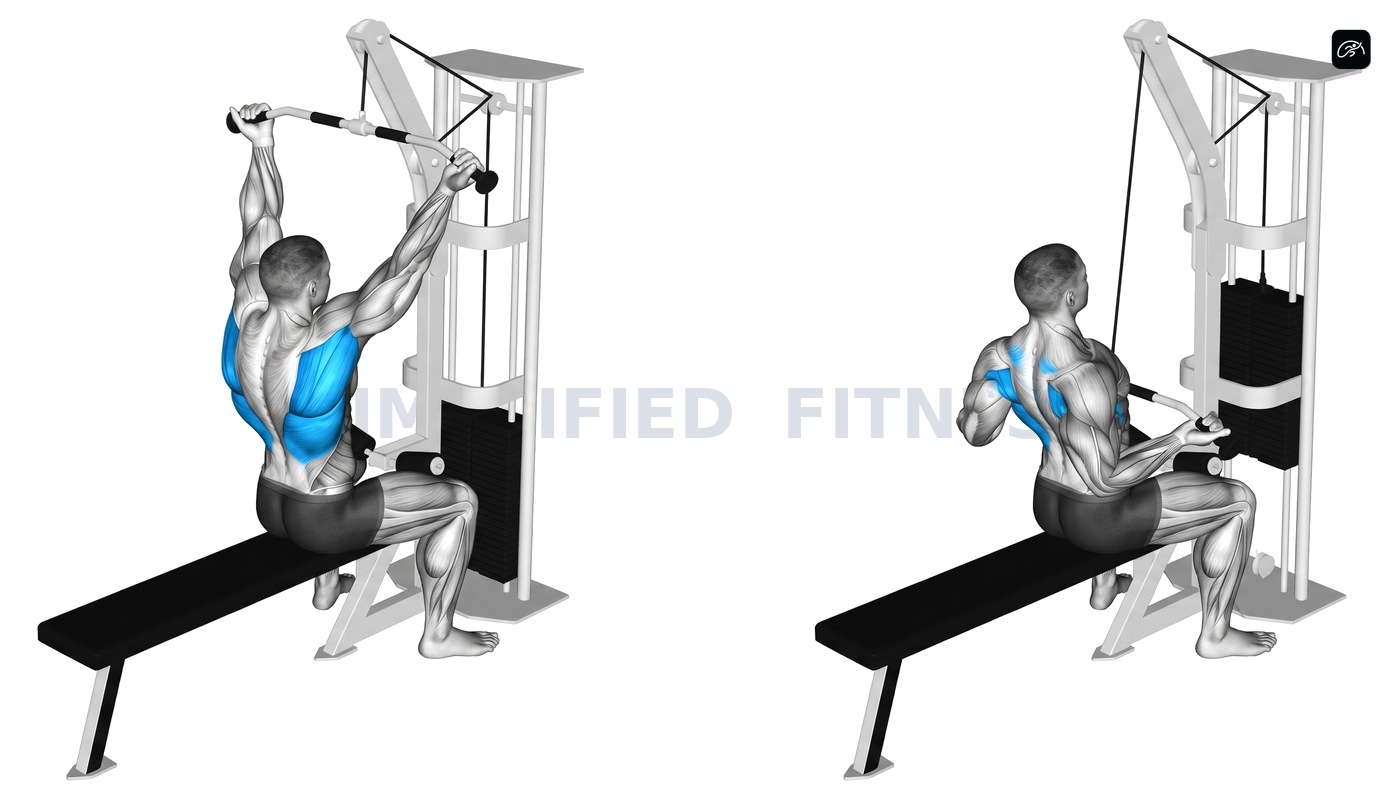
11 · Lats (Costal & Thoracic Fibers)
Wide-Grip Lat Pulldown
Frontal Plane Shoulder Adduction
Sets for Wide-Grip Lat Pulldown Set Reps Effort 1 6-8 0-1 RIR What It Is & Mechanics
Trains the costal and thoracic fibers of the latissimus dorsi through frontal-plane shoulder adduction, optimizing mechanical leverage for back width.
Key Execution Cues
- Sit tall with a very slight natural arch; avoid excessive backward leaning
- Drive elbows straight down toward hips rather than yanking the bar with biceps
- Pull to chin or collarbone level to avoid unnecessary internal shoulder rotation
- Take 2-3 seconds to return under control to full overhead lat stretch
AlternativesWide-Grip Pull-UpsNeutral-Grip Lat PulldownSingle-Arm Lat Pulldown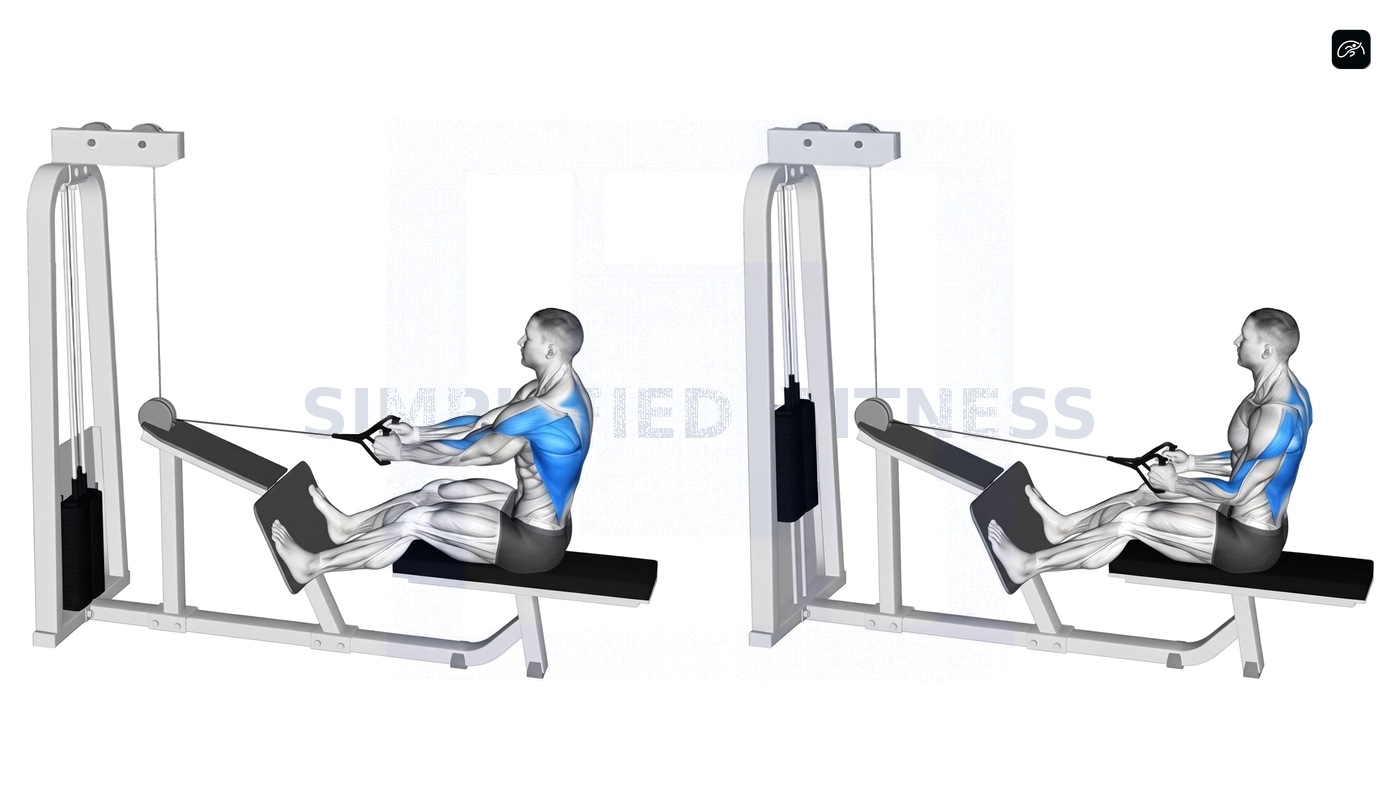 Cable Seated Row
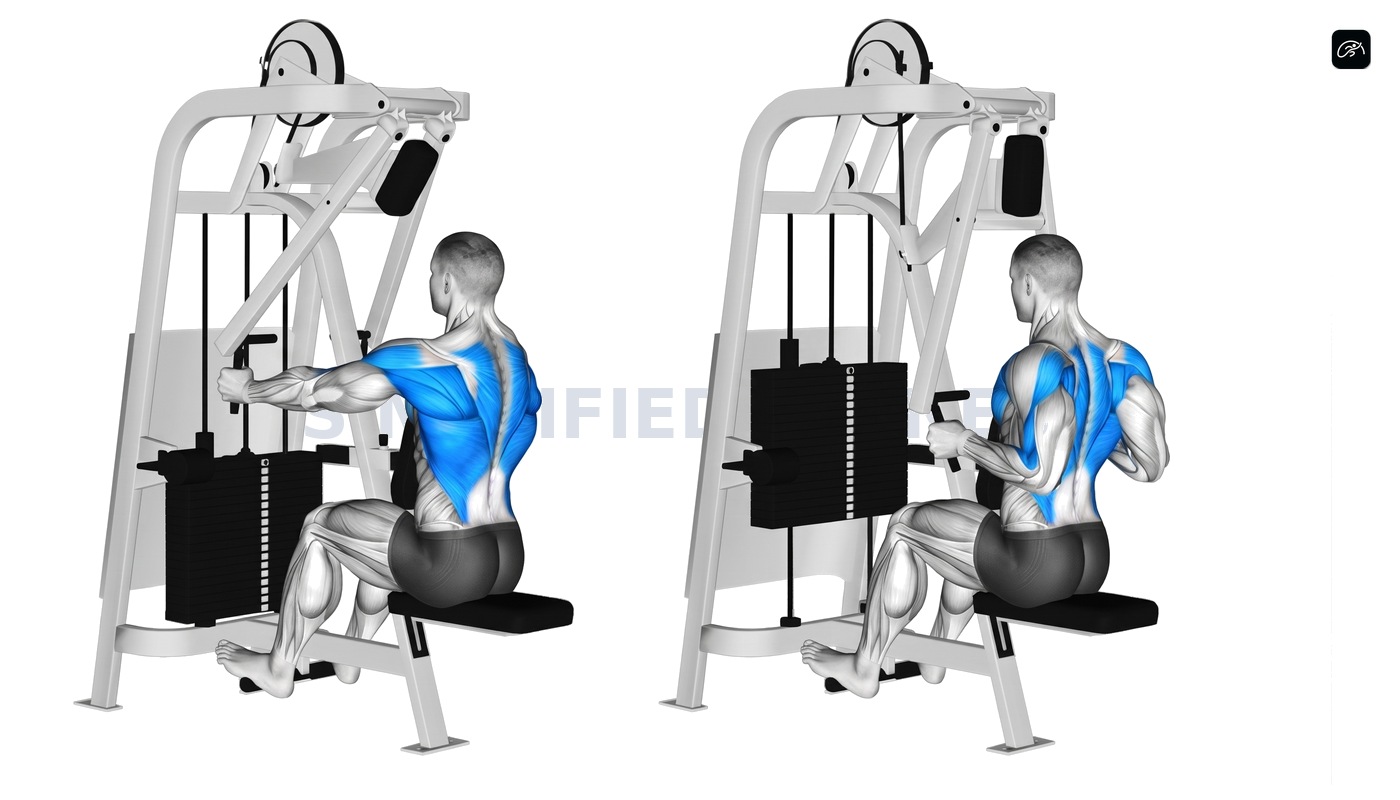 Machine Row
12 · Lats (Iliac & Lumbar Fibers)
Close-Grip Seated Row
Sagittal Plane Shoulder Extension
Sets for Close-Grip Seated Row Set Reps Effort 1 8-12 0-1 RIR What It Is & Mechanics
Biases the lower iliac and lumbar latissimus dorsi fibers through sagittal-plane shoulder extension, keeping continuous tension throughout the entire stroke without lower-back spinal fatigue.
Key Execution Cues
- Keep elbows grazed tightly along ribcage throughout the pull
- Stop pulling once elbows align with torso; pulling further back reduces lat tension
- Allow scapulae to glide forward into a stretch without rounding lower back
- Maintain an upright chest and eliminate backward torso momentum
AlternativesSingle-Arm Lat PulldownChest-Supported Machine RowStraight-Arm Cable Lat PushdownHalf-Kneeling Single-Arm Cable Row
How to run this plan
Run Upper Body (Day 1), Lower Body (Day 2), rest (Day 3), Upper Body (Day 4), Lower Body (Day 5), followed by two rest days. This classic 4-day Upper/Lower frequency stimulates every major muscle group twice per week while providing 72 hours of recovery between sessions for each body half.
That lands most muscles in the 6-10 hard sets per session (12-16 weekly sets) range that captures optimal hypertrophic stimulus for natural lifters without accumulating excessive axial or systemic fatigue.
"RIR" means reps in reserve: how many more clean reps you could have done. Use the RIR load calculator to pick weights, and add a rep or a little weight each week while keeping the same effort. When progress stalls for two to three weeks across several lifts, take a lighter deload week.