Upper / Lower Split · intermediate
Lower Body Workout
A high stimulus-to-fatigue lower body session designed on regional hypertrophy science and stretch-mediated growth. Covers knee extension, knee flexion, hip hinging, calves, adductors, and targeted abdominal work across 16 hard working sets.
- Exercises
- 8 exercises
- Working sets
- 16 working sets
- Duration
- 55-70 min
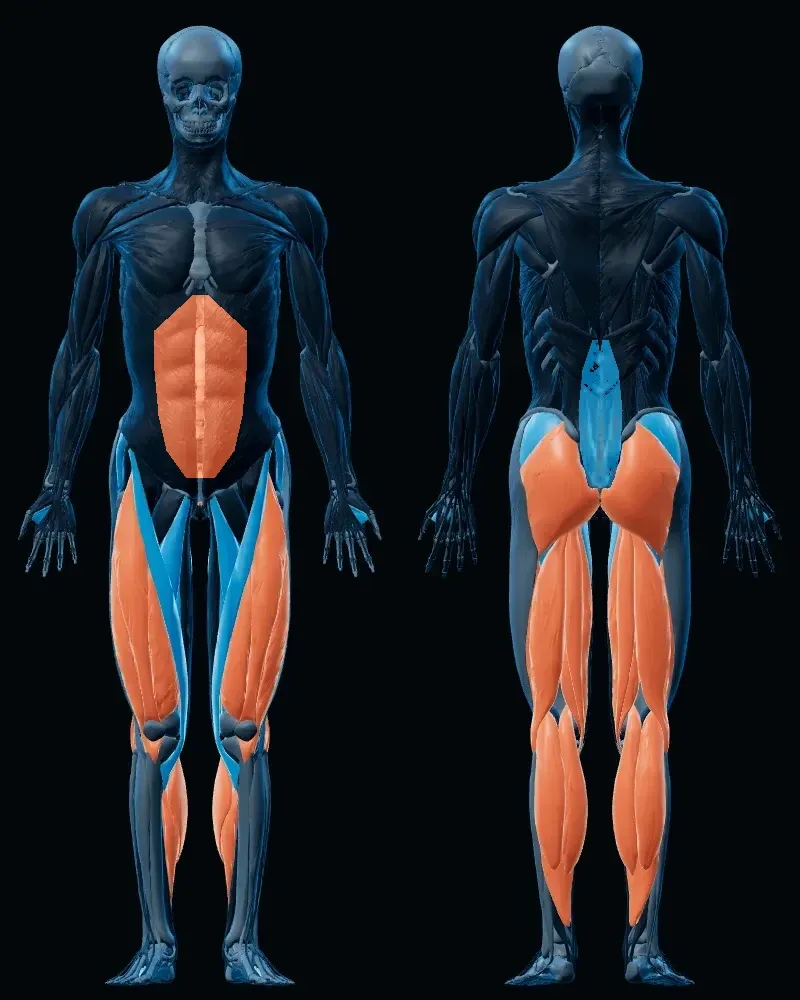
Muscles worked: lower body
Main movers: quads, hamstrings, glutes, calves and abs
Assisting: lower back and adductors
Exercise Routine
8 movements · 16 working sets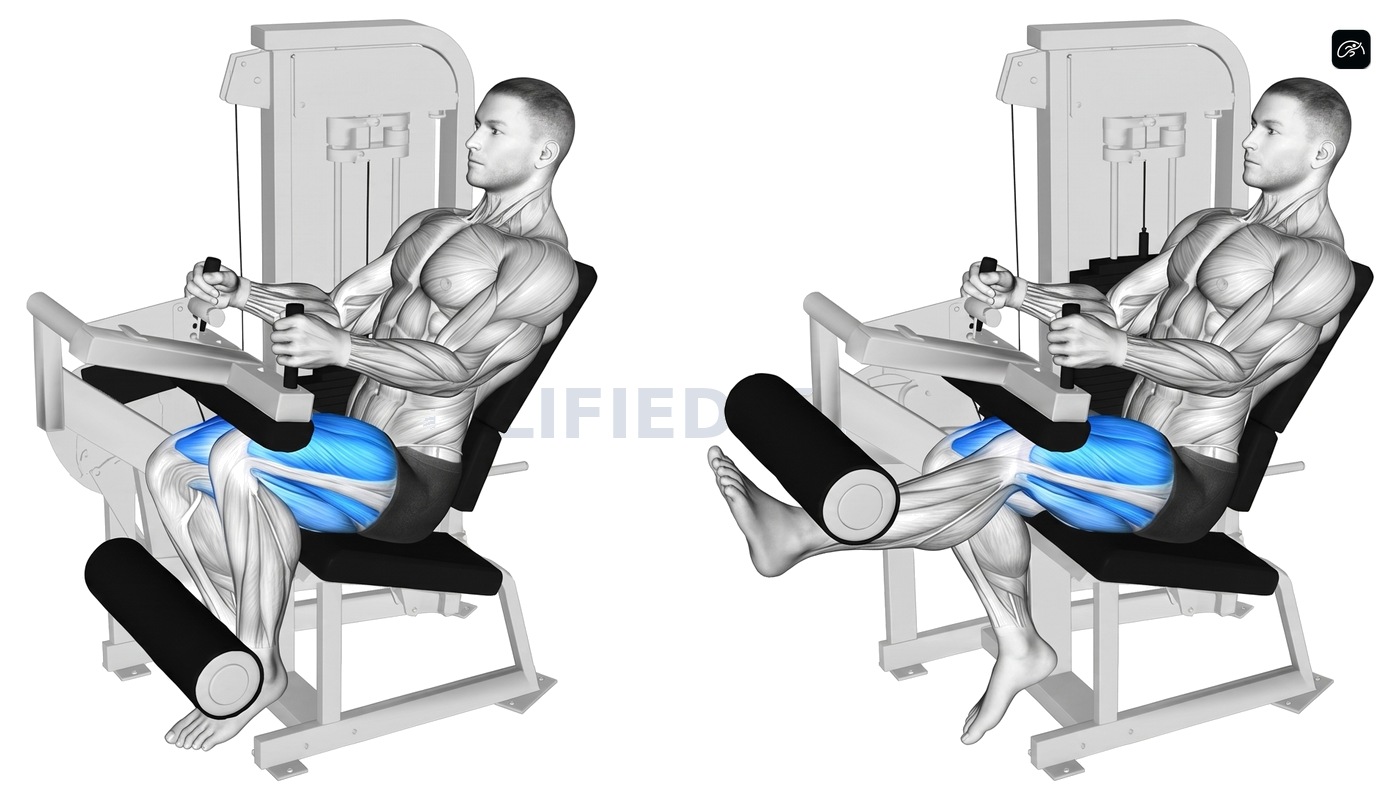
1 · Quads (Rectus Femoris (Biarticular Isolation))
Leg Extensions
Open-Kinetic-Chain Knee Extension
Sets for Leg Extensions Set Reps Effort 1 8-10 1-2 RIR 2 8-10 0 RIR What It Is & Mechanics
Direct open-kinetic-chain knee extension isolating the biarticular rectus femoris, which remains under-stimulated in multi-joint compound squatting.
Key Execution Cues
- Recline back pad slightly to 60-70° hip angle to put rectus femoris on optimal stretch
- Grip side handles tightly and pull upward to keep pelvis locked firmly to seat
- Hold full extension for a clean 0.5-1s pause without kicking or using momentum
- Lower weight under 2-3s eccentric resistance to the starting position
AlternativesSingle-Leg Knee ExtensionCable Leg ExtensionReverse Nordic CurlSissy Squat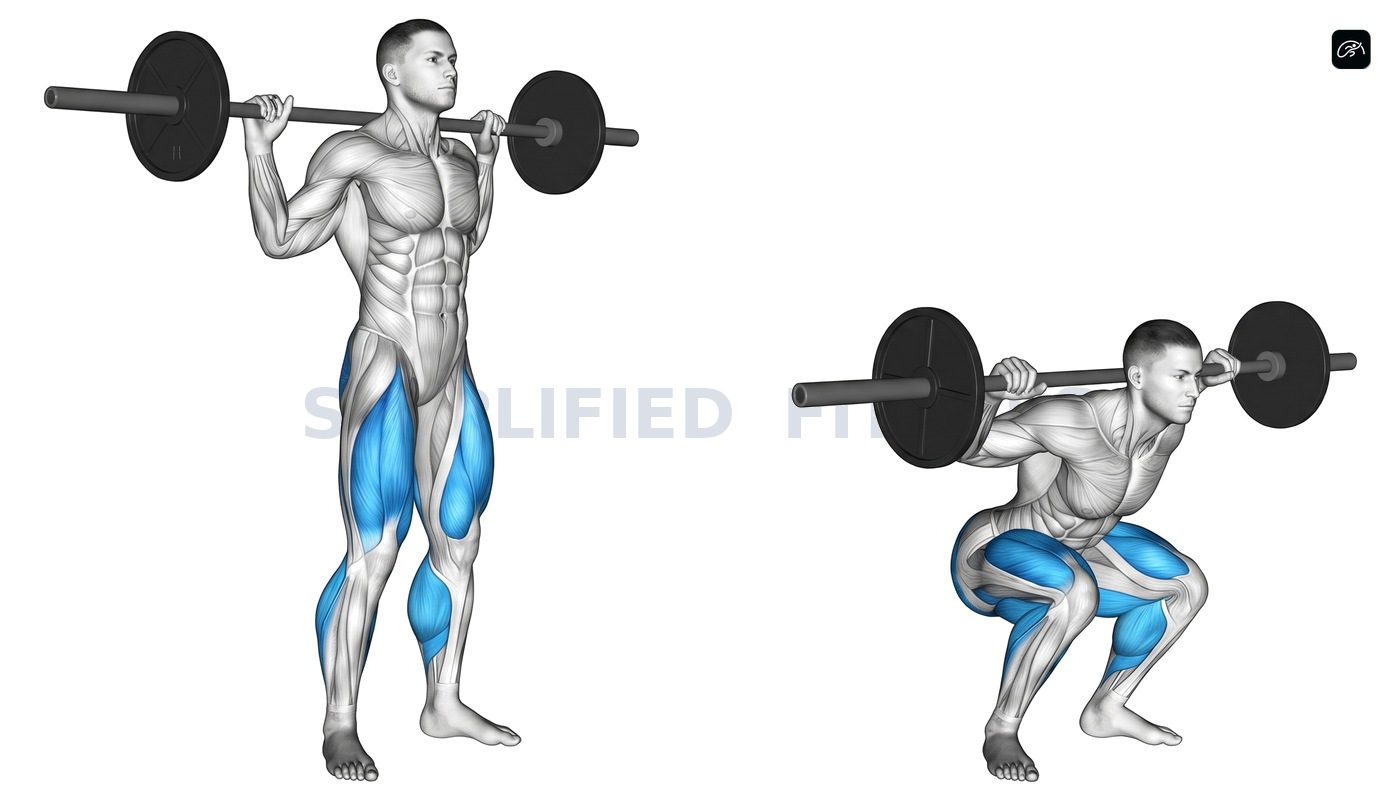 Barbell Back Squat
 Leg Press
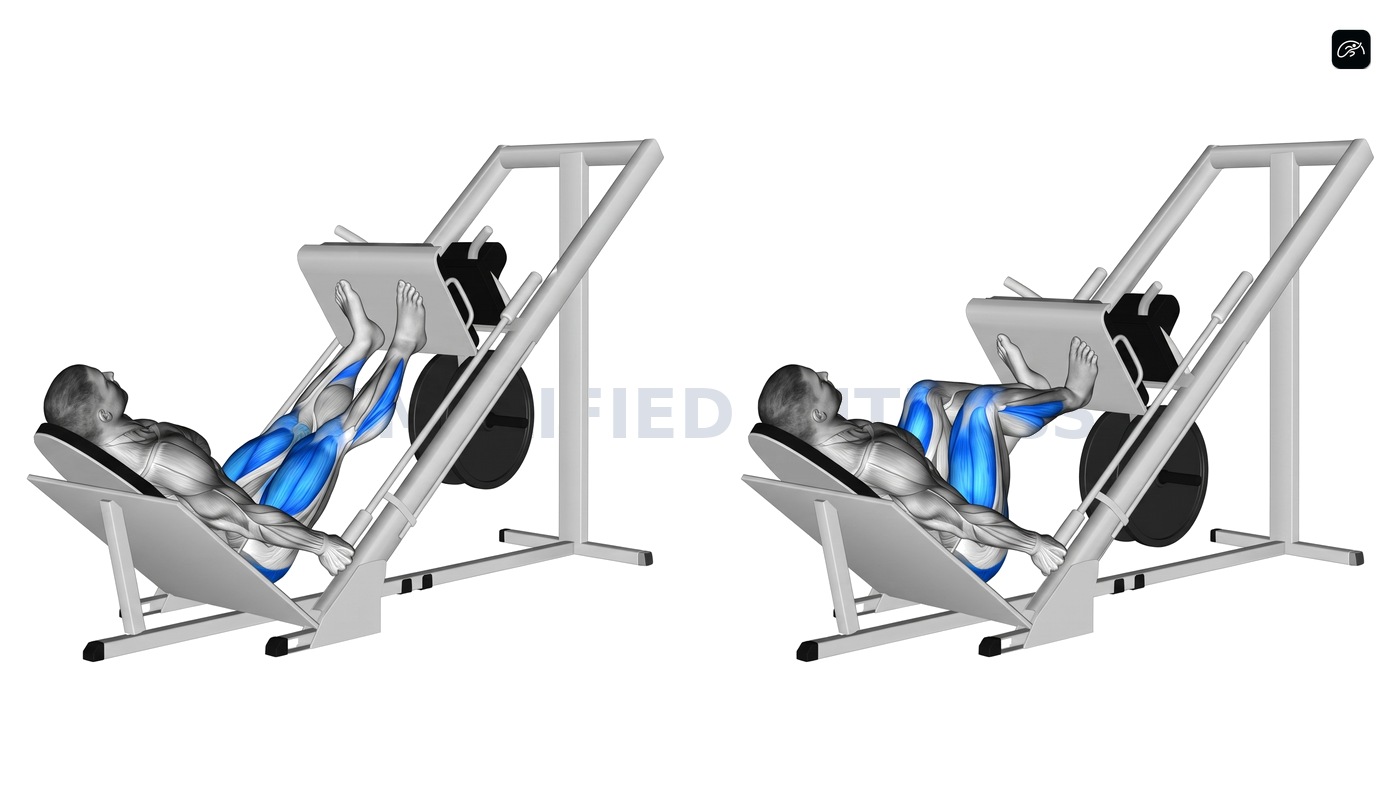
2 · Quads (Vastus Lateralis, Medialis, Intermedius & Glutes)
Squat Pattern (Barbell Back Squat / Leg Press)
Closed-Kinetic-Chain Knee & Hip Extension
Sets for Squat Pattern (Barbell Back Squat / Leg Press) Set Reps Effort 1 6-8 1-2 RIR 2 6-8 1-2 RIR What It Is & Mechanics
Heavy closed-kinetic-chain compound driving massive hypertrophy across the vastus quad heads and gluteus maximus through deep knee and hip flexion.
Key Execution Cues
- Descend under a strict 2-3s tempo; avoid bouncing out of the bottom position
- Allow knees to travel freely forward over toes to maximize quadriceps loading
- Hit hip crease at or below parallel while maintaining a braced, neutral spine
- Drive up smoothly pressing evenly through the whole midfoot without heels lifting
AlternativesBarbell Back SquatSmith Machine SquatHack Squat45° Leg PressPendulum Squat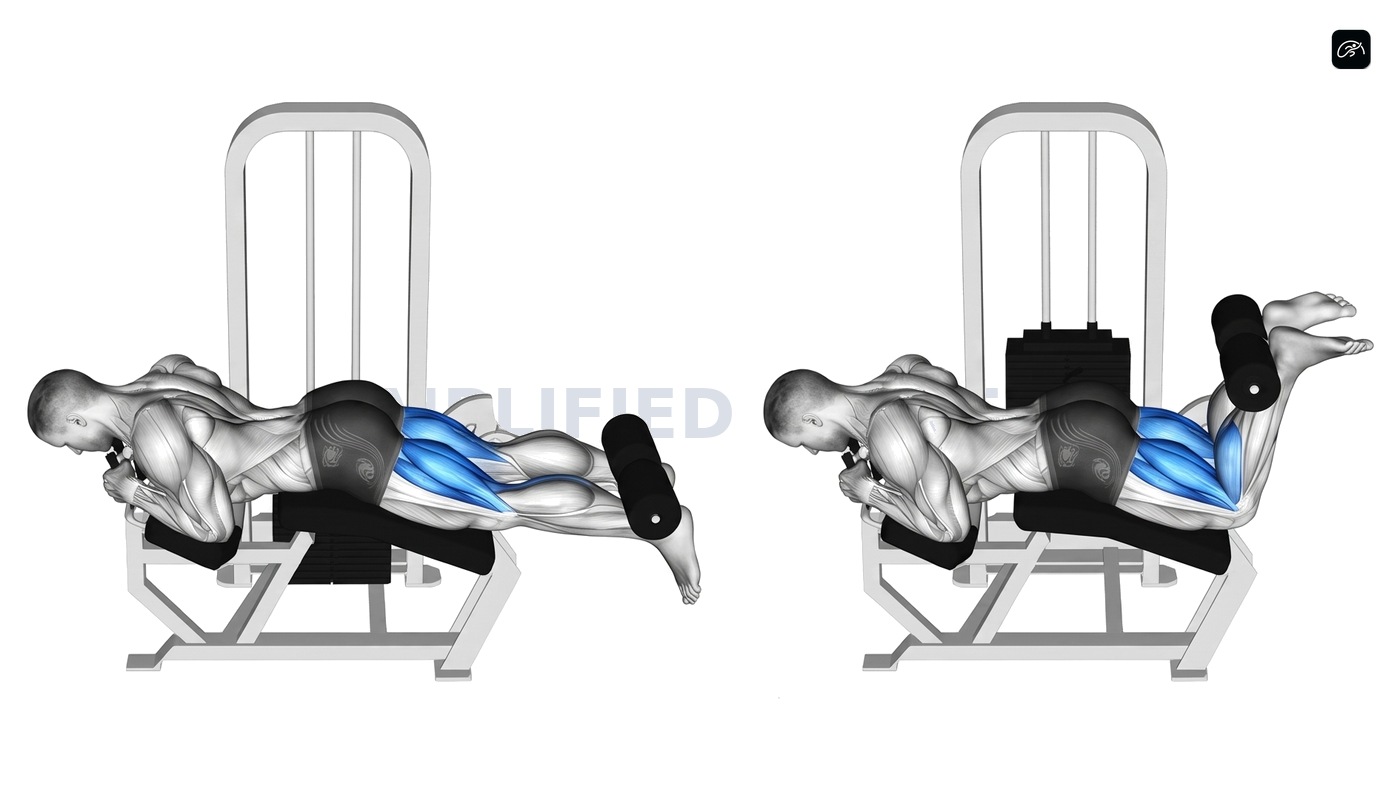
3 · Hamstrings (Biceps Femoris, Semitendinosus, Semimembranosus)
Seated Leg Curl
Knee Flexion (Hip Flexed)
Sets for Seated Leg Curl Set Reps Effort 1 8-10 1-2 RIR 2 8-10 0 RIR What It Is & Mechanics
Seated knee flexion flexes hips to ~90°, placing the biarticular hamstrings under long-muscle-length stretch for superior stretch-mediated hypertrophy.
Key Execution Cues
- Lock thigh pad down firmly against quads to prevent anterior pelvic tilt and hip lifting
- Curl heels completely underneath thighs into a deep, full contraction
- Pause for a brief 1-second squeeze before beginning the eccentric phase
- Resist the weight smoothly for 2-3 seconds back to near-straight legs
AlternativesLying Leg CurlSingle-Leg Seated Leg CurlNordic Hamstring Curl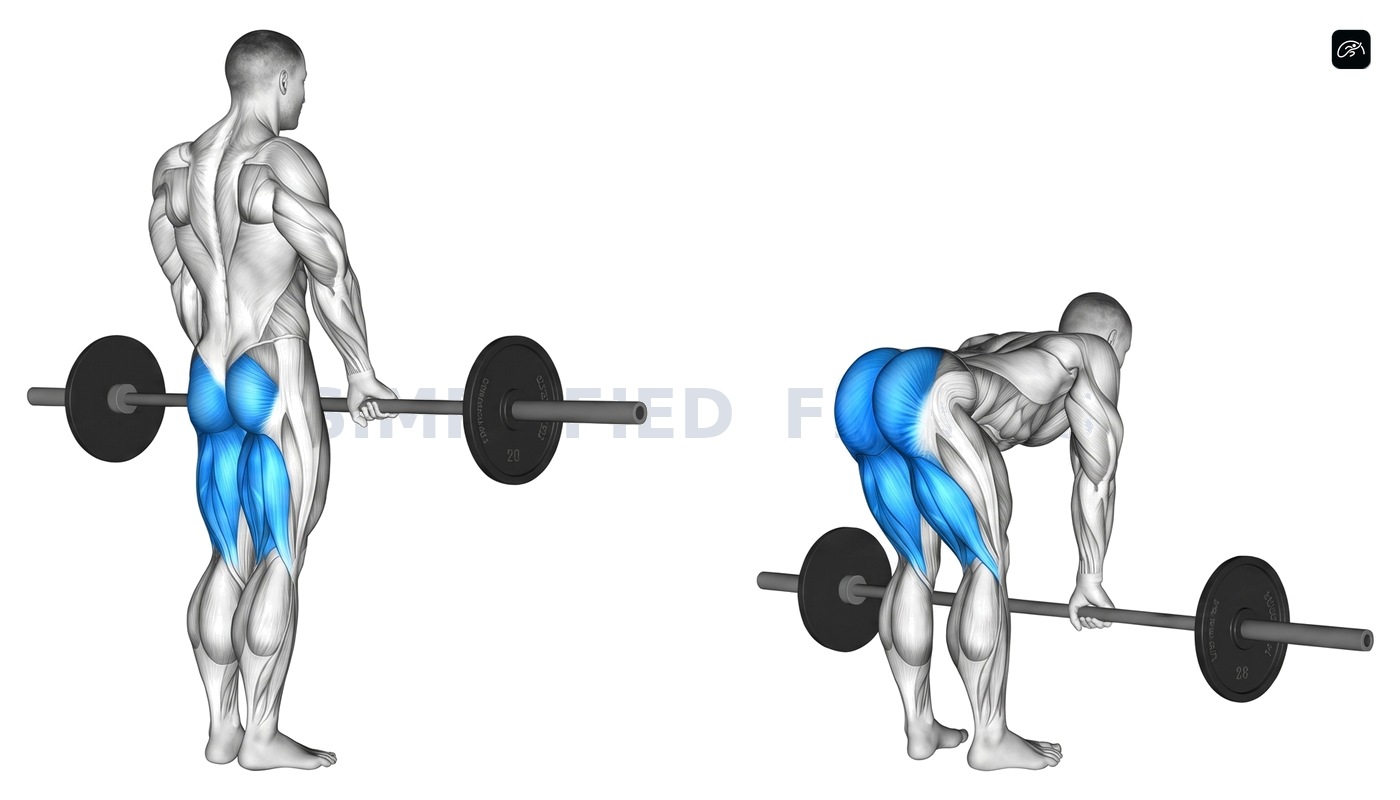
4 · Hamstrings (Proximal Hamstrings & Gluteus Maximus)
Stiff-Legged Deadlift (SLDL / RDL)
Hip Hinge / Pure Hip Extension
Sets for Stiff-Legged Deadlift (SLDL / RDL) Set Reps Effort 1 6-8 1-2 RIR 2 6-8 1-2 RIR What It Is & Mechanics
Pure hip hinge pattern loading proximal hamstrings and gluteus maximus at lengthened muscle lengths where tension and mechanical damage are greatest.
Key Execution Cues
- Set a soft 15-20° knee bend and keep it strictly fixed the entire set
- Push hips straight backward toward the wall behind you rather than squatting down
- Keep the barbell or dumbbells grazing along shins and thighs throughout
- Reverse once hips stop traveling backward (usually mid-shin); avoid rounding lower back
AlternativesDumbbell Romanian DeadliftBarbell Romanian DeadliftTrap Bar RDLDeficit Stiff-Legged Deadlift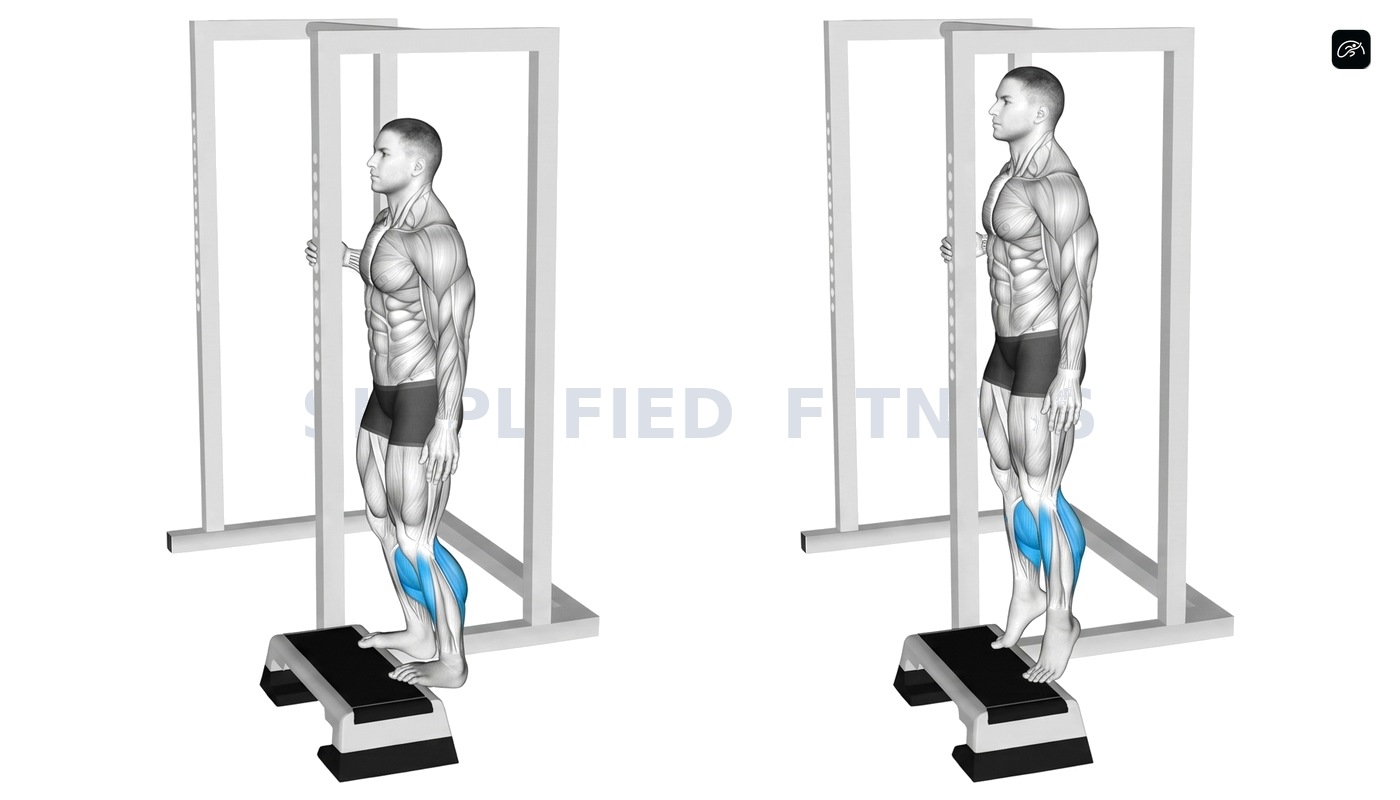
5 · Calves (Gastrocnemius & Soleus)
Standing Calf Raise
Ankle Plantarflexion (Knee Extended)
Sets for Standing Calf Raise Set Reps Effort 1 8-10 1-2 RIR 2 8-10 0 RIR What It Is & Mechanics
Straight-knee plantarflexion places the gastrocnemius under long-length stretch, maximizing tension across both gastrocnemius and soleus heads.
Key Execution Cues
- Maintain straight knees with only a soft micro-bend to engage gastrocnemius fully
- Lower heels into deepest stretch and pause for a strict 2-3s deadstop
- Drive straight up through balls of feet and first two toes without ankle roll
- Hold peak contraction at full tiptoe extension for 1 full second
AlternativesSmith Machine Calf RaiseLeg Press Calf PressSingle-Leg Dumbbell Calf RaiseDonkey Calf Raise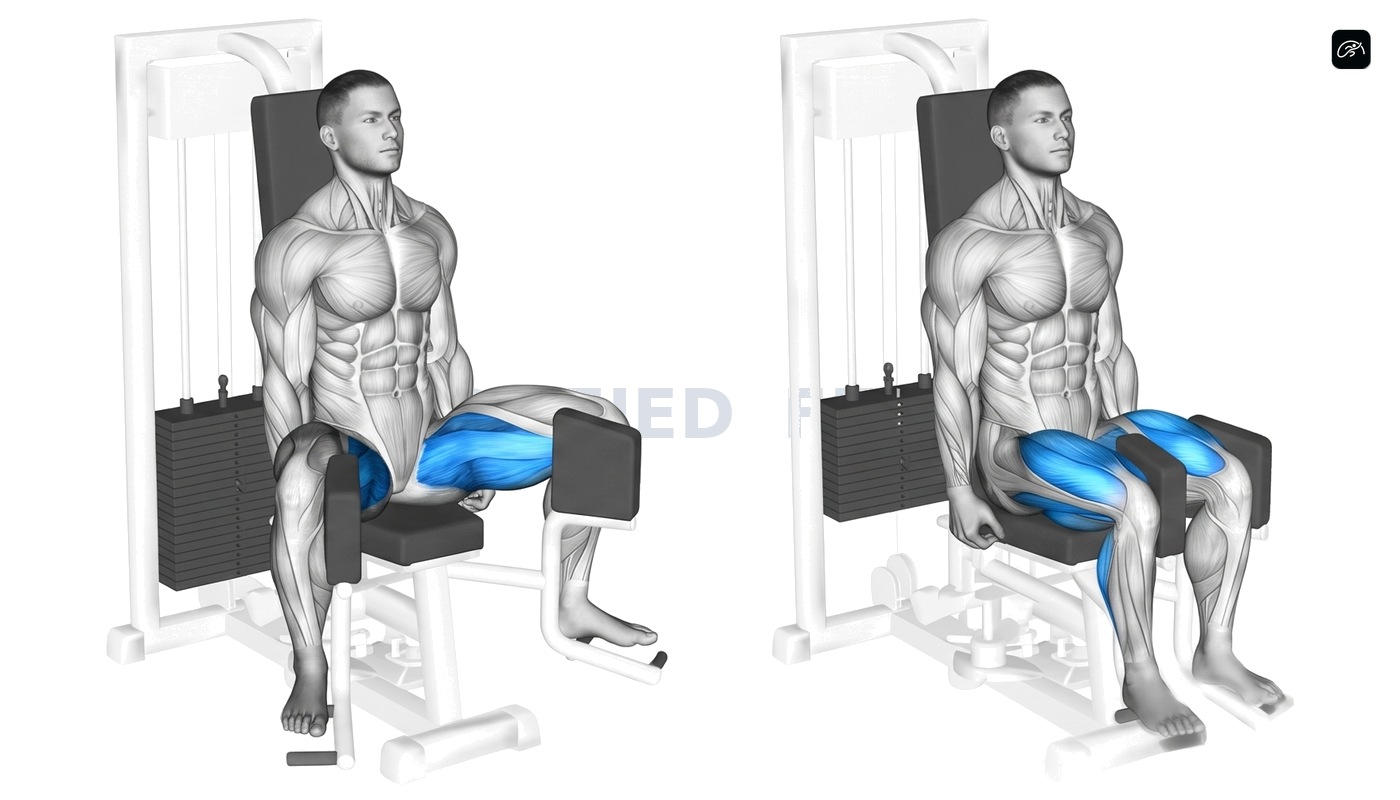
6 · Adductors (Adductor Magnus, Longus & Brevis)
Machine Hip Adduction
Frontal Hip Adduction
Sets for Machine Hip Adduction Set Reps Effort 1 10-12 1-2 RIR 2 10-12 0-1 RIR What It Is & Mechanics
Isolates the massive adductor magnus and longus in the frontal plane, filling out inner thigh volume and reinforcing squat biomechanics.
Key Execution Cues
- Set machine arms wide enough to produce a deep inner-thigh stretch
- Hold the lengthened stretch for 1 second before squeezing inward
- Squeeze pads together smoothly without jerking or using body swing
- Keep upper back and hips anchored flat against the seat throughout the set
AlternativesCable Hip AdductionCopenhagen PlankWide-Stance Sumo Squat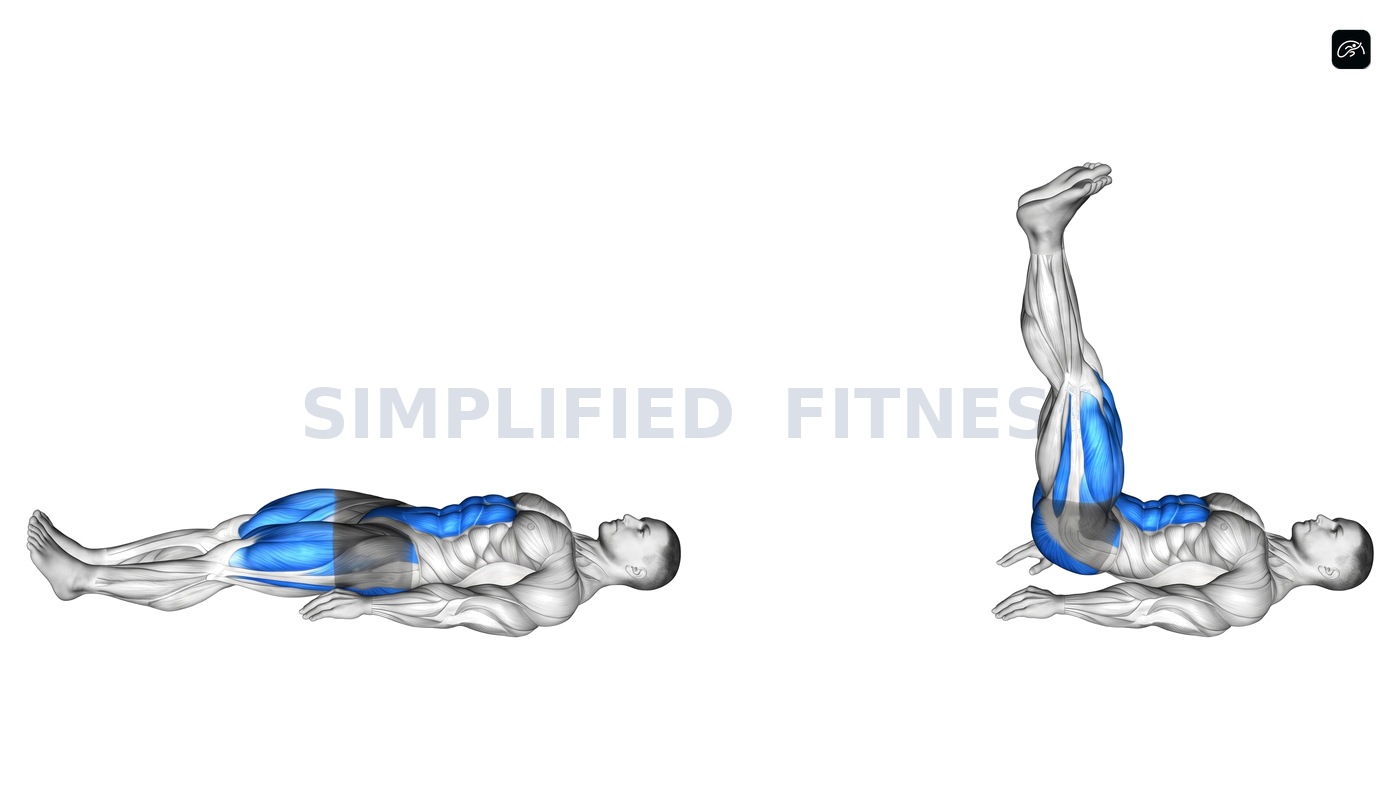
7 · Abs (Lower Rectus Abdominis & Deep Core)
Leg & Hip Raises (Hanging / Lying)
Posterior Pelvic Tilt & Lumbar Flexion
Sets for Leg & Hip Raises (Hanging / Lying) Set Reps Effort 1 10-15 1-2 RIR 2 10-15 0-1 RIR What It Is & Mechanics
Targets the lower rectus abdominis and deep core through posterior pelvic tilt and active lumbar flexion rather than simple hip flexor movement.
Key Execution Cues
- Roll pelvis upward toward sternum rather than just swinging legs
- Think of curling tailbone off the bench or mat at top contraction
- Avoid kicking or swinging legs; generate movement solely through abdominal torque
- Lower legs under control without arching lower back off the pad
AlternativesHanging Leg RaiseCaptain's Chair Leg RaiseLying Bench Leg RaiseHanging Knee TuckIncline Reverse Crunch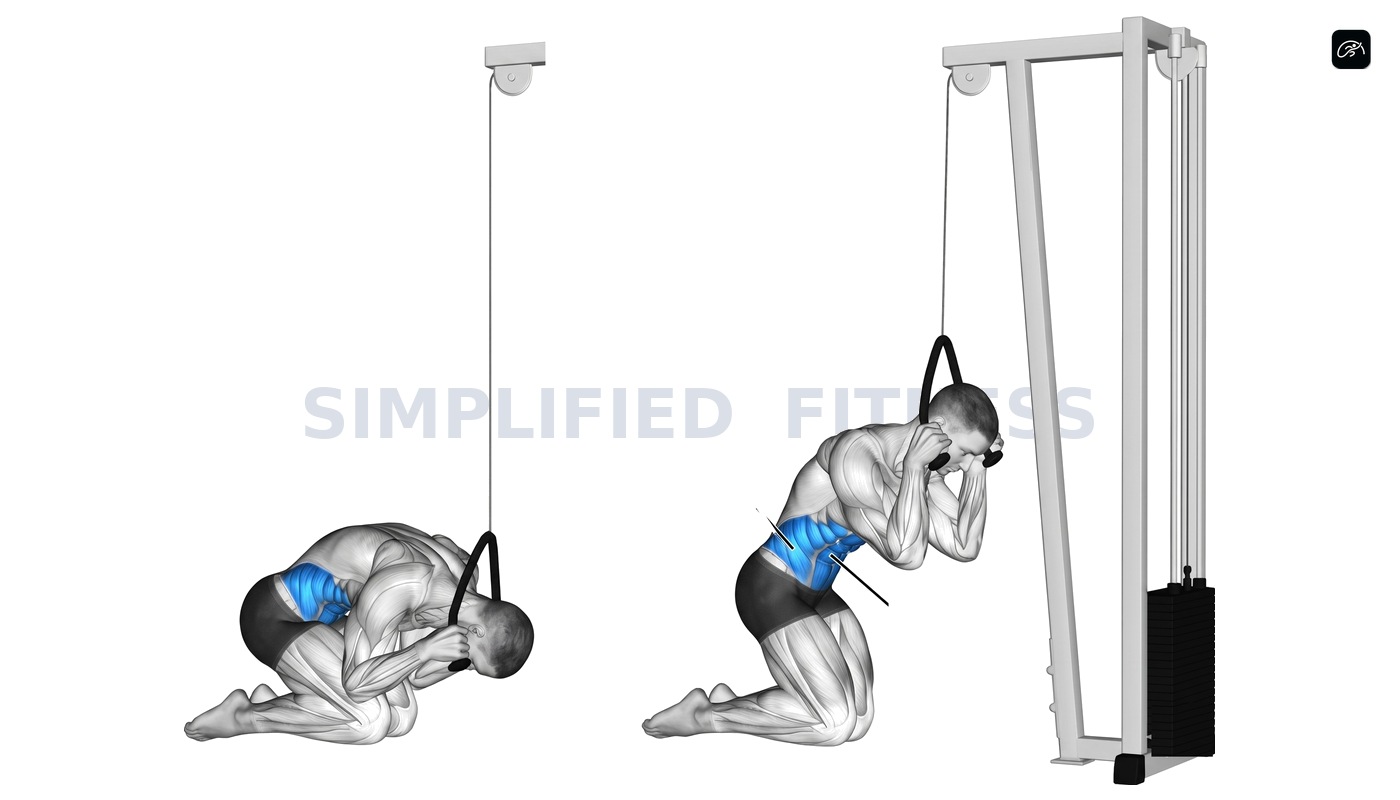
8 · Abs (Upper & Mid Rectus Abdominis)
Kneeling Cable Crunch
Thoracic & Lumbar Spinal Flexion
Sets for Kneeling Cable Crunch Set Reps Effort 1 10-12 1-2 RIR 2 10-12 0-1 RIR What It Is & Mechanics
Overloads the upper and mid rectus abdominis through active thoracic and lumbar spinal flexion against constant cable resistance.
Key Execution Cues
- Keep hips fixed in space; do not sit back toward heels during crunch
- Curl ribcage directly down toward pelvis like rolling up a carpet
- Anchor rope handles beside ears or temples without pulling with arms
- Exhale completely and hold maximum crunch contraction for 1 second
AlternativesMachine Ab CrunchDecline Weighted CrunchSwiss Ball Weighted Crunch
How to run this plan
Run Upper Body (Day 1), Lower Body (Day 2), rest (Day 3), Upper Body (Day 4), Lower Body (Day 5), followed by two rest days. This classic 4-day Upper/Lower frequency stimulates every major muscle group twice per week while providing 72 hours of recovery between sessions for each body half.
That lands most muscles in the 6-10 hard sets per session (12-16 weekly sets) range that captures optimal hypertrophic stimulus for natural lifters without accumulating excessive axial or systemic fatigue.
"RIR" means reps in reserve: how many more clean reps you could have done. Use the RIR load calculator to pick weights, and add a rep or a little weight each week while keeping the same effort. When progress stalls for two to three weeks across several lifts, take a lighter deload week.